 Eurasia Press & News
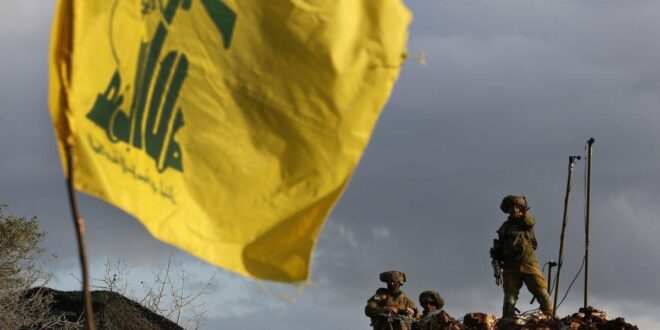
Iran has sent the Lebanese militia Hezbollah hundreds of millions of dollars over the past year via money exchanges and other businesses in Dubai, as Tehran seeks new ways to funnel money to its ally, people familiar with the matter said.
Hezbollah, a U.S.-designated terrorist group, is in desperate need of funds to rebuild and rearm its militia and pay other costs stemming from its bruising fight with Israel last year, the people said. Its smuggling routes through Syria were disrupted by the fall of the Iran-aligned Assad regime a year ago, and Lebanese authorities have made strides cracking down on couriers bringing suitcases of cash through the Beirut airport.
The limitations of those routes have forced Iran and Hezbollah to lean more heavily on alternatives like Dubai, the United Arab Emirates’ increasingly important global financial entrepot that Tehran has long used to launder funds and evade sanctions, said the people familiar with the matter, who include a senior U.S. official.
Earnings derived from oil sales are sent to Iran-linked exchange shops, private companies, businessmen and couriers in Dubai, who move them to Hezbollah in Lebanon via the Hawala method, a centuries-old system that allows users to transfer money from one point to another entirely on the basis of trust, the people said. Funds are deposited with a dealer in Dubai and paid out by a dealer in Lebanon, with the two dealers netting out or otherwise settling accounts later.
A U.A.E. official said the country is committed to preventing misuse of its territory for illicit finance and was working with international partners to disrupt and deter it.
Spokesmen for Hezbollah and the Lebanese prime minister’s office didn’t respond to requests for comment. Iran’s mission at the United Nations didn’t respond to a request for comment.
“Hezbollah is highly focused now on rebuilding,” said David Schenker, director of the program for Arab politics at the Washington Institute. “Iran is not backing away from its commitment to its premier regional proxy.”
Iran’s Quds Force, tasked with supporting the country’s allied militias overseas, has transferred more than $1 billion to Hezbollah since January, mostly through money exchange companies, the Treasury Department said in early November, naming and sanctioning three Hezbollah operatives.
The militant group, once the world’s best-armed nonstate militia, was battered in a two-month conflict last year when Israel launched a heavy air campaign against its armaments and killed its top leadership. Israel said it was responding to Hezbollah’s rocket attacks on Israel, which began shortly after the Hamas-led Oct. 7, 2023, attacks that left 1,200 dead.
Israel’s campaign crippled Hezbollah’s ability to fight and imposed a heavy financial burden. The group has promised to rebuild homes destroyed in the war and pay stipends for dead and wounded fighters while also expanding its recruiting efforts and trying to rebuild its armaments.
A year after a cease-fire ended the heaviest fighting, the group is still struggling to meet its financial needs. “One billion used to be their entire annual budget, but after the war they need a lot more,” said Hanin Ghaddar, a senior fellow at the Washington Institute.
The U.A.E. long had a reputation for being a hub for illicit funds and was placed on the Financial Action Task Force’s “gray list” in 2022 for not doing enough to confront money laundering and terror finance. The global watchdog removed the country from the list two years later saying it had made significant improvements in oversight, though some anticorruption groups said further progress needed to be made.
The U.S. is also concerned about funds being smuggled to Hezbollah through Turkey and Iraq, the senior American official said.
John Hurley, Treasury’s undersecretary for terrorism and financial intelligence, stopped in the U.A.E. and Turkey before visiting Lebanon earlier this month to discuss combating Iranian money laundering and the financing of terrorism.
The cease-fire deal that ended the war between Israel and Hezbollah requires Lebanon to secure the country’s ports of entry and prevent the flow of arms to nonstate militias, primarily Hezbollah. Lebanon has taken steps including banning direct flights from Iran and beefing up screening efforts at the airport and other ports of entry.
To get around the tighter airport controls, Iran is sending larger numbers of travelers with smaller amounts of cash or jewelry that don’t have to be declared and can more easily be hidden, the Arab officials said.
The cat-and-mouse game to prevent Iran from smuggling funds to Hezbollah underscores the challenge the U.S. and Israel have in stopping the resurrection of a group that is deeply embedded in the fabric of Lebanon and which is a key source of Iranian power and deterrence.
Hezbollah also has its own sources of funding via global networks reaching as far as West Africa and South America that trade drugs, diamonds and services like money laundering, the Arab officials said.
Earlier this month, the U.S. pushed back against a plan for Lebanon’s government to make disability payments to people injured by Israel’s pager attack last year on Hezbollah’s rank and file, the senior U.S. official said. Lebanese Prime Minister Nawaf Salam later reversed the decision, the senior U.S. official said.
A spokesman for the prime minister said he isn’t aware of any contact between the U.S. and Salam on the matter and that a number of applicants for the country’s disability allowance didn’t meet the criteria for eligibility.
The U.S. is also demanding that Lebanon shutter Hezbollah’s key financial institution, Al-Qard Al-Hassan, a U.S.-sanctioned bank that was established in the 1980s and which offers financial services including loans and ATMs to many Lebanese. Al-Qard Al-Hassan is structured as a charity and operates outside the purview of Lebanon’s central bank.
The cease-fire requires Lebanon to disarm Hezbollah in the south before moving on to the rest of the country as per a previous agreement.
Hezbollah is refusing to disarm, arguing it needs its weapons to defend Lebanon’s sovereignty. Its stance, and the inability of Lebanon’s weaker army to force disarmament, is heightening tensions with Israel and the U.S.