 Eurasia Press & News
As the Turkish Republic enters its second century, the world around it has become more complicated and less forgiving than ever before. The order that anchored global politics for decades is giving way to new centers of power, and crises are extending across borders. Populist threats to democracy and energy, climate, migration, and security challenges are intertwining in ways that test the capacity of governments everywhere.
For Turkey, a country that sits on two continents and near several conflicts, meeting the moment requires a steady hand: stability and freedom at home, and clear direction in its dealings abroad. But that is not what the Turkish government is delivering. The institutions that once made Turkey a confident democracy and a trusted partner have been weakened. The justice system no longer acts independently. Bureaucracy has lost its competence and diplomacy its discipline.
I have experienced the attack on Turkish democracy firsthand. Turkish authorities have been trying to build a legal case against me ever since I became mayor of Istanbul in 2019, and finally, in March, they arrested me on bogus charges. Last month, prosecutors produced a 3,379-page indictment seeking to lock me away for good with a sentence of more than 2,000 years. The allegations are being used to portray the elected administration of Istanbul as a criminal organization and its mayor as a gang leader. They rely on deliberate misreading of ordinary municipal work and anonymous witnesses. Confidentiality orders have prevented even my own legal team from scrutinizing the evidence.
This case is not about justice. It is about President Recep Tayyip Erdogan’s political survival. Having defeated mayoral candidates handpicked by Erdogan several times in Istanbul, I am now my party’s candidate to challenge him in the next presidential election, which must take place by 2028 at the latest. The legal challenges I face are the government’s attempt to strangle the opposition and engineer a political landscape in which Erdogan faces no competition—not now, and not in the years ahead.
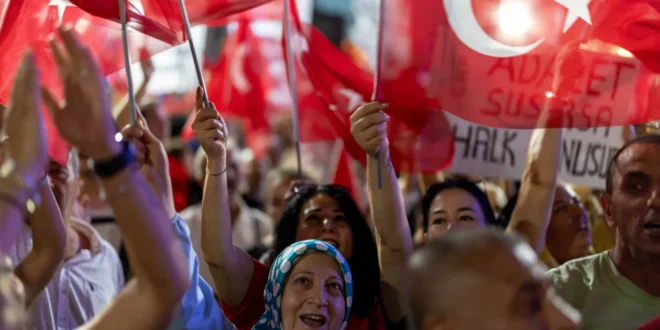
Yet the people of Turkey still believe in the possibility of a capable, honest, and representative government, as they have made clear in peaceful demonstrations in city squares ever since my arrest in March. Thanks to their courage, the path back to democratic rule, competent policymaking, and consistent foreign engagement is not yet closed off.
Foreign policy blunders have limited Turkey’s options, forcing the country to react to events around it rather than inspire positive change. A Turkey that is democratic, resilient, and self-confident will not only have a greater ability to mediate, convene, and lead in this critical period of geopolitical disruption. It will also be a constructive, stabilizing force in a world that desperately needs it.
FOREIGN POLICY STARTS AT HOME
Turkish officials speak often of “strategic autonomy,” of making sure the country can craft an independent foreign policy. But being truly autonomous requires strength—a strength that comes from domestic legitimacy, which in turn is grounded in democracy and the rule of law. A state that silences its citizens cannot speak with authority to the world. A divided society cannot project stability abroad. Turkey must be united at home if it is to withstand external pressure, adapt to change, and still maintain its moral compass. Rather than paying lip service to autonomy, Turkey should strive for strategic resilience: ensuring that the country is strong enough that it can make foreign policy choices freely.
This resilience requires a democracy grounded in fair, efficient institutions, which gives the government the ability to self-correct and navigate challenges. It also requires competent economic policies to encourage investment and innovation and to ensure that the country has sufficient resources to sustain its broader ambitions. And it requires investment in human capital and technological capabilities to prepare Turkey’s citizens to participate fully in the global economy. Yet despite Turkey’s inherent advantages, under the current government none of these pillars of resilience are as strong as they can and should be.
In the last two decades, Turkey’s governance has deteriorated at the country’s own expense. Independent courts, protected rights, and a predictable public administration in which key decisions follow rules rather than personal discretion instill confidence in a country’s leadership and create favorable conditions for foreign direct investment. In Turkey, arbitrary verdicts, politicized prosecutions, and sudden regulatory shifts have done the opposite, causing many foreign investors to leave, weakening the country’s global economic clout.
Restoring Turkey’s reliability will require judicial reform, the return of independent and competent regulatory agencies, and effective parliamentary scrutiny of foreign policy, security, and economic decisions. Appointments must follow clear, merit-based procedures, not draw on informal loyalty networks. The judiciary, the central bank, the main government accounting body, the election authority, and regulators who deal with competition, banking, energy, and procurement all need insulation from partisan pressure.
Unwise moves have undermined Turkey’s credibility with its allies.Better stewardship of the economy is also essential. For years, key interest rate, credit, and budget decisions have been made primarily with the next election in mind. The central bank has been pressured to cut rates despite sky-high inflation, to sustain cheap credit booms, and to use its reserves to hold down the exchange rate. Pre-election government spending on public-sector wage hikes, early retirement schemes, and broad subsidies has boosted consumption without building productive capacity. This has fed severe inflation and capital flight as investors lost confidence in the stability and logic of economic policy. The distribution of government loans, meanwhile, has facilitated the growth of political patronage networks. Turkish citizens have benefited unevenly, and many who saw their savings disappear have lost trust in the political and economic system.
My party, the Republican People’s Party, aims to reverse this downward slide. Turkey must restore predictable economic governance, protect the central bank’s independence, and reward creativity rather than rent-seeking. Growth must be sustainable and equitably shared, driven by investment in green industries, digital innovation, and high-quality jobs. A sovereign technology policy should safeguard data privacy, critical infrastructure, and other national interests, particularly in 5G, artificial intelligence, and energy systems. Turkey must act with foresight, turning its attention now to energy diversification, climate adaptation, and efficient water management—and investing in the education and skills necessary to support the green and digital transitions.
Macroeconomic stability and smart investments will help Turkey make decisions from a position of strength. Today, Turkey is caught in a web of dependencies on Western finance, Russian energy, and Chinese supply chains. Because of these dependencies, Turkey occasionally has been forced to accept costly loans, inflexible long-term energy deals, and opaque investment arrangements that it would resist if it could.
A critical part of extricating Turkey from this web is closer integration with Europe, mainly through a modernized customs union. The current Turkey-EU customs union was established in 1995 and only covers trade in goods. A new agreement must extend to services, public procurement, agriculture, and digital trade, as well as align Turkey with EU standards on data governance and sustainability. This could double Turkey-EU trade over the next decade and will give Turkey more leverage with all its foreign partners. Turkey can then escape the cycle of making ad hoc arrangements out of necessity and deliberately position itself as a global economic hub—connected to many but dependent on none.
A RELIABLE PARTNER
Over the past decade, Turkey’s foreign policy decision-making has been erratic, reactive, and increasingly personalized. Above all, it has served power consolidation at home, driving a wedge between the national interest and the political interests of the current leadership. Unwise moves have undermined Turkey’s credibility with its allies, including the acquisition of the Russian S-400 missile system in 2019; the use of Finland’s and Sweden’s 2022 NATO bids as an opportunity to make demands; abrupt shifts in policy toward Egypt, Saudi Arabia, and the United Arab Emirates, alienating these countries throughout the 2010s only to reverse course and seek rapprochement in the 2020s; and the gradual abandonment of judicial and regulatory reforms linked to the EU accession process. The sidelining of senior career diplomats who had managed the NATO, EU, and U.S. portfolios for decades deprived the diplomatic corps of institutional memory and steady guidance.
This improvisational approach isolated Turkey from EU partners, strained ties with the United States, and generated doubts in NATO about Turkey’s long-term reliability. It also narrowed Turkey’s room for maneuver. Policy changes became harder to negotiate, the country’s influence within multilateral forums declined, and foreign partners insisted on stronger conditions or monitoring before agreeing to cooperation.
Turkey’s dual identity—rooted in the institutional West yet attuned to the aspirations of the global South—puts it in a unique position to champion reform in global governance. In a fragmented world, Turkey can bring together partners across the EU, the Gulf, Africa, and Asia to push for reforms in the World Trade Organization, the International Monetary Fund, the World Bank, and key UN bodies. It can advocate new rules that make trade and taxation fairer and ensure that the benefits of the global economy are shared more equitably. It can also help shape global norms on data protection, algorithmic accountability, and the military use of AI.
While the world’s great powers remain gridlocked, middle powers can take the opportunity to advance reformist agendas. Consider migration. According to official figures, Turkey hosts nearly four million refugees, the highest number in the world. For years, policy has focused on containment, keeping refugees inside Turkey in return for financial support from Europe. This has reduced migration-related pressures on EU countries but leaves Turkey managing a long-term social and economic challenge largely alone. Countries must share such a responsibility, not outsource it, as Europe has done. A more collaborative migration policy should include real burden sharing with the EU through resettlement quotas, predictable and equitable financial support, and joint efforts to help refugees access education and employment. A democratic Turkey can not only push for this kind of migration cooperation with Europe but also promote this model elsewhere, drawing on its own unique experience.
In digital technology policy, too, Turkey can make the leap from passive consumer to norm-shaper. Clarifying its domestic policies can make Turkey a more constructive partner to others. It can engage directly with key allies and get more involved in initiatives on AI and data with the EU, the Council of Europe, the Organization for Economic Cooperation and Development, and the G-20. True digital power requires reform at home, too. Transparent oversight and predictable privacy rules enforced by independent regulators can make Turkey a trusted base for cloud services and regional tech investment.
Similarly, integrating climate targets into Turkey’s trade relationships, energy strategy, and industrial standards can position the country as a regional hub for adaptation finance and clean infrastructure. Turkish public and development banks, in partnership with European and multilateral lenders, can help fund coastal protection, resilient agriculture, and urban infrastructure in neighboring countries, and in doing so establish Istanbul—Turkey’s economic capital—as a regional green finance center.
MENDING FENCES
Across all of Turkey’s foreign relationships, a key lesson stands out. When Turkey acted ideologically, it lost influence: tying its Middle East policy to support for the Muslim Brotherhood, for example, backfired when regional governments cracked down on the group after the Arab Spring. When it acted rationally and through institutions, it gained influence, as in Ankara’s brokering of the 2022 UN-backed grain deal between Russia and Ukraine, and its subsequent management of the deal’s implementation, including vessel inspections and coordination of a safe transit corridor in the Black Sea.
Restoring coherence and professionalism to the country’s relationship management is therefore essential, as is privileging long-term national interests over short-term ideological concerns. Part of this recalibration involves recognizing that the transatlantic alliance is the backbone of Turkey’s deterrence and crisis response. This means making efforts to undo the damage of Turkey’s purchase and testing of Russian S-400s. The move was meant to signal the country’s strategic autonomy, but it triggered U.S. sanctions, Turkey’s removal from the F-35 Joint Strike Fighter program, and a loss of interoperability with key NATO air forces. The S-400s are still causing friction within the alliance. Turkey now needs to work with NATO allies to figure out a long-term solution. More broadly, Turkey must rebuild trust within NATO by being a transparent and constructive ally, active in joint planning and capability development.
With the United States, the Turkish government has been under the illusion that recurrent tensions are over now that President Donald Trump is back in the White House. Yet the personal relationship between Trump and Erdogan is an unequal one, and it does not ensure steady cooperation. To put the relationship on firmer ground, Turkey should pursue regular strategic dialogues and strengthen working-level channels to cooperate with the United States on defense modernization, advanced technologies, counterterrorism, and energy security. A more institutionalized relationship would help protect Turkish and American interests, address areas of concern, and give any administration in Washington, including Trump’s, a more dependable partner in Turkey.
While great powers remain gridlocked, middle powers can advance reformist agendas.With Europe, Turkey must reanchor itself not only in the continent’s security structures but also in its legal and economic frameworks. It must prioritize a modernized customs union, simpler and more predictable visa processes for Turkish citizens, active participation in Europe’s digital and green agendas, and a return to the Istanbul Convention, the largest pan-European accord on combating domestic violence, which Turkey withdrew from in 2021. Turkey must engage constructively with the EU to resolve long-standing issues in the Mediterranean and the Middle East, including for a just and viable solution in Cyprus, where unilateral actions by both the Greek Cypriot and the past Turkish Cypriot administrations and hard-line rhetoric on the Greek side have frozen talks. Finally, Turkey must resume the process of aligning with European law. A parliamentary body should monitor compliance with the judgments of the European Court of Human Rights, whose jurisdiction Turkey has accepted. This body must also oversee legislation that would make Turkish laws compatible with EU laws and standards and meet the benchmarks that are part of the EU accession process. These steps are not concessions to Europe. They are investments in Turkey’s own democracy and modernization.
It will remain necessary for Turkey to engage with Russia and China, but these relationships should also be conducted through transparent and institutional channels. The current approach, which relies on leader-to-leader bargaining and informal dealmaking, has produced opaque commitments, made the relationships prone to crisis, and left Turkey vulnerable to pressure. Turkey does need to work with Moscow in Beijing when interests genuinely overlap, such as in energy transit, counterterrorism, tourism, and the expansion of trade corridors across Eurasia, as well as in regional crisis management. But on matters such as the transatlantic alliance, human rights, digital surveillance norms, Turkey’s interests diverge from those of Russia and China. Clear compartmentalization can help Turkey avoid being pushed into package arrangements that demand concessions in one area in exchange for cooperation in another.
In the Middle East, the eastern Mediterranean, and the Caucasus, Turkey has too often resorted to confrontation or empty gestures, such as suspending diplomatic contacts, issuing highly charged public statements, and announcing new initiatives but not following through. The way Turkey’s influence will grow is instead through sustained dialogue and confidence building. It is crucial to maintain positions consistent with international law to play a constructive role in these regions. The full normalization of relations with Armenia and the opening of the Turkish-Armenian border, for example, would be an important step in this direction.
Turkey has another clear opportunity to model a better approach by defending the right of all Palestinians to a secure and dignified life and using bilateral diplomacy and initiatives at the UN and the Organization of Islamic Cooperation to push for humanitarian access and reconstruction in Gaza, the establishment of accountable Palestinian institutions, and a two-state solution in line with UN resolutions. This is both sound statecraft and a moral duty.
A REPUBLIC WORTHY OF ITS PEOPLE
I do not underestimate Turkey’s challenges, domestic or international, but I reject fatalism. Turkey is resilient. This resilience is on display every day that young people protest peacefully to demand opportunity, and every time that citizens trust the ballot over the baton.
The country’s next chapter can be one of renewal. If it can restore its democracy and return competence and consistency to its foreign policy, Turkey can once again become what its geography and history equip it to be: a European power with global reach, an indispensable member of the transatlantic alliance, and a commercial, energy, and diplomatic hub connecting its Western allies with partners across the global South. That is how Turkey becomes a stabilizing force in a fractured world. And it is how Turkey honors its citizens, by ensuring that the credibility it earns abroad rests on the justice upheld at home.