 Eurasia Press & News
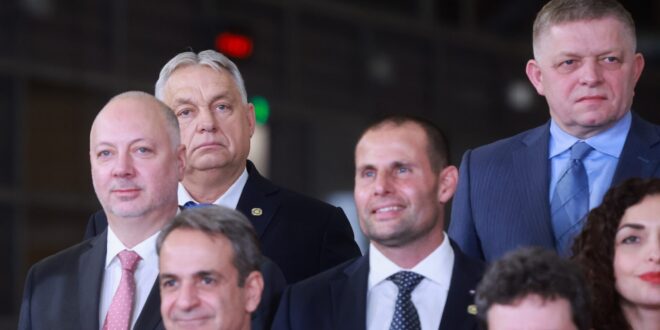
The new Czech PM Andrej Babis joined his two Central European counterparts Robert Fico of Slovakia and Viktor Orban of Hungary in deciding not to take part in a 90-billion-euro loan to Ukraine, which will secure the embattled country’s funding for next year to continue its defence against Russia’s invasion. That loan, at zero interest funded by the common EU budget, in itself was a climbdown from the plan to use more than 200 billion euros of frozen Russian assets to fund Ukraine’s war effort, which was principally blocked by Belgium as the holder of most of those assets in Euroclear. EU leaders avoided “chaos and division” with their decision to provide Ukraine with a loan through borrowing cash rather than use frozen Russian assets, Belgian PM Bart De Wever said early on Friday. “We remained united,” De Wever added. The agreement followed about 17 hours of heated debate at the European Council summit in Brussels that began Thursday, which sources in the EU’s diplomatic service told BIRN were critical for Ukraine’s continued defence against Russia: without the cash, estimated at 60 billion euros for 2026 in an interview with NATO Secretary General Mark Rutte, Ukraine would be forced to sue for peace on Russia’s terms, they said. Ukrainian President Volodymyr Zelensky, who had urged leaders to use the frozen Russian assets, said on X he was grateful to European leaders for the deal, which he described as “significant support that truly strengthens our resilience”. Arriving in the Belgian capital for a pre-summit meeting of leaders of the Patriots for Europe grouping in the European Parliament (of which Babis’s ANO party is a founding member along with Orban’s Fidesz), the new Czech PM insisted that while he did not question the EU’s commitment to cover Ukraine’s financial needs, “it should be financed as before… The Czech Republic will not provide any additional guarantees”, joining Slovakia and Hungary sceptical about the reparations loan plan. “We think that the money should be found in another way” than using Russian frozen assets, which should rather be used for post-war reparations, Babis said. Orban said he and the two other countries agreed not to veto the massive EU-backed interest-free loan to Ukraine for the next two years, as long as they were excluded from the guarantees needed for the debt in the agreement’s text. Donald Tusk, Poland’s PM and the odd one out in Central Europe, made no bones about what was at stake: “We have a simple choice: either money today or blood tomorrow. And I am not talking about Ukraine only; I am talking about Europe.”
Hungarians trash Slovak govt over new legislation covering WWII Benes Decrees
Tensions in Slovak-Hungarian relations rose during the week over the historically controversial Benes Decrees. Issued after World War II, the decrees are still regarded by many in the former Czechoslovakia as a cornerstone of their independent national statehood, although they breached fundamental human rights. The decrees stripped ethnic German and Hungarian communities living in Czechoslovakia of their property and citizenship, framing them as collectively responsible and punishable for the crimes committed during the war. In recent years, the Slovak government has been using the Benes Decrees to confiscate land from Hungarian (and also some Slovak) owners without compensation. While this practice has been going on for some time, and the Hungarian government was informed about it, Hungarian PM Viktor Orban had so far chosen to remain silent on it, in deference it seems to his political friendship with Slovak PM Robert Fico. This changed this week after Fico’s government, in response to the main opposition Progressive Slovakia party demanding clarification over the issue, pushed through a Criminal Code amendment that criminalises anyone who questions the decrees with up to six months in prison.
The reaction to the legislation was swift and and came from many quarters. The Hungarian Alliance, the main Hungarian minority political party in Slovakia, and Hungarian politicians from across the political divide – including Zsolt Nemeth, chairman of the Hungarian parliament’s Foreign Affairs Committee, and opposition leader Peter Magyar – accused the Slovak government of pursuing “anti- Hungarian legislation”. The small liberal opposition party, Momentum, said it would turn to the EU because the new law not only threatens the Hungarian minority in Slovakia, but it’s also dangerous for anyone advocating for human and minority rights as well as freedom of expression. Magyar also criticised Hungary’s own government for failing to defend the Hungarian minority in Slovakia, saying Orban had abandoned ethnic Hungarians in Slovakia. The Orban government appeared to have been caught off guard with Slovakia’s move. Hungary’s government maintains that it supports the Hungarian Alliance but wishes to avoid reopening historical conflicts. Hungarian Foreign Minister Peter Szijjarto said the new Slovak legislation is being legally analysed and that Hungarian officials have been assured it is not aimed at the minority, while insisting Budapest will use all available tools to prevent harm to Hungarians in southern Slovakia. He acknowledged that “with Slovakia, we have managed to defuse tensions on a number of issues; not on every point, however – the issue of the Benes Decrees unfortunately remains a source of tension.” When asked about it, Orban pretended he hadn’t been following the issue but said he would discuss the new law with Fico on the sidelines of the European Council summit. Some pro-government commentators described it as the “darkest days of the so-far pragmatic bilateral relations” and warned the Slovak law comes at a time when the two EU countries need to close ranks in their fight with Brussels and other EU states over their stance on the war in Ukraine.
Slovak PM faces setbacks at home and abroad
On Wednesday, Slovak PM Robert Fico suffered several setbacks. In Brussels, his aircraft was damaged ahead of the EU summit; new polling data showed that his coalition has lost around half a million voters over the past two years; and he was dealt two further blows by the Constitutional Court in eastern Slovakia – the region where the PM once notoriously claimed “nothing is there”. It was the rulings from the Constitutional Court that defenders of the rule of law had been waiting for most anxiously. On Wednesday, the court declared unconstitutional a law targeting NGOs, meaning it will lose its effect. The governing coalition now has a few months to amend the legislation or it will automatically lapse. At the same time, the court suspended the effect of a law that would have abolished the Whistleblower Protection Office. It is worth noting that before the summer the court had not suspended the NGOs law, so it remained in force until now. Among other things, it required organisations to prepare transparency reports and disclose information about their use of public funds, imposing additional bureaucratic burdens – even though, in many cases, these organisations substitute for the state itself. The court also found that the obligation to publish details about donors and the size of their contributions constituted a disproportionate interference with the right to privacy. The coalition, which adopted the law with the intention of targeting NGOs defending the rule of law but in practice affected the work of many other organisations, has signalled that it will work to amend the legislation.
In the case of the second piece of legislation, which was meant to abolish the whistleblower watchdog on January 1, the court intervened even before it could come into effect. The law was adopted on December 9 without any debate or discussion with experts. The governing coalition has not concealed the fact that this was a targeted change – although not stated in official documents – intended to remove the current leadership of the office. The likely aim was to halt fines imposed on the Interior Ministry, the sponsor of the bill, which has so far been the only institution to bypass the office when seeking permission to suspend or demote police investigators with whistleblower status. These investigators form a small group who were working on corruption cases linked to figures within the governing coalition and previous Fico-led governments. For more than two years they have been suspended and forced to stay at home. Only on Wednesday did the first of them return to work after a court ruled in his favour. Others may follow if the courts decide similarly in their cases. Since returning to office in 2023, Fico has repeatedly said he would crack down on NGOs funded from abroad and on those who, he claims, committed crimes or violated human rights between 2020 and 2023 – a reference to investigators and prosecutors who pursued cases involving figures linked to his previous governments. However, his plans appear to have been scuppered for now.
Tisza accuses Hungarian government over child protection
Hungarian opposition leader Peter Magyar staged a surprisingly large rally on Saturday under the banner “Protect Our Children”. Announced just three days earlier, the demonstration focused on the government’s abysmal record in child protection, drawing attention to past paedophilia cases in children’s homes as well as recent brutal assaults on detainees at a juvenile correctional facility. Several thousand people marched peacefully through Budapest, crossing the iconic Chain Bridge to the Castle, where Orban’s office is located. Many participants carried soft toys, which were later collected and donated to children’s homes. The organisers banned flags and anti-government slogans in an effort to keep the event focused on the issue itself. Magyar, who had earlier published in 2021 a report detailing systemic physical and sexual abuse in child-protection institutions, said he was speaking both as a father and as a former Fidesz member. “How did you let this happen? Why have you all remained silent?” he said, addressing the government and the president. “This regime is a monster, but this regime is coming to an end!” Magyar emphasised that these children are not asking for luxury yachts or special treatment, only what every child is entitled to: care, safety, love and the chance of a happy life. Yet the current authorities have been incapable of providing this for many years, he accused. The pro-government media has been trying to play down the revelations about systemic neglect and abuse in state facilities, dismissing Magyar’s rally as his smallest yet. Yet in a recent Median poll Magyar’s Tisza party leads the ruling Fidesz by 57 per cent to 14 per cent among under 40s.
Polish president to meet Ukraine counterpart in Warsaw Friday, signs new coal-mining law
Ukrainian President Volodymyr Zelensky will be in Warsaw on Friday to meet with Polish President Karol Nawrocki, marking their first official talks since the latter took office in August. The sequence is somewhat unusual: diplomatic practice more often sees a newly elected leader pay a first visit abroad to a more established counterpart. The meeting follows months of limited engagement. Ukrainian Foreign Ministry sources say Kyiv invited Nawrocki to visit several times since his inauguration, but the invitations went unanswered. Nawrocki also skipped the widely publicised White House meeting of the Coalition of the Willing in August, reportedly to avoid appearing overly supportive of Ukraine to his domestic electorate. Ahead of the visit, Nawrocki wrote on X that he “demands symmetry” in relations with Ukraine and expects Zelensky to express gratitude to Polish soldiers and the Polish nation for their support, echoing rhetoric used by US President Donald Trump. More recently, however, he has struck a more conciliatory note. In an interview, Nawrocki said Poland would continue backing Ukraine, calling it “in Poland’s interest to support a country fighting its existential enemy – Russia – and defending values we share.” Talks are expected to cover security, including ongoing peace negotiations, as well as bilateral issues such as the contentious question of exhumations of Poles killed in the World War II Volhynia massacres, and economic cooperation. While in Warsaw, Zelensky is also scheduled to meet PM Donald Tusk and address parliament.
Meanwhile, President Nawrocki on Monday signed a long-debated amendment to the mining law – a key step in Poland’s energy transition, as the country remains Europe’s most coal-dependent. The bill allows for coal mine closures and provides severance pay of 170,000 zloty (40,290 euros) per worker, a substantial sum by Polish standards. Energy Minister Milosz Motyka said at a press conference earlier this month that the mining law “fulfils the fundamental principle of a just transition”, emphasising that it resulted from social dialogue. The bill was backed by the Solidarity trade union, reflecting a widespread view in the mining sector that the EU-driven energy transition is inevitable and should be managed in a way that protects workers, through continued employment during closures and adequate compensation. In signing the law, Nawrocki diverged from his political origins, with his ally the PiS party choosing to abstain in parliament. Although he had campaigned on not supporting mine closures until Poland’s first nuclear power plant was built, Solidarity’s backing swayed his decision. “Lawmakers who tried to turn this bill into political theatre should learn from the president how a responsible politician behaves,” said Dominik Kolorz, head of Silesian-Dabrowa Solidarity. Under the new law, the transition away from coal is expected to be complete by 2049. Poland is now set to begin construction of its first nuclear power plant after the European Commission approved 60 billion zloty (14.2 billion euros) in state aid for the project on December 9. It is the largest investment in the country’s energy sector in history, and is expected to take a decade to build. Climate experts warn that action on coal is needed sooner: last year, the fuel still accounted for 57 per cent of Poland’s power generation.
New Czech foreign/interim environment minister causes dismay from get-go
Accompanying Czech PM Andrej Babis to Brussels this week was newly appointed Foreign Minister Petr Macinka, chairman of the conservative, anti-green Motorists party, who – temporarily – is also managing the new cabinet’s environment portfolio. Macinka, who has never held elected office until now and is a protege of the famously climate-change-denying (and rude) former president Vaclav Klaus, did not wait long to create a stir. “The most controversial politician of the new government (for now),” Czech daily HN.cz headlined this week. Immediately upon arrival at the Environment Ministry on Monday, Macinka was welcomed by Greenpeace activists criticising his appointment over his lack of competence in the field as well as his well-established links to the fossil fuel lobby and climate disinformation scene. A few hours later, he delivered: “The climate crisis is over today,” he declared at a press conference, sparking both dismay and meme-fuelled mockery online. Citing his other engagements as the new head of Czech diplomacy, Macinka raised a few eyebrows when he announced that, in his absence, Slovak Environment Minister Tomas Taraba would represent Czechia at Tuesday’s Environment Council – possibly confusing the European Council of heads of state of government (where mutual representation is possible and a relatively common practice) with ministerial-level meetings of the Council of the EU (where it is not). Perhaps once he had been apprised of normal diplomatic procedure, it was later reported that Czechia was represented by the country’s permanent representative to the EU, Stepan Cerny, a common option when the minister or his deputy are unable to attend.