 Eurasia Press & News
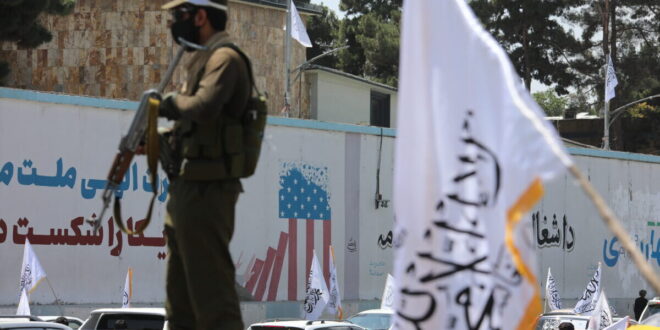
Taliban have absorbed former fighters from various terrorist groups into their local security forces to draw on their combat experience, a United Nations sanctions monitoring report says, warning that the practice raises concerns about infiltration and ideological alignment within their ranks.
In its latest comprehensive report covering developments through Dec. 8, 2025, the Analytical Support and Sanctions Monitoring Team said more than 20 international and regional terrorist organizations remain active in Afghanistan, despite Taliban assertions that no such groups operate in or from Afghan territory. The report said groups assessed to be present include al Qaeda, Islamic State Khorasan (ISIL-K), Tehrik-e Taliban Pakistan (TTP), the Eastern Turkistan Islamic Movement/Turkistan Islamic Party (ETIM/TIP), the Islamic Movement of Uzbekistan and Jamaat Ansarullah, among others, with several aiming to expand regionally and some using Afghanistan to plan and prepare external attacks.
The Monitoring Team said the overall security situation has stabilized compared with the previous reporting period, but described terrorist group presence as the main challenge, fueling regional insecurity and heightened bilateral tensions. It said the Taliban have carried out counter-terrorism operations against ISIL-K since the beginning of 2025, while publicly maintaining that the group has been defeated and that remaining threats stem from cross-border infiltration. The report said ISIL-K remains resilient, continues to claim attacks, and poses threats inside Afghanistan and externally, with concerns cited over the group’s operational capacity, propaganda, recruitment and its ability to infiltrate Taliban ranks. It added that Taliban officials have regularly sought external counter-terrorism assistance to fight ISIL-K, with efforts led largely by the head of the General Directorate of Intelligence, Abdul-Haq Wassiq.
ISIL-K capability, recruitment and financing
The report said ISIL-K has demonstrated northward and eastward expansion, warning that without adequate coordination between Afghanistan and its neighbors there is a risk of threat displacement or spillover. It estimated ISIL-K’s strength at about 2,000 fighters, noting that while the leadership remains overwhelmingly Afghan Pashtun, much of the rank-and-file is now of Central Asian origin.
It said Sanaullah Ghafari, also known as Shahab al-Muhajir, continues to lead ISIL-K and moves frequently. The report described recruitment activity involving some 600 Central Asian volunteers—mostly from Tajikistan and Uzbekistan—recruited largely online through religious chat groups, with some traveling to Afghanistan, others remaining in their home countries, and some sent onward to Europe. It said many recruits were young, often 17 or 18, with most in their mid-20s, and that none were noted to have prior terrorist-group backgrounds before recruitment.
The Monitoring Team said ISIL-K has continued to prioritize attacks on Shi’ite communities, the Taliban authorities and foreigners, citing the Dec. 11, 2024 suicide bombing that killed the Taliban’s minister of refugees and repatriation, Khalil Ahmed Haqqani, as evidence of persistent capability. It also said ISIL-K leaders seek to discredit the Taliban and deepen internal splits, including by branding Taliban policies and engagement as illegitimate.
On financing, the report said ISIL-K funding is believed to come from multiple streams, including donations, kidnap-for-ransom targeting local businessmen, and reliance on cryptocurrencies, particularly Monero. It added that ISIL-K has been experimenting with artificial intelligence for propaganda and for producing instructional materials related to improvised explosive devices, weapons component printing and methods to exploit vulnerabilities in anti-money-laundering systems, distributed via online channels.
TTP, al Qaeda and other groups
The Monitoring Team said TTP intensified attacks during the reporting period, mostly targeting Pakistani military and state institutions, and that cross-border attacks from Afghan soil have driven open hostilities and deterioration in Pakistan-Afghanistan relations. It assessed that Taliban harboring of TTP leadership and facilitation of operations have brought relations to a critical point, with differing views inside the Taliban on whether TTP is a liability or a cause still supported by elements of the movement. It said the Taliban are unlikely to confront TTP given historic ties and may lack the capability to do so even if they wished.
On al Qaeda, the Monitoring Team said Member State reporting indicates the group’s status, strength and location in Afghanistan remain unchanged from previous assessments. It said al Qaeda provides ideological guidance and acts as a “service provider and multiplier” for other groups, offering training, advice and logistical support, and that senior commanders are reported to be living in Kabul, with the Taliban maintaining tight control while hosting and supporting the group.
The report said a newer group, Ittihad-ul-Mujahideen Pakistan, emerged in April 2025 and is widely believed to include elements from AQIS, the Hafiz Gul Bahadur Group and Lashkar-e-Islam. It said the group had claimed more than 150 attacks targeting Pakistani security forces, is believed to have about 500 fighters, and that Taliban authorities are thought to have facilitated its movement into Afghanistan for training—raising fears of potential use in attacks against neighboring Central Asian states.
It also said ETIM/TIP expanded beyond earlier bases to Badakhshan and the Wakhan corridor, inciting attacks on Chinese interests, and that some Member States reported ETIM/TIP cooperation with TTP in training, equipment and terrorism financing. Jamaat Ansarullah, the report said, has fighters spread across Afghanistan with an objective to destabilize Tajikistan; it cited reports that the Taliban provided 18 members of the group with Afghan passports and hired experienced fighters, paying them $200–$300 per month.
Taliban security structure and spending
The Monitoring Team said the Taliban security apparatus is reported to comprise about 380,000 to 450,000 personnel, including roughly 150,000 soldiers and 200,000 police, as well as intelligence personnel. It said the Taliban authorities’ governance model remains insufficient for policing and rule-of-law functions outside major urban centers, citing corruption, weak accountability and contested legitimacy of local forces. The report said local-level disputes within the Taliban weaken the security apparatus and that leadership inflexibility has destabilized the security sector, heightening terrorist risks and affecting stability across Central and South Asia.
On finances, it said that during the first half of the 2025 financial year, security-related spending amounted to 55.2 billion Afghanis (about $835 million), representing 46% of total expenditure, while around 64.2 billion Afghanis ($980 million), or 54%, went to other sectors and service delivery programs.
The report said economic pressures have complicated the Taliban’s security response, including difficulties paying salaries. It said Taliban leader Hibatullah Akhundzada ordered a 20% reduction in security forces on April 13 due to budget constraints, and that more than 4,000 commanders and rank-and-file officers were removed nationwide—about 1,000 of them in Badakhshan province alone—with the highest proportions of redundancies after Badakhshan occurring in Kapisa, Parwan and Takhar, provinces with larger numbers of ethnic Tajik and Uzbek Taliban.
Women, minorities, media and former officials
The Monitoring Team described the situation for women and girls as “dire,” saying they continue to be denied basic rights. Citing the Afghanistan Gender Index 2024 published in 2025, it said UN Women assessed that 8 out of 10 Afghan women are excluded from education, employment and training, and that Afghanistan has the second widest gender gap globally. It also cited concerns over worsening access to healthcare, higher unemployment and increased risk of early and forced marriages, and referenced an estimate that Taliban policies toward women cost Afghanistan’s economy more than $1 billion per year.
The report said decrees from Kandahar have pushed religious madrasas to follow only the Hanafi Deobandi school of thought, with references to other jurisprudence omitted from curricula and crackdowns continuing against non-Deobandi forms of Islam such as Salafism, Shi’ism and the Tablighi Jamaat. It cited reporting that the General Directorate of Intelligence has a unit dedicated to monitoring and controlling Salafists.
It also said media freedoms have continued to decline, with outlets closing and strict censorship in place, and that credible reports persist of detention, torture and in some cases killings of journalists, former security forces members and former officials, though direct evidence of Taliban authorities’ involvement is difficult to obtain. The report cited the October 18 suspension of Shamshad TV and Radio broadcasts by the General Directorate of Intelligence on Hibatullah’s order, and reported comments attributed to a former police commander saying Taliban forces “had been ordered to kill journalists,” whom he labeled “traitors.”
Economy, forced returns and revenue
The Monitoring Team said Afghanistan’s economy remains precarious though resilient and “stable” at the time of writing. It said GDP fell 6.5% in the first half of 2025 and that monthly income per capita has fallen to about $100, with unemployment at 75%, more than 90% of the population below the poverty line, and over 70% dependent on humanitarian assistance that has decreased considerably. It cited external shocks including declining foreign aid, natural disasters, severe drought, multiple earthquakes and geopolitical tensions disrupting trade and deterring investment.
It said the forced return of more than 4.5 million Afghans from neighboring states since October 2023 has swollen Afghanistan’s population by roughly 10%, adding pressure on economic and social conditions and reducing remittances. In 2025 alone, it said around 2.2 million Afghan citizens were returned, and that the international community’s response has been hampered by Taliban restrictions on women and girls, including closures of operations in some areas after refusals to allow UN-supported nurses and midwives.
On state finances, the report said domestic revenue collection increased in October 2025 to 23.2 billion Afghanis (about $349 million), a 12% year-on-year rise driven by stronger enforcement, import growth and non-tax collections such as mining royalties and administrative fees. It said tax revenues and customs duties rose by about 20% through enhanced enforcement, border management, tariff adjustments and higher imports, while international payments remain constrained and hawala networks widely used. It said total 2025 expenditures remained in line with 2024, but wages and salaries fell about 8% (5.6 billion Afghanis, or $85.5 million), while cumulative spending rose 30% early in 2025 reflecting support for returnees and higher pensions and transfers for families of “martyrs” and the disabled.
Narcotics and protests
The Monitoring Team said the narcotics trade continues to dominate Afghanistan’s informal economy. It said enforcement of the Taliban’s April 2022 ban on opium cultivation has reduced opiate trafficking volumes and heroin processing, but that dry opium prices have risen sharply and are roughly four times higher than at the time of the ban’s announcement.
Citing UNODC reporting, it said 2025 opium cultivation was estimated at 10,200 hectares—20% lower than 2024—and production fell 32% compared to 2024, with cultivation shifting from the southwest toward the northeast, mainly Badakhshan. It said farmers’ income from opium sales dropped nearly by half, from $260 million in 2024 to $134 million in 2025, raising concerns about lack of alternatives amid forced returns. It reported protests after arrests linked to poppy cultivation, including incidents in which at least two locals were confirmed dead and nine injured, and said additional deadly protests erupted in Badakhshan amid eradication efforts, prompting the Taliban authorities to allow a 15-day window for harvesting in one case.
The report said there are indications cultivation may be moving across borders, and warned that terrorist groups including ISIL-K and TTP operating in those areas could benefit from poppy income. It added that rural farmers and traffickers have shifted toward methamphetamine production using Ephedra oxyphylla, and cited Taliban counter-narcotics claims of dismantling 1,400 drug production facilities and referring nearly 14,000 individuals to judicial authorities, while UNODC observed increased methamphetamine seizures—suggesting synthetics may be replacing opiates.
Sanctions and weapons
On sanctions implementation, the report said that under the Afghanistan-related sanctions regime, 135 individuals and five entities are subject to an asset freeze, travel ban and arms embargo, and that as of end-October 2025 the Monitoring Team confirmed at least 58 sanctioned Taliban members are associated with the Taliban authorities. It said the committee approved 38 travel-ban exemption requests during the reporting period for listed individuals to travel for medical treatment, the Hajj, international meetings or bilateral consultations, and four requests for asset-freeze exemptions.
It also said various groups have acquired weapons through cross-border smuggling and black-market trade, including drones, and cited Member State reporting that some groups deployed drone attacks on Pakistani military installations. It said the Taliban authorities have sought assistance to develop drone and counter-drone capabilities, and cited Member State reporting of possible involvement of al Qaeda emissaries in Taliban-linked drone production efforts in Logar and Kabul.