 Eurasia Press & News
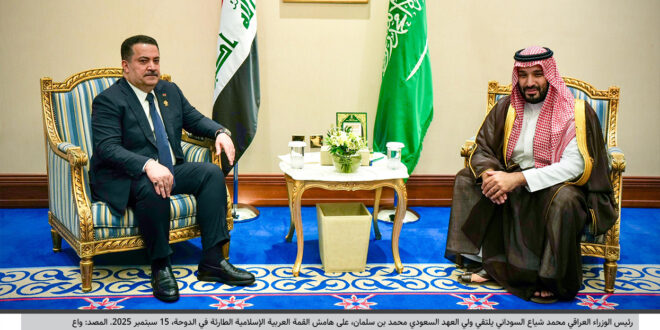
Recent developments in Iraq show that the country is on the cusp of a deep geopolitical and economic transformation, as the recent elections are a focal point for reshaping the balance of regional power. Iraq, with its oil and gas wealth and strategic location linking the Gulf to Turkey and Europe, is gradually becoming a geo-economic competition between Iran and Turkey, the Gulf-American axis and the West. As world powers race to invest in ports, corridors and energy, Iraq’s future remains dependent on its ability to employ this competition in building stability and development.
On November 11, 2025, Iraq held the parliamentary elections, the results of which resulted in the leadership of the Reconstruction and Development Coalition, led by Prime Minister Mohammed Shiaa al-Sudani, with 46 seats. These elections came in the midst of a delicate internal political stage, and in a regional context that is witnessing shifts in the balance of power and in security calculations, which has direct repercussions on the Iraqi scene, the decline of Iran’s influence and axis in the region has given rise to regional projects and new alliances, the most important of which is the Gulf-American alliance, which employs the geo-economic dimensions in drawing geopolitical features, and under this time and data, the Iraqi parliamentary elections are not only considered a constitutional entitlement, but also as determining the future features of Iraq and its position within the regional system that is taking shape.
Results of the parliamentary elections: and the turning point
Although the results of the elections may seem normal in the eyes of most democratic countries, the current situation in Iraq represents a decisive turn and a clear break with its history. The results achieved by the Sudanese electoral coalition should be seen as a high-level political engineering. To reinforce Sudan’s current opportunities, it has good relations with Iran, which Turkey finds a practical leader, and the Arab Gulf states trust it more than previous prime ministers, and most importantly, in the future – if it returns as prime minister – the West will be seen as the first Iraqi leader since 2005, capable of making its decisions without looking with concern to Iran’s allies in Iraq. This is important, as the return of Sudan to a second term does not depend on strength, but on balance, and although the Sudanese do not show optimism for a second term explicitly, but his legitimacy has been derived from his ability – almost impossible – to be an acceptable option for all.
However, despite the fact that his coalition topped the election results, he did not get enough seats to allow him to form the government alone, the forces of the coordination framework maintained their weight within the parliament, and declared itself the largest parliamentary bloc, after the parties within it succeeded in raising their toll of seats compared to the 2021 elections. The State of Law coalition won 29 seats, the Sadiqoun movement of the League of the Righteous won 27 seats, Badr won 21 seats, and the representation of the National State Forces Alliance rose to 18 seats, after winning only four seats in the previous elections.
However, it seems once again that the parliamentary elections have not led to a state of clarity or stability, which indicates that the Iraqi arena is on the verge of a new phase of political polarization, both in the process of forming a government and in the process of selecting the Speaker of the House of Representatives and the President of the Republic. But in the current scene, a fundamental difference emerges from what the previous periods witnessed, represented in the accelerated regional transformation, where the Iranian-backed “axis of resistance”, in which some Iraqi forces are an active party, declined in exchange for a growing rise of the Gulf axis, which deepened its partnership with the United States and expanded its cooperation, especially under the administration of US President Donald Trump, as exemplified by Trump’s Gulf tour to Saudi Arabia, Qatar and the United Arab Emirates in May 2025, and then in the visit of Saudi Crown Prince Mohammed bin Salman to the United States and his meetings with Trump. It has resulted in agreements in areas that go beyond security and politics, and extend to economic and strategic levels that have a direct impact on regional equations.
In contrast to the Iranian axis, which has historically been based on ideological, identity and sovereign considerations, the Gulf-American axis focuses on approaches of a geo-economic nature, foremost of which are energy and investment issues, and this interest puts Iraq in a pivotal position, given its strategic components, starting with its fully developed oil reserves, through its gas resources capable of reducing its dependence on gas imported from Iran, to its geographical location, which gives it a strategic advantage in regional infrastructure projects, where Iraqi ports and land corridors can contribute to redrawing trade routes in the Middle East, thus enhancing Iraq’s importance in the calculations of emerging powers.
At a time when Iraq’s internal political discourse and regionalization have been a challenge for decades, a geopolitical variable has entered the scene, represented by the repercussions of the war on the Gaza Strip, which weakened Iranian influence and undermined the pillars of its expansionist policy in the region. Although the Gulf-American partnership is not a departure from its historical framework, the path it is currently taking carries connotations that cannot be overlooked, as it seeks to strengthen areas of cooperation and regional integration in the fields of energy and investment in the Middle East, while at the same time consolidating the policies of containing Iran, and where this emerging axis will not be limited to the Gulf countries only, but may expand northwards, as it intersects with Iraq with its strategic location and vital resources, and thus Iraq will be one of the most direct influences that will feel the rise of that axis in the near term.
Traditional Axes: The Next Change
Iran views positively the results of the Iraqi parliamentary elections, and its officials have welcomed their conduct and results, and even before the announcement of the official results, the Iranian ambassador to Iraq stated that his country “respects any result it produces,” in fact Tehran seeks to promote its relations with Iraq as an ally and not a follower, where it is content to remain politically and economically dependent. Therefore, Iran has linked its influence in Iraq to a combination of political patronage, support for its agents, and Iraq’s dependence on it for energy, as Iran considers that Iraq’s dependence on it in operating Iranian electricity networks and gas lines is more valuable than ideological rapprochement.
At a time when Sudani showed clear independence, his steps were operational and cautious, while he promised reform and pointed out his areas clearly, he did not seek confrontation. Tehran also sees Baghdad’s engagement with the Gulf states and its openness to Western countries limited, although quiet Iraq has sought a strategic repositioning at the regional level. On this basis, Iran can accept any Iraqi leadership capable of balancing itself without taking full sides with the Gulf and Western countries at its expense, at least for now. But there are indications that change may be coming.
On the other hand, Iran is trying to obstruct Iraq’s efforts to achieve independence in the field of gas, as the exploitation of the associated gas and stopping its burning, the development of the Akaz and Mansouriya fields, and the establishment of a national gas network capable of feeding power plants in Iraq are all clear steps towards reducing one of the most effective tools of Iranian influence. Based on the regional moment in which the talk of curbing Iranian influence has intensified, any Iraqi acceleration in the gas file will be seen by Tehran as a strategic threat.
Turkey, on the other hand, views Iraq from a completely different perspective from Iran; while Iran pursues a strategy of “isolating” Iraq, Turkey seeks to “integrate it.” Turkish influence in northern Iraq is based not on militias or ideology, but on infrastructure, construction companies, security arrangements, and trade. Ankara has also established a near-permanent military presence aimed at keeping the PKK under constant pressure.
The Turkish-Iraqi Development Road project, a huge corridor linking Basra to the Turkish border, is the cornerstone of Ankara’s geo-economic strategy, as it not only views this corridor as an economic project, but also as an integrated network aimed at influencing the Iraqi economy and linking it to the Turkish logistics and industrial system.
The same applies to Iraq’s gas fields, where options for developing reserves in the Akaz, Mansouriya and Khor Moor fields are not only linked to the management of Iraq’s national assets, but also an extension of Turkey’s ambitions to become a regional gas trading hub, enhancing its capabilities to balance Russian, Azerbaijani and Eastern Mediterranean gas supplies. In due course, these resources will be integrated with Iraqi gas. Clearly, the Turkish strategy in this part is incompatible with Iran, and Iraq will have to deal cautiously with the emerging rivalry between the two countries.
Besides competing with Iran, Turkey has been following the recent Gulf-U.S. relationship. Turkish officials now realize that they will face competition with a new axis in northern Iraq, and the rise of the Gulf-American axis could complicate Turkish plans and ambitions for land and sea corridors. At the same time, the large-scale inflow of Gulf capital could direct infrastructure projects southwards, challenging Ankara because it weakens Turkey’s monopoly on Iraqi trade routes. Therefore, the next phase is expected to witness a massive acceleration of the implementation of Turkish projects in Iraq, and Turkey will try to consolidate its military presence in the north, all of which Turkey wants within a bilateral framework with Baghdad, to reduce Iraq’s ability to maneuver.
The rise of the Gulf-American axis
While Iran and Turkey were the traditional axis of influence in Iraq, the rise of a new axis is now taking shape. Where the Gulf states, especially Saudi Arabia and the UAE, have not shown a clear strategy over the last decade toward Iraq, swinging between ignoring it and fearing losing it to Iran, the situation is changing rapidly. Based on assessments in the Arab world, Iraq is seen not only as a buffer zone, but also a frontal frontier, turning Gulf investment into a tool to stabilize the northern strip of the Arab world and reduce Iranian influence. With significant opportunities in petrochemicals, energy, agricultural supply chains and logistics corridors, the Gulf states no longer seek to end Iran’s influence in Iraq, but to control and reduce it through economic tools and capital flows.
As for everyone, Sudani has been an appropriate partner for the Gulf states, taking a delicate balance in welcoming Gulf investments without compromising core Iranian interests, and demonstrating seriousness in his relations with Saudi Arabia and the UAE beyond the framework of review or formal policies. Gulf sovereign wealth funds also viewed it as the ideal partner, with their fund officials appreciating the protection of their projects and ensuring that they are not harmed in their pursuit of economic and political gain in a short time.
If Riyadh and Abu Dhabi continue their broad investment rush in the port, power plants, petrochemical projects and industrial zones sectors, the next decade will see dramatic changes in the investment map, and what can be described as the deeper “economic integration” contract, as it looms large.
The Gulf Arab states consider their advanced relations with the United States and the recent agreements in the fields of investment and economy a strong boost to strengthen their current position. Where the region sees a U.S. administration closely tied with Gulf energy and security interests, it provides political cover for Gulf expansion in Iraq. It can be said that everyone is playing with the same card by entering Iraq under the cover of a unified strategic goal: confronting Iran without risking destabilizing Iraq. Arab leaders now seem to have chosen to build economic influence rather than militias, and analysts should begin to assess a potential situation in which Iraq may become a silent focus of a Gulf-U.S. strategy based on capital rather than military power.
The list of those interested in Iraq, where European countries that have long remained silent, have shown an interest in returning to Iraq with quiet steps, as Europe thirsts for diversification of its sources of hydrocarbons, and Iraq has emerged as an option to replace Russian gas and oil. In the past, energy security has not advanced Europe’s priorities, especially towards Iraq, especially in the face of other threats such as ISIS and Al-Qaeda, so in recent years European oil and gas companies have been cautious about investing in Iraq, as well as their frustration with bureaucracy and delaying security payments and risks. But as cost and geopolitical interest shifts, European interest in Iraqi energy sources is growing, especially as it has become more attractive in light of relative stability, and under a technocrat government interested in Western technical standards.
The administration of US President Donald Trump shows its special interest in Iraq, as the elections provide the opportunity to rearrange and engineer Iraq without owning it, and since Washington does not have the desire to engage intensively in the Iraqi arena, but it has incentives to ensure that Iraq is not dragged deep into the Chinese ark or remain under the control of Iran, in addition to Washington’s monitoring of Turkey’s moves, where it does not want the third option for Iraq to expand its dependence on Ankara, although it does not disclose it publicly. Perhaps the most appropriate U.S. option for Iraq is to return to limited engagement, and focus it on areas that target energy infrastructure, governance, and security cooperation, and do so at the lowest possible cost. The U.S.-Gulf rapprochement is one of the factors that compound U.S. strategic importance and interest in Iraq.
Iraq on the map of geopolitical and economic competition
Each party has a direct or indirect interest in the main resource of Iraq and its most important assets, represented by the energy sector in it. As this sector is the central weakness of Iraq, it is also the most exceptional opportunity for it, especially at a time when Baghdad aims to increase crude oil production from 4.6 million barrels to about 6 million barrels per day by the early 1930s. This goal is still far from being achieved, but it can be achieved if the Iraqi government is ready to set updated contractual terms, while stabilizing the payment of dues and removing bottlenecks in the infrastructure for the transport, storage and processing of energy products.
To achieve all this, it requires Western capital, or Chinese engineering capability in the event of non-interference of Western companies, as well as infrastructure partnerships between Iraq and the Gulf states, and a capacity for political prediction. Without the participation of Western and Gulf countries, high production capacity will fall into the hands of Russian and Chinese companies, which will be able to increase production, but are unable to establish an economically sustainable and secure system for the future.
Political stability remains the key, and the last parliamentary elections may provide the opportunity, and then it will be up to the next prime minister to implement the reforms initiated by Sudan – which is likely to return to a second term – and push it through a system designed to preserve them.
However, natural gas has a more political character than oil, because it is the only area where Iraq’s internal interests conflict with foreign agendas, as Iraq’s gas strategy will achieve independence and break its dependence on Iran by reducing its imports of natural gas and electricity to Iraq. However, further development of natural gas would reduce the fiscal depletion from electricity generation by oil, allow the country to enter regional energy diplomacy as a seller rather than as a buyer, and many European countries would be very interested, as this move would put Baghdad at the heart of emerging gas policies between the Gulf, Turkey and Europe.
Thus, the competition for energy continues, despite all its negative repercussions, as it can be said that every molecule of Iraqi gas that is exploited internally is a molecule that is no longer bought from Iran. In contrast, Turkish influence will increase with each kilometer of pipelines linking it with Iraq, and it is interesting that Gulf funding for Iraqi gas projects will also restore the balance of regional power. If the expected huge quantities of gas are discovered in Iraq, it will make it a real arena of competition, and then Iraq’s foreign relations will be tested for real.
In the future, the infrastructure that is still hidden behind the fog of hydrocarbon and energy policies will play a larger role, and geography will be the main determinant, as ports and corridors with a geopolitical weight similar weight of energy will change logistics services at the regional level, especially after the completion of the construction of the port of FAO and the progress of the development path. Some even go on to assume that these two projects may upset the balance between the Suez Canal, Turkish corridors, and Gulf ports.
In this context, various forces are competing for gains and influence, where the Gulf countries want a share, while Turkey wants control and influence, and China seeks contracts, and the United States is trying to prevent Chinese dominance. In principle, Baghdad wants all of that at once, but its institutional capabilities are still unable to accommodate it. If Sudani or any other prime minister in the future manages a system for managing all oil wells, it will provide Iraq with the competition not only to attract capital, but also to improve the infrastructure the country needs to become a bridge linking Asia to Europe, an ambition that the country has long dreamed of. If the system, policy, and project management approach in Iraq are not rearranged, this mismanagement would turn Iraq’s geography into a theater of competition.
A new era is on the horizon.
In light of the features of the new phase in the region, Iraq should not take the same deadlock, time and environment are different, as the elections resulted in a popular trend that supports achievement and development, and Iraq tested a desirable model for all external parties under the Sudanese government, which was an acceptable leader for the majority of the countries of the Middle East and the world in a rare balance witnessed by the country. Everything depends on the return of Sudan, or if he or any other prime minister is able to use it to create a real strategic space, including strengthening Iraq’s independence from Iranian gas without provoking it, deepening integration with the Gulf states without raising Turkey’s concern, and calling for Western investments without empowering armed factions, and maintaining stability. If all these conditions are met, a contract of pragmatic update may be the future.
However, if Iraq falters, it could once again become the arena where others settle their differences. The Great Game (the term that refers to the rivalry that existed between the Russian Empire and the 19th-century British Empire over Afghanistan and neighboring territories in Central and South Asia) has returned), but this time not based on ideology or identity, but in the interesting and challenging truth at the same time, that it competes for energy molecules, trade routes, ports, and infrastructure, sectors that will determine the future of the Middle East.