 Eurasia Press & News
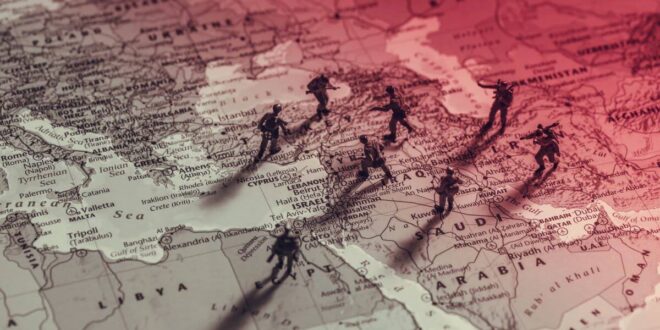
The Stimson Center recently convened a meeting of U.S. regional experts to discuss three scenarios for the Middle East over the next 18 months: a continuation of low-level fighting in Gaza; an “all-hell-breaks-loose” nightmare of increased war and violence; and a “keep-hope-alive” vision entailing a long-term cease fire in Gaza and a plan for physical and political reconstruction. Throughout the discussion it became apparent that some variation of the first scenario is most likely with the second scenario having some plausibility; the third scenario, however, was seen as unlikely by 2026. The meeting was held under the Chatham House Rule to foster an atmosphere conducive to frankness.
Hopes for a sustained cease fire, humanitarian aid, and economic and political reconstruction in Gaza are met with anxieties of increased anger, rage, and hostility in the region. By far the worst possible outcome—scenario two—would be an all-out war with devastating consequences not just for the region, but potentially for the global economy. The best-case scenario imaginable in the short term would be one of increasing Israeli exhaustion coupled with the decimation of most of Hamas leading to a limited compromise with Palestinian and Arab actors, backed by the United States.
Nine months after the Hamas assault on southern Israel on October 7, 2023, the Middle East remains in an extremely volatile, fragile state. The Gaza war continues without resolution, and there are growing threats of an even more devastating conflict breaking out between Israel and Hezbollah in Lebanon. Compounding this situation is the uncertainty over who will win the U.S. presidential and other possible elections in Israel and Iran, growing political and societal divisions in Israel, unstable Palestinian leadership, and domestic restiveness in Iran. As one longtime analyst remarked, “I’ve never seen such an unsettled situation in the region.” The future of the Middle East looks murky indeed.
No Easy Solution
President Joe Biden on May 31 outlined what he claimed was an Israeli proposal for a three-phase roadmap that would begin with a six-week cease-fire, the release of many hostages— including Americans—in return for Palestinian prisoners, and the withdrawal of Israeli forces from “all populated areas” of Gaza. However, Israeli Prime Minister Benjamin Netanyahu has waffled about the plan in public, and Hamas has raised concerns over how Israeli compliance can be guaranteed. A “day-after” paper on what to do with Gaza, reportedly circulating within the Israeli government, advises against setting a departure date. Israel should not promise Palestinian statehood, but rather make Gaza into an autonomous Palestinian entity under Israeli tutelage. The paper does acknowledge that there will be a need for Hamas’ middle managers to stay in place to provide services.
The consensus among the experts was that Netanyahu would not accept any plan that constricted Israel’s ability to continue to go after Hamas. One expert referred to the “Westbankification” of Gaza, cutting the enclave into tiny pieces where humanitarian aid could be delivered but Palestinians would not gain any political agency.
The Netanyahu government has rejected a role for Hamas or the Palestinian Authority (PA)—the Biden administration’s preferred candidate—in the future administration of Gaza. Led by an 88-year-old man, Mahmoud Abbas, who has not faced an election since 2005, the PA has long been unpopular in the West Bank, where it ostensibly has administrative control. The Authority is increasingly losing viability as the hard-right Israeli finance minister Bezalel Smotrich has refused to transfer taxes that Israel collects on behalf of the PA to pay Palestinian salaries. Palestinian workers who used to be allowed to enter Israel remain blocked from doing so, and Israeli militants backed by the Israeli army and police continue to attack West Bank residents and seize land for future settlements.
Despite these challenges, Palestinians are attempting to renovate the PA, according to one of the experts, meeting recently in Ramallah to discuss the formation of a national unity government that would include individuals close to but not members of Hamas. “The peace camps on both sides are suppressed now but that can change,” the expert said.
Israeli cooperation with the PA would, however, require a new government in Jerusalem. Despite criticism from the center-right and an overstretched military, Netanyahu continues to rely on the support of a majority 65-member bloc in the Knesset. He has an added personal incentive to stay in power: new elections that removed him from power could send him to jail on pending corruption charges.
Many of the experts said Netanyahu, who recently complained in public that the Biden administration had withheld some arms shipments to Israel because of the high civilian death toll in Gaza, is playing for time in anticipation of Biden’s potentially losing the November 5 presidential election. Should Donald Trump, the presumptive Republican nominee, win the election, he is expected to be even more supportive of Israel than Biden; Robert O’Brien, Trump’s last national security advisor and a potential secretary of state, wrote recently in Foreign Affairs that “the United States should continue to back Israel as it seeks to eliminate Hamas in Gaza,” that “long-term governance and status of the territory are not for Washington to dictate . . . [and] Washington should not pressure Israel to return to negotiations over a long-term solution to the broader conflict with the Palestinians.” Instead, O’Brien wrote, the U.S. should focus on increasing pressure on Iran.
Iran, in the view of the experts, is benefiting from the continuation of the Gaza war, which has isolated Israel internationally and increased anger at the U.S. in Arab and Muslim countries and the wider Global South. Iran is also advancing its nuclear program, installing more centrifuges in its most protected underground site. And Tehran continues close consultation with the “Axis of Resistance”— Arab militias that have proved more potent adversaries of the United States and Israel than many conventional armies.
Limited External Influence on Israel
The U.S. remains the main mediator in the war; other major world powers, such as China, have been active but mostly performative and have even less clout with Israel than the U.S.—and clout is needed to engineer a peace deal. However, the U.S. has also lost credibility, the experts said, with deepening anger and resentment throughout the region owing to Washington’s unconditional support of Israel and seeming inability to bring about a cease-fire. For many in the Global South, the U.S. is seen as hypocritically criticizing Russia for human rights abuses in the Ukraine war while only recently openly criticizing Israel for its devastation of Gaza, including causing a high number of civilian deaths.
Wealthy Arab states that have either normalized relations with Israel, like the United Arab Emirates, or are contemplating normalization, like Saudi Arabia, are “compartmentalizing” the Gaza war, in the words of one expert, focusing on economic development and trying to insulate themselves as best they can from the fallout. Although Riyadh has maintained fragile détente with Iran, it is pursuing a defense agreement with the U.S. that the Saudis may decide does not depend on certain progress toward a Palestinian state.
Poorer countries such as Jordan and Lebanon are more exposed to the fallout and are extremely worried. From their perspective, “all hell has already broken loose,” in the view of one participant. They fear that Israel will seek to drive Palestinians from the West Bank into Jordan and from Gaza into Egypt and that ultranationalist Israelis are coveting even more territory. Indeed, in a recent speech in Paris, Israeli Minister of Finance Smotrich displayed a map that included Jordan and the West Bank as part of “Greater Israel” and said the Palestinian people were “an invention.” Some Israelis are calling for the establishment of new settlements in Gaza, which Israel withdrew from in 2005 and where Hamas seized control from the PA in 2007. And a group called “Wake Up the North” is even urging Israel to seize and colonize southern Lebanon.
Many Uncertainties
“Gray swans”—such as the Iranian Supreme Leader Ali Khamenei and Abbas dying and upcoming or possible elections, not just in the US, but also Israel— which Netanyahu could lose— would impact the near-term and mid-term futures. Iran, which elected a new president on July 5, is facing pressure from a population alienated by the regime’s foreign adventures, domestic repression, crippling economic sanctions, and mismanagement. Prospects for a renewed nuclear agreement with the U.S. and regional de-escalation might improve if the next Iranian administration is pragmatic and Biden wins a second term.
Israel, too, is feeling an economic pinch as its credit rating falls; uncertainty may curb foreign investment, especially in its world-leading tech sector. A growing number of Israeli professionals are also seeking to emigrate. Families of remaining hostages are furious that the government has prioritized completely destroying Hamas—an impossible goal—over saving their relatives. Members of the military are increasingly questioning whether the country can afford a two-front war even as Netanyahu’s Gaza strategy of “total victory” remains unachievable.
Terrorism experts worry that the confrontation is reanimating Sunni jihadist groups throughout the region. ISIS-K, which has already struck in Russia, Turkey, and Iran since October 7, is actively supporting the Palestinian cause, according to one of the experts. Factions within the Taliban are pressing their leaders to jump on board, and extremism is rising in Pakistan, India, Bangladesh, Indonesia, and Malaysia, the expert added. Recently, a group of eight Tajiks with alleged ties to ISIS-K was apprehended after crossing into the U.S. over the Mexico border.
Likelihood of the Different Scenarios
The experts concluded that by far the worst possible outcome—scenario two—would be an all-out war with devastating consequences not just for the region, but potentially for the global economy. The best-case scenario imaginable in the short term would be one of increasing Israeli exhaustion coupled with the decimation of most of Hamas leading to a limited compromise with Palestinian and Arab actors, backed by the United States. Some experts are concerned that a heightened military conflict with Hezbollah—if short of an all-out war—plus an uprising in the West Bank and a new wave of global terrorism might overtake this best-case scenario, catapulting the region into the worst-case of all-out war. In addition, a move by Israel toward annexation of Gaza or the West Bank—whether de facto or de jure—could jeopardize its peace treaties with Egypt and Jordan and increase the risks of a regional conflict. An all-out conflict could make the U.S. military presence in Iraq and Syria unsustainable. Although there are few viable alternatives evident to an eventual two-state solution, it is difficult to envision the anger, rage, and horror on both sides subsiding and a modicum of trust being rebuilt in the foreseeable future. The best that can be obtained in the short and medium term would be a Gaza cease-fire, massive humanitarian aid, and initial steps toward economic and political reconstruction under combined Arab and Palestinian leadership. Even those preliminary advances were viewed by the experts as problematic for the 2026 time frame. The ambitious “day-after” plans floated by some for a two-state solution backed by wealthy Arab countries and the Biden administration will be eclipsed by the need to sustain a cease-fire, tend to the urgent humanitarian plight of Gazans, and allow time for Israeli society to recover from the trauma of October 7.