 Eurasia Press & News
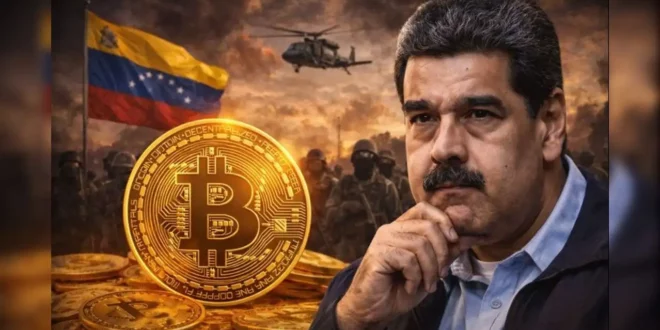
On January 3, 2026, US special forces captured Venezuelan President Nicolás Maduro and his wife, significantly influencing Venezuela’s political dynamics.
On January 3, 2026, US special forces carried out a high-profile operation in Caracas, capturing Venezuelan President Nicolás Maduro and his wife, Cilia Flores, on charges of narco-terrorism, drug trafficking, and corruption. The operation, reportedly codenamed Operation Absolute Resolve, dramatically altered Venezuela’s political landscape and reignited long-running speculation about the regime’s covert financial strategies.
Among the most controversial claims is the allegation that Maduro’s government converted state assets into Bitcoin to bypass international sanctions. Some estimates suggest the regime built a “shadow reserve” of nearly 600,000 BTC, valued at roughly $56–60 billion as of early January 2026. However, these figures remain speculative, based on intelligence estimates and extrapolations rather than verifiable blockchain evidence.
Official trackers have historically reported far smaller holdings for Venezuela, highlighting a sharp gap between confirmed data and the more sensational claims. This has fueled debate over whether the Bitcoin narrative reflects a calculated sanctions-evasion strategy or an exaggerated myth amplified by geopolitical drama.
Sanctions Pressure and the Turn to Crypto
Venezuela’s shift toward cryptocurrencies began as US sanctions intensified from 2017 onward, targeting the Maduro regime over corruption, disputed elections, and human rights concerns. By 2019, sanctions extended to PDVSA, the state-owned oil company, effectively cutting it off from the global banking system and freezing billions of dollars in assets.
Facing isolation, Venezuela explored alternatives similar to those used by other sanctioned states. Crypto adoption accelerated, driven by hyperinflation and the collapse of traditional payment systems. By the mid-2020s, Venezuela ranked among the world’s top countries for cryptocurrency usage, with large transaction volumes reflecting both necessity and experimentation.
The government’s first major initiative was the Petro, a state-backed digital token launched in 2018 and tied to oil reserves. The project struggled due to international bans and credibility issues. Later, PDVSA increasingly turned to dollar-pegged stablecoins for oil trade, allowing transactions outside frozen banking channels.
Gold Sales and Alleged Bitcoin Purchases
A central element of the “shadow reserve” theory involves Venezuela’s gold exports. Between 2018 and 2020, the government reportedly sold large quantities of gold from the Orinoco Mining Arc to raise hard currency during the economic collapse.
Some analysts speculate that proceeds from these sales were used to buy Bitcoin at relatively low prices, potentially resulting in hundreds of thousands of BTC. While the gold exports themselves are documented, no direct on-chain evidence has emerged linking these sales to large-scale Bitcoin accumulation.
Key intermediaries are alleged to have facilitated such deals through overseas networks, but these claims remain unproven and are contested by blockchain analysts.
Oil Revenues, Stablecoins, and BTC Swaps
PDVSA’s use of stablecoins for oil payments is a confirmed practice. By the mid-2020s, a large share of oil revenues reportedly flowed through these digital channels.
Speculation suggests that some of these stablecoins were later swapped into Bitcoin to reduce the risk of account freezes. A corruption probe in 2023 revealed billions of dollars in missing funds, underscoring the opacity and governance risks surrounding these mechanisms.
Bitcoin Mining and Power Constraints
Venezuela’s access to cheap hydroelectric power from the Guri Dam once made it an attractive destination for Bitcoin mining. The government initially encouraged mining activity, but widespread power outages and grid instability later triggered crackdowns.
By 2024, authorities had seized equipment and disconnected tens of thousands of miners. While military-linked operations were rumored to have mined Bitcoin, chronic infrastructure problems limited the scale and sustainability of such efforts.
Weighing the Claims After Maduro’s Capture
Combining estimates from gold sales, oil revenues, and mining yields the headline figure of roughly 600,000 BTC. Yet critics emphasize the lack of verifiable blockchain data and warn that such holdings, if they exist, may be scattered across inaccessible wallets.
Following Maduro’s capture, US authorities reportedly began probing potential asset seizures. Any attempt to access crypto holdings would hinge on control of private keys, reinforcing the principle that without keys, ownership is meaningless.
Bitcoin prices briefly surged on speculation surrounding these claims, reflecting market sensitivity to supply narratives. Whether Venezuela truly amassed a vast Bitcoin reserve or not, the episode highlights both the appeal of crypto for sanctioned regimes and the risks of secrecy, corruption, and unverifiable power.