 Eurasia Press & News
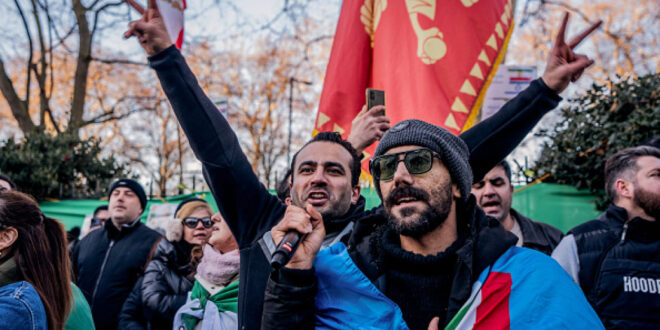
Nightly protests continued across several Iranian cities as authorities reported no official toll, while Donald Trump warned Tehran against using force.
Nightly protests continued across several Iranian cities on Sunday, while US President Donald Trump renewed warnings against the use of force and Iranian officials delivered mixed messages on how to respond to the unrest.
Videos circulating on social media showed protest gatherings taking place on Sunday night in several cities, marking the eighth consecutive night of demonstrations.
According to the footage and reports by opposition Persian-language media, protests were recorded in Ilam in western Iran, as well as in Mamasani and Zarrin Dasht in Fars province in the south, and in the city of Zarand in the central province.
Iranian authorities have so far not released any official statistics on the number of people killed, wounded, or arrested. However, some opposition media outlets reported that the death toll has reached around 25 people.
Late on Sunday night, footage was published showing protesters attacking an ammunition depot belonging to Iran’s Revolutionary Guard in the city of Malekshahi in Ilam province. Iranian forces opened fire to prevent protesters from entering the site.
The exact number of casualties or injuries remains unclear, though some conservative Telegram channels said the attempt to seize control of the depot had been thwarted.
Trump warns Iranian authorities
In remarks to journalists aboard Air Force One, US President Donald Trump renewed his warning to Iranian authorities against using violence against protesters. “If Iran wants to go back to killing people as it did before, it will face a tough response from the United States,” Trump said.
Separately, Iran on Monday accused Israel of seeking to “undermine its national unity” following comments by Israeli Prime Minister Benjamin Netanyahu, who spoke of his country’s solidarity “with the Iranian people’s aspirations for freedom”.
Iranian Foreign Ministry spokesman Esmail Baghaei said that “the Zionist regime is determined to exploit any opportunity to sow division and undermine our national unity, and we must remain vigilant”.
The protests were initially sparked by worsening economic conditions, including soaring inflation, the collapse of the Iranian rial, and rising food prices, before broadening into wider expressions of anger over governance and living standards.
‘Foreign-driven’ protests
While Iranian authorities have portrayed the unrest as foreign-driven, opposition media and analysts say the demonstrations reflect long-standing domestic grievances that have periodically erupted across the country in recent years.
Inside Iran, senior officials offered differing approaches to handling the protests. Iranian parliament speaker Mohammad Baqer Ghalibaf said during a public parliamentary session on Monday that protesters should be engaged through dialogue, stressing that their demands are legitimate and that efforts should focus on restoring economic stability.
Ghalibaf said separating protesters from rioters and those seeking chaos “constitutes an essential and calm step in addressing the situation”, adding that this approach could help ease tensions and provide a proper response to popular demands. He said that “protest must be heard and should form the basis for changes that serve the people’s interests”.
On Sunday, Iranian President Masoud Pezeshkian said during a cabinet meeting that “society cannot be calmed or convinced through coercive methods or improper measures”.
He stressed the need for “continuous, transparent, and honest communication between officials and citizens”, adding that “awareness and transparency play an important role in preventing the escalation of resentment and social tensions”.
Pezeshkian also called on provincial governors to engage with “local notables and influential figures” and to hold dialogue sessions with students inside universities, saying that engagement with society should be based on respect and dialogue.
Iran’s judiciary chief Gholamhossein Mohseni Ejei adopted a harder line, saying on Monday that authorities “will not show any leniency this time toward rioters”.
According to Iranian state television, he said this stance came amid what he described as official support by the United States and Israel for acts of unrest.
Iran has offered no proof of Israeli or any other foreign involvement in the protests.