 Eurasia Press & News
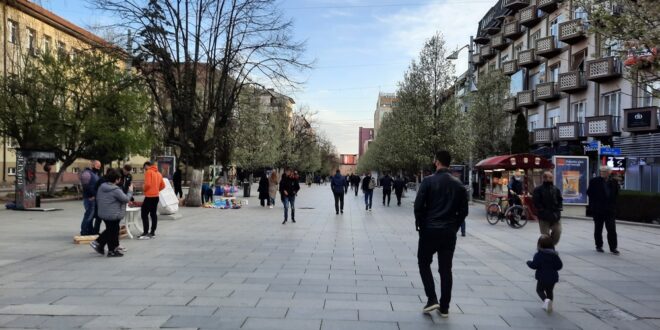
As new early elections approach, scheduled for December 28th, the debate in Kosovo regarding voting rights for the influential and large diaspora is reopening: some are proposing the introduction of reserved seats, along the lines of Croatia
Kosovo’s diaspora abroad is, according to the World Bank 2024 country report, among the largest in the world, numbering between 700,000 and 900,000 people, and it continues to play a crucial role in the country’s economy, particularly through remittances sent to family members.
Those in the diaspora who are citizens of Kosovo also have the right to vote in Kosovo’s elections, both local and national. According to the World Bank, the development impact might be beyond remittances mainly when diaspora communities engage in the local economy through different business channels.
However, when the time comes for them to exercise the right to vote, the political climate inside Kosovo often becomes heated and polarized. What begins with political parties soon moves to television studios where the debate focuses on whether the diaspora should vote at all.
On one side stands the largest political party, Vetëvendosje, which receives the most support from diaspora voters. On the other are political parties that, while working to strengthen their bases in major cities, criticize Vetëvendosje for what they describe as the strumentalization of Kosovars living abroad.
However, is the debate over the diaspora’s legitimacy and right to vote the only option left, or are there other alternatives that could contribute to a fair representation of the diaspora’s needs in parliament?
Enver Robelli, foreign policy editor for the Swiss newspaper Tages-Anzeiger, suggests that Kosovo follow the Croatian model, which gives three to six parliamentary seats to the diaspora, ensuring their voice is well represented.
“The diaspora has its own specific problems. These problems need to be articulated within the Parliament of Kosovo and other relevant institutions. I believe this is best achieved if the diaspora, as in the case of Croatia, is declared a special electoral district, allowing people with voting rights to elect three to five representatives of the diaspora to the Parliament of Kosovo. These MPs would then focus on addressing the specific needs of the diaspora,” Robelli told OBCT.
Currently, diaspora voting is regulated by Kosovo’s Law on General Elections, adopted by the Assembly in 2023. Article 96 specifically outlines the special registration process for diaspora voters.
There are three ways to vote in parliamentary elections: voting in person at a diplomatic mission, voting by mail, or submitting ballots through postal boxes provided by the Central Election Commission at embassies and consulates abroad.
Compared to the size of Kosovo’s diaspora, the number of registered voters remains relatively low, around 77,000. Of these, only 19,260 registered to vote in person at diplomatic missions, while the remainder opted to vote by mail.
“The registration of fewer than 80,000 voters shows that the diaspora is not as obsessed with politics in Kosovo. If around 500,000 Kosovo citizens with voting rights live in the German-speaking countries, this means that only about 15 to 16 percent of them have expressed interest in participating in the elections,” Robelli added.
CEC spokesperson Valmir Elezi told OBCT that under both voting options, diaspora voters do not cast their ballots on election day itself.
“Voting at diplomatic missions is organized one day before the election day in Kosovo. Meanwhile, for voting by mail, the Central Election Commission sets the voting period, with the final deadline on the day before the elections in Kosovo,” Elezi said.
A request by the Vetëvendosje Movement, which was adopted as a decision by the commission to seek additional polling spaces for diaspora voting outside embassies, was later overturned by the Supreme Court following an appeal by the Democratic League of Kosovo (LDK).
LDK argued that the measure could open the door to manipulation of diaspora votes. The issue became a problematic topic during the pre-campaign period, once again fueling accusations and counter accusations over which political actors care more about the diaspora.
Besa Luzha, a professor of art at the University of Prishtina and political analyst in Kosovo, agrees that the country must seek voting models that work better for the diaspora. Referring to examples such as Croatia, Italy, and France, she says that reform could help reduce further polarization, while recognizing something like emotional voting among the people in diaspora.
“A part of diaspora voters who do not live in Kosovo base their support on emotional considerations and focus on certain issues, while those who live in Kosovo focus on the lack of quality services in education, healthcare, and social welfare, shortcomings the diaspora does not experience. As a result, for those living in Kosovo, it often seems that the diaspora’s assessment is purely emotional and does not take into account their real, everyday difficulties,” Luzha told OBCT.
Sources close to the processes explain that for any change to happen, political parties need to agree for an electoral reform which will then open the discussion to designate the diaspora with their parliamentarian seats.
Being out of parliament for almost a year, this is a discussion political parties haven’t made yet. For the coming elections, scheduled for the 28 December, the Kosovo Electoral Commission has prepared for diaspora voting to take place at Kosovo’s diplomatic representations in 24 countries, mostly in Europe, but also in the United States, Canada and Japan.
In parallel, to facilitate voting by mail, postal ballot boxes are operational in 23 countries, marking the final stage of preparations for diaspora participation in the upcoming vote.