 Eurasia Press & News
Introduction
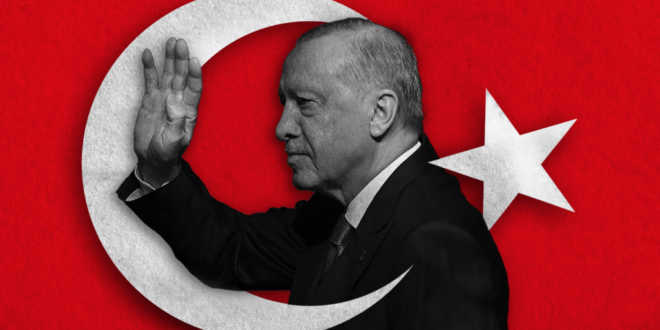
It’s the strongman’s dilemma. When one leaves power — one way or another — does one pave the way for a successor? With an aging leader, Turkey may have to face that question sooner rather than later.
There is no official confirmation, but sources allege that Turkish President Recep Tayyip Erdogan, 71, is in poor health. This is now common knowledge. Pro-government media and official “counter-disinformation agencies” have nevertheless branded the reports of poor health as “insults” to the president. And in Erdogan’s Turkey, insults are punished with jail time.1
This is not the first time Turkish media have called attention to the longtime leader’s well-being. During the hotly contested 2023 presidential campaign, Erdogan fell ill during a live-broadcast interview and later missed several planned public appearances due to what he deemed “serious stomach flu.”2 Rumors swirled about more serious conditions.
Erdogan bounced back and has shown no signs of stepping aside after nearly 23 years in power. He has led Turkey continuously since March 2003 — first as prime minister (2003-2014) and then as president (2014-present).3 He is by far the country’s longest-serving leader, surpassing even the 15-year tenure of the founder of the modern Turkish state, Mustafa Kemal Ataturk, who held the reins from 1923 to 1938. Now, in the third decade of Erdogan’s rule, many Turkish observers — even the pro-Erdogan Daily Sabah website — question how long he will remain.4
While Erdogan remarked in May 2025 that he had “no interest in being reelected or running for office again,” there is speculation about a fresh round of constitutional changes that would allow him to do so.5 Additionally, Erdogan has been inconsistent about his electoral future. In January 2024, Erdogan suggested he might run again if “our nation wants it.”6 Supporters, such as the deputy chair of Erdogan’s Justice and Development Party (AKP), Mustafa Elitas, declared, “We want to continue under our leader until death.”7
Erdogan has been able to retain power because of his drastic changes to Turkey’s constitution and political system. His capture of the Turkish executive began with a 2007 constitutional referendum on a proposal to elect Turkey’s president directly, in place of appointment by parliament.8 This set Erdogan up to secure a popular-vote victory in the 2014 presidential elections, enabling him to take up the presidency after his premiership ended. At the time, the prime minister continued to wield the most formal executive power. Yet in 2017, Erdogan arranged another referendum, consolidating the Turkish executive into a presidential government (with a theoretically strict but highly manipulable two-term limit). This appeared to reset the system for Erdogan. He went on to win successive (and increasingly slim) victories in 2018 and 2023. If he were to run again in 2028, it would mark his fourth real presidential bid — something prohibited under Turkey’s current constitution, notwithstanding the referendum’s legal ambiguity.
During Erdogan’s September 2025 visit to the White House, a hot mic exchange between two Turkish journalists appeared to reveal details of an emerging leadership contest for Turkey’s post-Erdogan era. Now fired NTV reporter Huseyin Gunay said that the United States was “playing to [Foreign Minister] Hakan Fidan” in talks over fighter jet engine procurement and that “there’s a fight going on inside [the leadership] between Bilal [Erdogan, the president’s son], Hakan Fidan, and the son-in-law [Selcuk Bayraktar]” to succeed Erdogan.9 If true, a high-level power struggle has erupted in Erdogan’s most trusted circle. The AKP might experience internal chaos ahead of choosing Turkey’s next leader.
This memo examines the legal and political framework governing Turkey’s presidential succession. It explores how Erdogan might seek to retain power despite nominal constitutional limits. It then considers several figures who could plausibly succeed him should he leave office in the next two years. Finally, this memo evaluates the candidates’ respective strengths and weaknesses. Instead of hard predictions on who Turkey’s next president will be or when the transition might occur, this memo explains the dynamics that will shape that eventual outcome.
Turkey’s presidential succession will likely come down to a few key questions. Who will Erdogan choose as his favored successor? To what extent is Erdogan willing and able to silence his most serious challengers in the opposition? How will a candidate’s government experience, command of the media, popular support, and proximity to the current president affect them? This memo attempts to answer these questions while leaving room for the unexpected turns that two more years of Erdogan’s presidency may hold.
Scenario 1: Erdogan Remains in Power Past 2028
If Erdogan chooses to stay in power, he will almost certainly seek to legally justify the way he goes about it to preserve his legitimacy. The Turkish public has elected its leaders with relative regularity since 1950, and a brazen attempt to seize power without a legitimate vote is unlikely. Erdogan currently holds four legal (and quasi-legal) cards to play should he desire to remain in power past his scheduled retirement in 2028.
First, he can amend the Turkish Constitution, as he did in 2007 and 2017, to revise or abolish the term limit provision and allow for another presidential bid. Amending the Turkish Constitution of 1982 requires broad approval in the Turkish parliament (the Grand National Assembly of Turkey) pursuant to Article 175 of the Turkish Constitution.
Article 175 requires that an amendment “be proposed in writing by at least one-third” of the legislature.10 That means at least 200 members of parliament must sign on before it can even enter debate. Two rounds of debate are then followed by a vote, requiring a three-fifths majority (360 MPs minimum) to send an amendment to the president’s desk.11 The AKP currently holds 272 seats, while its allies — the Islamists and ultranationalists of the Nationalist Movement Party (MHP), the New Welfare Party (YRP), and the Free Cause Party (HUDA PAR) — control another 55.12 This puts Erdogan’s coalition 33 votes short of the 360 required (as of December 2025), requiring a deal with opposition members to get anywhere.13
If the amendment passes the three-fifths threshold, the president can then issue “a referendum, if he/she deems it necessary, on laws regarding amendment to the Constitution.”14 From there, Erdogan need only secure a simple majority of the Turkish popular vote.15
While a successful referendum would support Erdogan’s narrative of legal legitimacy, obtaining a simple majority of the country may not be simple. Since 1961, Turkish governments have held seven referendums.16 The most recent, in 2017, allowed Erdogan’s AKP backers and MHP allies to push through a wave of amendments collectively referred to by Anadolu, Turkey’s flagship state media outlet, as the “presidential system.”17 The referendum on all 18 amendments, which passed with a slim majority of 51.4 percent,18 effectively reset the clock on Erdogan’s rule and allowed him to run for reelection in 2018 and 2023.
A second legal method allowing Erdogan to stay in power would be early elections (“election renewal” in the Constitution). Article 116 stipulates that the assembly can set a date for early elections and make a second-term incumbent eligible to run for a third and final term.19 Should he win that vote, Erdogan would be allowed to remain in office until 2033. This option also requires a minimum vote of three-fifths of the assembly to pass.20 Importantly, the constitution does not specify timing. In theory, a snap election just days before the scheduled vote would be sufficient and allow Erdogan to effectively complete his current term before starting another.
The third way for Erdogan to wield Turkey’s constitution to ensure his continued rule is through obstructing elections. Article 101 of the constitution holds that the incumbent president’s term will continue if “elections cannot be completed.”21 The constitution does not provide additional details on what “cannot be completed” means.
Turkey’s Supreme Election Council (Yuksek Secim Kurulu — YSK), the judicial body responsible for establishing election procedures, overseeing elections, and validating their results, is the highest authority on Turkey’s elections. While Erdogan does not directly appoint the YSK’s 11 members — the Court of Cassation and the Council of State do — he maintains broad power over the Turkish judiciary.22 Erdogan has the power to issue presidential decrees, which would allow him to appoint persons of his choosing, to include judicial appointments if necessary.
The fourth — and perhaps most extreme — method at Erdogan’s disposal is to suspend constitutional rights in a national emergency. Article 119 of the Turkish constitution declares that the president can issue a regional or national state of emergency for a period of no more than six months.23 However, the Grand National Assembly can extend a state of emergency for a further four months at a time.24 The four-month extension ceiling does not apply in cases of war,25 and each extension requires a simple majority vote to pass.26
The constitution provides that during a national emergency, presidential executive decrees can regulate “fundamental rights, individual rights and duties” normally immune from executive interference under Article 104.27 Article 15 also provides that these rights and liberties “may be partially or entirely suspended … to the extent required by the exigencies of the situation.”28 Together, these articles indicate that a dire enough national emergency, perhaps a war or widespread civil unrest, could permit Erdogan to revoke constitutional rights. Of those rights and liberties, Article 15 deems only the rights to life, trial in court, freedom of religious and political belief, and the prohibition of ex post facto laws unconditionally inviolable — leaving plenty of other democratic rights up for suspension.29 Accordingly, Erdogan could engineer and declare a state of emergency to suspend other rights and liberties, such as the ability to vote in a public presidential election, with a simple majority in the Turkish legislature. Such a scenario is not unthinkable with growing civil unrest because of Erdogan’s anti-opposition crackdown and Turkey’s skirmishes with Kurdish forces in Syria.
With all of these options in mind, elections will most likely proceed in 2028.
Scenario 2: Erdogan Vacates Office by 2028
Although Erdogan has potential means to remain in power past 2028, he may choose to step down or retire at the end of his term. Or he may be incapacitated and unable to fulfill his presidential duties. As noted above, Erdogan remarked earlier this year that he does not intend to run for office again. If he relinquishes power before the end of his term, it will trigger a snap election. Otherwise, the country will hold a regular election no later than May 2028.
Article 106 of the Turkish constitution dictates that new presidential elections must occur within 45 days of the presidency becoming vacant for any reason.30 Until the new election concludes, the vice president will deputize as president with full executive powers.31 The constitution does not specify a designated line of succession past the vice president nor an explicit order of precedence among executive ministers. If the presidential vacancy and snap election occur more than one year before the next scheduled general election, the winner of the snap election governs only until the scheduled election. However, this does not count as a full term, so the snap winner would remain eligible to run for two full terms.32 If the scheduled general election is less than a year away when a vacancy occurs, the snap election will take its place, rewarding the winner with a full five-year term.
If the presidency becomes vacant during Erdogan’s current term, Vice President Cevdet Yilmaz would immediately assume the presidency for 45 days. Yilmaz would be eligible to pursue a term; however, he is not a major figure in the AKP, and the party would almost certainly put forward a different candidate in the snap election. Unlike in the United States, the office of the vice president in Turkey is not an elected position that puts one in line for the presidency. It is a mostly bureaucratic position that oversees the administrative aspects of the Turkish presidency.
Regardless of whether there is a regular election in 2028 or a snap vote before that time, the AKP would have to devise a process for appointing Erdogan’s successor. At present, it remains unclear how a successor might be designated given the AKP’s lack of primary elections and because more than 20 years have passed without a leadership contest. For its part, the CHP held a formal presidential primary this year — more than three years ahead of the scheduled election — with candidate applications open to those with sponsorship from at least 20 of the party’s MPs.33 The primary took place on March 23 with a nationwide party vote, resulting in Istanbul mayor Ekrem Imamoglu’s nomination. Imamoglu’s preemptive move to challenge Erdogan resulted in his arrest and pretrial imprisonment. He is currently languishing in jail on spurious corruption charges leveled by the state.34
The AKP could follow suit and hold a primary, or it may forgo that option and allow party or coalition leadership to decide on a candidate, just as key figures in the CHP-led Nation Alliance (also known as the Table of Six) nominated Kemal Kilicdaroglu to run against Erdogan in 2023.35 Alternatively, the AKP may follow a diktat from Erdogan on whom his successor will be, although this directive would certainly be formalized through internal party mechanisms.
The leading contenders for the AKP nomination are foreign minister and former intelligence chief Fidan, presidential son-in-law and drone magnate Bayraktar, and Erdogan’s own son, Bilal. In the opposition’s corner, Imamoglu won this year’s primary, yet Mansur Yavas, the mayor of Ankara, is also popular and could replace Imamoglu if he remains in prison and legally barred from running on technicalities. Lastly, the dark horse list consists of Erdogan’s less formidable CHP foes Kilicdaroglu and Ozgur Ozel, and a collection of former Erdogan allies, namely Suleyman Soylu, Abdullah Gul, Ali Babacan, Hulusi Akar, and Ahmet Davutoglu.
Erdogan’s Proteges
Hakan Fidan — Foreig
Hakan Fidan is one of Erdogan’s top confidants and one of the most senior political officials in Turkey, with a long history as a member of the president’s inner circle. Of partial Kurdish origin, Fidan began his career in the military before joining Erdogan’s senior staff.36 Fidan became the chief of Turkey’s National Intelligence Organization (MIT) in 2010, serving for 13 years before becoming Erdogan’s foreign minister in the cabinet reshuffle after the 2023 election.37
Strengths
As early as 2013, CHP spokesman Haluk Koc called Fidan “the most untouchable person in Turkey … [he] cannot be investigated, let alone prosecuted, cannot be pursued, and cannot even be questioned.”38 Erdogan even refers to Fidan as his “jar of secrets,” and opposition outlets argue that Fidan’s knowledge of and leverage over key political figures (owing to his intelligence career) makes him effectively “untouchable.”39 Erdogan refused to fire Fidan from his position as MIT director after the failed 2016 coup attempt despite seemingly major intelligence failures.40 Whether this decision came because Fidan remains highly useful to Erdogan — or poses a powerful threat should Erdogan try to alienate him — is unclear, but in either case, he remains close to the president.
Fidan also exerts considerable influence over foreign and national security policy issues of importance to the Turkish electorate. Fidan is the Turkish government’s primary point of contact with Syria,41 and his efforts to secure a return for the country’s millions of Syrian refugees may strengthen his support base, especially in southeastern Turkey, which has been inundated with Syrian refugees. Fidan’s public image may benefit should the Kurdistan Workers’ Party (PKK) disarmament process succeed, particularly if he manages to deepen coordination with the Iraqi government in place of Turkey’s longstanding unilateral military intervention there.
Turkish attempts to expand influence in Damascus will likely also benefit Fidan’s public image in both countries, at least among the AKP in Turkey and supporters of Syrian President Ahmad al-Sharaa.42 Fidan’s management of Syria-Turkey relations may generate a public perception of the foreign minister as a peacemaker and skilled diplomat worthy of managing executive powers.
Weaknesses
Fidan has no experience in Turkish electoral politics. He entered public service through the military and became foreign minister through the Turkish intelligence service. As such, he lacks the domestic policy credentials of potential challengers like Imamoglu. The Turkish opposition also points to Fidan’s past as Turkey’s intelligence head to raise suspicion that he has authoritarian and undemocratic tendencies.43 CHP leader Ozel has criticized Fidan’s self-styling as a “shadowy deep statesman”44 whose powers and activities function outside the law. Opposition outlet Bianet published a leaked sound bite from 2014 in which Fidan allegedly said he would “fabricate a justification for war” and stage a false flag attack to justify an intervention in Syria.45 Finally, Fidan’s tense relationships with senior AKP figures are likely to hinder his presidential ambitions. This friction is especially evident in his relationship with Ibrahim Kalin, Turkey’s current national intelligence chief and another trusted confidant of Erdogan. The two have clashed over key policy issues, including the Kurdish peace process, and Kalin is unlikely to back Fidan as a successor.46
Selcuk Bayraktar — Chairman and CTO of Baykar (AKP-aligned, Age 46)
Selcuk Bayraktar,47 one of Turkey’s most recognized private citizens, is the chairman of Baykar Technology, Turkey’s primary drone manufacturer and defense contractor. Bayraktar rose to leadership in his family’s company in 2007 at the age of 28, becoming chief technology officer (CTO) and project leader for several drone systems.48 Bayraktar has received state honors from Azerbaijan, Ukraine, Kyrgyzstan, and Mali for the Baykar drones successfully deployed in those countries’ conflicts.49 Bayraktar married Erdogan’s youngest daughter, Sumeyye, in 2016.50
Strengths
Bayraktar’s family ties to Erdogan put him in an advantageous position. He is also one of the wealthiest men in Turkey, with a net worth of roughly $1.8 billion as of early 2026.51 As such, he has the means to finance and launch a nationwide presidential campaign. As chairman of Baykar, he is the most prominent individual in Turkey’s defense technology sector and a figure of major importance to Turkish power projection. A frequent recipient of praise in pro-Erdogan Turkish media,52 Bayraktar is often regarded as Turkey’s “unofficial” defense minister given his command of defense technology and his role in shaping Erdogan’s defense policies.53
Persistent economic turmoil — fueled by a chronic currency crisis and rampant inflation (which hit a three-year low of 33 percent in 2025)54 — might convince undecided or middle-ground Turkish voters to prefer a candidate with a reputation for business acumen over a career politician or bureaucrat.55 Bayraktar’s defense company is one of the most profitable in Turkey, having developed the mass-produced TB2 unmanned aerial combat vehicle and the “Kizilelma” unmanned fighter jet. Turkish voters associate Bayraktar with Turkish global influence in defense and diplomacy, especially given Turkey’s boom in military exports and influence in Africa over the last five years.56
Weaknesses
Bayraktar, though highly popular, has not taken part in Turkish politics, especially electoral politics. Moreover, he has not expressed significant interest in holding political office. This lack of political experience might cast some doubt on his readiness to serve as the head of state. He might also struggle to gain AKP support over longtime party politicians. Additionally, Bayraktar may encounter difficulties in securing voter support beyond the AKP due to his close association and family ties with Erdogan. Lastly, Bayraktar’s relatively informal role in Turkish public service might be viewed as a weakness compared to some of Erdogan’s other trusted advisers.
Bilal Erdogan — Businessman and Islamist Organizer (AKP, Age 44)
Necmettin Bilal Erdogan57 is the son of the president, offering him access to Erdogan and his political network. He also stands to inherit the “strongman cult of personality” his father has cultivated.58 Bilal completed most of his post-secondary education in the United States and became involved in Turkey’s commercial and nonprofit sectors after working for the World Bank for several years.59 Among his other positions, Bilal is currently the president of the Science Dissemination Foundation (IYV), an Islamist organization formed in 1951 that sponsors Islamic secondary and university education and is a subsidiary of Istanbul Sabahattin Zaim University (IYV), which has ties to convicted Palestinian Islamic Jihad (PIJ) terrorist Sami al-Arian.60 By early 2026, Bilal began to emerge as the AKP’s preferred candidate to succeed his father. In the waning months of 2025, the president’s son was headlining high-profile events, ingratiating himself with his father’s base as he was promoted by the pro-Erdogan media ecosystem.61
Strengths
Bilal Erdogan’s strongest advantage as a potential presidential candidate is his last name, which makes him immediately recognizable to Turkish voters and, of course, provides him with the favor of his father. Although not an elected or formal political figure, the younger Erdogan wields a broad network in Turkish media, industry, and social institutions that has expanded the influence afforded to him by his birth. This includes strong ties to figures in major organizations like Turkish Airlines and state media provider TRT.62 Bilal also holds a seat on the board of the Turkish Youth Foundation (TUGVA), an influential Islamist NGO whose members have embedded themselves in Erdogan’s government.63 Bilal’s influence is also visible in Turkey’s powerful judiciary, as he has previously directed government courts to censor opposition media and jail critics by opening cases on political insults and technicalities that Turkey’s legal system can easily punish.64 If Bilal faces significant challenges or competition from AKP politicians, particularly those close to his father, he can wield his family’s patronage of the courts as a judicial weapon against them, just as his father did to strike down Imamoglu’s election in 2025.65
Weaknesses
It is highly unlikely that Bilal will be able to garner broad-based support beyond elements of the AKP and the MHP. Since 2013, the Turkish opposition has attacked Bilal for alleged corruption, calling attention to leaked phone transcripts between Bilal and his father, the president, in which they discuss laundering money as part of an Iran sanctions evasion scheme.66 Among the more damning lines in the transcripts is Bilal saying, “We [the Erdogan family] still have 30 million euros that we could not dissolve [launder] yet … with the remaining money we can buy a flat.”67 Turkish journalists and media personalities outside of President Erdogan’s Islamist circle have also raised concerns over Bilal’s role as an Islamist organizer. Under his leadership, TUGVA played a big role in organizing public rallies in support of Hamas.68 These actions would almost certainly alienate secular elements of the electorate and cast him as an extremist. While well-connected, Erdogan lacks the government experience of potential AKP challengers like Fidan or the broader reputation and charisma of Bayraktar. According to Turkish opposition journalists, he too reportedly faces disapproval from MHP leader Devlet Bahceli, whose support Tayyip Erdogan needs to maintain his parliamentary supremacy.69
High-Profile Opposition Challengers
Ekrem Imamoglu — Mayor of Istanbul and 2028 CHP Presidential Nominee (Age 55)
Ekrem Imamoglu, who hails from a conservative family from Turkey’s Black Sea coast, joined the CHP in 2008 after establishing himself as a social democrat and an organizer for Istanbul’s influential sports clubs.70 In 2014, Imamoglu became the mayor of Beylikduzu, one of Istanbul’s 39 districts, and later won election as mayor of all Istanbul following a highly contested, two-round election in 2019.71
Strengths
Imamoglu is popular among the Turkish opposition. Indeed, no other candidate qualified for the CHP primary.72 Four days before the March 23 primary, pro-Erdogan judicial officials arrested Imamoglu on fabricated charges intended to block his candidacy. The Erdogan government’s attempts to silence Imamoglu are a testament to the threat he poses to continued AKP dominance due to his popularity in Istanbul. The city’s 16 million inhabitants comprise roughly one-fifth of the Turkish population.
If Erdogan cannot, or does not, run for the presidency, it is conceivable that domestic and foreign legal pressure will push Turkish authorities to release Imamoglu from jail and prevent the forfeiture of his political rights. Europe’s Parliamentary Assembly of the Council of Europe (PACE) and Congress of Local and Regional Authorities have condemned Imamoglu’s incarceration and called for his release.73 Until now, the European Union (EU) has refrained from criticizing Erdogan’s visible assault on the rule of law in Turkey.74 But that could easily change.
Erdogan was in a similar position in 2002 when existing political bans prevented him from running for office in that year’s November elections. Following the AKP’s landslide victory, EU pressure led Turkey’s courts to remove Erdogan’s ban, allowing him to run for a parliamentary seat in a special election, resulting in his ascent to power in March 2003.75 Renewed EU pressure would likely be matched by public pressure in Turkey. There is little to suggest that Imamoglu’s popularity has waned during his months in prison. Further attempts to decapitate the CHP could turn Turkish opposition voters against the AKP and the government. Major protests erupted in Istanbul in early September after a court declared the CHP’s local congress (leadership council) invalid and appointed AKP-approved caretakers, renewing opposition fervor against Erdogan’s government.76
Weaknesses
The fabricated charges against Imamoglu include corruption, allegations of a forged university diploma (an eligibility requirement for the Turkish presidency), insulting electoral court members, and supporting the PKK.77 The courts’ loyalty to Erdogan and their attacks on CHP leadership indicate they are unlikely to release Imamoglu from prison before the election, making him unable to campaign. Beyond the charges, Imamoglu’s eligibility to run is still contested. The government has pursued various means of banning him, including revoking his degree and pushing for criminal conviction, but that would require finalized judicial rulings and winning every appeal to cement the ban.78 Imamoglu’s ability to campaign effectively for the presidency from prison is slim. His continued incarceration could result in the CHP leadership choosing an alternate candidate for president. CHP member Mansur Yavas, the current mayor of Ankara, would be the most obvious choice.79
Mansur Yavas — Mayor of Ankara (CHP, Age 70)
Mansur Yavas, an Ankara native, runs Turkey’s capital and second-largest city. Yavas served as a lawyer, both in Turkey’s military and in private practice, before becoming mayor of Ankara’s Beypazari District (his home district) in 1999. Yavas won Ankara’s mayoral election in 2019 and has presided over the city since then.80
Strengths
Yavas is a well-known opposition figure who enjoys a similar level of popular support to Imamoglu’s, if not more. Turkish public opinion polling from February 2025, before Imamoglu’s arrest and imprisonment, found Yavas to be respondents’ preferred opposition candidate. He received the support of 28 percent of respondents compared with Imamoglu’s 21 percent.81 Yavas also possesses a reputation as a capable public administrator, having garnered widespread praise for his response to the COVID-19 pandemic in 2020.82 Yavas won reelection in Ankara in 2024 with 60 percent of the vote, nearly double that of his AKP opponent.83 His wide margin of victory in a politically mixed major city — home to more than 5 million people — suggests that Yavas can garner broad public support in Turkey’s metropolitan areas. Yavas could become the CHP’s presidential nominee if Imamoglu remains in prison or is otherwise barred from running. CHP leader Ozel remarked in September 2025 that Yavas is the party’s strongest candidate should the judiciary decisively render Imamoglu unable to run for the presidency.84
Weaknesses
The AKP-led government views Yavas as a serious threat to the party’s post-Erdogan political dominance. In October 2025, government prosecutors began investigating Ankara’s CHP leadership over allegations of corruption that were likely engineered to target Yavas.85 Yavas, while compliant with authorities’ requests for investigation and information, has blasted the allegations as “false information” and a “perception operation” to discredit the CHP.86
Yavas was previously a member of the ultranationalist MHP before joining the CHP, which might weaken enthusiasm among the CHP’s more liberal voters.87 Within the CHP, political disagreements and factionalism may damage the opposition’s chances of securing a victory against the AKP. Pro-Erdogan media commented on an early 2025 disagreement among Yavas, Imamoglu, and Ozel over the party’s intention to declare a nominee three years before the election.88 AKP-aligned press may attempt to exaggerate intra-CHP disagreements to split and weaken the opposition at Yavas’s expense.
Dark Horse Candidates
The five frontrunners identified above constitute the most likely successors to the Turkish presidency should Erdogan leave office, though other prominent names are worth briefly noting.
Suleyman Soylu — Former Interior Minister and AKP Deputy for Istanbul (Age 56)
Suleyman Soylu89 was born in 1969 in Istanbul to a family from Trabzon — an AKP stronghold associated with Erdogan, not far from the president’s hometown of Rize.90 Soylu worked on the Istanbul Stock Exchange until the mid-1990s, when he rose to leadership in Istanbul’s Gaziosmanpasa District and gained patronage from then Prime Minister Tansu Ciller. Soylu later became head of the Democrat Party in 2007 before joining the AKP and pledging fealty to Erdogan in 2012. Soylu almost immediately joined the AKP’s central committee and became Erdogan’s interior minister shortly after the 2016 coup plot, serving for seven years.91
Soylu has demonstrated loyalty to Erdogan, and vice versa. Amid a corruption scandal in 2021, Erdogan defended Soylu against accusations of aiding an underworld boss who fled the country.92 The crime lord at the heart of the scandal, Sedat Peker, released videos in which he claimed Soylu had offered him protection and enabled him to escape the Turkish authorities.93 Given that the scandal was highly publicized and caused significant controversy in AKP circles, Erdogan took some political risk in choosing to support Soylu. Soylu’s position as an AKP deputy in Istanbul, currently the epicenter of Erdogan’s crackdown on CHP leadership, may enable him to become involved in silencing the CHP in the name of “anticorruption.” Soylu also maintains ties with the MHP’s leader, Devlet Bahceli, and could possibly leverage MHP support in an electoral bid should the race become an inter-AKP/People’s Alliance power struggle.94
Soylu attempted to resign twice during his time as interior minister, the latter during the COVID-19 pandemic in 2020. Erdogan rejected his resignations both times.95 Soylu also announced his upcoming “retirement” from politics in early 2025 and claimed he would “fight tirelessly to ensure that Tayyip Erdogan is reelected” for a third term.96 As such, Turkish voters are not likely to imagine Soylu as a serious presidential candidate. Soylu is also known to have poor relations with the Kurdish community, in part owing to strong rhetoric against the PKK and accounts of scathing criticism against Kurdish politicians.97 This may complicate Soylu’s efforts to win conservative Kurds’ votes in a future presidential election.
Abdullah Gul — Former Prime Minister/President of Turkey and AKP Co-Founder (Age 75)
Abdullah Gul is a veteran conservative politician and one of the AKP’s founders, originally from a conservative family from Kayseri.98 Gul’s political career began with a strong adherence to Turkey’s Islamist “National Vision” movement. He joined the now dissolved Welfare Party and won his first MP election in 1991.99 After the Welfare Party and its successor, the Virtue Party, were both dismantled for violating Turkish principles of secularism, Gul worked with Erdogan to establish the AKP in 2001.100 Aside from serving as prime minister for a brief term in 2002-2003, Gul was Turkey’s foreign minister from 2003 to 2007 and subsequently its president from 2007 to 2014.101
Of the potential successors to Erdogan, Gul possesses the most executive leadership experience. Because he is a former head of state, many in the Turkish electorate may consider Gul better qualified than any other potential successor. Gul is (at least in international media) viewed as more aligned with the AKP’s earlier balance of pro-Western democracy and Islamism.102 This balance might gain him favor with pro-AKP moderates.103
Gul’s primary weakness is his distance from power since leaving the presidency 11 years ago. In 2018, he backed down from a rerun bid after then Minister of Defense Hulusi Akar and national intelligence chief Ibrahim Kalin paid him a home visit, clearly warning him against the idea.104 Gul also has a history of disputes with Erdogan, the two having clashed over the latter’s crackdowns on free speech and assembly during and after the Gezi Park protests.105 The friction continued through 2019, with rumors that Gul planned to start a conservative anti-Erdogan political bloc.106 Gul faced fierce backlash from Turkey’s secular electorate for Islamist tendencies during his presidency.107 The opposition’s growing frustration with Islamism under Erdogan’s rule may make the liberal vote harder to be persuaded in favor of a “compromise” candidate.
Ozgur Ozel — Leader of the CHP (Age 51)
Ozgur Ozel is the CHP’s leader, taking up the mantle after Kemal Kilicdaroglu’s presidential defeat in the 2023 election. Born in Manisa, near Turkey’s liberal-stronghold west coast, Ozel was a pharmacist before entering politics in 2009 as an unsuccessful mayoral candidate for his home city.108 Ozel secured an MP seat in 2011 and focused heavily on social welfare and accountability — including investigations into a mining disaster in 2014 — throughout his parliamentary career.109 In November 2023, the CHP voted for Ozel to replace Kemal Kilicdaroglu as the CHP’s leader.110
Ozel is popular within his party’s leadership, and he has rallied the Turkish opposition against Erdogan’s attempts to smear the CHP’s most likely nominees. However, Ozel is considerably less popular among CHP’s rank and file than Imamoglu and Yavas. Turkish polling from February 2025 found that Ozel significantly trailed the CHP’s two high-profile mayors as a presidential pick — only 4 percent of respondents wrote in Ozel’s name.111 Still, polling from September 2025 showed Ozel winning in a potential presidential matchup against Erdogan by 4.6 percent of the vote. While still successful, it was the smallest victory margin of the CHP’s “big three.”112
Ozel has repeatedly refused to join the presidential race. In July, he said on national television that he would not take up the CHP nomination even if Imamoglu cannot run.113 Ozel’s reluctance may push Yavas forward as the alternative.
Kemal Kilicdaroglu — Former Leader of the CHP and 2023 Presidential Nominee (Age 77)
Kemal Kilicdaroglu is among the oldest of Turkey’s prominent politicians, born in Turkey’s eastern interior Tunceli province in 1948.114 After working as an accountant through the 1980s, Kilicdaroglu became Turkey’s Social Security general director in 1992. It was in that role that Erdogan first criticized him, targeting the agency in his political rallies.115 Kilicdaroglu joined the CHP in 2002 and won a seat in parliament. He became CHP leader in 2010 and held the position for 13 years until his loss to Erdogan in the 2023 presidential election by a margin of more than 2 million votes.116
Since that election, Kilicdaroglu has become something of a pariah within the CHP. He has been seen to be Erdogan’s preferred replacement as party leader.117 Such a prospect led many in the CHP, particularly the broad voter base loyal to Ozel and Imamoglu, to view Kilicdaroglu as an AKP collaborator.118
Ahmet Davutoglu — Leader of the Future Party and Former Prime Minister and Foreign Minister (Age 66)
Ahmet Davutoglu is a former political partner of Erdogan, having served as his foreign minister from 2009 to 2014 and then as prime minister from 2014 to 2016.119 Born in 1959 in Konya, one of Turkey’s most religious and conservative provinces, Davutoglu originally taught political science as a professor in Malaysia and Istanbul before becoming Erdogan’s foreign policy adviser in 2003.120 Davutoglu became the AKP’s leader upon assuming the premiership during Erdogan’s first presidential term, before falling out with Erdogan and leaving his post in May 2016.121 Davutoglu left the AKP in 2019 and established the right-wing opposition Future Party later that year.122
Although his experience and current engagement in Turkish politics give him some gravitas, Davutoglu still faces several challenges on both sides of Turkey’s political aisle. Davutoglu styles himself an experienced leader who is not afraid to challenge Erdogan, but he lacks the popular base to become a serious contender for the Turkish presidency. Turkish and international media have called attention to liberal criticisms of his Ottomanist foreign policy view, which entails a belief in Turkish supremacy and domination over the Turkish Empire’s former territories first espoused in his 2001 book, Strategic Depth: Turkey’s International Position. Liberals have similarly expressed skepticism over his longtime involvement in Erdogan’s political machine.123 Additionally, Davutoglu’s falling out with Erdogan has alienated him from the AKP base. While Davutoglu may attempt to wield some conservative and Islamist support through the Future Party’s involvement in the right-wing New Path parliamentary bloc, his estrangement from the AKP will likely render him an outsider candidate.124
Ali Babacan — Leader of the Democracy and Progress Party (DEVA) and Former Economic and Foreign Minister (Age 58)
Ali Babacan, another Ankara native, is a founding member of the AKP who joined Erdogan’s political bloc after a private-sector consulting career.125 While part of the AKP’s Central Executive Committee, Babacan served as Turkey’s economy minister, foreign minister, and chief negotiator with the European Union.126 Like Davutoglu, Babacan is a former Erdogan loyalist who has since splintered from the AKP into Turkey’s right-wing opposition. Following his break from the AKP, in 2020, Babacan established the DEVA Party (Democracy and Progress Party), as an attempt to recapture national significance as the face of the New Path political bloc.127
However, in doing so, Babacan, too, fell into the conservative anti-AKP electoral trap. He left the Erdogan camp and the AKP in 2019, yet the right-wing opposition movement has failed to gain the critical mass needed to meaningfully challenge the ruling party.128 Even if recent rumors from pro-Erdogan media are true — that Babacan plans to shut down the DEVA Party and rejoin the AKP — the former economic minister faces the “disloyalty problem” of having betrayed Erdogan’s trust and leaving the mother party.129 Regardless of whether Babacan plans to reconcile with the AKP, he lacks the momentum to pose a threat to Erdogan’s inner circle and has no leverage with opposition liberals. DEVA has struggled to gain meaningful traction with the electorate, and Babacan’s efforts have been further undermined by the defection of his party’s own parliamentarians to the AKP.130
Hulusi Akar — Former Defense Minister (AKP, Age 73)
Hulusi Akar is a career military officer who served as Erdogan’s defense minister from 2018 to 2023. Originally from Kayseri, Akar graduated from the Turkish Military Academy in 1972, only a year after Turkey’s second military coup.131 Akar worked closely with NATO forces in southern Europe and the Balkans during his career and took part in NATO’s interventions in Bosnia and Kosovo.132 Akar claimed he was taken hostage during the 2016 coup attempt while he was chief of the general staff of the Turkish Armed Forces (TSK).133
While Akar was once a viable presidential candidate during his time as defense minister, he is now unlikely to succeed Erdogan.134 Akar lacks the popular base to feasibly challenge other, more powerful Erdogan-aligned AKP presidential hopefuls. As a soldier, Akar’s career has never been predicated upon securing popular recognition or a loyal political base. Another strike against Akar is that he no longer enjoys the political status and proximity to Erdogan that he had while serving as defense minister. Following the 2023 general election, Erdogan replaced Akar with current Defense Minister Yasar Guler in a major cabinet shuffle.135
Conclusion
There is no reliable way to predict who will succeed Erdogan, nor whether that transition will occur through a democratic process. Much will depend on the circumstances of Erdogan’s departure from office.
What awaits Turkey following Erdogan’s tenure may be a descent into entrenched autocracy. Erdogan’s rule has wrecked the country’s democratic institutions and rule of law. While the constitution lays out procedures for presidential succession, there is no guarantee these procedures will be followed. Indeed, it is difficult to define Turkey as a country where the rule of law exists.136
It is possible that Turkey’s next leader will take office without a legal or electoral mandate for doing so. The country’s security forces may subordinate their constitutional responsibilities to the preferences of Erdogan and his successor. Erdogan may be sufficiently determined to install his son Bilal as president that he shreds the constitution. This is not an extreme scenario, but rather a strong possibility. If not Bilal, other leading figures in Erdogan’s immediate circle, including Hakan Fidan, could pursue similar strategies. Holding onto power is an existential priority for all elites close to Erdogan’s orbit.
And yet, individuals with close ties to the Justice and Development Party or to Erdogan’s own family will face the steepest odds of taking power through elections for two reasons:
As of late 2025, public confidence in both Erdogan and the AKP’s management of Turkey and its economy has sunk to historic lows. After almost 23 years in power — marked by rampant inflation, entrenched corruption, and the erosion of the rule of law — many Turks are eager to turn the page. Frustration with Erdogan’s erosion of democracy, while not enough to unseat him in 2023, has grown with the president’s latest bid to destroy the CHP as an effective opposition party. Hundreds of thousands gathered across Turkey following Imamoglu’s arrest in March 2025 despite a protest ban and fierce suppression by the police.137 Istanbul erupted in chaos after the judiciary moved to purge the city’s CHP leadership in September.138 CHP politicians and supporters even barricaded the party’s Istanbul office to prevent Erdogan from installing hand-picked opposition leader Gursel Tekin.139 It is difficult to imagine public appetite for another leader drawn from Erdogan’s family or party inner circle.
Moreover, AKP elites and Erdogan family members appear to underestimate the importance of public trust and voter confidence — qualities that opposition figures such as Imamoglu and Yavas have and the current ruling clique does not. Erdogan’s latest moves against the CHP, weaponizing the courts to systematically decapitate the party, and the response of charismatic leaders like Ozel, exemplify this. During the CHP’s September crisis, Ozel remarked, “We are facing an authoritarian regime, and the only option is resistance,” and anti-Erdogan demonstrators mobilized vigorously to answer his call.140
Still, public trust and voter confidence will matter only if Erdogan’s successor is chosen through genuinely democratic means. Erdogan may very well go the route of propping up an effective one-party state, a playbook that Ozel rightly notes would make Turkey like Vladimir Putin’s Russia.141
Also complicating the perpetuation of the “Erdogan System” are the growing signs of competition, perhaps even infighting, within Erdogan’s inner circle for the future of the populist-Islamist movement. Turkish political scientist Nurettin Kalkan remarked in November that supporters of Fidan, Bilal Erdogan, and Bayraktar are “trying to build their own loyalty regimes and secure the economic ammunition necessary” to fight for the 2028 AKP candidacy.142 Given the proximity each of these figures has to Erdogan — whether as family or as a political ally — it is increasingly likely they will clash.
If Erdogan were to pass power to his son Bilal, it would effectively resolve the regime’s succession dilemma for at least another decade, shielding the Erdogan family from political investigations that could expose crimes and corruption. The pivotal question is whether Bahceli and the MHP would accept such a dynastic transfer of power. Given the coalition numbers, absent MHP backing, Erdogan’s succession strategy would face serious constraints.
It is also possible that Erdogan’s crackdowns and growing public outrage may coalesce into widespread civil unrest and threaten the survival of the AKP regime. While the Turkish president’s bid to silence all threats insulates his allies from serious competition for now, the risk of pushing Turkey’s electorate past a breaking point is growing. It is unclear how much longer Turkish citizens will tolerate Erdogan’s systematic dismantlement of democracy and how much more Erdogan can do to eliminate the opposition before risking overthrow.
If, in his last two years in office, Erdogan does little to correct course, his successor may very well bear the brunt of Turkish civil unrest should he choose to perpetuate the current president’s authoritarian brand of populist Islamism without Erdogan’s popularity. The legacy Erdogan bequeaths to his successors is one of overseas aggression, domestic demagoguery, and the flouting of democratic institutions. Whether to perpetuate that legacy is the choice Erdogan’s successor will face.
Candidates like Fidan and Bayraktar might choose to alter some characteristics of Erdogan’s presidency, most likely the brazen disregard for institutions and law, while keeping its other hallmarks intact. On the other hand, the opposition is more concretely poised to dismantle Erdogan’s legacy and set out on a mission to return society to secular-liberal ideals and a firm belief in Turkey’s democratic commitments at home and abroad. Whoever leads Turkey next will decide which path the country takes.