Eurasia Press & News
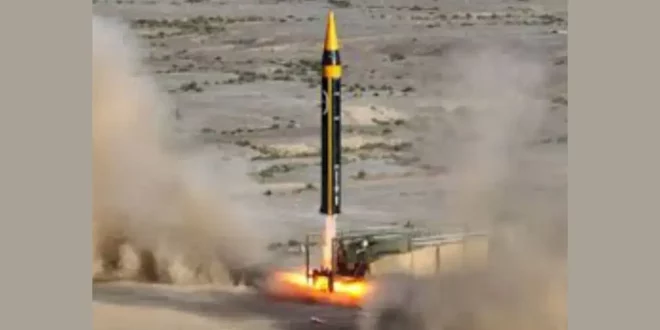
A look at Tehran’s ballistic missile systems and why the Pentagon has cause to be alarmed.
Amidst the growing threat of a direct US-Iran confrontation, a stark military reality stares the Pentagon in the face: most American bases in the region sit well within Iran’s missile range. With Tehran openly warning that it has its “fingers on the trigger”, this map of potential strike targets is fast becoming Washington’s worst-case scenario.
‘Swiss Army Knife’: Iran’s 2000 Ballistic Missiles
While Iran’s missile bombardment of Israel last year may not have caused any serious damage, military planners in the US are treating Tehran’s capabilities as a serious threat. As per a Wall Street Journal report, Iran possesses around 2000 mid-range ballistic missiles that are capable of striking across the Middle East, and shorter-range systems that can reach US bases in the Gulf.
According to analysts, these missiles form the backbone of Iran’s military leverage. “In the absence of any meaningful air force and air defences and with decimated allies and nuclear capabilities, Iran’s ballistic missiles now constitute the backbone of Iran’s deterrence,” Behnam Ben Taleblu, senior director of the Iran Program at the Foundation for Defence of Democracies, told the Washington Post. “They are like a Swiss Army knife for the regime – for coercion, defence and punishment all at once.”
This deterrence means that most key US facilities across the region fall within the strike range of these missiles.
Iranian Missiles And The US Air Bases They Can Target
Khorramshahr Missile: The Khorramshahr is Iran’s most powerful missile system. It carries an ultra heavy warhead and has a range of 2000 kilometres, which puts all of Israel and major US bases across the Middle East and some parts of southeastern Europe within reach.
Key US installations that are within its strike range include Al Udeid Air Base in Qatar, the US Naval Support Activity (NSA) in Bahrain, and bases in Kuwait, Iraq, Syria, the UAE and Saudi Arabia.
Sejjil Medium-Range Ballistic Missile: The Sejjil missile also has a range of 2,000 kilometres, and can hit similar targets. US facilities in Qatar, Bahrain, Kuwait, Iraq, the UAE, Saudi Arabia, Jordan and Turkey fall within its strike radius.
Emad and Ghadr-1 missiles: The Emad and Ghadr-1 missiles can reach up to 1,700 kilometres, placing bases such as Al Udeid, Al-Asad in Iraq, Al Dhafra in the UAE, Incirlik in Turkey, and installations in Jordan and Syria at risk.
Fattah-1, Haj Qasem and Kheibar Shekan missiles: Developed by Iran’s Islamic Revolutionary Guard Corps, these missiles extend Iran’s reach to roughly 1,400 kilometres, covering US bases in Qatar, Kuwait, Bahrain, the UAE, Jordan and Syria.
Shorter-Range Systems Pose Equal Risk
Dezful missile: The Dezful missile, with a range of about 1,000 kilometres, can strike key facilities including Ain al-Assad Air Base in Iraq, Camp Arifjan in Kuwait, Al Dhafra in the UAE and eastern Saudi Arabia, including Prince Sultan Air Base.
Taken together, most US military bases in the Gulf lie within the range of at least one Iranian ballistic missile system. This is a stark reality that continues to be an ongoing nightmare for the Pentagon as it reviews threat assessments amidst Washington’s attempts to bolster its military presence in the region.