 Eurasia Press & News
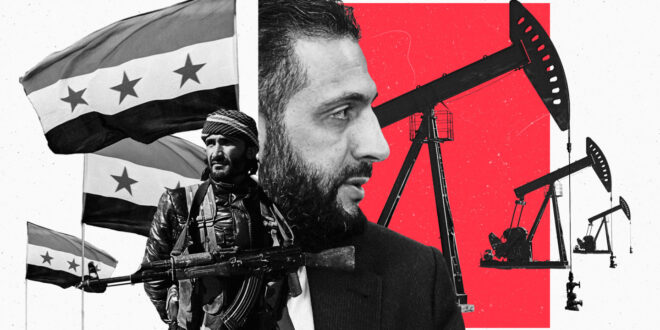
Syria’s oil fields in the northeast have returned to the state from the SDF, but the recovery of the country’s energy sector will take time, energy, and money
Damascus, Syria – Following the government’s takeover of much of northeast Syria from the Kurdish-majority Syrian Democratic Forces (SDF) in recent weeks, Syria’s vast oil fields now have new owners.
On 18 January, the state-owned Syrian Petroleum Company (SPC) announced that it had regained control of several oil fields, including al-Omar, Syria’s largest.
As part of Damascus’ deal with the SDF, the armed group will integrate into the Syrian military, and those oil fields, still under SDF control, will be correspondingly handed over to the SPC.
With the last 70% of Syria’s ample oil reserves, estimated at 1.3 billion barrels, now back in the hands of the Syrian government, Damascus faces a number of opportunities and challenges that could reshape the country’s road to recovery.
Years of neglect
Syria, which used to be a net oil and gas exporter, has seen years of destruction and neglect decimate its fossil fuel sector. Before 2011, Syria produced 380,000 barrels per day (bpd) of oil, of which 109,000 bpd were exported.
Over the last decade, the country’s northeast oil output dropped precipitously to a nadir in 2019 between 15,000 and 30,000 bpd. “The neglect over the last 10 years has three causes,” explains Benjamin Feve, a senior research analyst at Karam Shaar Advisory, to The New Arab.
Firstly, oil infrastructure, including wells, pipelines, and refineries, has suffered direct destruction as a result of the war, with the country’s northeast, where most of Syria’s oilfields are located, experiencing heavy fighting throughout the conflict.
Secondly, the oil sector suffered “maintenance starvation under sanctions and isolation,” Feve says, which saw the gradual decline of its technical capacity. Most of Syria’s oil deposits fell under the control of the Islamic State (IS) between 2013-14, who used the illicit trade of oil to finance their project.
However, lacking the requisite knowledge and technological capacity to properly extract and refine the sub-earth fossil fuels, the group relied on ad hoc practices. This included pumping oil into open-air storage pits and, after coalition airstrikes destroyed most of the region’s refineries, operating a decentralised network of makeshift refineries.
Thirdly, the sector suffered under a “short-term extraction logic under a state of fragmented governance,” says Feve. This “prioritised keeping barrels flowing for cash over needed rehabilitation works”.
Under the SDF, many of these practices continued as the region remained strangled by sanctions, targeted by Turkish airstrikes, and lacking the specialised equipment and expertise to rebuild and professionalise its oil sector.
As a result, the oil sector in the northeast languished for over a decade. Whilst some gains were achieved, with the SDF managing to increase capacity to between 50,000 and 80,000 bpd, production never returned close to pre-war levels.
Over the long term, these factors have crippled the sector and resulted in huge losses. “At al-Omar field alone, losses have been estimated at $800 million over the last decade,” adds Feve.
Prospects for recovery
With the oil sector in such a decrepit state, the road to its recovery will be long and complicated.
The Syrian Petroleum Company restarted oil and gas production in the recently captured oil fields on 24 January, and according to The Syria Report, quoting a source at the company, production has risen by 26,000 bpd, with a target set to reach an increase of 45,000 bpd within months as scheduled maintenance work comes into effect.
Ziad Ayoub Arbache, Professor of Economics at the University of Damascus, explains that Syria will likely see this “initial production recovery in 2026 due to certain low-cost repairs, which will help ease shortages”. However, full redevelopment could take years.
“Beyond [extracting] the oil deposits themselves, key constraints include damaged infrastructure, sanctions deterring investments, and limited refining capacity,” he adds.
Increasing production is only one part of the puzzle. Syria’s refining capacity, centred around two war-damaged refineries in Homs and Baniyas, currently stands at just 50,000 bpd. Addressing Syria’s current fuel crisis will require a broader infrastructure development beyond simply restarting oil production in the northeast.
Whilst Syria has seen crucial investments in the energy grid over the last year – the most sizable being a deal with Qatar’s UCC Holdings worth $7 billion to double the country’s energy capacity – “challenges like the slow implementation of major projects for which the memorandums of understanding have been signed still persist,” Arbache told TNA.
Despite the challenges, there are signs of optimism. With US sanctions now largely removed, the window for vital foreign investment in the sector is opening. In 2025, the Syrian government also amended its foreign investment law, now permitting foreign investors to own up to 100% of their projects, in a bid to attract foreign investors.
The SPC signed a deal with US energy giant Chevron this week to explore and develop Syria’s offshore oil and gas reserves. Several other key oil players, mostly from the Gulf, have also inked deals to enter Syria’s oil sector. Syria has received $28 billion in Gulf investment across all sectors in 2025.
Foreign investment might not have a noticeable impact in the short term, but it is “pivotal for scaling up production and export capacity,” argues Arbache, which will allow Syria to re-establish its oil sector over the medium to long term.
Addressing local grievances
During the government’s offensive against the SDF in the northeast, a number of Arab tribes defected from the SDF to Damascus in what appeared to be a coordinated move. Many Arab communities in Deir Az-Zour and Raqqa had long-held grievances against the SDF due to what they perceived as systematic discrimination against Arabs within SDF territory.
One of the largest sticking points was the failure to use oil rents to rebuild and develop the largely Arab regions from which they were collected and the supposed redirection of oil rents from areas in which they are generated towards Kurdish communities in Qamishli, Hasakah, and Kobani.
Although the northeast contains the majority of Syria’s fossil fuels and fresh water, alongside being the country’s agricultural breadbasket, the region was historically marginalised under the Assad dynasty even before 2011.
Despite its natural riches, the region records some of the highest poverty rates and lowest standards of living in the country, according to a 2024 World Bank report. Its cities are also some of the most destroyed in the country.
The return of its oil resources to a central government could offer Damascus a rare opportunity to address this historic marginalisation. “This is one of the most important make-or-break issues for stability in north-east Syria,” says Feve.
“This new moment creates an opportunity to mobilise a new social contract that earmarks local development spending and engages in participatory governance, of which providing local employment will be key.”
National implications
Beyond the northeast, the return of Syria’s oil deposits to the central government could have huge implications for the country’s energy security and efforts to boost the economy and living standards.
“The northeastern fields offer a path to self-sufficiency,” explains Arbache. Syria relied on oil imports from key foreign partners for over a decade. Under Assad, Iran provided fossil fuel supplies to its ally, but following the collapse of Assad’s regime in 2024, it halted energy exports to the country.
Friendly countries in the Gulf, who have been quick to support Ahmed Al-Sharaa’s new government, stepped in to fill the gap. Qatar has provided Damascus with natural gas supplies to generate 400 megawatts of power daily to boost the country’s electricity supplies. However, such largesse will likely not last forever, making it crucial that Syria develops enough domestic capacity to cover its needs.
A healthy domestic fossil fuel sector could also provide a much-needed boon to Syria’s state finances. Before 2011, crude oil exports constituted 20% of the government’s public purse. If Syria can return to being a net exporter, it would help support the country’s “reconstruction financing and public service provision,” explains Arbache.
However, “energy independence is harder than just having more domestic crude oil underground,” warns Feve. “The real bottlenecks are all above ground.”
Like the rest of Syria’s battered landscape, the recovery of its fossil fuel sector will take time, energy and money. The return of its northeast oil fields may provide a short-term boost to capacity, but the road to returning Syria to securing net energy exports and energy independence will be measured in years.