 Eurasia Press & News
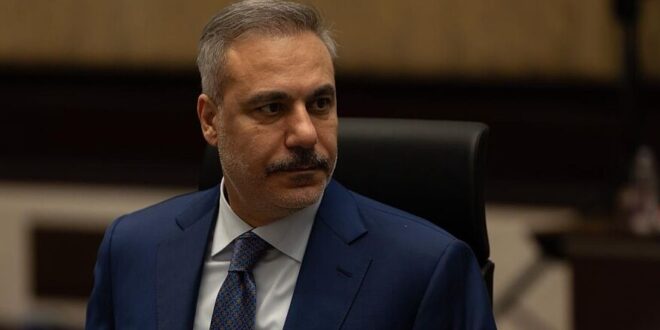
On February 9, Turkish Foreign Minister Hakan Fidan suggested that Turkey would begin developing nuclear weapons should Iran obtain them. During a televised interview with CNN Turk, Fidan warned that Iranian nuclearization would upset the “balance of power” in the Middle East and likely initiate a regional nuclear arms race, which Turkey may be compelled to join. The foreign minister declined to comment when asked if he believed Turkey should possess nuclear weapons.
Fidan’s remarks surfaced during a broader discussion of Iran’s indirect negotiations with the United States in Oman on February 6, as well as rumors of an impending US military action. The foreign minister questioned the international assessment that the Tehran regime intends to produce nuclear weapons, claiming there is “no data that they want to build them.” He also cited Iranian Supreme Leader Ali Khamenei’s fatwa against nuclear weapons and asserted that Iran has only pursued uranium enrichment, not weaponization. In light of Iran-US talks, Fidan stated that issuing ultimatums on Iran’s nuclearization and ballistic missile programs—which Iranian President Masoud Pezeshkian deemed “unreasonable”—would be unrealistic and obstruct a peaceful settlement.
The Turkish government has expressed opposition to US strikes against Iran since hosting Iranian Foreign Minister Abbas Araghchi in Istanbul on January 30. Regarding Khamenei’s government, Fidan said that “the problem is not the regime itself [… it] is the decisions the regime makes.” Amid speculation over an impending US military action against Tehran, he argued that an American air campaign would be insufficient to collapse the Iranian regime and claimed that the threat of war had diminished amid negotiations.
Turkey is a signatory to the Treaty on the Non-Proliferation of Nuclear Weapons (NPT). However, Turkish leaders have long suggested that all countries maintain a “right to enrich” uranium, even though such a right is not explicitly delineated in the NPT. In 2019, Turkish President Recep Tayyip Erdogan criticized the notion that “countries like the United States, Russia, China, France, and the United Kingdom could possess nuclear weapons while others, including Turkey, could not.” Until now, Erdogan’s rhetoric has not been matched by noteworthy actions to potentially procure such capabilities. Comprehensive safeguards also cover sites like plants that convert or enrich uranium and plutonium separation facilities, which Turkey does not possess but may acquire in the future.
Ankara has also signed an enhanced IAEA inspection agreement known as the Additional Protocol (AP), which gives the IAEA the authority to visit sites where Turkey does not produce nuclear material but that could support a clandestine nuclear weapons program. The AP also requires Turkey to provide information about sensitive foreign nuclear procurements. In essence, by signing the AP, Turkey better positioned the IAEA to detect activities that it might, in the future, try to hide.
Independent of any desire develop nuclear weapons capability, Turkey maintains a commercial relationship with Russia, which is in the process of completing the construction of Turkey’s first nuclear power plant. The project, owned by Russia’s Rosatom Corporation, is for the cradle-to-grave construction, financing, and ownership of four nuclear power plants located in Akkuyu, a suburb of Turkey’s Mersin province. The Akkuyu plants are expected to start operating between 2026 and 2028.
South Korea or Russia may build four additional units in the Black Sea province of Sinop, and China may build other reactors at Igneada, near Istanbul. The US nuclear power plant manufacturer Westinghouse is also considering contending for reactor projects in a bid to move Turkey away from Russian and Chinese suppliers.