Eurasia Press & News
The recent Oman talks reflect a remarkable shift in Iran’s negotiating behavior, with acceptance of expanding the scope of negotiations to include non-nuclear files that were previously considered red lines. This shift is due to the escalation of the US military threat, the decline of Iranian regional influence, and the escalation of internal pressure on the regime. While Tehran’s willingness to make concessions in the nuclear file and regional engagement is likely, its missile program remains the most complex obstacle as the regime’s last deterrent pillar.
The first round of “semi-direct” talks between the United States and Iran was held in Oman on February 6, 2026. After the two sides agreed to concessions to move back to the negotiating table, Washington agreed to Iran’s proposal to change the place of negotiation from Turkey to Oman, while reports indicate that Iran has conceded on the issues of negotiations. The positions of the two parties were positive at the end of the first round, with US President Donald Trump referring to “very good talks”, and on the one hand, Iran, Foreign Minister Abbas Araqchi described it as a “good start.” However, this round is the first step in a complex and intertwined path, which has faced many obstacles and challenges throughout its history, in addition to the multi-level variables and transformations: the regional and internal Iranian, and those related to the approach adopted by US President Donald Trump.
Round One: Between the Option of War or the Agreement
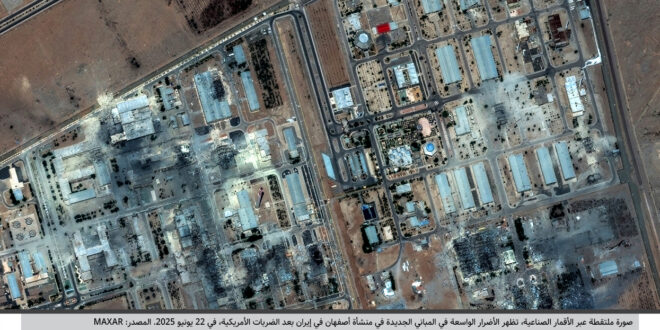
This round of negotiations between the United States and Iran is the second of its kind, after the two countries faltered in completing the first negotiating framework of the “semi-direct” talks hosted by the Sultanate of Oman on April 12, 2025, which ended two days before its second round, when the United States carried out Operation Midnight Hammer on June 22, 2025, which targeted Iran’s main nuclear facilities in Natanz, Isfahan and Fordow.
The United States enters this second negotiating framework, based on the results of its strikes against nuclear facilities, and in light of the wave of new demonstrations in Iran, where it worked to expand the scope of negotiation issues compared to what it was in the first negotiating framework, it moved according to American assurances to deal with a broader package of overlapping files, including Iran’s missile and ballistic program, and its support for its agents in the region, which Tehran maintains to deny its negotiation.
For years, Iran has refused to include files outside the nuclear program in its negotiations with the United States, but the current indicators show broader flexibility for Tehran to expand the negotiating agenda, and it can be assumed that this flexibility is linked to the military threat waving US President Donald Trump on almost every occasion of the possibility of attacking Iran, especially as it is supported by an adequate military mobilization to carry out both offensive and defensive missions.
A series of recent developments have demonstrated the seriousness of the U.S. threat, both in Operation Midnight Hammer and in the capture of Venezuelan President Nicolas Maduro on January 3, 2026, after a complex and large-scale military operation in the capital, Caracas, which was preceded by a military build-up off the coast of Venezuela, the largest since the 1989 Panamanian War. For Washington, its military buildup in the Middle East supports the ongoing negotiating framework, and, as Kissinger puts it, diplomacy is more effective when it is supported by force. As for Iran, the U.S. military threat is a serious option, and it sends signals that it is reading the message well. What Iran fears most is that it is no longer about launching military strikes against its nuclear program, as it has already been implemented, as it is waiting for unconventional ways and means that may lead to regime change or its approach or aim to undermine it, so that replacing it is a matter of time.
For the first time in decades, U.S. rhetoric of regime change has become more systematic and consistent with current changes. In the past, that speech was met with widespread opposition to public opinion and American opinion leaders, especially by US President Trump and his political current known as “Maga”, and rejecting military interventions abroad, as military interventions are often linked to models of US wars – long-term – in Iraq and Afghanistan.
However, two major variables have been included in the equation; the first is the shift of patterns of US military operations, which have become dependent on hijacking speed and decisiveness, and are characterized by high degrees of operational and technological complexity and a combination of diplomatic and intelligence effort. From this perspective, no one has any idea what the shape and nature of the U.S. military action against the Iranian regime might be, which is crystallizing day by day, based on the diplomatic tracks coming from Oman’s rounds, intelligence assessments and military readiness. The second is that the widespread protests inside Iran and the transformations of the Iranian internal scene after the war, in addition to the dynamic analysis of the tracks of military operations against Iran, which began with the Israeli operation “Rising Lion” on June 13, 2025, which targeted Iran’s military capabilities, and expanded to the American operation “Midnight Hammer”, which targeted its nuclear capabilities, indicates that the Iranian arena is operationally ready for a broader process aimed at regime change or creating a broad strategic vacuum at the leadership, security, political and military levels.
Next Step Options
The options for the next step are mainly related to the developments of the second negotiating framework, where Washington is demanding Tehran, based on the surplus of power and previous experience, to make fundamental concessions in the three negotiating agenda.
Starting with Iranian support for its proxies, an American issue of high importance, related to resolving other regional files, including the disarmament of what is left of the Lebanese Hezbollah in the post-war reality. It is likely that Iran will make relative concessions in this file, as many of its proxies are going through an unprecedented state of weakness, while imposing intense pressure on others, and with Iran losing the Syrian arena, which was considered a strategic and logistical in its regional project, the gradual erosion of the strength and influence of its agents is continuous and permanent and its continuation will constitute a political and economic burden on Iran. It makes sense for Iran to look for an agreement that amounts to a strategic level, so that it does not give space to agents to harm it or its gains.
On the other hand, Iran went to negotiations, amid the realization that its nuclear requirements are no longer commensurate with its requirements in the 2015 nuclear deal. The American options are clear in their transgression of the modalities of the interim agreement or interim understanding, and to proceed with the dismantling of all nuclear capabilities, at least inside Iranian territory, from the possibility of maintaining a limited capacity for peaceful purposes within 3.76%, under expanded international control and perhaps outside its borders, to ensure that Iran cannot return to its nuclear program at the threshold of military use, in return, Iran is likely to obtain international recognition, and the United States in particular, of its right to benefit from nuclear energy for peaceful purposes.
The likelihood that Iran will show some flexibility in both of the previous two issues is based on the fact that their tracks have been decisively affected by the developments and outcomes of the war. However, the same starting point makes the missile and ballistic program the main challenge to the negotiating framework, as it formed the main offensive pillar of Iran during the recent war with Israel and its main weapon to achieve deterrence and balance, especially in light of the Israeli and American air superiority, and hence the low probability of Iran making concessions in this file.
On the one hand, Israel insists and pressures the United States to resolve Iran’s ballistic missile program in the negotiations, and waving unilateral action to undermine it, as it tested the magnitude and gravity of the missile threats during the war, and considers it an “existential threat.” In contrast, Tehran confirms that its ballistic program is dedicated to defensive purposes, and it is not negotiable, especially since Iran has worked hard to recover from the damage it suffered during the war, and even continues to develop it.
Why look for a deal?
The current moment indicates that the Middle East is facing pivotal paths, linked to the developments in Iran. While the latter has pursued an expansionist foreign policy, which for decades has posed a threat to its neighbors, the various countries of the region and the United States, the state of turmoil facing the country, the worsening pressures due to the tightening of US sanctions on it, and the expansion of protest movements, puts the region in the face of the scenario of the collapse of the regime and the country’s entry into a spiral of political and security vacuum, a scenario that the region and the United States seek to avoid.
In fact, the ongoing negotiations represent a key option for maintaining regional stability, and their success means that the Iranian regime remains without effective capabilities to engage in non-diplomatic activities beyond its borders. Particularly with regard to its missile program and its support for its proxies, the two main threats that for decades have posed a threat to Israel and American interests.
But the stalled negotiations put the United States in the midst of a major challenge, which is its ability to translate its threats of a military operation against the Iranian regime, especially with the agreement of observers and experts that any limited military operation may not lead to its goals of weakening or undermining the regime, while launching a large-scale military operation against the capabilities of the regime and its leaders may lead the country towards chaos, especially in the absence of ready alternatives to the existing regime in Iran.
In doing so, monitoring the next step requires assessing the outcome of the ongoing negotiating framework that Washington is seeking to achieve quickly, in a way that does not allow Iran to maneuver time to ease the pressure on it. It is also associated with three main indicators:
الأولFirst: The extent of the cohesion of the elite and the leadership within the political system, both in their positions on domestic and external issues.
The second: in the size and breadth of the protest movement and the consistency of its objectives and requirements with the perceptions of the next day of the regime.
The third is the nature of the US military action, which is believed to be closely proportional to the previous two indicators, and is unlikely to be traditional, either in terms of its tools or scope, so that it targets a number of specific and specific goals, and is directed to support alternative paths that are already being prepared.
Finally, the option of gradually stifling Iran remains in place, as the regime is going through its most dangerous stage since the 1979 revolution, both internally and externally, and the continuation and development of current pressures will eventually lead to the demise of the regime, similar to the end of the Roman Empire, which has been dying for many years.