 Eurasia Press & News
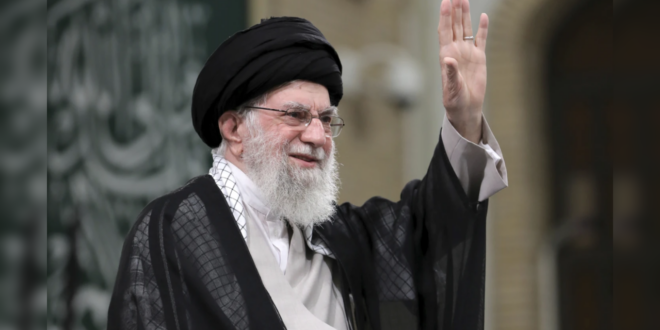
For nearly four decades, Ayatollah Ali Khamenei was the most powerful figure in Iran, holding ultimate political and religious authority. Seen by some as the protector of the Islamic Revolution and by others as a leader who suppressed dissent, his influence shaped Iran and the wider West Asian region.
Early this morning, Iranian state media and international news outlets reported that 86-year-old Supreme Leader Ali Khamenei has been killed following coordinated US and Israeli airstrikes on Iran. While media circulates reports about the attack, there is one undeniable fact that for nearly four decades, Khamenei had been the single most powerful figure in Iran and one of the most consequential political faces in West Asia.
Khamenei was the second Supreme Leader of the Islamic Republic, succeeding Ruhollah Khomeini, the cleric who led the 1979 revolution that overthrew the Shah, Mohammad Reza Pahlavi. His death would mark the end of an era that began in the shadow of the 1979 Islamic Revolution and reshaped Iran’s political, religious and military landscape for 36 years.
The heir to a revolution
Born in 1939 in Mashhad in northeastern Iran, Khamenei studied in Islamic seminaries from a young age. As a teenager, he was influenced by the radical Islamist ideas circulating in clerical circles, including those of Navab Safavi, who advocated political violence against the Shah’s regime.
In 1958, Khamenei met Khomeini, a meeting that went on to define his ideological trajectory. He embraced what later came to be known as Khomeinism, an idea centred on the concept of velayat-e faqih which means the ‘guardianship of the jurist.’ The idea propagated that a senior Shia Islamic scholar should rule the state, with extensive religious and political authority.
When Khomeini was exiled in 1964, Khamenei became an active revolutionary figure in Iran. He was arrested multiple times by the Shah’s secret police and according to his own accounts in his biography, tortured. In fact, in Tehran’s Ebrat Museum, which was once a notorious prison for political detainees under the Shah, there is Khamenie’s image in a brown wooden frame, with his name written in Farsi- Ayatollah Seyyed Ali Khamenei. The dimly lit cell where he was kept has been left intact by the revolutionary regime as a grim reminder of the brutality of the Shah’s secret police. “He endured the most brutal and savage torture for eight months in there,” says a short biography posted outside the cell.
After the Shah’s overthrow in 1979, Khamenei quickly rose through the ranks of the new Islamic Republic. He became the Imam of Friday prayers in Tehran, a position which he held till his death.
Khamenei survived an assassination attempt in June 1981 where he was seriously wounded by a tape recorder bomb that went off in Tehran’s Abouzar Mosque. As a result of the attack, his right arm got paralysed and he lost hearing in one ear. “I won’t need the hand; it would suffice if my brain and tongue work,” Khamenei once said about the attack. However, the attack further solidified his image as a survivor who was seen as a living martyr of the revolution. A year later, he was elected president of Iran, serving two terms from 1982 to 1989 during the devastating Iran–Iraq War. But his ascent to ultimate power came after Khomeini’s death in June 1989.
When Khomeini died in 1989, the revolution became an orphan. With no clear successor in line, senior clerics turned to Khamenei and Ali Akbar Hashemi Rafsanjani, who was another revolutionary figure in Iran played a crucial role in the selection of Khamenei. In an emergency closed-door session with assembly of expertd, Khamenei is recorded speaking to the assembly, “I am truly not worthy of this title. I know it, and maybe the gentlemen know it too.” Understanding his role as a mid-level cleric, he said, “Based on the Constitution, I am not qualified for the job, and from a religious point of view, many of you will not accept my words as those of a leader. What sort of leadership will this be?” But everyone voted for him, he accepted the role.
There were critics who argued he lacked the clerical rank of grand ayatollah required by the constitution. However, a referendum in July 1989 amended the constitution to allow a leader with demonstrated Islamic scholarship rather than the highest clerical title.
Over time, constitution’s amendments expanded the Supreme Leader’s powers giving Khamenei even broader authority than Khomeini had enjoyed. He could determine general state policy, appoint and dismiss key judicial and military figures, oversee the armed forces, control state broadcasting, influence elections and even call referendums.
The architecture of control
If Khomeini was the revolutionary firebrand, Khamenei was the institutional consolidator. He helped shape and strengthen the Islamic Revolutionary Guard Corps (IRGC), originally created to protect the revolution. Under him, the IRGC evolved into a dominant military, political and economic force. Internationally, Khamenei positioned Iran as a nation against ‘Western imperialism.’ He backed Hezbollah in Lebanon, Hamas in Gaza and other militant networks across the region, building what analysts called Iran’s ‘axis of resistance.’
The most dramatic rupture came after the disputed 2009 re-election of President Mahmoud Ahmadinejad. When millions of Iranians took to the streets alleging electoral fraud in what became known as the Green Movement, Khamenei publicly backed the election result. The crackdown that followed led to dozens of deaths and thousands of arrests. In later years, cycles of protest became a recurring feature of Iranian life. Reports described widespread arrests, internet shutdowns and violent crackdowns. Chants directly targeting Khamenei, which was once unthinkable became more common in protest movements in later part of 2000s. The authority that had once seemed absolute now faced visible public resentment.
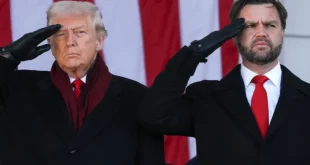
US President Donald Trump had described Khamenei as ‘one of the most evil people in history,’ framing him as the architect of Iran’s defiance against Western pressure. To supporters inside Iran’s establishment, however, he was the guardian of the revolution the man who preserved the Islamic Republic through war, sanctions, isolation and internal unrest.
Back in 2015, Iran signed a major agreement with world powers to ease sanctions, reconnect with the global economy and rebuild its struggling system. But when Donald Trump became the President of United States, he withdrew from the deal during his first term and brought back stricter sanctions. Iran’s economy worsened after that. Then came the October 7, 2023 Hamas attack on Israel. In response, Israel began targeting Iran’s allies across West Asia, groups and governments that Tehran relied on as a line of defence. Hezbollah was weakened. Gaza was devastated. Israel also carried out strikes in Syria against the government of Bashar al-Assad, whose regime eventually collapsed.
Many believe Ali Khamenei could do little but watch as Iran’s regional influence shrank. It seemed only a matter of time before Israel directly confronted Iran and that happened on June 13, 2025. Iran responded with strong retaliatory strikes, showing it could hit back but the conflict also revealed weaknesses in its defence systems. Iran managed to survive the 12-day war without direct outside support. But eight months later, the U.S. and Israel launched another attack, this time eliminating Khamenei who had been at the centre of Iran’s political system for nearly four decades. A reformist politician once called him the ‘Sun of the Iranian solar system,’ and that sun has set.
Khamenei’s death would not simply mark the passing of a leader. It would open a deeply uncertain chapter for Iran. The question of succession which is always sensitive would move from speculation to urgency. For 36 years, one man embodied the Islamic Republic’s highest authority. He rose from revolutionary cleric to president, then to Supreme Leader, reshaping Iran’s institutions in his image. Now, whether mourned as a defender of sovereignty or remembered as an autocrat who crushed dissent, Ali Khamenei’s imprint on modern Iran is indelible. And his departure would reverberate far beyond Tehran.