 Eurasia Press & News
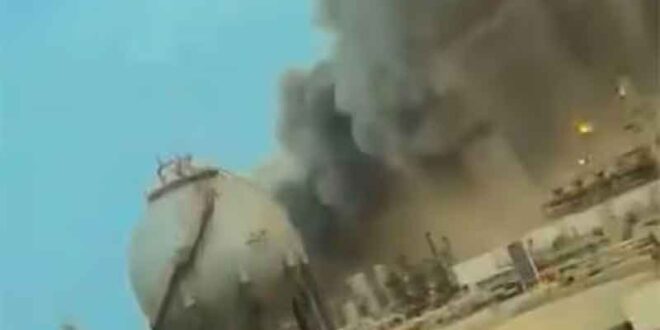
As of March 2, 2026, the attack on Iran has already begun to reverberate far beyond the immediate theatre of war. Financial markets reacted within hours. Oil prices surged. Shipping routes were disrupted. Currencies weakened. The world economy, still fragile after years of pandemic recovery and the prolonged Ukraine conflict, now faces a renewed crisis centered on the most volatile strategic corridor on earth.
The Middle East remains the world’s primary energy tap. When that tap is threatened, the consequences are immediate and global. What we are witnessing is not a regional disturbance, but a systemic economic shock with potentially stagflationary consequences.
The Energy Shock: Oil and Gas as Weapons of War
The most immediate and dramatic impact has been in the energy markets. Roughly 20% of the world’s oil and nearly 20% of global liquefied natural gas (LNG) pass through the Strait of Hormuz. Even the possibility of disruption functions as a tax on global growth.
Brent crude has already jumped by 12–13%, trading around $82 per barrel. Analysts warn that if the Strait of Hormuz is closed or partially blocked, prices could rapidly climb to $100–$110 per barrel. Markets are pricing in risk — and in geopolitics, risk translates into higher energy costs.
For LNG-dependent nations such as Japan, South Korea, and several European countries relying on Qatari gas, the situation is equally serious. Supply disruptions would sharply raise electricity and heating costs, feeding into consumer inflation worldwide. Energy inflation is rarely contained; it spreads through transport, manufacturing, and food supply chains.
The lesson from previous Gulf crises is clear: oil shocks rarely remain confined to oil.
Supply Chain Disruptions: Trade Routes Under Siege
War in the Gulf transforms critical sea and air corridors into high-risk zones.
Major shipping carriers such as Maersk and MSC have reportedly suspended transits through the Gulf. Vessels are being rerouted around the Cape of Good Hope, adding 15–20 days to transit times between Asia and Europe. This not only increases freight costs but also insurance premiums and fuel expenses. The result: higher prices for goods across continents.
Air travel has also been severely affected. With Iranian and surrounding airspaces restricted or closed, flights between Asia and Europe are being rerouted over longer paths. Airlines face higher fuel costs, while cargo operations are delayed or grounded. Global supply chains — already vulnerable after pandemic-era bottlenecks — now confront renewed stress.
More alarming is the impact on fertilizer trade. Roughly one-third of the world’s fertilizer shipments pass through the Strait of Hormuz. A prolonged disruption would threaten agricultural production cycles globally. Food inflation, already politically sensitive across much of the Global South, could surge by late 2026.
Energy and food — the twin pillars of economic stability — are now both exposed.
Impact on Major Economies
The consequences of the attack on Iran are uneven but universally destabilizing.
India: High Vulnerability
India imports approximately 85% of its crude oil. Every $1 increase in crude prices adds an estimated $2 billion to its annual import bill. With Brent already climbing, pressure on the Indian Rupee has intensified.
Higher oil prices widen the current account deficit, strain fiscal balances, and complicate monetary policy. For the Reserve Bank of India, this presents a dilemma: raising interest rates to curb inflation could slow growth, while holding rates steady risks currency weakness and imported inflation.
For a developing economy that relies on stable energy inputs to sustain growth and employment, this is a dangerous equation.
China: Strategic Exposure
China imports about 90% of Iran’s oil exports. Any sustained disruption would force Beijing to compete for more expensive Atlantic or Russian crude supplies. That would raise manufacturing costs in the world’s largest industrial economy.
Given China’s central role in global supply chains, increased production costs there translate into higher prices everywhere.
Europe: Energy Fatigue
Europe is already economically strained following years of energy turbulence triggered by the Ukraine conflict. Higher oil and LNG prices risk pushing parts of the Eurozone back toward recession.
Energy-intensive industries, already weakened, may face renewed shutdowns or cost pressures. Political instability could follow economic contraction.
United States: Partial Insulation
As a net energy exporter, the United States is somewhat shielded from supply shortages. However, high “prices at the pump” directly affect American households. Rising fuel costs could fuel inflationary pressures and complicate domestic politics, especially ahead of midterm elections.
No major economy emerges untouched.
Financial Market Volatility
The financial markets have responded in predictable fashion.
Investors are fleeing “risk” assets and moving toward safe havens. Gold has surged. The US dollar has strengthened. Equity markets across Asia and Europe opened sharply lower.
Indian indices such as the Sensex and Nifty recorded significant losses, particularly in oil-sensitive sectors such as aviation, chemicals, and paints. Similar patterns are visible in Japan’s Nikkei and European bourses.
Markets are signaling uncertainty — and uncertainty dampens investment, hiring, and expansion.
If volatility persists, capital flows into developing economies could slow dramatically, further pressuring currencies and fiscal balances.
The Stagflationary Threa
If the conflict lasts only days, markets may stabilize. But if it stretches beyond a few weeks, the global economy could enter a stagflationary phase — stagnant growth combined with high inflation.
This is the most dangerous macroeconomic environment for policymakers. Inflation demands higher interest rates; stagnation demands stimulus. The two responses contradict each other.
For developing nations, the challenge is particularly acute. Currency depreciation amplifies imported inflation. Higher interest rates slow job creation. Fiscal stimulus becomes expensive due to higher borrowing costs.
The memory of the 1970s oil shocks looms large. Then, too, geopolitical conflict in the Middle East triggered global stagflation. The consequences lasted years.
Beyond Economics: Structural Realignments
The attack on Iran may also accelerate structural changes in global trade and energy systems.
Countries may intensify efforts to diversify energy sources. Strategic petroleum reserves could be drawn down. Alternative corridors — such as overland pipelines or expanded shipping infrastructure — may receive renewed investment.
At the same time, geopolitical blocs may harden. Energy flows increasingly follow political alliances rather than pure market logic. Sanctions, counter-sanctions, and retaliatory trade restrictions could further fragment the global economy.
This would represent a step away from globalization toward a more fractured world order.
A Conflict with Global Consequences
The attack on Iran is not merely a military development. It is an economic shock with cascading global consequences.
Energy prices have surged. Supply chains are under strain. Major economies face renewed vulnerability. Financial markets are volatile. The specter of stagflation looms.
For countries like India, the crisis poses immediate fiscal and monetary challenges. For Europe, it threatens economic relapse. For China, it raises production costs. For the United States, it risks renewed inflation.
In an interconnected global economy, war in the Gulf does not stay in the Gulf.
If diplomacy fails and escalation continues, the world may soon discover that the true battlefield is not only geopolitical — but economic.