 Eurasia Press & News
Key Takeaways:
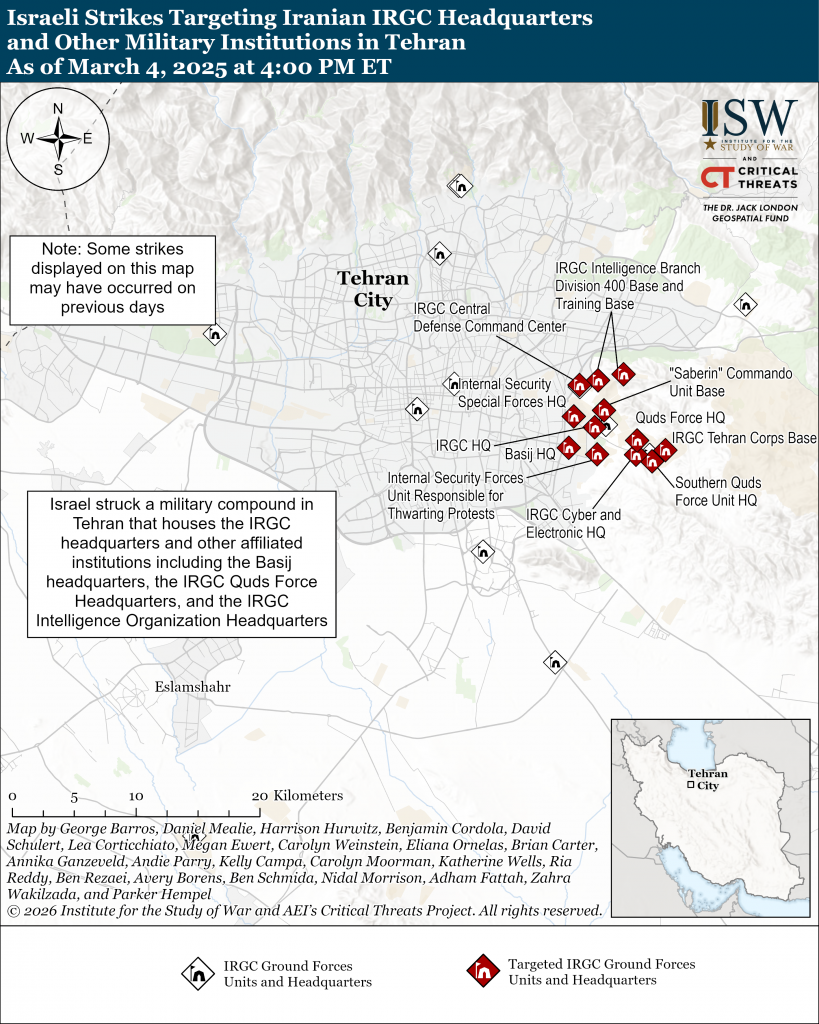
The IDF conducted multiple strikes at several military compounds in southeastern Tehran on March 4 that house the headquarters of several services and branches of the Islamic Revolutionary Guards Corps (IRGC) as well as other internal security forces. The IDF strikes could be part of an effort to disrupt Iranian command-and-control, but these strikes could also seek to achieve other effects, such as suppressing and degrading Iranian retaliatory capabilities.
There are reports that Kurdish groups moving from Iraqi Kurdistan have begun a cross-border ground operation in Iran. CTP-ISW has observed no corroborating evidence of such an operation, and a senior Iraqi Kurdistan official denied on March 4 that any groups from Iraqi Kurdistan had begun a ground offensive in Iran.
The combined force destroyed more provincial sites of internal and external forces key to the armed forces’ domestic control over the population in Tehran and Kurdish-populated cities in northwestern Iran.
Iran has continued to launch a greater number of drones in its attacks as the number of ballistic missile launches continues to fall, which likely reflects the combined forces’ success in degrading Iran’s ability to launch ballistic missiles.
Iran will continue to attempt to disrupt international shipping through the Strait of Hormuz as part of a broader effort to impose a cost on the Gulf states using missiles and drones until the combined force degrades the ability of Iran to do so. The combined force has severely degraded the Iranian navy.
Toplines
The Israel Defense Forces (IDF) conducted multiple strikes at several military compounds in southeastern Tehran on March 4 that house the headquarters of several services and branches of the Islamic Revolutionary Guards Corps (IRGC) as well as other internal security forces.[i] IDF strikes targeting several IRGC-affiliated headquarters in Tehran could be part of an effort to disrupt Iranian command-and-control, but these strikes could also seek to achieve other effects, such as suppressing and degrading Iranian retaliatory capabilities. The compounds in southeastern Tehran contain the headquarters of three of the IRGC services, including the IRGC Ground Forces, IRGC Navy, and IRGC Quds Force. It also contains other key IRGC branches, including the Basij Organization and the Intelligence Organization. The IDF explicitly identified the following sites in the compound:
IRGC Headquarters. The IDF said it struck the IRGC’s headquarters.[ii] The IRGC is a deeply ideological force that was created after the 1979 Revolution to protect the Iranian regime from internal and external threats. The IRGC is one of the most dominant political, security, economic, and ideological actors in Iran.[iii] The IRGC is the primary body responsible for controlling the Iranian missile and drone arsenals and managing and supporting the so-called “Axis of Resistance.” The IDF may have also hit the IRGC Central Defense Command Center, which is located less than 1.5 kilometers from the IRGC Headquarters.
IRGC Ground Forces Headquarters. The IDF did not confirm whether it struck the IRGC Ground Forces headquarters, but identified the building in a graphic.[iv] The IRGC Ground Forces has dual missions to counter external and internal threats.[v] The Ground Forces are structured to wage a guerrilla campaign against any invading force while also having units positioned to violently suppress social unrest. The Ground Forces decentralized its command structure in the 2000s and 2010s, establishing 32 provincial units that could operate independently in the event of a decapitation strike against the IRGC central leadership. The provincial units oversee IRGC ground elements that are largely dispersed across population centers, such as how the Sarallah Headquarters oversees security in the capital region.[vi] The IDF struck Sarallah Headquarters on March 1.[vii]
IRGC Intelligence Organization Headquarters. The IDF said it struck the “Intelligence Directorate headquarters,” which may refer to the IRGC’s Intelligence Organization.[viii] The IRGC established the Intelligence Organization in response to the Green Movement protests that shook Iran in 2009.[ix] The Intelligence Organization has thus focused primarily on domestic surveillance, social control, and counterinsurgency operations, while also conducting limited operations abroad. The IDF also said it hit the IRGC Intelligence Organization Unit 4000.[x] Unit 4000 is the special operations division within the IRGC Intelligence Organization.[xi] Israeli media reported in October 2022 that Unit 4000, alongside an IRGC Quds Force unit, attempted to smuggle weapons to the West Bank for attacks on Israeli targets.[xii] The report added that these units had made similar attempts in the past.
Basij Organization Headquarters.[xiii] The Basij is a paramilitary organization that the Iranian armed forces use to recruit, indoctrinate, organize, and control regime loyalists.[xiv] The Basij focuses largely on producing and disseminating propaganda, social policing, suppressing domestic dissent, and conducting civil defense activities. The Basij cooperates extensively with the IRGC Intelligence Organization to monitor the Iranian population. The Basij maintains elite units that receive advanced military and “ideological-political” training and function as a manpower reserve for the IRGC Ground Forces. The Basij has historically played a key role in the regime’s crackdown on protests, including in the December-January 2026 and 2022 Mahsa Amini protest movements.[xv]
The IRGC Quds Force Headquarters. The Quds Force is the extraterritorial arm of the IRGC and Iran’s primary means of controlling and supporting the Axis of Resistance.[xvi] The Quds Force provides leadership, materiel, intelligence, training, and funds to Iranian proxy and partner militias across the Middle East, including Hezbollah in Lebanon, Hamas in the Gaza Strip, the Houthis in Yemen, and militias in Iraq.[xvii]
IRGC Electronic Warfare and Cyber Defense Headquarters. The Electronic Warfare and Cyber Defense Headquarters is responsible for training IRGC forces in cyber defense.[xviii] The United States sanctioned the headquarters in January 2018 for censoring Iranians’ access to Western media.[xix]
27th Mohammad Rasoul Ollah Provincial Unit. The IDF referred to it as the “IRGC Tehran Corps.”[xx] The 27th Mohammad Rasoul Ollah Provincial Unit is the IRGC Ground Forces’ provincial unit for Tehran City and the IRGC’s main unit in the city.[xxi] Mohammad Rasoul Ollah Provincial Unit operates under the IRGC Ground Forces Sarallah Headquarters and oversees the 22 Basij regional bases throughout Tehran City.[xxii] The combined force has targeted at least six of the 23 Basij regional bases in Tehran as of March 4.[xxiii] The Mohammad Rasoul Ollah Provincial Unit also deployed to Syria to fight for the Assad regime during the Syrian civil war.[xxiv]
The IRGC Ground Forces Saberin Special Forces Brigade Headquarters. The Saberin Special Forces Brigade has previously played a role in protest suppression and expeditionary operations in Syria.[xxv] IRGC Major General Mohammad Pakpour appointed Brigadier General Mohammad Hosseini as commander of the Saberin Special Forces Brigade on February 24.[xxvi] CTP-ISW observed on February 24, Hosseini may have been selected, at least partly, due to his experience with internal security and counter-insurgency operations.[xxvii]
Unidentified Internal Security Unit. The IDF said that it struck an internal security unit “responsible for suppressing protests.”[xxviii] There are numerous internal security sites within this area that may have been struck. The IDF may be referring to the Tehran Province LEC Special Units Headquarters. The LEC Special Units are a highly trained anti-riot force deployed when regular police are unable to manage civil unrest.[xxix] The IDF may also be referring to the 1st Amir ol Momenin Brigade within the LEC Special Units. Iran’s Counter-Terror Special Forces (NOPO) reportedly operate under the 1st Amir ol Momenin Brigade.[xxx] NOPO has previously participated in violent protest suppression.[xxxi]
CTP-ISW has also identified several other Iranian armed forces-affiliated sites within or adjacent to the targeted compound area on March 4, including:
The IRGC Ground Forces Research and Self-Sufficiency Jihad Organization. The IRGC Ground Forces Research and Self-Sufficiency Jihad Organization is responsible for the research and development of ballistic missiles.[xxxii] The United States sanctioned the organization in 2017 for involvement in Iranian ballistic missile research, development, and flight test launches.[xxxiii]
Artesh Ground Forces 65th Airborne Special Forces Brigade. The 65th Airborne Special Forces Brigade is one of the most elite units in the Artesh Ground Forces and specializes in “guerrilla warfare, close combat, hostage release [operations], psychological operations, sabotage behind enemy lines, parachuting, countering aircraft hijacking, and protecting individuals,” according to Iranian state media.[xxxiv]
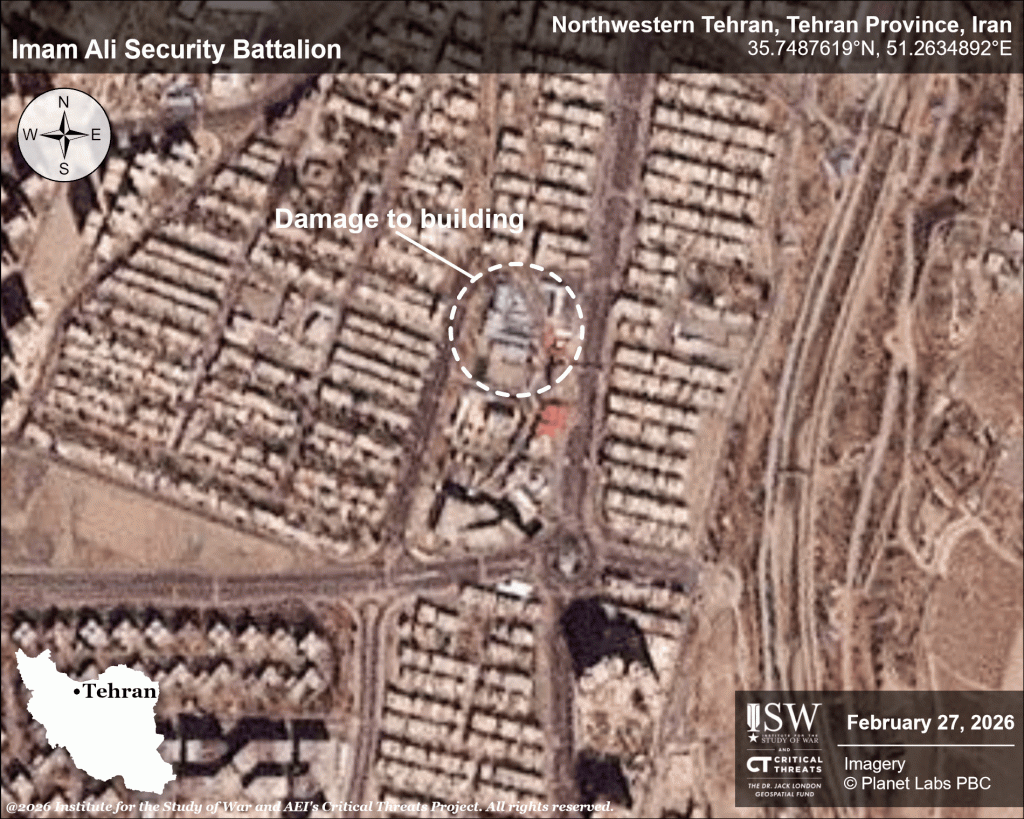
The combined force also destroyed more provincial sites of internal and external forces key to the armed forces’ domestic control over the population in Tehran and Kurdish-populated cities in northwestern Iran. Commercially available satellite imagery confirmed that a combined force airstrike damaged the northern complex on 22nd Tehran Municipality Region: Ammar Yasser Basij Resistance Regional Base in northwestern Tehran. This base is one of the 23 Basij regional bases in Tehran under the IRGC Ground Forces Mohammad Rasoul Ollah Provincial Unit, which operates under the IRGC Ground Forces Sarallah Headquarters.[xxxvi] The area also houses the Imam Ali Battalions, which are Basij security units trained and equipped to suppress urban protests and conduct anti-riot operations and intimidate and arrest protesters under IRGC direction.[xxxvii] OSINT analysts published footage on March 4 confirming that combined force airstrikes targeted and heavily damaged two local LEC police stations in southeastern Tehran City on March 2 and southwestern Tehran City on an unspecified date, respectively.[xxxviii] LEC personnel from both these sites were reportedly involved in the violent suppression of protests in Tehran during the December 2025-January 2026 protests.[xxxix]
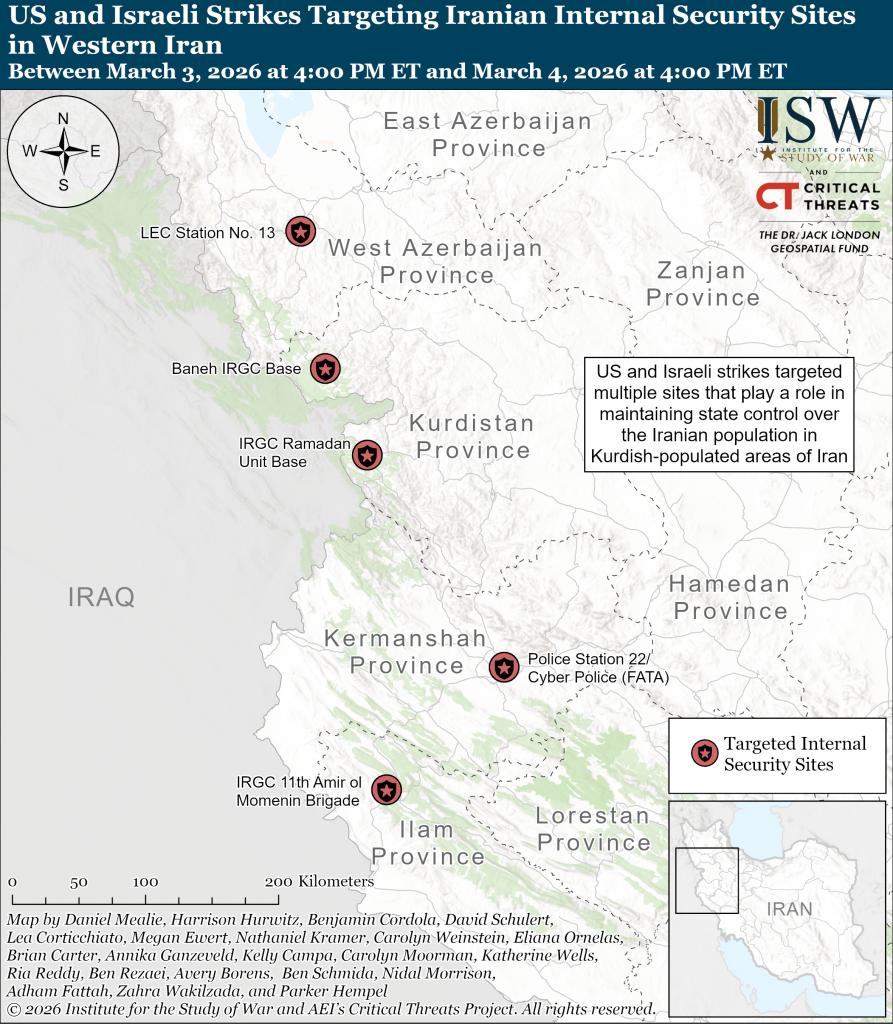
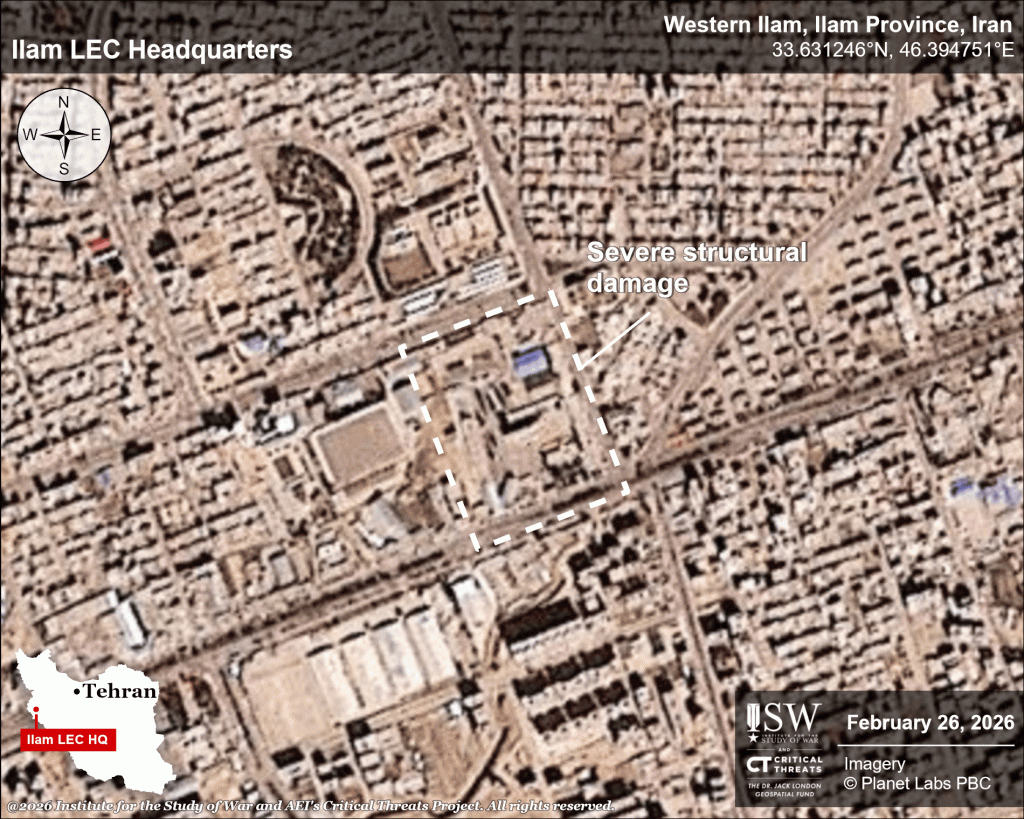
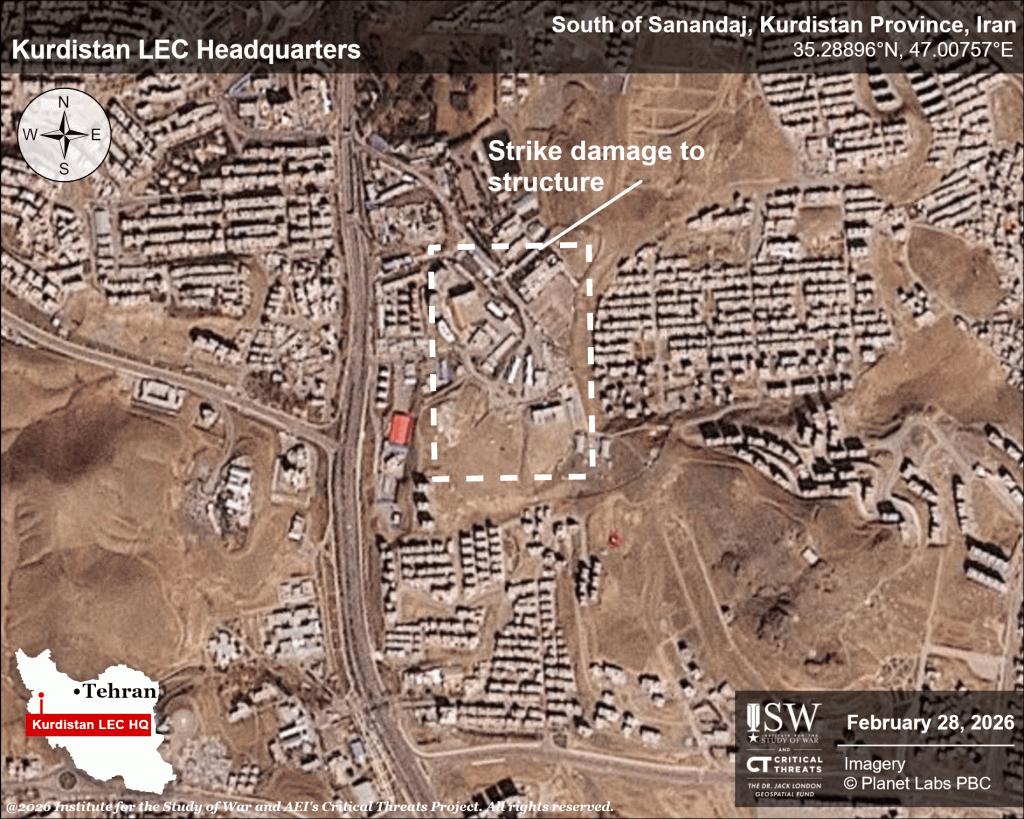
The combined force also launched airstrikes targeting key internal security sites in Kurdish-populated areas of northwestern Iran. Commercially available satellite imagery from March 4 confirmed that airstrikes damaged unspecified buildings at both the LEC headquarters in Ilam and Kurdistan provinces (see below). Commercially available satellite imagery from March 4 also confirmed damage to two buildings at the IRGC 11th Amir ol Momenin Brigade base in Soltanabad, Ilam Province. This brigade operates under the IRGC Ground Forces Najaf-e Ashraf Operational Base, which is responsible for supporting LEC and Basij’s internal security operations in Ilam, Kermanshah, and Hamedan western border provinces, by providing rapidly deployable support to suppress internal unrest and protect the regime.[xl] Local sources reported that combined forces airstrikes targeted the IRGC Ramadan Unit Base in Marivan City, Kurdistan Province, on March 4.[xli] The IRGC Ramadan unit has supported the local LEC forces in suppressing the protests in Marivan City, which has been a hotspot for anti-regime unrest in the past decade.[xlii] Combined force airstrikes also targeted local LEC sites in Marivan City on March 3.[xliii] OSINT analysts published footage of airstrikes targeting an unspecified IRGC base and Artesh barracks in Baneh, Kurdistan, which was also a battleground between security forces and protesters during the 2022 Mahsa Amini Protest Movement.[xliv] Combined forces airstrikes separately destroyed a local LEC Station in Mahabad, West Azerbaijan Province, on March 3.[xlv] Security forces cracked down on protesters in the 2022 Mahsa Amini Protest Movement and in January 2026.[xlvi] An OSINT analyst also reported on March 3 that an airstrike targeted the IRGC Ground Forces Farj Division headquarters’ heliport in Shiraz City, Fars Province.[xlvii] The Farj Division is a special forces unit under the IRGC Ground Forces Madineh Headquarters that covers Fars, Hormozgan, and Bushehr provinces.[xlviii] CTP-ISW recorded several protests in Shiraz between December 30, 2025, and February 24, 2026.[xlix] Iranian diaspora media noted in 2020 how the Farj Division’s headquarters is the closest IRGC Ground Force headquarters to the Strait of Hormuz and has carried out many exercises simulating defending the strait.[l]
There are reports that Kurdish groups moving from Iraqi Kurdistan have begun a cross-border ground operation in Iran. CTP-ISW has observed no corroborating evidence of such an operation, and a senior Iraqi Kurdistan official denied on March 4 that any groups from Iraqi Kurdistan had begun a ground offensive in Iran.[li] A Fox News correspondent reported on March 4 that “thousands of Iraqi Kurds have launched a ground offensive in Iran,” citing an unspecified US official.[lii] Unspecified Kurdish officials told the Associated Press on March 4 that Kurdish groups “based in northern Iraq” are preparing for a cross-border operation in Iran.[liii] Five Iranian Kurdish political parties officially formed the “Coalition of Political Forces of Iranian Kurdistan” on February 22.[liv] Iranian forces have continued to strike Kurdish militias in Iraq since the war began on February 28.[lv]
The Mobarizoun Popular Front (MPF) announced on March 3 that it targeted the Iranian LEC Commander of Tardast station in Zahedan, Sistan and Baluchistan Province.[lvi] This marks the first time the insurgency group has attacked Iranian security forces since the war began. The MPF claimed that the LEC Commander had a prominent role in suppressing and intimidating Zahedan’s residents.[lvii] The MPF is a coalition of four Baloch organizations in Sistan and Baluchistan that has historically posed security issues for the Iranian regime in southeastern Iran.[lviii]
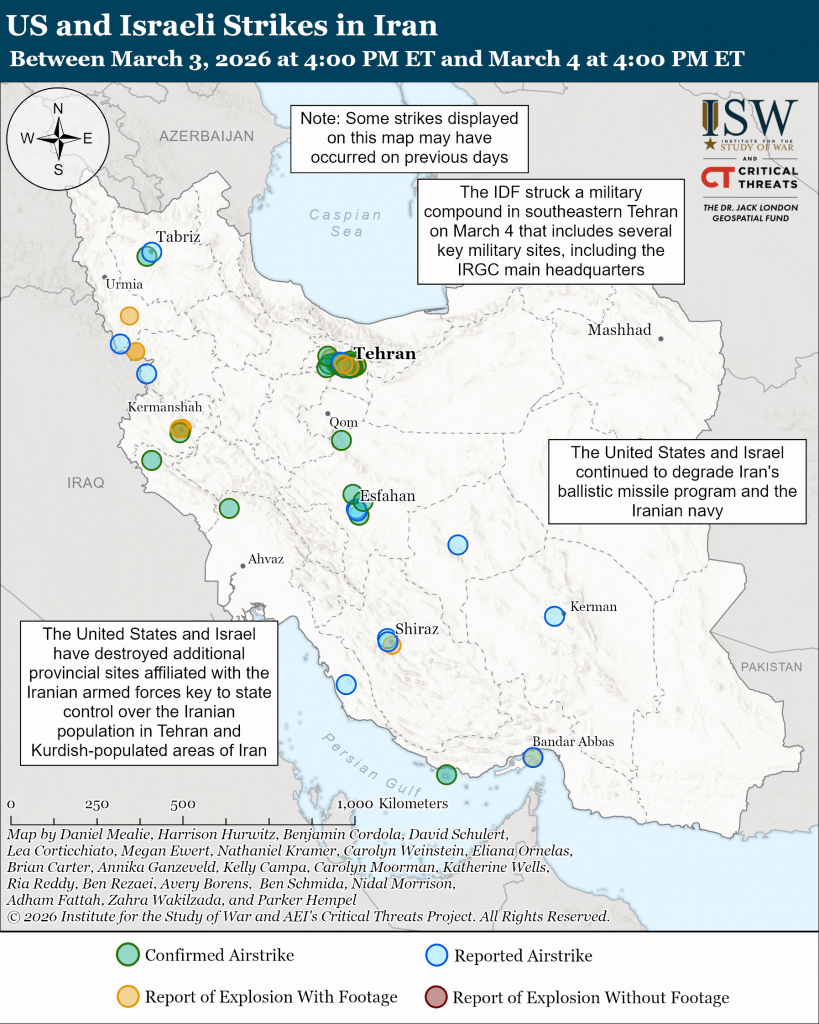
US-Israeli Air Campaign
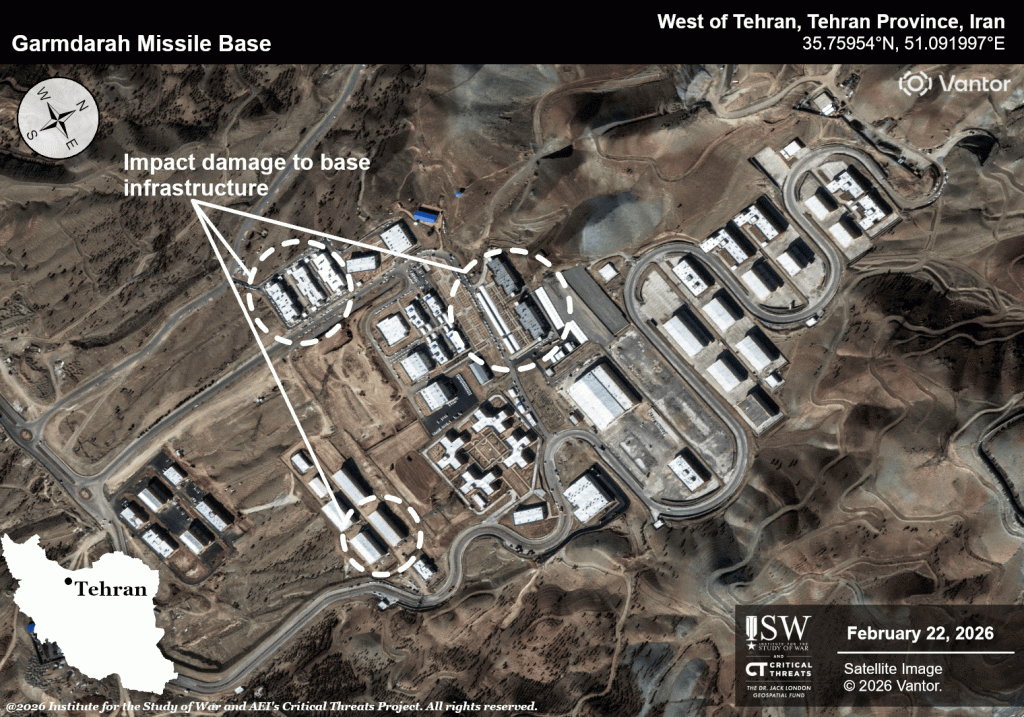
The US-Israeli combined force continues to degrade Iran’s ballistic missile program. US Central Command (CENTCOM) said on March 4 that combined force strikes on ballistic missile facilities have reduced Iranian ballistic missile launches by 86 percent since February 2[lix].[lx] The IDF said it struck a chemical plant that produces missile components west of Tehran in Garmdareh, Alborz Province, on March 3.[lxi] Iranian media also reported sounds of explosions near Garmdareh on February 3.[lxii] The James Martin Center for Non-Proliferation Studies posted satellite imagery from March 3 that shows IDF strikes damaged or destroyed at least eight buildings.[lxiii] The IDF said that the site produced raw materials for solid-fuel surface-to-surface missiles.[lxiv]
The combined force also struck the Esfahan South Missile Base, likely with at least two bunker buster bombs, on March 3, according to satellite imagery from the Martin Center.[lxv] This is the third combined force strike on the Esfahan South Missile Base since the conflict began on February 28.[lxvi]
The combined force conducted at least three airstrikes on two vehicles and a building near the Kashan Missile Base, Esfahan Province, likely on March 2, according to satellite imagery from the Martin Center.[lxvii] A researcher at the Martin Center said that Iran previously used the Kashan Missile Base to launch missiles at Israel during the October 7 War in 2024.[lxviii] The Kashan Missile Base is located near the 840th Missile Group in Aran va Bidgol, Esfahan Province.[lxix]
Combined force airstrikes on the Dezful Missile Base, Khuzestan Province, destroyed at least seven buildings between March 1 and March 3, according to satellite imagery from the Martin Center.[lxx] The strikes indicate that Iran used the Dezful site for some form of ballistic missile production, but this is likely the first recorded strike at the facility.[lxxi] CTP-ISW did not record Israeli strikes on Dezful during the 12-Day War.
The combined force conducted several airstrikes on the Southwest Tabriz Missile Base, East Azerbaijan Province, which inflicted heavy damage on the facility and destroyed nearly every building at the facility, according to satellite imagery captured on March 3.[lxxii] The combined force likely struck the facility on March 3, given that smoke from a presumed strike is visible in some published satellite imagery.[lxxiii] Combined force airstrikes also targeted a likely surface-to-air missile (SAM) position at the facility and a possible radar.[lxxiv] The Southwest Tabriz Missile Base is an underground facility for housing and launching ballistic missiles. The base also reportedly stores Shahab missiles.[lxxv] The IDF previously struck the Tabriz Missile Base during the 12-day War.[lxxvi]
An IAF F-35 struck a mobile ballistic missile launcher located on a highway south of Kermanshah City on March 4.[lxxvii] The IAF published footage of the strike on February 4, and an Israeli analyst geolocated the strike the same day.[lxxviii]
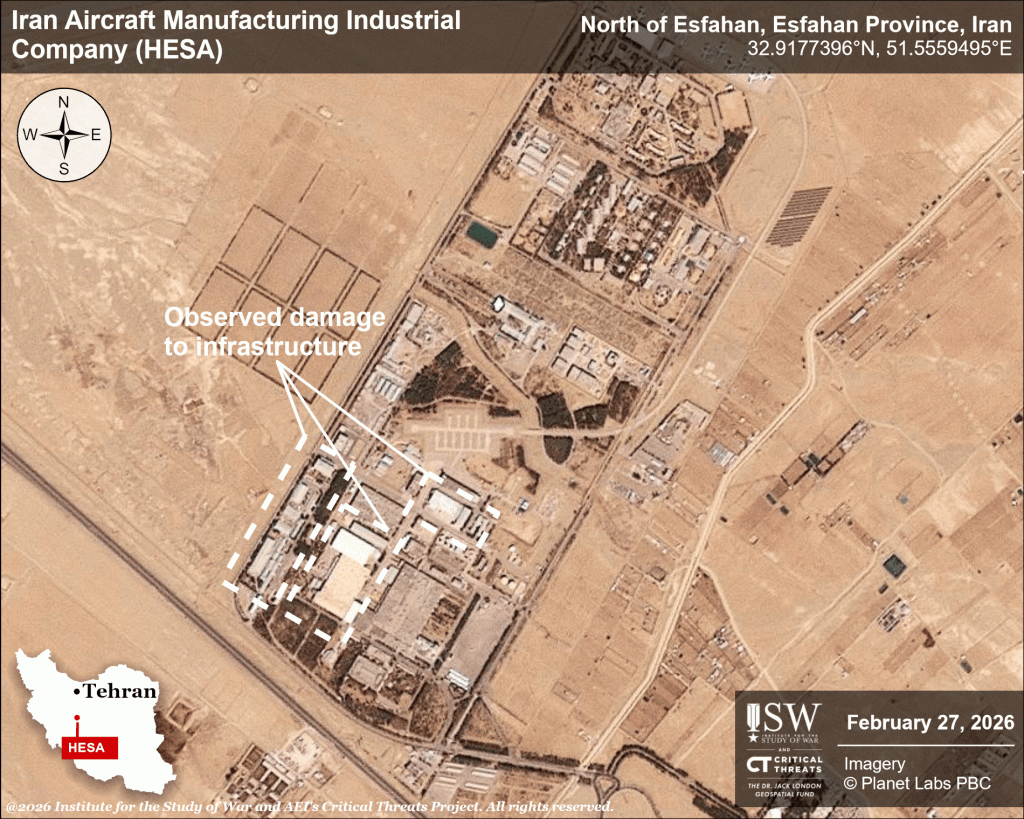
The combined force struck a state-owned drone production facility in Esfahan Province. Commercially available satellite imagery shows at least nine impact points at Iran Aircraft Manufacturing Industrial Company (HESA) in Shahin Shahr, Esfahan Province, between March 1 and 2. At least five buildings show visible damage. HESA is a state-owned subsidiary of the Iranian Defense and Armed Forces Logistics Ministry.[lxxix] HESA manufactures Ababil and Shahed-series drones for the IRGC.[lxxx] Israel struck HESA during the June 2025 war.[lxxxi]
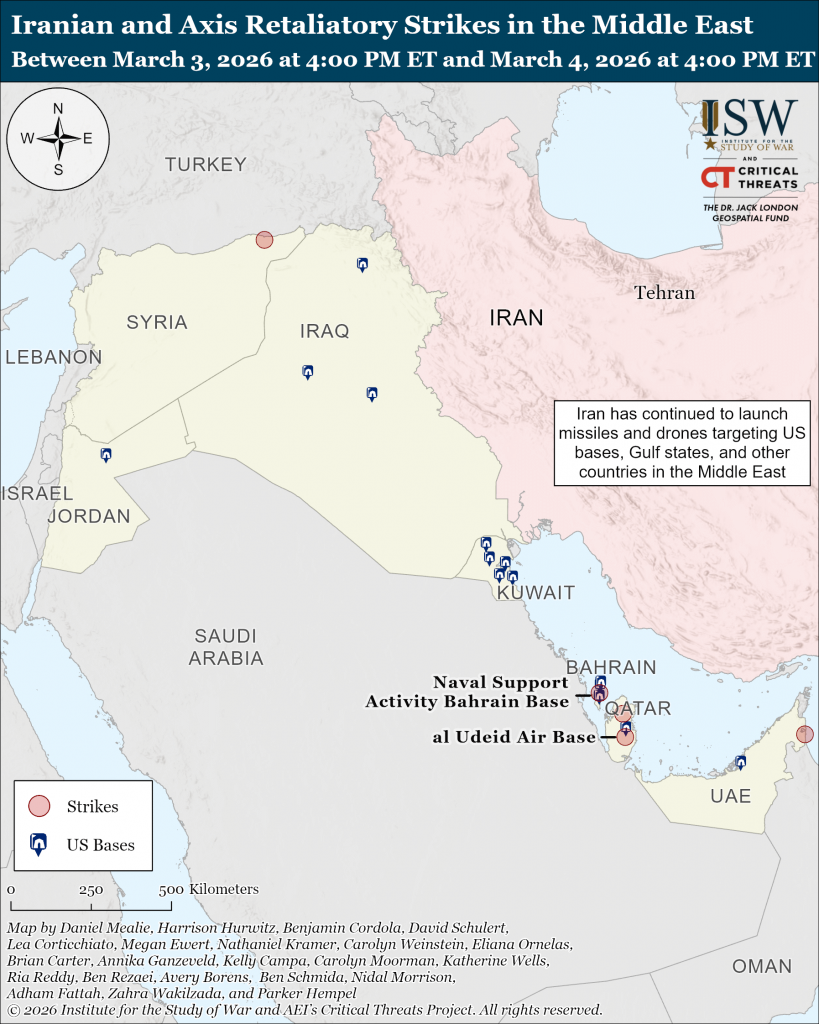
Iranian Retaliation
Iran has continued to launch ballistic missiles at Israel since CTP-ISW’s last data cutoff on March 4.[lxxxii] Iran conducted at least two missile barrages targeting Israel between March 4 at 8:00 AM ET and March 4 at 4:00 PM ET.[lxxxiii] One of the barrages reportedly included three ballistic missiles, two of which the IDF intercepted, while the third fell in Jordan.[lxxxiv] CTP-ISW did not observe any reports of impacts in Israel.
Iran has continued to launch a greater number of drones in its attacks as the number of ballistic missile launches continues to fall, which likely reflects the combined forces’ success in degrading Iran’s ability to launch ballistic missiles. Iran launched at least 158 ballistic missiles, a total of 798 missiles, and 1,628 drones since the war started on February 28.[lxxxv] The consistently low level of Iranian ballistic missile launches compared to Iranian drones reflects the continued degradation of Iran’s ballistic missile capabilities by the combined force. The IDF assessed on March 3 that the combined force had destroyed around 300 Iranian ballistic missile launchers.[lxxxvi] US Chairman of the Joint Chiefs of Staff General Dan Caine noted on March 4 that Iran’s ballistic missile fire is down 86 percent compared to February 28 and has decreased 23 percent within the past 24 hours.[lxxxvii] US and Israeli strikes on Iranian command-and-control networks may also be limiting Iran’s ability to launch large missile barrages.
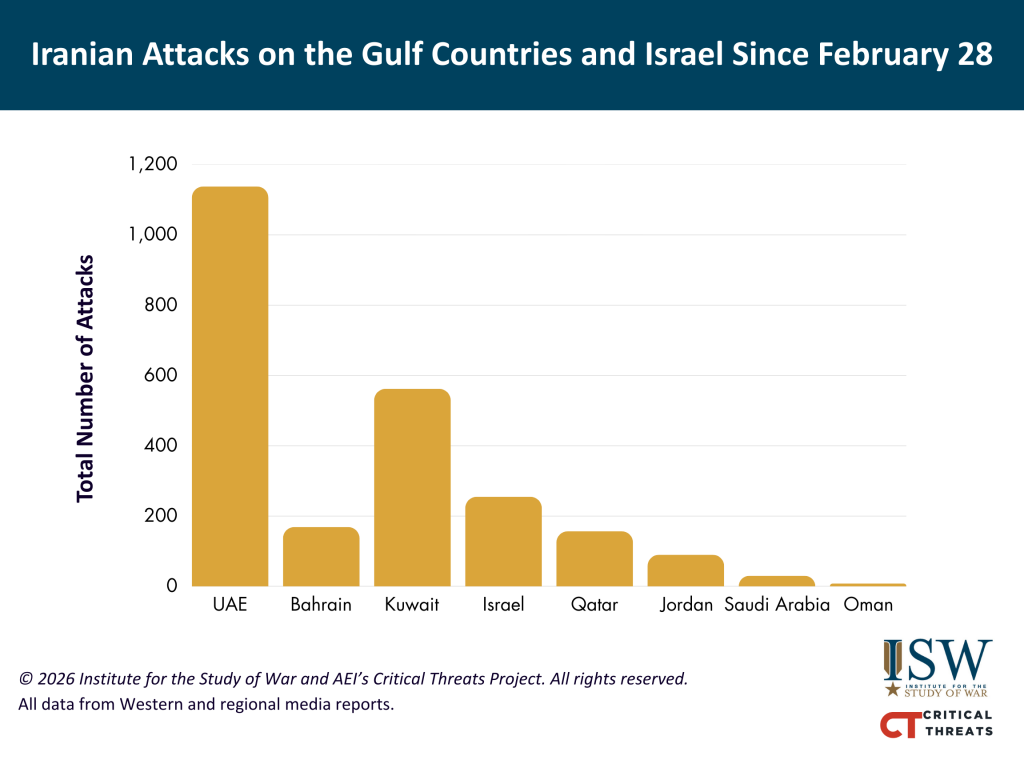
Iran’s retaliatory attacks have heavily focused on targeting the Gulf countries rather than Israel. Most of Iran’s retalitory attacks have targeted the UAE. Iran has reportedly launched 255 drones and missiles targeting Israel since February 28, which is relatively small compared to the 2,171 drones and missiles Iran has launched at the Gulf countries.[lxxxviii] 1,138 of these 2,171 Iranian drone and missile attacks targeted the UAE, which exemplifies how the UAE is taking the most hits in this war.[lxxxix] An Iranian official close to the Iranian regime said on March 4 that Iran seeks to expand the war to regional countries and noted that Israel is not the regime’s first priority.[xc]
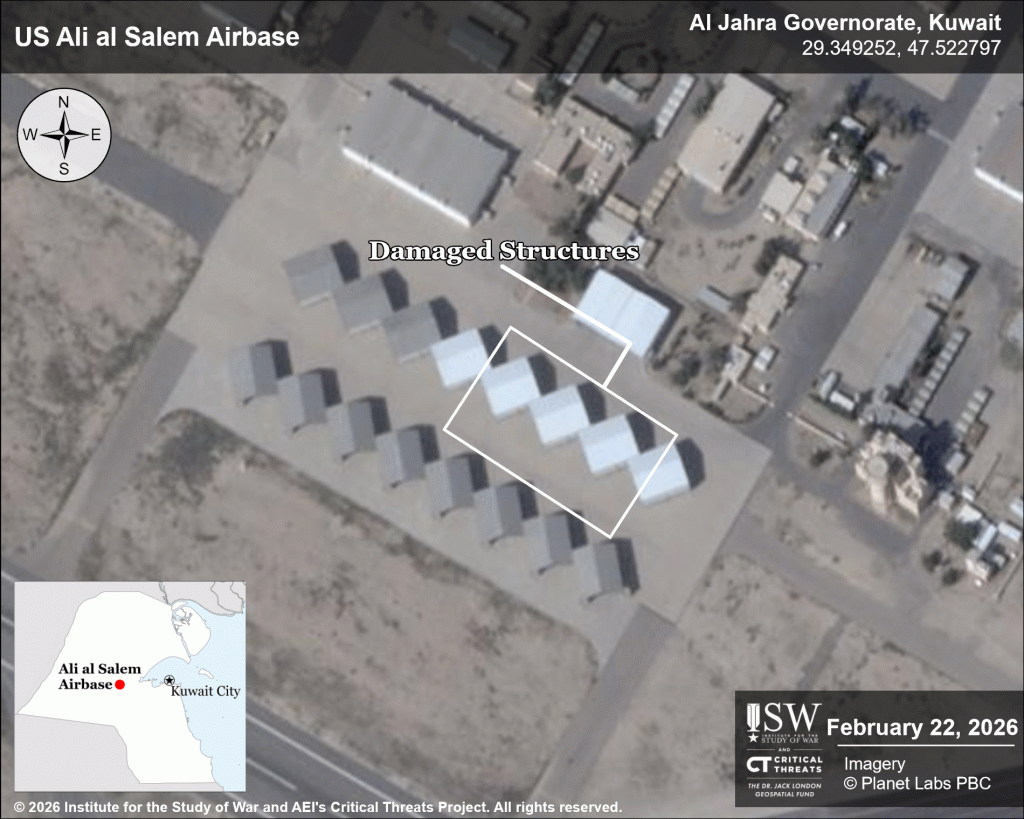
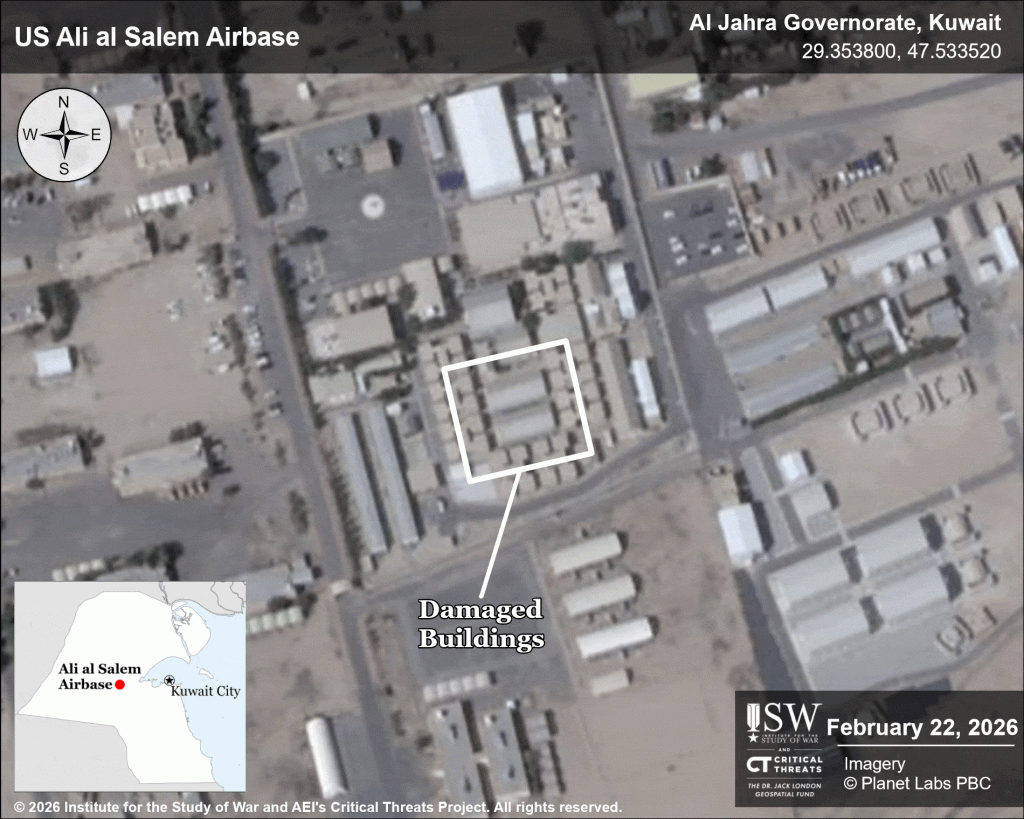
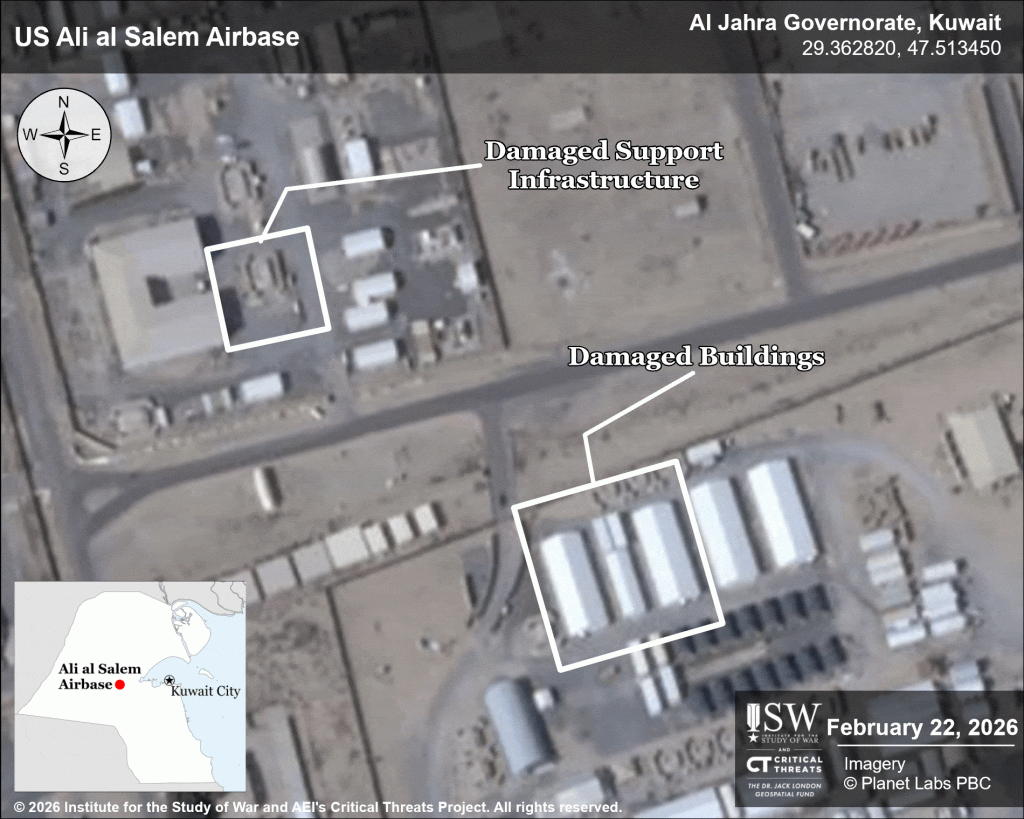
Iranian strikes targeting US bases in the region have caused some material damage and casualties. Commercially available satellite imagery captured on March 4 shows that Iranian airstrikes on the Ali al Salem Airbase in Kuwait damaged several buildings, including aircraft shelters and equipment warehouses. Iran targeted the Ali al Salem Airbase on February 28 and March 2.[xci] Ali al Salem Airbase has long served as a crucial US military base in the region that provides a variety of capabilities, including air surveillance, force protection, combat rescue, aero medical evacuation, and combat support.[xcii] The airbase hosts the US Air Force 386th Air Expeditionary Wing that supports coalition forces’ missions and was a key logistics hub for US Operation Inherent Resolve.[xciii] The New York Times reported on March 3 that Iranian strikes also damaged structures that are part of or near communication and radar systems on at least seven US military sites across the region.[xciv] These sites included Ali al Salem Airbase, al Udeid Airbase in Qatar, Camp Arifjan in Kuwait, the US Navy’s Fifth Fleet Headquarters in Bahrain, and Prince Sultan Airbase in Saudi Arabia.[xcv] Iran has previously attempted to attack the US military’s communication capabilities.[xcvi] The Iranian drone attack on Port Shuaiba, Kuwait, on March 1 killed four US Army reserve soldiers.[xcvii]
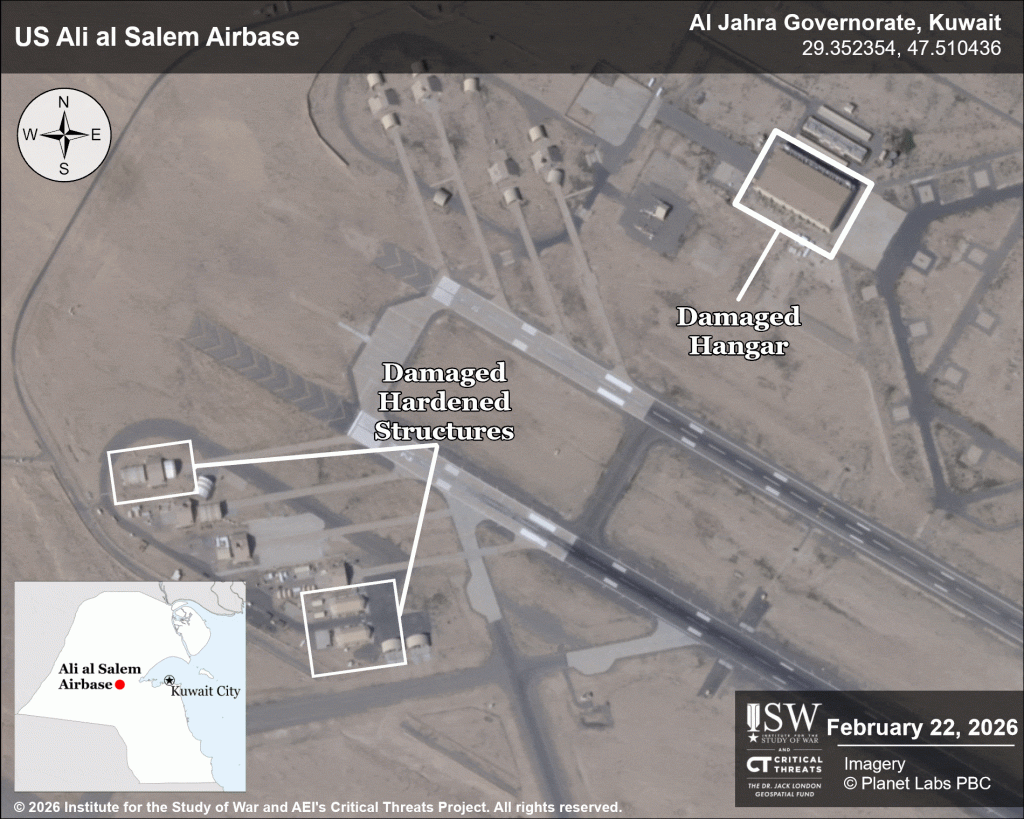
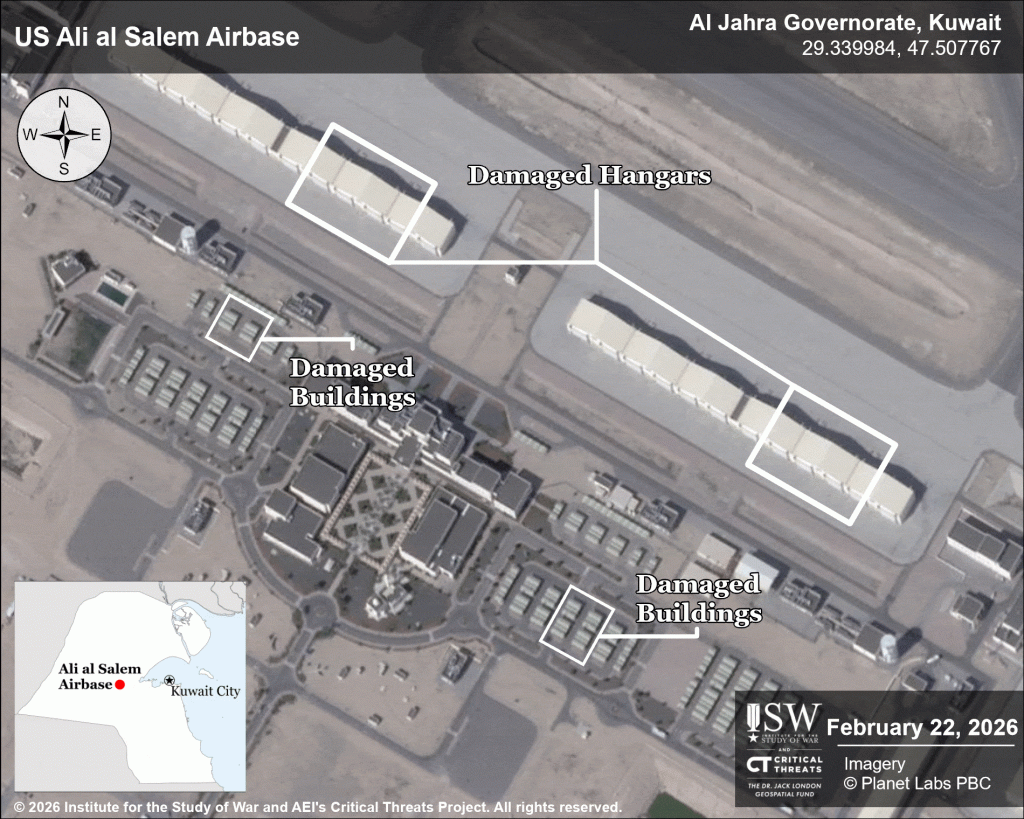
Iranian attacks targeting energy infrastructure in the Gulf have continued to disrupt the regional oil, gas, and international shipping industries. Vessel traffic through the Strait of Hormuz is down by approximately 90 percent on March 4.[xcviii] Danish shipping giant Maersk suspended on March 4 cargo booking acceptance in and out of the UAE, Oman, Iraq, Kuwait, Qatar, Bahrain, and Saudi Arabia immediately and until further notice.[xcix] Maersk only made an exception for the Port of Salalah in Oman and the Dammam and Jubail ports in Saudi Arabia.[c] Maersk previously noted on March 1 that it was halting transit through the Suez Canal and the Strait of Hormuz.[ci] Iraq is reportedly facing a total electricity cut-off due to ”technical issues.”[cii] Iraq previously halted oil production at the Rumaila oil field, which is operated by the British-owned BP PLC, due to storage shortages.[ciii] Qatar also fully shut down gas liquefaction on March 4 and will not be able to return to normal production and export levels “for at least a month.”[civ] Companies have reportedly warned other Gulf states, specifically Saudi Arabia and the UAE, that they may also need to halt oil production due to limited storage capacity ”within weeks.”[cv] European natural-gas prices have surged roughly 70 percent since the war started on February 28.[cvi] The war has also prompted some oil and fuel buyers, specifically in Asia, to cut back on exports and tighten regional supplies.[cvii]
The combined force has severely degraded the Iranian navy. CENTCOM said it has struck or sunk more than 20 Iranian ships, including the recent sinking of the IRIS Dena off the southern coast of Sri Lanka, and the IRGC Navy’s IRIS Shahid Sayyad Shirazi, a Soleimani-class corvette, off the coast of Bandar Abbas on March 3.[cviii] The Artesh Navy has only four frigates and one corvette left in service, along with dozens of fast attack craft.[cix] The sinking of the IRIS Dena means that the combined force has destroyed all Iranian Moudge-class frigates in the Artesh Navy Southern Fleet. The combined force sank both the IRIS Sahand and the IRIS Jamaran on February 28.[cx] There is a single Moudge-class frigate still in service, IRIS Deylaman, which is part of the Northern Fleet in the Caspian Sea. The Northern Fleet, given its position in the Caspian Sea, is irrelevant to the combined force’s efforts to prevent Iran from retaliating against merchant shipping in the Persian Gulf.[cxi] The IRGC Navy, which is responsible for operations in the Persian Gulf, retains three remaining Soleimani-class corvettes, one Abu Mahdi al Muhandis-class corvette, and dozens of fast attack craft.[cxii] The reduction in Iran’s naval capabilities will also prevent it from blocking the Strait of Hormuz using conventional means, such as sea mines. All future attempts by the Iranian navy to blockade the Strait of Hormuz will likely employ unconventional forces such as small boats, uncrewed surface vessels (USVs), and underwater drones.
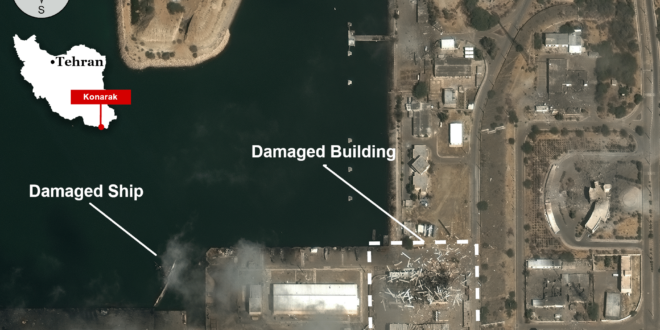
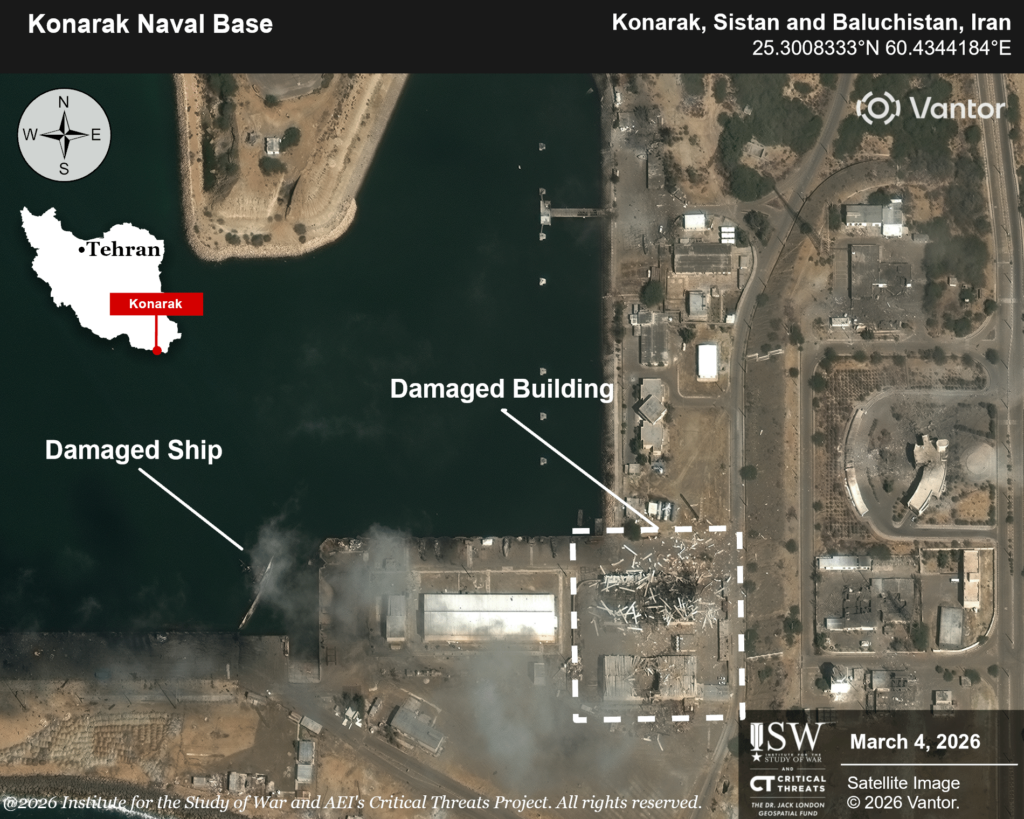
Commercially available satellite imagery captured on March 4 showed damage to a building and a vessel at the Artesh Navy 3rd Naval District base in Konarak, Sistan and Baluchistan Province. Combined force strikes sank the IRIS Bayandor and IRIS Naghdi, Iran’s two remaining Bayandor-class patrol frigates, at the port on or before March 1.[cxiii]
Iran will continue to attempt to disrupt international shipping through the Strait of Hormuz as part of a broader effort to impose a cost on the Gulf states using missiles and drones until the combined force degrades the ability of Iran to do so. The United Kingdom Maritime Trade Operations (UKMTO) reported five maritime security incidents in and around the Strait of Hormuz on March 3 and March 4, which were likely Iranian attacks on shipping.[cxiv] The UKMTO reported an explosion in close proximity to an unspecified vessel off the coast of Muscat, Oman, on March 3. The explosion did not injure the crew or the vessel.[cxv] The UKMTO separately reported that an unspecified projectile struck the Panamanian-flagged Gold Oak Cargo Ship off the coast of the UAE on March 3, causing damage to the vessel but not injuring the crew.[cxvi] The UKMTO also reported that an unknown projectile struck the Marshall Islands-flagged Libra Trader oil tanker off the coast of the UAE on March 3, causing damage to the vessel but no injuries to the crew.[cxvii] The UKMTO reported that an unknown projectile struck the Maltese-flagged Safeen Prestige Cargo Ship just above the water line off the coast of Oman on March 4.[cxviii] This strike was likely caused by an Iranian unmanned surface vessel (USV), given its impact location on the vessel, which subsequently caused a fire in the engine room and forced the crew to abandon ship.[cxix] The UKMTO previously reported a likely Iranian USV attack on an unspecified vessel 50 nautical miles north of Muscat, Oman, which forced the vessel to abandon ship on March 1.[cxx] Iran may have used USVs to attack the commercial vessel because USVs can inflict greater damage to vessels than unmanned aerial vehicles. The UKMTO also reported on March 4 that unknown projectiles landed near a Liberian-flagged container ship but did not hit it.[cxxi] An unspecified senior Iranian naval commander told Iranian media on March 4 that the IRGC navy targeted more than 10 ships and oil tankers in the Strait of Hormuz since February 28.[cxxii]
Iranian regime officials are debating who should become the next Supreme Leader, with Ali Khamenei’s son, Mojtaba Khamenei, emerging as the reported favorite.[cxxiii] The combination of public reports and leaks about the supreme leader’s succession indicates that an internal debate over Khamenei’s successor is underway, particularly within the Assembly of Experts. The Assembly of Experts is an 88-member clerical body that is responsible for appointing and supervising the Supreme Leader, according to the Iranian constitution.[cxxiv] Assembly of Experts member Ahmad Khatami announced on March 4 that “the leadership options have been determined” and that the Assembly of Experts is “close to choosing the leader.”[cxxv] Three Iranian officials told the New York Times that the Assembly of Experts held two virtual meetings on March 3 to discuss who would become the next Supreme Leader of Iran.[cxxvi] The Iranian officials stated that Mojtaba emerged as the “clear front-runner.”[cxxvii] A pro-Iran Iraqi media outlet reported on March 3 that the Assembly of Experts is considering six options to become the next Supreme Leader.[cxxviii] The options are Guardian Council member Alireza Arafi, senior cleric Hashem Hosseini Bushehri, senior cleric and grandson of the first Supreme Leader Hassan Khomeini, former president Hassan Rouhani, Expediency Discernment Council head Amoli Larijani, and Mojtaba Khamenei.[cxxix]
Axis of Resistance
Hezbollah claimed that the group launched 11 attacks targeting IDF positions and forces in northern and central Israel and southern Lebanon since CTP-ISW’s last data cutoff.[cxxx] Hezbollah conducted a total of 17 attacks against Israeli forces on March 4. Hezbollah on March 4 targeted Israeli missile defense bases, air bases, and an IDF staging point in northern Israel.[cxxxi] Hezbollah claimed three drone attacks and one missile attack targeting missile defense bases in Kiryat Elazar and Ain Shemer, northern Israel.[cxxxii] Hezbollah also claimed that the group attacked two air bases in northern and central Israel.[cxxxiii] Hezbollah claimed multiple missile and drone attacks on two Israeli bases in northern Israel since March 3.[cxxxiv] Hezbollah also claimed that its fighters injured an unspecified number of IDF forces in a direct fire rocket attack in Kiryat Shmona, northern Israel.[cxxxv] Hezbollah claimed attacks on Israeli forces in southern Lebanon, including a Merkava tank in Tal al Nahas, Nabatieh District, and Israeli forces in Khiam, Marjaayoun District.[cxxxvi] The IDF has not confirmed or commented on any of these attacks at the time of this writing. The IDF Navy intercepted a Hezbollah drone fired from Lebanon on March 4.[cxxxvii] The IDF reported that two soldiers from the 401st Armored Brigade, 162nd Division, were injured by anti-tank fire in southern Lebanon.[cxxxviii]
The IDF Spokesman Brigadier General Effie Defrin reported that the IDF has no intelligence indicating that an attack on unspecified sites in central Israel on March 4, with concurrent fire from Iran and by Hezbollah in Lebanon, was a coordinated effort.[cxxxix] A senior Israeli official told an Israeli media correspondent on March 4 that Iran and Hezbollah have attempted to coordinate their attack timing on the unspecified sites in central Israel.[cxl] The Iranian military is currently experiencing challenges in coordinating its own operations within Iran between units in the Iranian military. It is unlikely that Iran could coordinate simultaneous attacks with Hezbollah fighters in Lebanon, given the current command and control challenges Iran is experiencing.
The IDF has advanced and reportedly established at least one position in southern Lebanon as part of Israel’s goal to prevent direct fire attacks on northern Israeli towns.[cxli] The IDF has reportedly advanced into Khiam and Mays al Jabal, Marjaayoun district, southern Lebanon.[cxlii] Lebanese media reported that the IDF established a position in front of the Khiam municipality building.[cxliii] The municipality building is located about 1.5 miles (2.48 kilometers) from Israel’s Tal al Hamamis outpost, one of Israel’s five permanent positions it has occupied since February 2025.[cxliv] The IDF reported that three divisions are operating in southern Lebanon.[cxlv] The IDF 91st Division is operating in eastern southern Lebanon, the 210th Division is operating in the Mount Dov (Sheeba Farms) area, and the 146th Division (Res.) is operating in western southern Lebanon.[cxlvi] An unspecified Israeli spokesperson told Reuters on March 4 that the IDF is “positioning troops a little farther” into Lebanon to protect northern Israeli communities from attacks.[cxlvii] Israeli Defense Minister Israel Katz and Israeli Prime Minister Benjamin Netanyahu said on March 3 that the IDF will seize territory in southern Lebanon to prevent Hezbollah’s direct fire attacks on northern Israeli towns.[cxlviii]
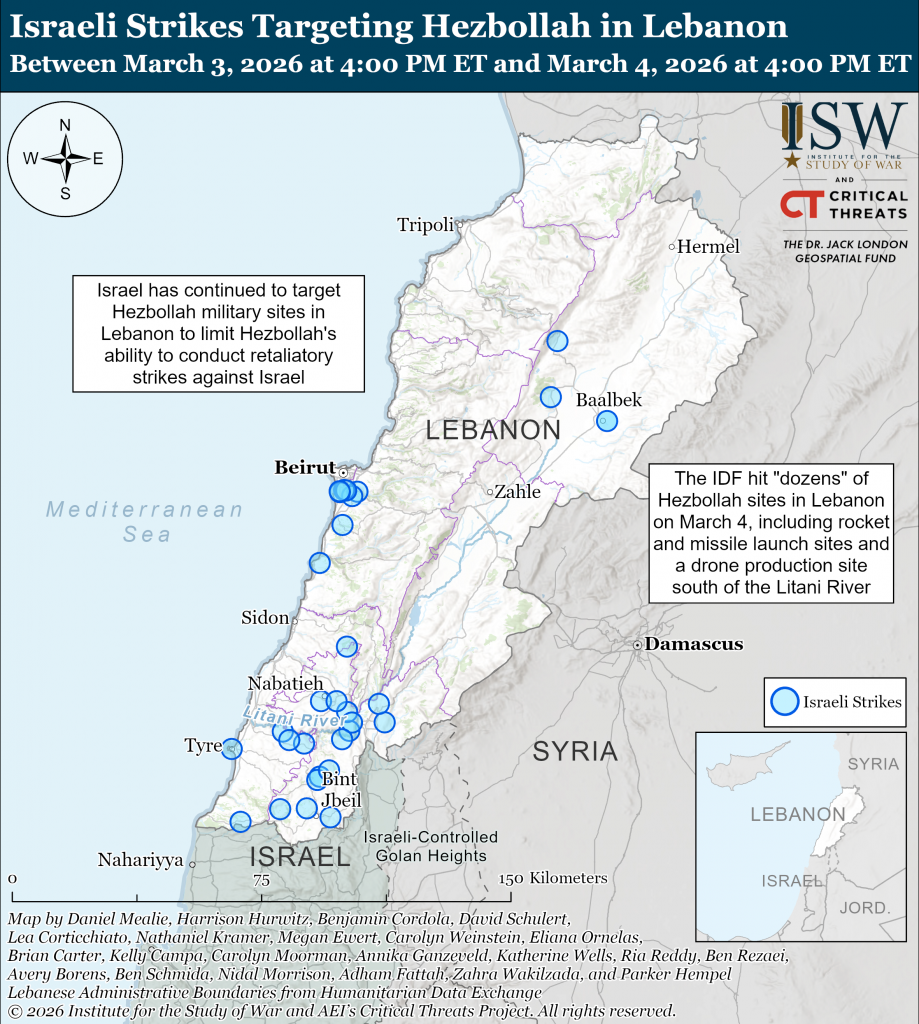
The IDF has continued to conduct airstrikes targeting Hezbollah military sites in Lebanon to degrade Hezbollah’s ability to conduct retaliatory attacks against Israel. IDF reported that it hit “dozens” of Hezbollah targets, particularly in the south of the Litani River, including rocket and missile launch sites and a drone production site.[cxlix] The IDF also targeted two Hezbollah operatives in Beirut.[cl] The IDF has not confirmed the identity of the two individuals at the time of this writing, however.
The Lebanese Armed Forces (LAF) has reportedly conducted operations to disarm Hezbollah in southern Lebanon, after the government banned Hezbollah military activities in Lebanon on March 2.[cli] The LAF reported that it is continuing to coordinate with UNIFIL and the US-chaired ceasefire monitoring committee to disarm Hezbollah.[clii] The LAF reported that it has arrested 26 Lebanese citizens and one Palestinian for illegally possessing weapons and ammunition.[cliii] Unspecified Lebanese security sources told Lebanese media on March 4 that the LAF patrols seized an unspecified number of ”rocket launchers“ from multiple southern Lebanese towns.[cliv] Lebanese President Joseph Aoun said on March 2 that Hezbollah’s March 1 rocket attack on northern Israel was fired from a position north of the Litani, where the LAF had not yet deployed to disarm Hezbollah.[clv] The Lebanese Cabinet declared on March 2 that all Hezbollah military and security activity is illegal, demanded that Hezbollah hand over all of its weapons to the state, and called for Hezbollah to be relegated to only a political organization.[clvi]
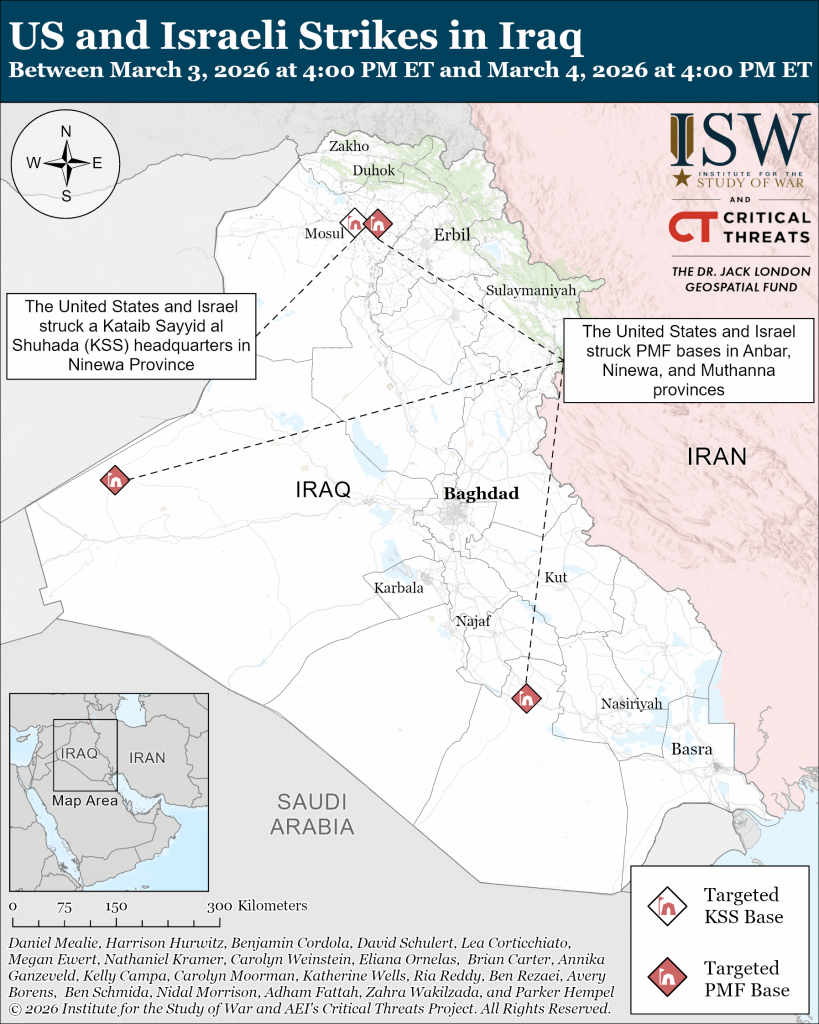
The United States and Israel continued to strike Iranian-backed Iraqi militias on March 3 and 4 to degrade their ability to conduct retaliatory attacks against US forces and Israel. The United States and Israel struck a Popular Mobilization Forces (PMF) base in Diyala Province, Iraq, on March 3, killing one fighter.[clvii] Several Iranian-backed Iraqi militias operate under the PMF, and some of these militias answer to Iran instead of the Iraqi prime minister.[clviii] The United States and Israel separately struck PMF bases in al Qaim, Anbar Province, and Samawah, Muthanna Province, on March 3.[clix] A security source told Iraqi media that the strike in Samawah injured three fighters.[clx] The combined force recently carried out strikes targeting PMF bases in Diyala, Anbar, and Muthanna provinces on March 1.[clxi] The United States and Israel also reportedly struck a Kataib Sayyid al Shuhada headquarters and two 30th PMF Brigade bases in Ninewa Province on March 4.[clxii] The combined force has carried out several waves of strikes targeting 30th PMF Brigade bases in Ninewa Province since March 1.[clxiii] The 30th PMF Brigade is primarily composed of Shabak fighters and is aligned with the Badr Organization, which is both an Iranian partner militia and a political party.[clxiv] The combined force separately struck a Kataib Hezbollah vehicle in Babil Province on March 4.[clxv] A security source told Iraqi media that the strike killed two Kataib Hezbollah members, including commander Abu Hassan al Faraji.[clxvi] The United States has previously conducted pre-emptive airstrikes targeting Iranian-backed Iraqi militias in Iraq to prevent the militias from launching attacks.[clxvii]
Iranian-backed Iraqi militias continue to conduct attacks against US forces. Likely Iranian-backed Iraqi militias targeted the US military’s former Victory Base at Baghdad International Airport on March 4 with at least two drones.[clxviii] A security source told Iraqi media that air defenses intercepted two drones attempting to target the base.[clxix] The United States transferred control of the Victory Base to the Iraqi government in 2011, but many Iranian-backed actors continue to assert that the area is still a US base.[clxx] Saraya Awliya al Dam, which is commonly believed to be a front group for larger Iraqi militias, previously claimed responsibility for targeting the base on March 1.[clxxi]
The Houthis warned unspecified Arab countries on March 4 that attacking Iran would prompt their entry into the war, according to Iranian Supreme National Security Council (SNSC)-affiliated media.[clxxii] The Houthis likely aim to deter Gulf countries from attacking Iran. The Houthis have not yet conducted any retaliatory attacks against the United States or Israel, which is notable because the Houthis were the only Axis of Resistance member that participated in the June 2025 Israel-Iran War.[clxxiii] The Houthis could decide at any time to attack US interests or Israel in response to the combined strike campaign, however.
Other Activity
The Iranian Intelligence Ministry announced on March 4 that security forces detained an unspecified number of “terrorist mercenaries” and seized large quantities of “urban warfare equipment, sums of euros and dollars, and a Starlink device” in an unspecified location in Iran.[clxxiv] The Intelligence Ministry warned of harsh punishments for individuals deemed ”domestic mercenaries” in Iran.[clxxv]