 Eurasia Press & News
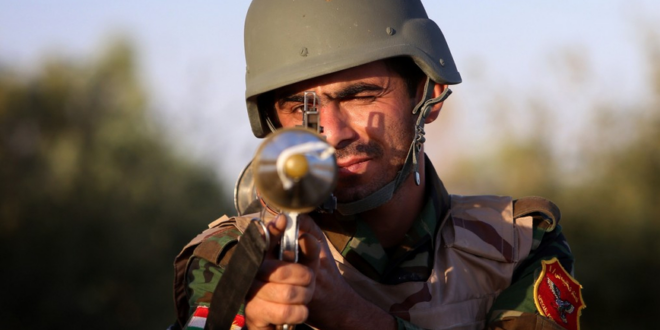
At the moment when the regime in Iran was shaken, the attention of the world community turned to the Kurds, whose forces are concentrated on the border of the country. The first reports of the invasion of the Kurds опроверглиdenied: “We can’t move if the air is not clean above us. We need to see the destruction of weapons depots. Otherwise, it would be suicide.” Meanwhile, the Kurds themselves are trying to maintain autonomy in Syria, where they were forced to sign not the most profitable agreement with the new authorities because of the passivity of their American allies. The Iranian war could return the Ukrainians to the location of the United States, without which it will be very difficult for them to defend themselves in this region.
Content
How the Kurds Lost American Support

The crisis of trust between the Kurds and the Arabs

Forced integration

Between Israel and Iran
The Kurds are again in the spotlight. Washington confirms that it refutes that by agreement with him, fighters from Iraqi Kurdistan crossed the Iranian border and began hostilities in the territory where their brethren live – Iranian Kurds. According to one version, the United States wants to arm them and use it to start an internal uprising against the central authorities in Iran.
At the same time, because of the situation that developed at the beginning of the year in Syrian Kurdistan, it seemed that the United States was no longer interested in Kurdish assistance. We are talking about the forced subordination of the Syrian Kurds to the new government. At the beginning of the year, the agreement between the central authorities of Syria and the Kurds seemed unattainable. The talks, held on January 4 at the government residence in Damascus between representatives of the Syrian Cabinet and Kurdish politicians led by the commander of the Kurdish Syrian Democratic Forces (SDF), Mazloum Abdi, ended in scandal.
Syrian Foreign Minister Assad al-Shaibani suddenly lost his temper and demanded that the Kurds leave the premises. Abdi and mediators at the meeting representatives of the American administration tried to protest, but the minister was adamant. Negotiations, which discussed the plan for the peaceful reintegration of the northeastern regions of the country with a predominantly Kurdish population into the “large” post-Sadasad Syria, paused.
In Damascus, then in the breakdown of negotiations blamed Abdi, allegedly unable to make independent decisions without regard to the Kurdistan Workers’ Party (PKK). This is a rather serious accusation: the PKK combat detachments for decades were the main enemy of Turkey neighboring Syria, fighting in different historical periods that for the independence of the Kurdish territories from Ankara, then at least for their wide autonomy.
In Turkey, they feared that as a result of the civil war, the Syrian Kurds would get their own state on the fragments of the country that had fallen apart before its eyes and would try to annex the southern regions of Turkey. That is why the Turks got into a bloody conflict in a neighboring country on the side of those who clearly did not intend to divide Syria into autonomy. And Ankara did not lose: at the end of 2024, during the lightning offensive of the al-Sharaa forces, the army of the president-usurper Bashar al-Assad was defeated. He himself fled to Moscow, after which the rebel leader was proclaimed the interim head of state.
How the Kurds Lost American Support
One of the main problems of post-war Syria, which demanded an immediate solution, was separatism in the Kurdish-popularly populated northern regions of the country. The Kurds have been able to reach an unspoken agreement on neutrality with Assad since the beginning of the civil war: they did not support the rebels, and the Assad’s government and army did not interfere in internal affairs in the north.
Later, with the advent of ISIS, it was the Kurds, as their main allies in the war against the self-proclaimed caliphate, the West bet. This was not done from a great love of them, but because it was impossible to find other real allies. The so-called secular opposition, which began to speak against Assad, quickly quarreled among themselves and fell apart on incapable factions and small groups.
Assad himself, though hostile to ISIS, was persona non grata for Europe and the United States. In addition, he was an ally of Iran, and he was helped by Russia. The so-called moderate Islamist groups were not always moderate and sometimes joined the openly hostile West of al-Qaeda and ISIS. So, there is emphatically secular, declaring their commitment to human rights, Kurdish leaders were, by and large, the only ones that the Western world could rely on. As a result, thanks to Europe, but more even the United States, the Syrian Kurds had weapons, money and diplomatic support. However, after the defeat of ISIS, foreign aid quickly dried up. In addition, neither Washington nor European capitals have ever made any statements in support of Kurdish independence or at least autonomy in Syria.
When al-Sharaa came to power, the Kurds could not dream of a closer interaction with the United States. On the contrary, President Trump, contrary to the calls of Mazloum Abdi and his colleagues, openly announced plans to return American troops home from Syria. It seemed to the Kurds that the very presence of the Americans in the region guaranteed that Damascus would not force the return of the Kurdish lands under its control, but in fact they had miscalculated at that moment.
Abdi found himself in an extremely difficult situation – without the real support of yesterday’s partners and in the face of a possible invasion of a well-armed and well-motid new Syrian army. Therefore, in March 2025, he signed an agreement in Damascus to reintegrate the northern regions and return them to the control of the central authorities. The document did not regulate all aspects of future integration and did not give clear answers to many controversial issues. Such, for example, as the future of Kurdish armed formations, the status of the Kurdish language, the division of power between the center and regional authorities. It was assumed that all this would be decided later, already during the reintegration. But the process stalled, having met with rather tough resistance on the ground.
The Kurds, accustomed to a decade and a half of their independent existence, were in no hurry to go back to Damascus rule. Al-Sharaa they even called jihadist, and negotiations with him illegal. This sabotage of the new Syrian authorities considered the intrigues of the PKK, or rather, its Syrian branches – the People’s Protection Units (YPG) and the Women’s Self-Defense Units (YPJ). These groups make up the backbone of the Kurdish forces, led by Mazloum Abdi. At the same time, they have their own political leadership, preaching the most distant from the ideals of the Islamist al-Sharah, secular socialism. He is also not against autonomist rhetoric, which sometimes borders on separatism.
YPG and (especially) YPJ are not just combat detachments, it is also the main symbol of the opposition to ISIS. The world knows photos and videos of Kurdish girls in uniform, fearlessly fighting against jihadists. Self-defense groups have their own clear ideology and governance structure that do not fit into the views of the government of al-Sharaa about what the law enforcement agencies should look and function. Indeed, it is quite difficult to imagine in the armed forces a new, frankly gravitating to the strong central and Islamism of Syria anarchist and YPG queer battles.
It is difficult to imagine in the armed forces of the new Syria anarchist and quirr battalions of the Kurdish People's Self-Defense UnitsThe tradition of Kurdish detachments to choose commanders (to the brigade level) also does not fit into the most consolidated, directly subordinate to Damascus, the structure of the armed forces of Syria. Therefore, the ministers of al-Sharaa have always insisted that the YPG and YPJ fighters should join the new army individually and that they should be distributed among different units. The political leadership of the detachments is aimed at preserving them in its current form, including their control over a considerable part of the Syrian army. In such a supplant, Damascus accused Abdi when he disrupted the talks.
The crisis of trust between the Kurds and the Arabs
The SDF has reason not to trust the new Syrian authorities and even to nostalgate on the last few years of Bashar al-Assad’s rule. It was with him that they received not just a broad autonomy, but a whole quasi-state, known as Rojava (translated from Kurdish this means “the West”, that is, the western part of Kurdistan, which also includes the northern regions of Iraq and Iran). Damascus did not particularly get into his business. This was because Assad did not have enough strength to regain control of the north of the country.
The new authorities have quite clearly demonstrated their attitude to the Kurdish national project by adopting the so-called Constitutional Declaration, which will apply until the country’s full-fledged new basic law is adopted.
According to this interim document, Syria retained its former, irritating national minorities, the official name of the Syrian Arab Republic. In addition, the declaration does not contain any mention of the Kurdish language (the Arabic is listed as the only official one). In the list of public holidays in the Declaration were initially only secular, Muslim and Christian, but there was no main Kurdish – Novruz.
The declaration does not contain a single mention of the Kurdish language, and in the list of public holidays there is no NovruzSeeing a clear disagreement of Damascus to keep even a hint of Kurdish autonomy, Mazloum Abdi and his comrades were preparing not only for political, but also military confrontation with the new authorities. And this, despite the solid combat experience of Kurdish formations and still not exhausted stocks of Western weapons, would be quite problematic. Still, on the side of al-Sharaa were the sympathies of most of the world community.
He used – and skillfully – the fame of the winner of one of the bloodiest dictators of our time, while the Kurds were unable to convert their image of fearless fighters who defeated ISIS in sympathy for their national project, which conflicts with the Syrian one. In addition, there are many Arab tribes in Rojava, most of which are quite religious and conservative, not always and not in all sympathetic secular (and secularism in the Middle East is often equated with atheism) to the Kurdish authorities.
While the Kurds fought against ISIS and with the help of soft power did not allow Assad to regain its influence in northern Syria, the local Arabs remained loyal to the Kurdish authorities and even enchanted en masse into the SDF units. They were gladly received and armed not only to increase the number of units, but also for ideological reasons. The SDF positioned themselves as an interethnic formation, protecting the interests of representatives of all peoples living in the territory they controlled. Therefore, they readily took the Arabs with whole communities.
It got to the point that in some areas the SDF units were only nominally Kurdish, but in fact were a tribal Arab militia. And this turned into a disaster for the army of Mazlum Abdi. A day after the failure of the talks in Damascus – January 6 – the Syrian army launched an offensive against the SDF position in the northern part of the city of Aleppo.
By January 11, the last Kurdish center of resistance in the city was suppressed, after which the army went on the offensive in other directions, quickly taking control of all new cities. The speed and success of offensive operations were largely ensured by the massive transition of the Arab SDF to the side of the central government.
The success of offensive operations largely ensured the massive transition of the Arab SDF to the side of DamascusThese Arabs, acting in the rear of their recent comrades, coordinate their actions with the main army forces, so that the Kurdish forces are forced to literally fight simultaneously on two fronts. And if you believe the statements of the SDF commanders about the direct participation in the battles of the Turkish formations, then even three.
In just two weeks of intense fighting, the SDF lost control of 80% of the territories previously subordinate to them. It is possible that under the blows of the Syrian army soon would soon fall and still held by the Kurdish forces of the cities of Khasaka and Kamylish, as well as several rural enclaves. But they were saved by the consent of the Rojava administration to find a compromise with Damascus.
Forced integration
After several failed attempts to conclude a peace agreement about a month ago, the parties agreed on a ceasefire and in more detail than before, the mechanisms for the reintegration of Kurdish territories. The new agreement obliges SDF fighters and commanders to individually move to serve in the Syrian army, it is impossible to transfer to the jurisdiction of Damascus by brigades and battalions. New structural units will be formed from these people. Foreigners associated with the PKK will not be allowed to serve in the armed forces and the police. The issue of admission to the new structures of Syrians from YPG and YPJ will be decided individually. All heavy weapons, control over oil-bearing areas, airports and borders with Iraq and Turkey are transferred to Damascus. All local officials of Rojava retain their positions, but are now controlled not by local councils, but by the central government. Damascus is committed to helping refugees from the region return to their homes and protect their rights. SDF leaders receive high positions in settlements with a large share of the Kurdish population and in the national administration.
The signing of this agreement was preceded by the publication of the decree of President al-Sharaa, which gave the Kurdish language the official status of a national language. It will be used in clerical production in the former Rojava, it will be possible to teach in state-certified educational institutions.
In addition, all Kurds deprived of citizenship in 1962 (then the authorities deprived about 20% of the Kurds of civil rights, declaring them illegally arrived in the country foreigners), and their descendants returned to Syrian citizenship. In the same decree, Novruz is proclaimed an official holiday.
Commenting on his decree, the Syrian president said that the Kurds should take an active part in the revival of the Syrian nation and that their rights will henceforth be protected. In early February, the remaining city under nominal control of the SDF, in agreement with local administrations, included Syrian police and special services. Under their supervision, the remnants of the quasi-statehood of Rojava will be eliminated: weapons will be transferred to Damascus, local legislation will be rewritten in accordance with the national, combat units will be spread, and the people of employees will be redistributed to new units.
The long-term experiment to build a socialist enclave in a civil war-tornist, ruled by local councils in accordance with Marxist principles, is over. Ahead of the long and difficult work to integrate millions of people into the political and economic life of the state from which they have been detached for the last decade and a half. And a new aggravation in the region in the form of an attack by Israel and the United States on Iran and the elimination of its leadership, as well as the Iranian Islamic Revolutionary Guard Corps to play “middle-east chaos,” or a war of all against all, are now opening up new opportunities, including to the Kurds.
The pragmatic and purposeful al-Sharaa is negotiating even with the Russians, on whose account the murders of at least 7 thousand civilians alone. He has a good chance to gather the war-disseminated Syria, but here it does not depend on him. Until recently, YPG and YPJ fighters were disorganized and confused, but now they can try to regain lost influence and territory. For example, if there is a military conflict with Lebanon or over Lebanon, since the concentration of Syrian troops is rather serving as Hezbollah not infiltrate Syria, but could escalate into a direct conflict with its neighbors, including even Israel.
Between Israel and Iran
A lot will also depend now on whether there is a force in the region that is ready to provide the Kurds with substantial assistance. Theoretically, earlier it could be Israel, whose leadership is not at all enthusiastic about the Islamist government in Damascus. But the Israelis are very pressed by Americans interested in the long-term world in the region. Especially against the backdrop of the war with Iran, which also from Israel, which has already called more than 100 thousand reservists, requires full force.
If Israel withdraws itself or limits only the support of the Syrian Druze, then the Kurdish groups will have only one potential ally and sponsor – Iran. And now is the moment when a new complex tangle can start. On the one hand, there are rumors that Donald Trump is considering the possibility of betting on the Iranian Kurds against the central government. Here he will certainly need the help of Iraqi, and maybe their Syrian counterparts. At the same time, the Iranians may try to make a mistake with their former enemies in desper, just to add chaos and shake the already weak new Syrian regime.
At the official level, Tehran recognizes the self-defense units by terrorists, but on the unofficial – quite closely even earlier began to interact with them. At least, this is reported by the Turkish media. Turkey is another player who did not want to confront Iran, but is now forced to join it and is most afraid of the activation of the Kurdish issue. For official Ankara, there is nothing worse than the current alliance between the United States and Iraqi Kurdistan, which threatens to grow by Kurdistan Iranian.
However, it is also worth remembering that Syria has been in the zone of Iranian influence for decades. The loss of control over the Syrian government after the defeat of the Assad army was a serious blow to the prestige of the Ayatoll regime, and even deprived them of outpost in the heart of the Arab world. Now, during the war of all against all, Syria may again be the weakest and most disintegrated player in the heart of a major regional conflict. So not only the Americans, but also Tehran can try at least partially won back the losses in the region and even start flirting with the local Kurds, who find themselves in a completely different position than the Iraqi Kurdistan.
Turkey will have to, at the risk of quarrelling with the United States, to start military operations against the Kurds on foreign territory – in Iraq, and maybe in Syria. And then again it will be important with whom in these wars will be the Syrian Kurds, squeezed between the central authorities of the country (friends with Turkey), Israel, pro-Iranian forces in Syria and in Lebanon, and, finally, their brethren in Iraqi Kurdistan.