 Eurasia Press & News
Key Takeaways
Iran’s Assembly of Experts selected former Supreme Leader Ali Khamenei’s son, Mojtaba Khamenei, as the next Supreme Leader on March 8. Mojtaba’s selection as the Supreme Leader represents a victory for hardline factions over more pragmatic figures within the regime. Mojtaba is a hardline cleric who will likely pursue similar domestic and foreign policies to those of his father. Mojtaba will face several immediate challenges, including trying to establish his legitimacy and attempting to unite and gain the support of various regime factions. Mojtaba’s connections to the IRGC and the Office of the Supreme Leader may mitigate some of these challenges.
Ukraine will send an unspecified number of Ukrainian military personnel with expertise in downing Shahed drones to Gulf states, underscoring how Ukraine’s experience in defending against Iranian drones can strengthen the air defenses of the United States and its allies in the Middle East.
The US-Israeli combined force continued to target Iranian ballistic missile infrastructure in order to degrade Iranian missile capabilities and ultimately destroy the Iranian ballistic missile program. The IDF has attacked over 400 targets, including ballistic missile launchers and weapons production sites, in western and central Iran over the past day. The IDF has destroyed around 75 percent of Iran’s missile launchers.
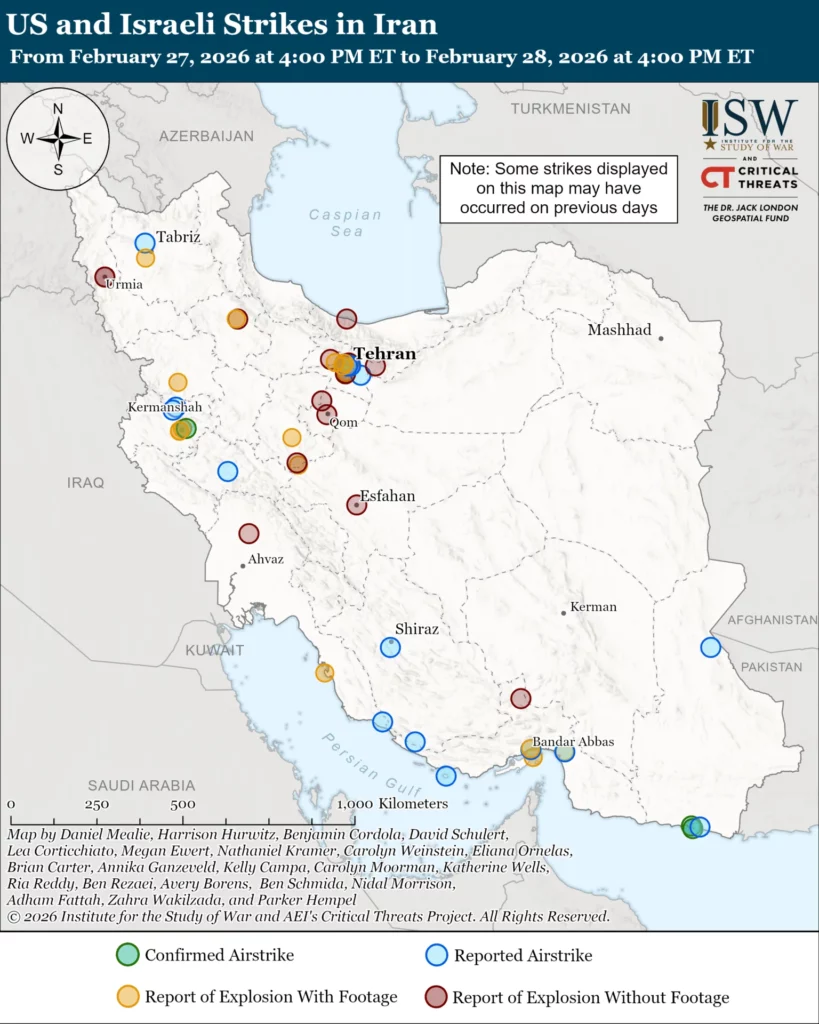
The combined force continued to target Iranian internal security institutions in Tehran City and western Iran. OSINT accounts reported combined force airstrikes targeting LEC headquarters in Borujerd, Lorestan Province, Kuhdasht, Lorestan Province, Eslamabad-e Gharb, Kermanshah Province, and Abdanan, Ilam Province.
Iran continued to attack regional countries on March 7 and 8. An Iranian drone damaged a desalination plant in Bahrain. The Saudi Civil Defense Authority reported on March 8 that an unspecified projectile fell on a residential area in Kharj, Saudi Arabia, killing two individuals and wounding 12 others.
The IDF has continued to conduct airstrikes targeting Hezbollah across Lebanon to degrade Hezbollah’s ability to launch attacks targeting Israeli forces and positions in northern Israel and southern Lebanon. The IDF has conducted over 100 strikes in Lebanon in the past 24 hours and a total of 600 strikes using 820 munitions in Lebanon since the war began on February 28.
Toplines
Iran’s Assembly of Experts selected former Supreme Leader Ali Khamenei’s son, Mojtaba Khamenei, as the next Supreme Leader on March 8.[1] Mojtaba’s selection as the Supreme Leader represents a victory for hardline factions over more pragmatic figures within the regime. Mojtaba is a hardline cleric who will likely pursue similar domestic and foreign policies to those of his father. Mojtaba fought in the Iran-Iraq War and developed important relationships while serving in the Habib Ibn Mazahir Battalion under the 27th Mohammad Rasoul Allah Division.[2] Many members of the Habib Battalion went on to hold influential positions, particularly in the Islamic Revolutionary Guards Corps (IRGC) Intelligence Organization.[3] Mojtaba maintained ties to these individuals, such as former IRGC Intelligence Organization Chief Hossein Taeb. Mojtaba used these relationships to cement his role in Iran’s security apparatus. Mojtaba reportedly played a leading role in securing former hardline President Mahmoud Ahmadinejad’s victory in 2009 and subsequently took control of the Basij to crush the protests over Ahmadinejad’s election, for example.[4] US President Donald Trump told Axios on March 5 that Mojtaba was an unacceptable candidate to become Iran’s new Supreme Leader.[5]
Mojtaba will face several immediate challenges, including trying to establish his legitimacy and attempting to unite and gain the support of various regime factions. Mojtaba’s connections to the IRGC and the Office of the Supreme Leader may mitigate some of these challenges, however. Mojtaba is a mid-level cleric like his father was when he assumed the position, which has historically caused his candidacy to be controversial.[6] Prominent clerics have publicly questioned Mojtaba’s religious credentials, for example.[7] Mojtaba will also likely face criticisms that the Islamic Republic is transforming into a monarchy with hereditary succession, particularly because Ali Khamenei reportedly opposed hereditary succession.[8] Mojtaba will additionally have to contend with a very fractured regime and attempt to unite and gain the support of various factions at a point when the regime is facing unprecedented internal and external pressure. Anti-regime media recently reported that the IRGC pushed for Mojtaba’s selection.[9] It is unclear which specific factions within the IRGC support Mojtaba, but this support may mitigate some of the challenges Mojtaba will face.
Mojtaba’s selection represents a victory for hardliners over more pragmatic figures within the regime. Some Assembly of Experts members, such as hardline cleric Ayatollah Mohammad Mehdi Mir Bagheri, wanted the Assembly of Experts to quickly appoint a new Supreme Leader after Ali Khamenei’s death, likely, in part, to make it difficult for those who opposed Mojtaba’s candidacy to have sufficient time to convince others to oppose Mojtaba.[10] More pragmatic figures within the regime appear to oppose Mojtaba. Anti-regime media reported on March 6 that Supreme National Security Council Secretary Ali Larijani had wanted his brother, Sadegh Amoli Larijani, to become the next Supreme Leader, which would have given Ali Larijani immense power within the regime.[11] Anti-regime media previously reported in September 2025 that Ali Larijani was “competing to position [himself] for a potential succession.“[12] The New York Times reported on February 22 that Khamenei had tasked Ali Larijani with “steering the country” during the recent protests and that Larijani has “effectively been running the country” since then.[13]
NOTE: A version of the following text also appears in The Institute for the Study of War’s March 8 Russian Offensive Campaign Assessment:
Ukraine will send an unspecified number of Ukrainian military personnel with expertise in downing Shahed drones to Gulf states, underscoring how Ukraine’s experience in defending against Iranian drones can strengthen the air defenses of the United States and its allies in the Middle East. Ukrainian President Volodymyr Zelensky stated on March 8 that an unspecified number of Ukrainian experts and military personnel will depart from Ukraine on March 9 to teach unspecified Gulf states Ukraine’s knowledge on how to destroy drones.[14] Zelensky stated that Ukraine will provide the United States and countries in the Middle East with Ukraine’s expertise and military experience in combating Shahed drones, cruise missiles, and other aerial threats and noted that three unspecified Gulf states seek to buy Ukrainian Shahed interceptors.[15] Zelensky has also spoken with several leaders from Middle Eastern states in recent days, including Bahraini King Hamad bin Isa al Khalifa and Saudi Crown Prince Mohammad bin Salman al Saud, to discuss insights into countering Iranian threats.[16] Iran has fired thousands of drones targeting Gulf states since February 28, inflicting significant damage on US and Gulf military infrastructure and civilian areas and disrupting regional oil, gas, and international shipping industries.[17] Ukraine can offer the United States and US allies in the Middle East unique insights into how to combat Iranian strikes because the Ukrainian military has institutionalized and operationalized the fighting experience that Ukraine has learned throughout the past four years of war.
Several Ukrainian companies have the ability to export battle-tested interceptor drones to the United States and US allies. Reuters reported on March 7 that Ukrainian manufacturers of low-cost interceptor drones stated that they have the capacity to export large volumes of drones.[18] SkyFall, a major Ukrainian drone and drone interceptor manufacturer, estimated on March 7 that it could produce up to 50,000 interceptor drones per month and could export 5,000 to 10,000 drones while still fulfilling Ukraine’s needs. Ukrainian drone manufacturer TAF Industries Head Oleksandr Yakovenko stated on March 8 that the UAE, Qatar, and Kuwait have already requested or expressed interest in importing Ukrainian interceptor drones.[19] Yakovenko noted that it has taken several months to train drone interceptor operators and that training interceptor operators is the main limiting factor for countries looking to use Ukrainian technology. Ukraine’s institutional knowledge has enabled Ukrainian firms to rapidly develop and refine capabilities specifically tailored to counter Iranian-origin weapons, and continued investment into Ukraine’s defense industrial base is important for not just Ukrainian security but also for the United States and its allies.
US and Israeli Air Campaign
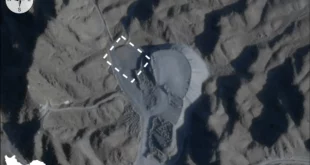
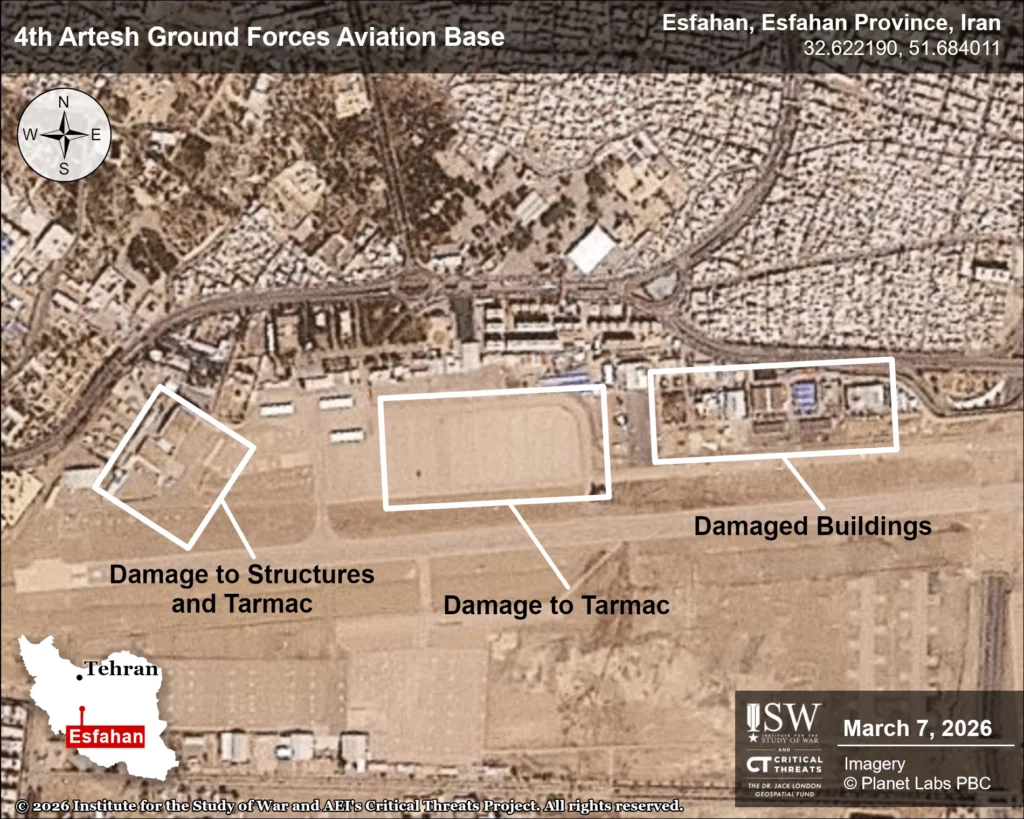
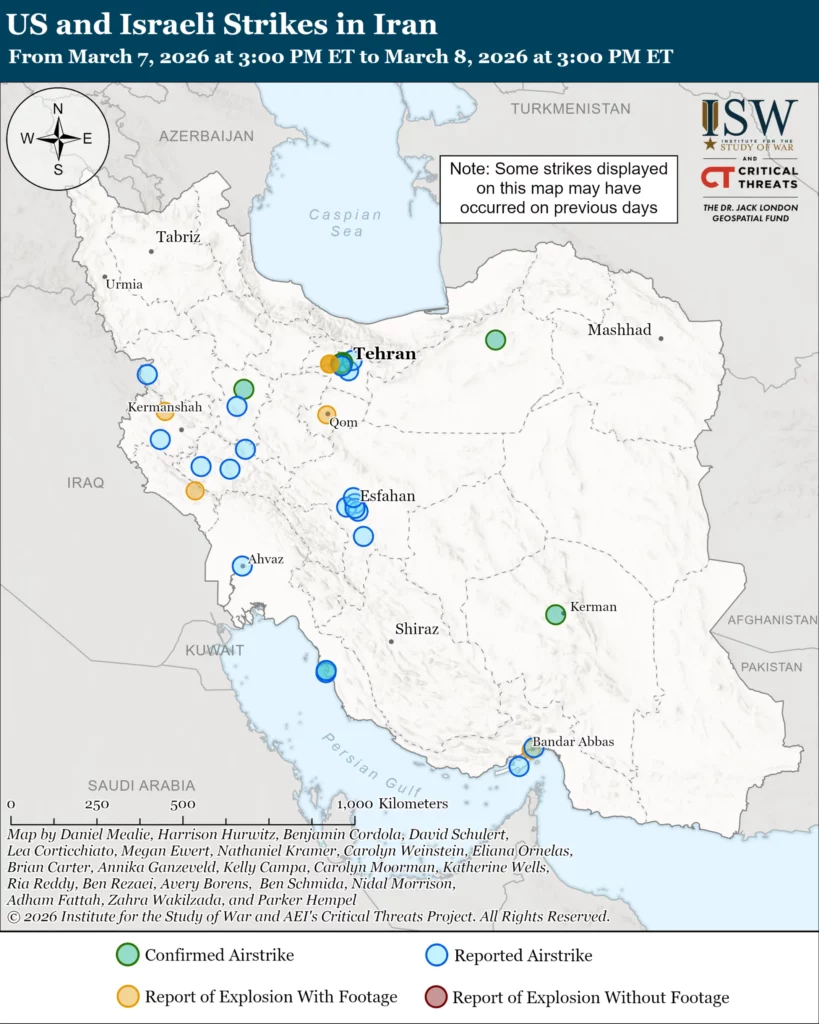
The combined force has damaged runways and taxiways and likely destroyed aircraft at several airbases in central Iran, likely to suppress and destroy Iranian air defenses over the area and extend US and Israeli air dominance into central Iran. The combined force struck two airbases in and around Esfahan City on March 7.[20] The Israel Defense Forces (IDF) likely struck the 8th Artesh Air Force Tactical Airbase, north of Esfahan City, Esfahan Province, on March 7.[21] Commercially available satellite imagery captured on March 8 shows about ten impact points, including extensive cratering on the base’s taxiway. The IDF announced on March 8 that it struck structuresstoring F-14 fighter jets in addition to air defense systems at an unspecified Esfahan airbase, presumably referring to the 8th Tactical Airbase.[22] The base hosts F-14s, F-7s, and PC-7s.[23] The combined force also struck the 4th Artesh Ground Forces Aviation Base in Esfahan City on March 7.[24] Commercially available satellite imagery captured on March 8 shows damage to several structures north of the base’s runway, including several large hangars or warehouses. The 4th Artesh Ground Forces Aviation Base hosts rotary-wing aircraft. The combined force also cratered runways and taxiways at the 3rd Artesh Air Force Tactical Airbase in Kabudarahang, Hamedan Province, according to commercially available satellite imagery.[25]
The IDF has struck at least two IRGC Aerospace Force command centers in Tehran since March 6, likely to degrade Iranian air defense capabilities and command and control. The IRGC Aerospace Force is the principal operator of the Iranian missile and drone arsenals.[26] Commercially available satellite imagery captured on March 6 showed that the IDF struck several warehouses in the southeastern part of an IRGC Aerospace Force air defense command center in southwestern Tehran. The IDF also struck the IRGC Aerospace Force Headquarters in Tehran on March 7.[27]
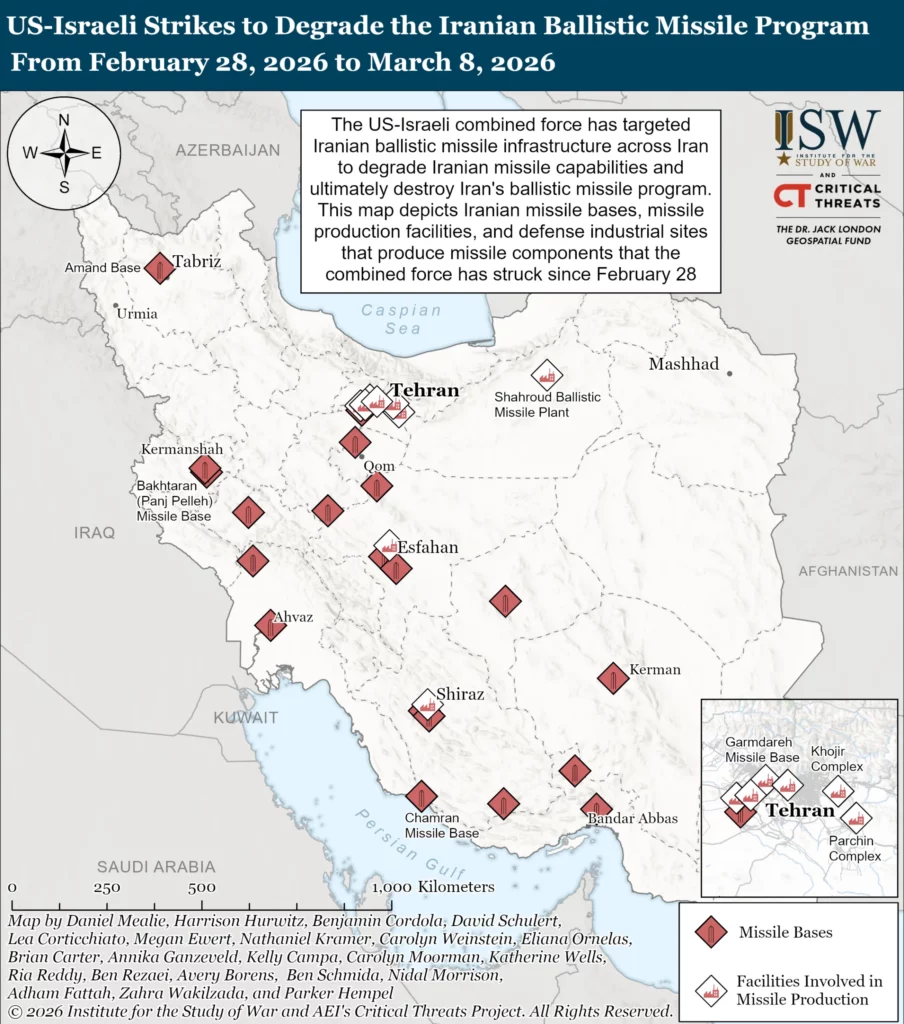
The US-Israeli combined force continued to target Iranian ballistic missile infrastructure in order to degrade Iranian missile capabilities and ultimately destroy the Iranian ballistic missile program. The IDF has attacked over 400 targets, including ballistic missile launchers and weapons production sites, in western and central Iran over the past day.[28] The IDF has destroyed around 75 percent of Iran’s missile launchers.[29] Commercially available satellite imagery shows damage to the following Iranian missile bases:
Shiraz South Missile Base. Commercially available satellite imagery captured on March 7 appears to show that the combined force used ground-penetrating munitions to target underground facilities at a missile base south of Shiraz, Fars Province. This base is reportedly one of at least 25 Iranian missile bases that Iran can launch medium-range ballistic missiles from.[30] Israeli strikes during the June 2025 Israel-Iran War caused “light, above-ground damage” to this base, according to the Alma Research and Education Center.[31]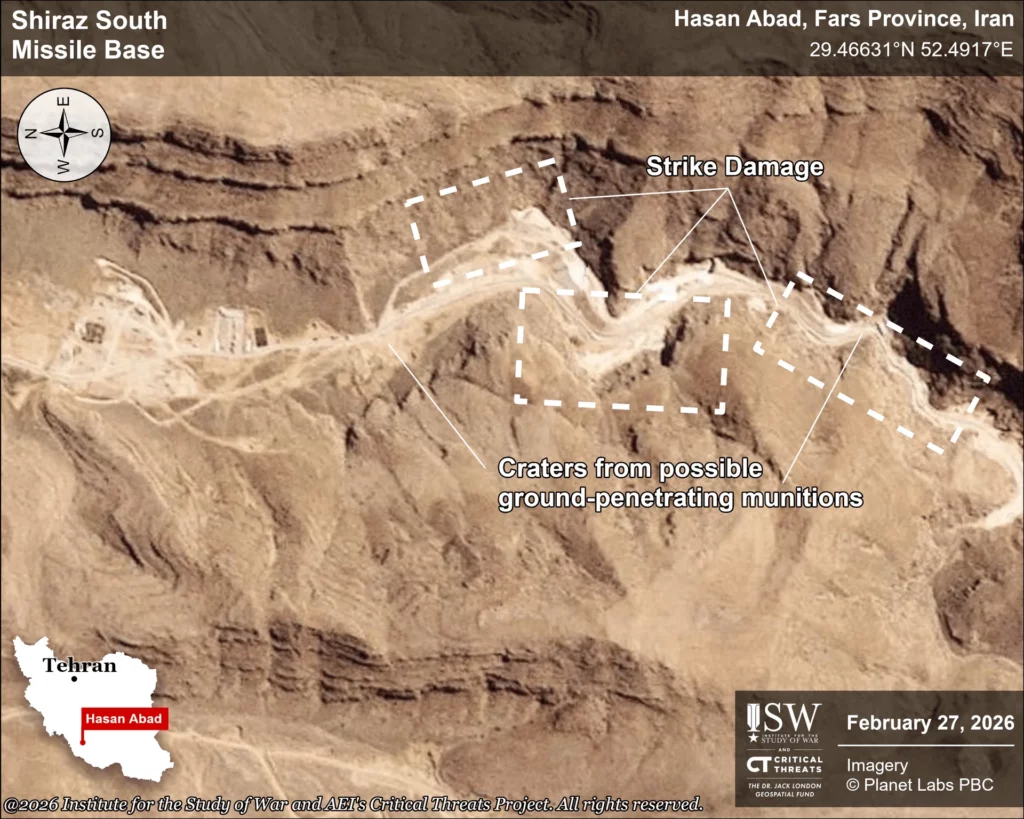
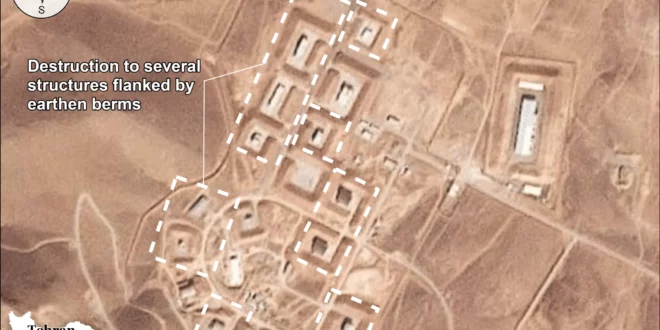
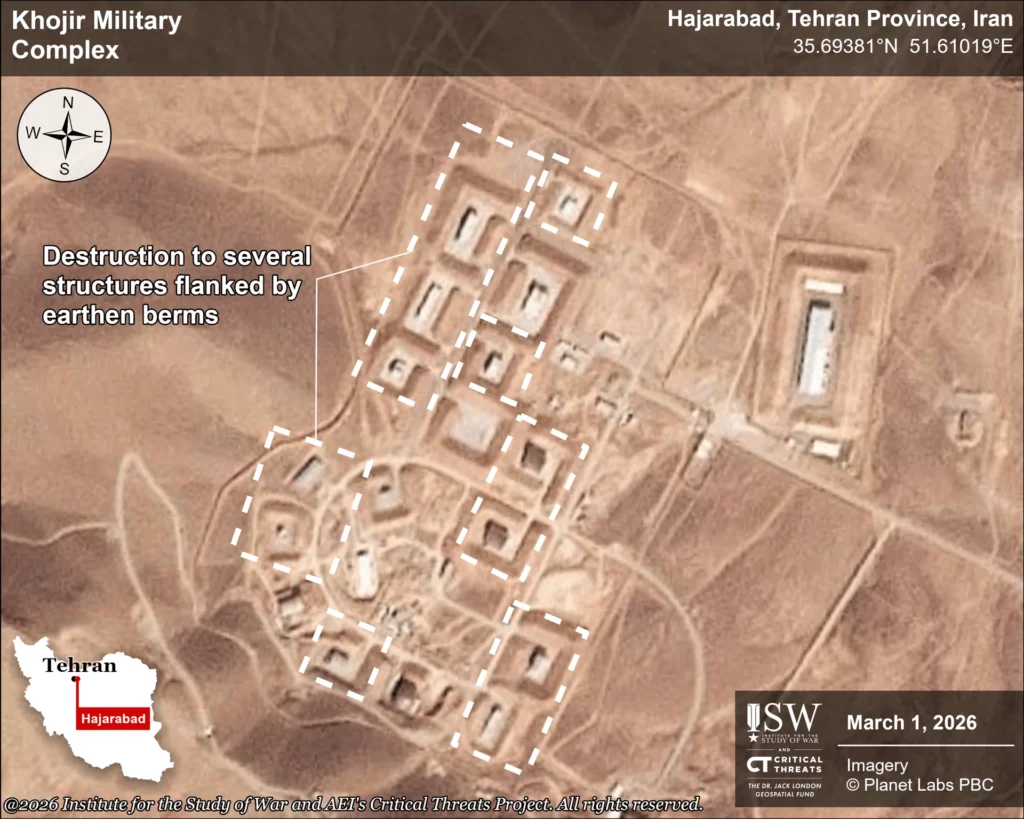
Khojir Military Complex. Commercially available satellite imagery captured on March 7 shows that the combined force destroyed several structures that were flanked by earthen berms at the Khojir Military Complex in Tehran Province. An analyst at the James Martin Center for Nonproliferation Studies assessed on March 6 that the combined force struck mixing and casting buildings at the Khojir Missile Facility.[32] The same analyst assessed on March 7 that the combined force also struck mixing and casting buildings at the Shahroud Military Complex in northeastern Iran, as CTP-ISW reported in its March 8 Morning Update.[33] Satellite imagery published by Reuters in July 2024 showed that Iran had established 30 new buildings at the Khojir facility between August 2023 and April 2024.[34] The IDF previously struck the Khojir Military Complex in June 2025 and October 2024.[35]
Chamran Missile Base. Commercially available satellite imagery captured on March 6 shows that the combined force damaged above-ground structures at the Chamran Missile Base in Jam, Bushehr Province. Iran stores Qiam-1 ballistic missiles, which have a range of around 800 kilometers, at the Chamran Missile Base.[36]
Garmdareh Missile Base. Commercially available satellite imagery from March 6 indicates that the combined force struck above-ground and underground structures at the Garmdareh Missile Base in Alborz Province. The IDF destroyed a building at an IRGC missile integration facility during the Israel-Iran War that appears to be part of the Garmdareh Missile Base.[37]
Shiraz West Missile Base. Commercially available satellite imagery from March 7 indicates that the combined force struck above-ground and underground structures at a missile base west of Shiraz, Fars Province. The combined force has struck the Shiraz West Missile Base at least twice during the war.[38]
Khorgu Missile Base. Commercially available satellite imagery from March 7 shows that the combined force damaged several structures at the Khorgu Missile Base north of Bandar Abbas, Hormozgan Province. It is unclear if the damage in the new satellite imagery is from recent airstrikes or airstrikes that the combined force previously conducted against the base around March 1.[39]
Satellite imagery captured on March 7 also confirms that the IDF struck the Shahroud and Parchin military complexes in Semnan and Tehran provinces, respectively, as CTP-ISW reported in its March 8 Morning Update.[40]
The combined force continued to target Iranian internal security institutions in Tehran City and western Iran. The IDF announced on March 8 that the IAF conducted airstrikes targeting an IRGC Ground Forces compound, an unspecified “internal security command center,” an unspecified Basij base, and 50 Law Enforcement Command (LEC) ammunition bunkers in Tehran.[41] Two open-source intelligence (OSINT) accounts reported and geolocated combined force airstrikes on a Basij base near Yas Boulevard in southeastern Tehran City.[42]
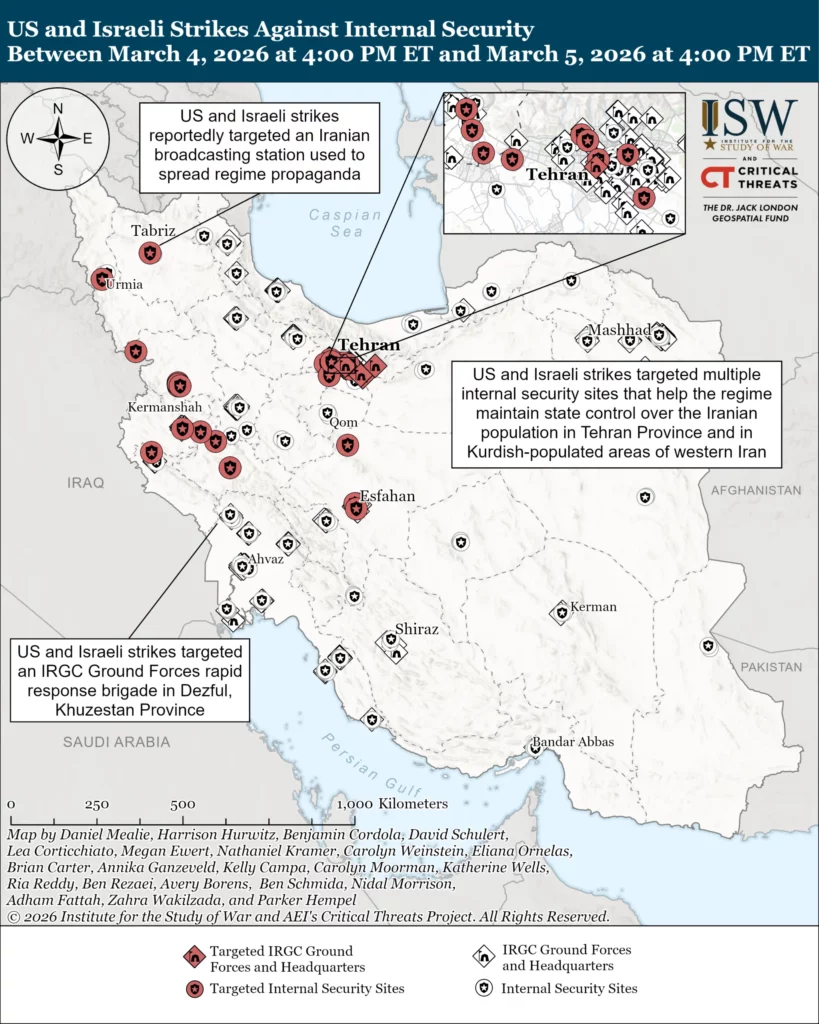
The combined force reportedly struck several internal security sites in western Iran. An OSINT analyst and anti-regime media reported that the combined force struck an IRGC headquarters and an LEC police station in Khorramabad, Lorestan Province, on March 8.[43] OSINT accounts also reported combined force airstrikes targeting LEC headquarters in Borujerd, Lorestan Province, Kuhdasht, Lorestan Province, Eslamabad-e Gharb, Kermanshah Province, and Abdanan, Ilam Province.[44] CTP-ISW observed protests in Eslamabad-e Gharb, Borujerd, and Abdanan during the December 2025-January 2026 protests.[45]
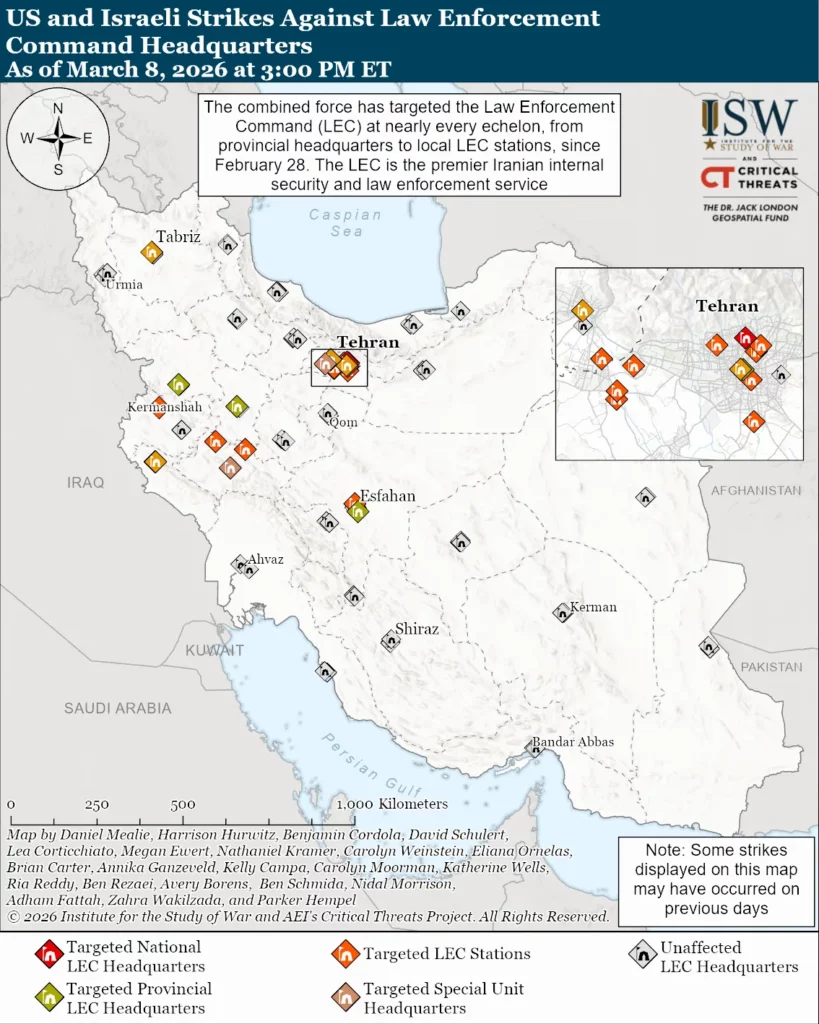
The combined force also struck internal security institutions in southwestern and central Iran on March 8. Anti-regime media reported that the combined force airstrike targeted the Artesh Ground Forces 92nd Division in Ahvaz, Khuzestan Province, on March 8.[46] The Artesh has deployed its ground forces to support protest suppression in previous protest movements.[47] OSINT accounts reported that the combined force also targeted several internal security institutions in Esfahan Province, including an LEC headquarters in Shahin Shahr on March 8.[48]
OSINT analysts reported that the combined force struck a fuel tank at Qeshm International Airport on Qeshm Island in the Persian Gulf on March 8.[49]
The IDF confirmed that it killed newly appointed Supreme Leader Office Military Chief and Khatam ol Anbia Central Headquarters Chief of Staff Brigadier General Abu al Qassem Babaeiyan on March 7.[50] Babaeiyan replaced former Supreme Leader Office Military Chief Mohammad Shirazi after the combined force killed Shirazi on February 28.[51] The IDF reported that Babaeiyan was appointed as the Khatam on Anbia Central Headquarters Chief of Staff after the IDF killed his predecessor, Brigadier General Ali Shadmani, during the June 2025 Israel-Iran War.[52]
The combined force is reportedly considering deploying special forces at a later time in the war to move Iran’s highly enriched uranium (HEU) stockpile out of the country. Four sources with knowledge of the matter told Axios on March 8 that the US administration has discussed a potential future operation to move Iran’s HEU out of Iran or dilute it in Iran.[53] The sources added that the combined force would only conduct such an operation if Iran could no longer seriously threaten US or Israeli troops.[54] US Secretary of State Marco Rubio said during a congressional briefing on March 3 that “people are going to have to go and get it” in response to a question about whether Iran’s HEU would be secured.[55] Iran’s HEU is buried underneath rubble at the Esfahan, Fordow, and Natanz nuclear sites, which the United States and Israel struck during the 12-day war.[56] US and Israeli officials told Axios that most of Iran’s HEU stockpile is located in the underground tunnels of the nuclear facility in Esfahan, while the rest is split between Fordow and Natanz.[57] An Israeli analyst, citing March 2 satellite imagery, reported that the combined force struck Natanz and severely damaged at least three buildings.[58]
Iranian Internal Security
The IRGC Intelligence Organization announced on March 8 that security forces arrested a 50-member cell “affiliated with a royalist group,” likely in reference to the Mojahedin-e Khalq (MEK), in Kohgiluyeh and Boyer Ahmad Province.[59] Security forces reportedly seized the cell’s firearms and knives.[60] The IRGC Intelligence Organization claimed that the group planned to conduct “sabotage” operations.[61] The MEK is an Iranian opposition group.[62]
The LEC Border Guard announced on March 8 that its forces arrested a “terrorist” and seized 20 weapons in an unspecified location in Sistan and Baluchistan Province, southeastern Iran.[63] The LEC Border Guard claimed that the “terrorist” confessed to being a leader in the December 2025-January 2026 protests.[64]Iran continues to face fuel shortages. The Tehran Province Governor announced on March 8 that the maximum volume of gasoline that Tehran residents can purchase has decreased from 30 liters to 20 liters.[65] The Petroleum Products Distribution CEO also called on Iranians not to panic buy fuel following Israeli airstrikes targeting oil refineries and depots in Tehran City.[66]
Iranian Retaliation
Iran launched eight missile barrages at Israel between 3:00 PM ET on March 7 and 3:00 PM ET on March 8.[67] Israel’s national emergency service, Magen David Adom, reported on March 8 that an Iranian cluster munition wounded at least six individuals in central Israel.[68] Iran has launched at least six missile barrages at Israel per day since March 2.[69]
Iran continued to attack regional countries on March 7 and 8. An Iranian drone damaged a desalination plant in Bahrain.[70] Bahrain’s water and electricity authority stated that the strike has not affected the country’s water supply. Iran also launched two drones targeting the Shaybah Oil Field in Saudi Arabia, but Saudi air defenses intercepted the drones.[71] The Saudi Civil Defense Authority reported on March 8 that an unspecified projectile fell on a residential area in Kharj, Saudi Arabia, killing two individuals and wounding 12 others.[72] The IRGC announced on March 8 that it had targeted radar systems in Kharj.[73]
Saudi Arabia reportedly warned Iran on March 5 that it may retaliate against Iran if Iran continues to attack Saudi territory and critical energy facilities.[74] Four sources told Reuters on March 7 that Saudi Foreign Minister Faisal bin Farhan told Iranian Foreign Minister Abbas Araghchi on March 5 that the Saudi government would permit US forces to use Saudi bases for military operations against Iran if Iran continues to attack critical energy facilities and Saudi territory.[75] Farhan conveyed this warning before Iranian President Masoud Pezeshkian’s March 7 apology to regional countries for Iran’s attacks on them since the start of the war.[76] Iran has continued to conduct drone and ballistic missile attacks targeting Gulf states despite Pezeshkian’s order to suspend strikes on Gulf states unless attacks on Iran originate from their territory.[77]
Axis of Resistance Response
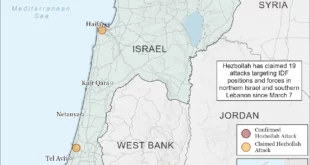
Hezbollah has conducted two attacks targeting IDF forces and positions in northern Israel since CTP-ISW’s last data cutoff at 8:00 AM ET on March 8. Hezbollah claimed that it conducted 7 attacks as of 3:00 PM ET on March 8, which is significantly fewer attacks than Hezbollah’s 33 claimed attacks on March 7.[78] Hezbollah claimed that it conducted two rocket attacks targeting the IDF Misgav Base and the town of Kiryat Shmona in northern Israel.[79] The IDF intercepted three drones launched from Lebanon on March 8.[80] The IDF reported that Hezbollah has been launching most of its attacks from positions deep inside southern Lebanon and not from positions along the Israel-Lebanon border.[81] Hezbollah claimed that it attacked the IDF Rehavam Camp in Ramla, which is approximately 135 kilometers from the Israel-Lebanon border, on March 7, as CTP-ISW reported in its March 8 Morning Update.[82] The IDF’s statement regarding Hezbollah’s firing position indicates that Hezbollah likely used its medium- or long-range rockets or missiles, such as the Khaibar-1 rocket, Fadi 6 rocket, or Fateh-110 ballistic missile, in this attack.[83] CTP-ISW previously forecasted in a February 28 report that Hezbollah would likely participate in the war and use its long-range weapons to conduct attacks against Israel from central and northern Lebanon.[84]
The IDF reported that Hezbollah attacked an Israeli D9 armored bulldozer in southern Lebanon, killing two IDF soldiers.[85] This attack marks the first time that Hezbollah has killed an IDF soldier since the Fall 2024 Israel-Hezbollah conflict.[86]
The IDF has continued to conduct airstrikes targeting Hezbollah across Lebanon to degrade Hezbollah’s ability to launch attacks targeting Israeli forces and positions in northern Israel and southern Lebanon. The IDF has conducted over 100 strikes in Lebanon in the past 24 hours and a total of 600 strikes using 820 munitions in Lebanon since the war began on February 28.[87] The IDF targeted weapons depots, dozens of military sites, a Radwan Force headquarters, a Radwan Force training compound, rocket launchers, and fighters on March 7 and 8.[88] The IDF confirmed that it killed the following IRGC Quds Force officers in Beirut:
Majid Hassani.[89] Hassani was an IRGC Quds Force commander responsible for transferring Iranian funds to Iranian officials in Lebanon to finance Hezbollah, the IRGC Quds Force’s Lebanon Corps and Palestine Corps, and Hamas. Hassani was also responsible for purchasing and procuring weapons for Hezbollah.
Ali Reza Beyaz.[90] Beyaz was the IRGC Quds Force’s Lebanon Corps intelligence branch commander. The IDF stated that Beyaz was a “key knowledge center” and gathered intelligence on behalf of Hezbollah.
Ahmad Rasouli.[91] Rasouli was an intelligence officer in the IRGC Quds Force’s Palestine Corps. Rasouli was responsible for collecting intelligence for Palestinian militias in Lebanon and the Gaza Strip.
Hossein Ahmadlou.[92] Ahmadlou was an intelligence operative who gathered intelligence on Israel. It is unclear if Ahmadlou was a member of Hezbollah or the IRGC Quds Force.
Abu Mohammad Ali.[93] Ali was Hezbollah’s representative in the IRGC Quds Force’s Palestine Corps. Ali was responsible for coordinating between Hezbollah and the Palestine Corps.
The IDF has continued to conduct “forward defense maneuver[s]” in southern Lebanon.[94] The IDF 769th Regional Brigade (91st Division) identified a Hezbollah cell in southern Lebanon and directed an airstrike against the cell “during the past week.”[95] 769th Regional Brigade forces also located a weapons stockpile in southern Lebanon that included explosive devices, light weapons, wireless devices, and ammunition. The IDF issued another evacuation warning for all residents south of the Litani River on March 8.[96]
Iranian-backed Iraqi militias continue to claim attacks against US forces. The Islamic Resistance in Iraq, which is a coalition of Iranian-backed Iraqi militias, claimed on March 7 that it conducted 24 drone and missile attacks targeting “enemy” bases in Iraq and the region in the past 24 hours.[97] CTP-ISW has not observed any indications of Iraqi militias using missiles in their attacks as of this writing. Likely Iranian-backed Iraqi militia front group Rijal al Baas al Shadid claimed that it conducted three drone attacks targeting the former US Victory Base at Baghdad International Airport on March 7.[98] A security source told Iraqi media on March 8 that air defenses thwarted an attempted attack on the base.[99] Iranian-backed Iraqi militia Kataib Sarkhat al Quds also claimed on March 7 that it conducted a drone attack targeting Harir Airbase at the Erbil International Airport.[100] An unspecified Iraqi source told Iranian state media on March 8 that a drone hit a radar system at the base.[101]