 Eurasia Press & News
Key Takeaways
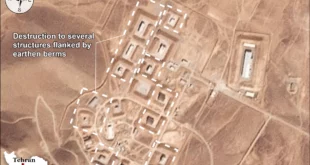
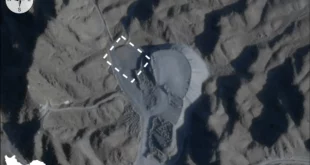
Geolocated satellite imagery published on March 7 confirms that the IDF struck the Shahroud Missile Facility in Semnan Province, northeastern Iran. The IDF struck buildings at the Shahroud Missile Facility during the June 2025 Israel-Iran War that had previously housed planetary mixers, which are essential for producing ballistic missile solid fuel. Satellite imagery published by the Associated Press in September 2025 showed that Iran had started repairing damaged mixer buildings at Shahroud.
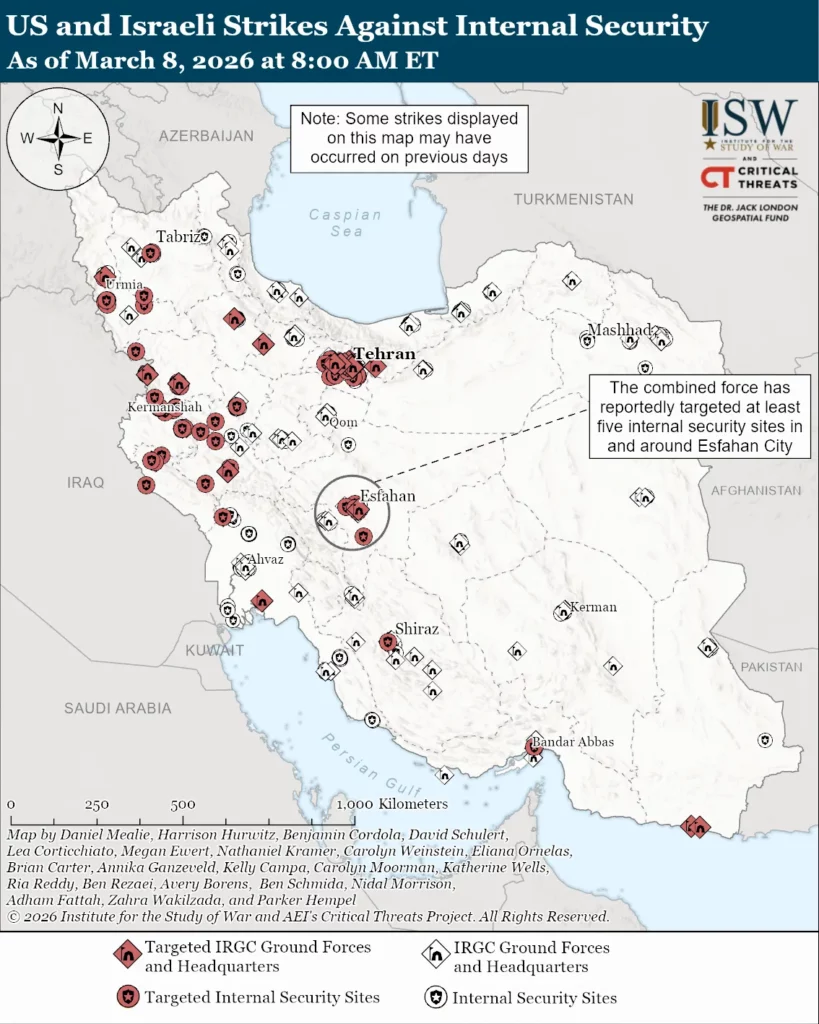
The combined force has reportedly targeted at least five internal security sites in and around Esfahan City, central Iran, since CTP-ISW’s last data cutoff at 3:00 PM ET on March 7. These sites include the Esfahan Province Law Enforcement Command (LEC) Headquarters, which oversees LEC units in Esfahan Province.
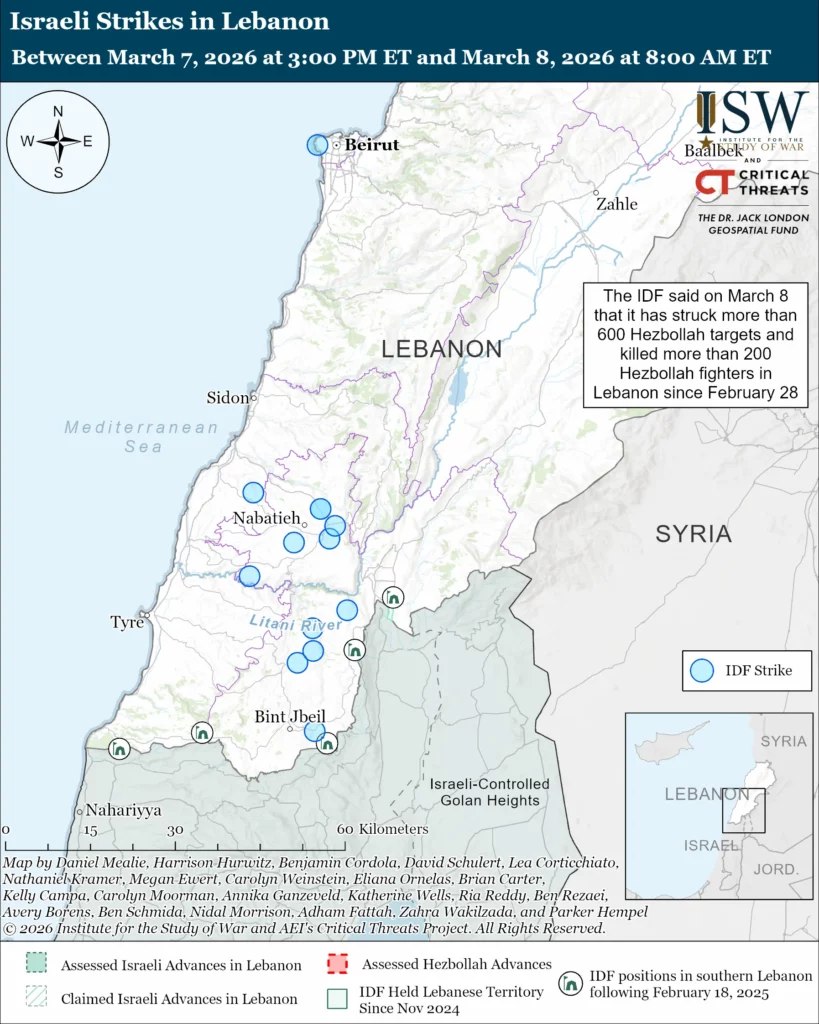
The IDF has continued to conduct airstrikes against Hezbollah to degrade Hezbollah’s ability to launch attacks against IDF forces and positions in northern Israel and southern Lebanon. The IDF stated on March 8 that it has struck more than 600 Hezbollah targets and killed more than 200 Hezbollah fighters in Lebanon since February 28.
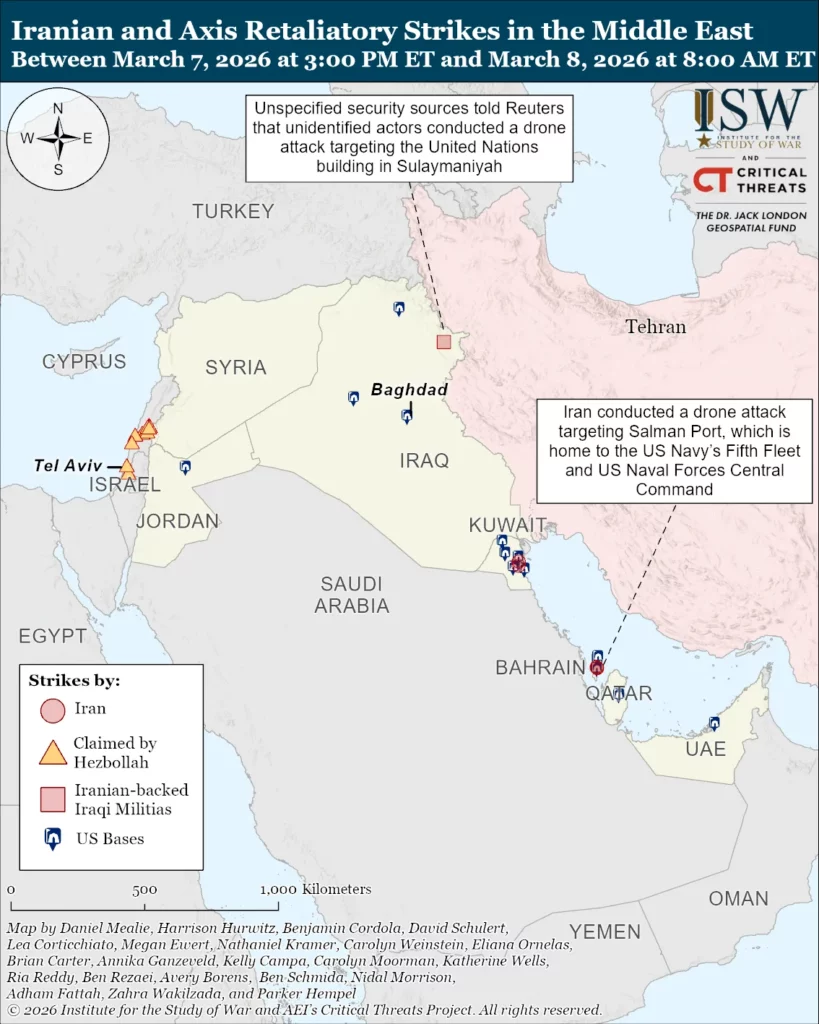
Iran has continued to target regional countries and Israel since CTP-ISW’s last data cutoff at 3:00 PM ET on March 7. Iran conducted two separate drone attacks against Kuwait on March 7, targeting the Kuwaiti Social Security Building and fuel storage tanks at the Kuwait International Airport. Unspecified security sources told Reuters that unidentified actors conducted a drone attack targeting the United Nations building in Sulaymaniyah, Iraqi Kurdistan.
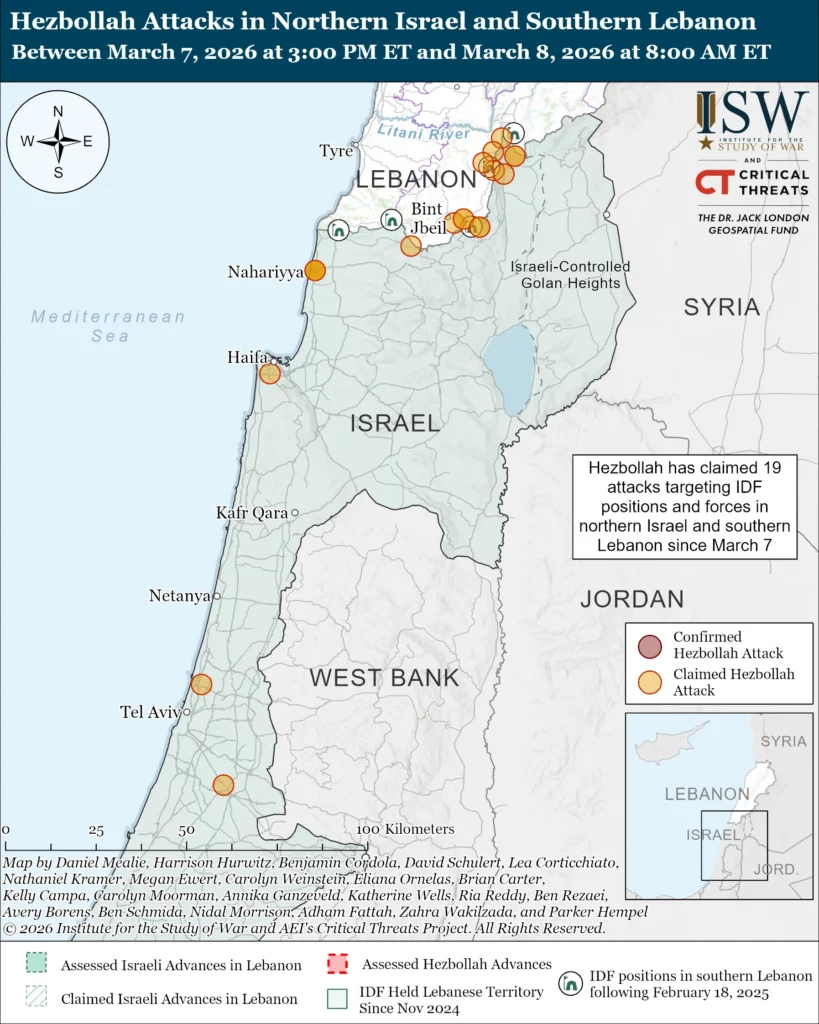
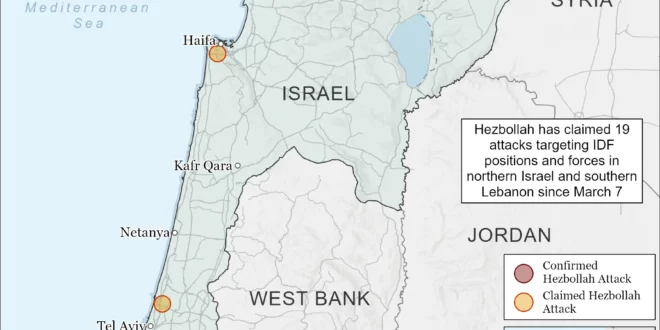
Hezbollah has claimed 19 attacks targeting IDF positions and forces in northern Israel and southern Lebanon since CTP-ISW’s last data cutoff at 3:00 PM ET on March 7.
US and Israeli Air Campaign
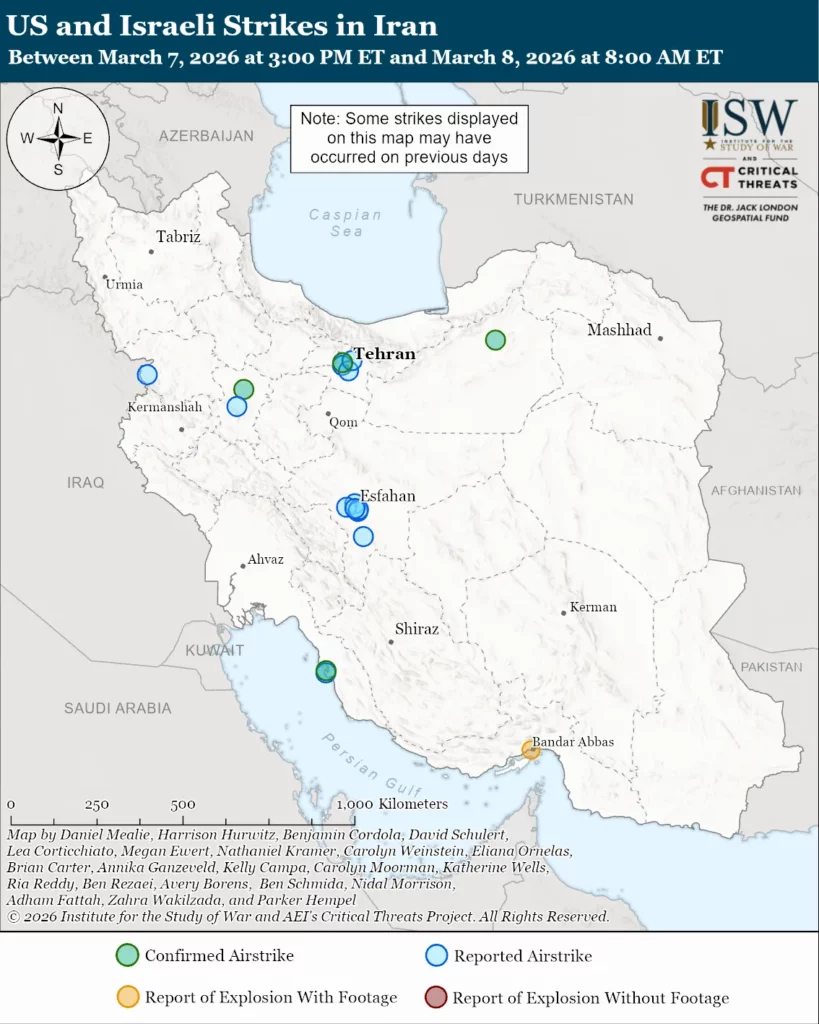
Geolocated satellite imagery published on March 7 confirms that the Israel Defense Forces (IDF) struck the Shahroud Missile Facility in Semnan Province, northeastern Iran.[1] An analyst at the James Martin Center for Nonproliferation Studies identified that the IDF damaged a mixing building, casting building, and “warhead production line” at the facility.[2] The IDF struck buildings at the Shahroud Missile Facility during the June 2025 Israel-Iran War that had previously housed planetary mixers.[3] Planetary mixers are essential for producing ballistic missile solid fuel. The IDF previously destroyed 12 Iranian planetary mixers, likely including mixers at Shahroud, during its October 2024 strikes on Iran.[4] Satellite imagery published by the Associated Press in September 2025 showed that Iran had started repairing damaged mixer buildings at Shahroud.[5] The Associated Press assessed at the time that Iran had not replaced its destroyed planetary mixers, however.[6] The IDF strikes on the Shahroud Missile Facility come as the Washington Post reported on March 7 that two Iranian state-owned vessels recently left a port in the People’s Republic of China that is used to load chemicals, including sodium perchlorate, onto vessels.[7] Sodium perchlorate is a chemical precursor for solid missile propellant.
The IDF also confirmed on March 7 that it struck the Parchin Military Complex east of Tehran.[8] Satellite imagery from recent days confirms that the combined force has damaged several buildings at Parchin.[9] Iran similarly sought to repair mixer buildings at the Parchin Military Complex following the Israel-Iran War.[10]
The combined force continues to target Iranian internal security institutions. The combined force has reportedly targeted at least five internal security sites in and around Esfahan City, central Iran, since CTP-ISW’s last data cutoff at 3:00 PM ET on March 7.[11] These sites include the Esfahan Province Law Enforcement Command (LEC) Headquarters, which oversees LEC units in Esfahan Province.[12] An OSINT account and anti-regime media reported airstrikes targeting two Basij bases in Najafabad and Shahreza, near Esfahan City.[13] The Basij is a paramilitary force that supports the LEC in protest suppression. CTP-ISW recorded over 70 protests in Esfahan Province during the December 2025-January 2026 protests in Iran.[14] An OSINT account claimed that the combined force struck a “morality police” building in Kosar Town, northwest of Esfahan City.[15] CNN reported that the combined force struck a morality police building in Tehran City on March 5.[16] Morality police operate under both the LEC and Basij and are responsible for enforcing the regime’s laws against “immodesty and societal vices,” including its strict hijab and chastity laws.[17]
The combined force also continues to target internal security sites in Tehran City and northwestern Iran. An OSINT analyst published footage on March 8 of a drone attacking a reported Basij checkpoint in northwestern Tehran.[18] A BBC journalist geolocated a damaged LEC station in Hamedan City, Hamedan Province, in northwestern Iran on March 7.[19]
The IDF struck an oil depot in the Kuhak neighborhood, northwestern Tehran City, on March 7.[20] CTP-ISW reported in its March 7 Evening Update that the IDF struck several oil storage facilities and refineries in Tehran and Alborz provinces on March 7. BBC and CNN journalists reported on March 7 and 8 that the fires caused by the IDF strikes on oil refineries and depots in Tehran have spread across Tehran City and damaged additional infrastructure.[21] Fires at these sites have also resulted in oil infusing into rain clouds.[22]
The combined force continues to target Iranian naval facilities around the Persian Gulf. An open-source intelligence (OSINT) account geolocated damage to a naval base entrance in Bushehr City on March 7.[23] The entrance was damaged after the combined force struck an ammunition depot in its vicinity around March 3.[24] The combined force also struck at least eight warehouses at a port in eastern Bushehr City.[25] Anti-regime media published a video of smoke and reported that the combined force targeted an Iranian naval base in Bandar Abbas, Hormozgan Province, on March 8, but did not specify which base the combined forces targeted.[26] Bandar Abbas Port is home to the Islamic Revolutionary Guards Corps (IRGC) Navy Headquarters, the IRGC Navy 1st Naval District, and the Artesh Navy Southern Forward Naval Headquarters.[27] The combined force has attacked Iranian naval assets and facilities in Bandar Abbas in recent days.
The combined force reportedly struck a complex belonging to the Iran Aviation Industries Organization (IAIO) in southwestern Tehran City on March 7, according to a video published by an OSINT analyst.[28] The IAIO is a subsidiary of Iran’s Ministry of Defense and Armed Forces Logistics and is responsible for developing and manufacturing drones, helicopters, and fighter jets.[29]
The IDF has continued to conduct airstrikes against Hezbollah to degrade Hezbollah’s ability to launch attacks against IDF forces and positions in northern Israel and southern Lebanon. The IDF stated on March 8 that it has struck more than 600 Hezbollah targets and killed more than 200 Hezbollah fighters in Lebanon since February 28.[30] The IDF conducted airstrikes targeting key commanders in the IRGC Quds Force’s Lebanon Corps in Beirut on March 7.[31] The IDF stated that the Lebanon Corps serves as a link between Hezbollah and Iran and is aiding Hezbollah’s reconstitution.[32] The IDF previously killed Lebanon Corps Commander Daoud Ali Zada and Chief of Staff Reza Khazali on March 3.[33] The IDF also struck a rocket launcher on March 7 that Hezbollah previously used to launch rockets at northern Israel.[34]
Iranian Retaliation
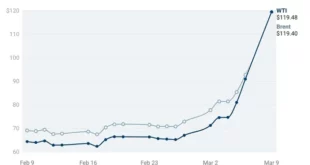
Iran has continued to target regional countries and Israel since CTP-ISW’s last data cutoff at 3:00 PM ET on March 7. Iran conducted at least six ballistic missile barrages targeting Israel between 3:00 PM ET on March 7 and 8:00 AM ET on March 8.[35] CTP-ISW has not observed any missile impacts in Israel at the time of this writing. Iran conducted a drone attack targeting Salman Port, which is home to the US Navy’s Fifth Fleet and US Naval Forces Central Command, in Manama, Bahrain, on March 7.[36] Iran previously struck Salman Port on March 1.[37] Iran conducted two separate drone attacks against Kuwait on March 7, targeting the Kuwaiti Social Security Building and fuel storage tanks at the Kuwait International Airport.[38] An Israeli journalist posted a video of a fire at the Titanic Hotel in Sulaymaniyah, Iraqi Kurdistan, after it was reportedly struck on March 7.[39] Unspecified security sources told Reuters that unidentified actors conducted a drone attack targeting the United Nations building in Sulaymaniyah, which is located directly next to the Titanic Hotel.[40] The Emirati Defense Ministry reported that Iran launched 17 ballistic missiles and 117 drones at the United Arab Emirates (UAE) on March 8.[41] Iran appears to have increased the number of ballistic missiles it has launched at the UAE since March 6 (see graphic below).
Axis of Resistance Response
Hezbollah has claimed 19 attacks targeting IDF positions and forces in northern Israel and southern Lebanon since CTP-ISW’s last data cutoff at 3:00 PM ET on March 7.[42] Hezbollah claimed that it conducted four rocket attacks targeting Israeli forces in southern Lebanon and directly engaged Israeli forces twice in Aitaroun, Bint Jbeil District, southern Lebanon.[43] Hezbollah claimed that it targeted the IDF Rehavam Camp in Ramla, which is the IDF Home Front Command’s headquarters, on March 7.[44] The Rehavam Camp is approximately 135 kilometers from the Israel-Lebanon border, which suggests that Hezbollah used medium- or long-range rockets or missiles, such as the Khaibar-1 rocket, Fadi 6 rocket, or Fateh-110 ballistic missile, in this attack.[45] CTP-ISW cannot confirm this attack. Hezbollah claimed that it launched a “squadron” of attack drones targeting the Glilot Base in central Israel, which houses IDF Unit 8200.[46] IDF Unit 8200 is Israel’s signal intelligence unit.[47] Hezbollah also claimed that it launched a barrage of rockets targeting the IDF 91st Division headquarters and “high-quality missiles” targeting the IDF Haifa Naval Base.[48]