 Eurasia Press & News
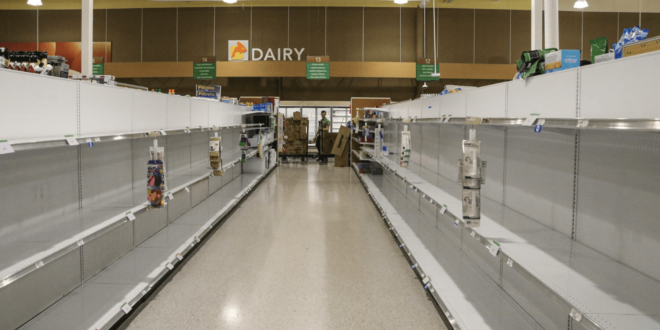
Kiran unlocked her dosa shop in Bangalore before sunrise, a morning routine she had followed for many years. Only, this time she was not able to open for business. The price of gas had surged again, and deliveries of a LPG cylinder had become uncertain. Thousands of kilometers away in Meru, Hassan postponed harvesting his crop due to rising diesel prices. In Berlin, Anna has begun lowering the heating to cope with rising energy bills.
These stories may appear unrelated. In reality, they are increasingly tied to a single geopolitical fault line: the escalating confrontation between Israel/United States and Iran in the Gulf.
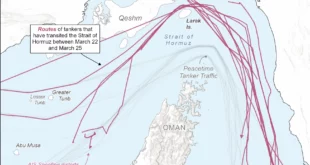
At the center of this emerging global ripple effect lies the Strait of Hormuz, a narrow maritime corridor between Iran and Oman linking the Gulf to global markets. Roughly a fifth of the world’s oil supply passes through this waterway every day, making it one of the most strategic chokepoints in the global economy. Any disruption in shipping through the strait quickly reverberates across energy markets by raising prices, causing supply disruptions.
But energy shocks do not stop at the gas pump. They travel rapidly through the global food system challenging global food environment.
Industrial agriculture is highly dependent on energy supplies. Fuel powers tractors and irrigation systems. Natural gas is essential for producing nitrogen fertilizers that sustain crop yields worldwide. Shipping networks transport grains, animal feed, and agricultural commodities and inputs across continents. When energy prices surge or transport routes become unstable, food production and distribution costs inevitably rise.
Early signs of such pressures are already emerging. Shipping companies are reassessing routes through the Gulf as security risks increase, pushing up insurance premiums and freight costs. The World Food Programme is mobilizing to secure the flow of humanitarian emergency food aid despite increasingly insecure logistics networks. This fragility is illustrated by 21,000 metric tons of wheat stranded at the Port of Salalah in Oman, which has recently been struck allegedly by Iranian drones.
Disruptions are already producing economic effects across regions. In India, rice prices have fallen as export shipments pile up due to disrupted routes, while LPG shortages are affecting restaurants, hotels, transport and manufacturing industries, given that around 80 percent of ıts LPG imports normally pass through the Hormuz.
Iran’s Islamic Revolutionary Guard Corps recently announced strikes against oil tankers linked to the United States. A Thai-flagged bulk carrier was also reportedly targeted. At the same time, Tehran appears to be applying selective trade restrictions, that spare certain countries, underscoring how geopolitical tensions can rapidly reshape global trade flows.
Consumers in the Gulf are already suffering from the impacts of war on food shortages. In the United Arab Emirates, shoppers have reported rising prices for fruits and vegetables amid disruptions linked to the regional conflict, while in Kuwait, local fish markets have been affected. Ranking among the top 50 countries worldwide in food security, Gulf countries maintain significant food reserves to ensure availability and affordability, but nevertheless remain heavily dependent on imported food supplies. Since the Saudi-led blockade in 2017, Qatar has invested heavily in domestic food production and strategic food reserves, strengthening its resilience, though the region remains exposed to shocks in global energy and shipping systems.
The world has already experienced how Covid 19 pandemic and war in Ukraine destabilized the global food systems. When Russia invaded Ukraine in 2022, the conflict quickly evolved into a global food crisis. Ukraine and Russia together accounted for 30 percent of global wheat exports, and fighting disrupted shipments from ports along the Black Sea. Grain prices surged, placing enormous pressure on food-importing countries across North Africa and the Middle East.
Diplomatic intervention eventually helped mitigate that crisis. The Black Sea Grain Initiative, mediated by the United Nations and Türkiye, reopened shipping corridors and helped stabilize global grain markets for several months. The episode demonstrated how conflict in a single region can rapidly trigger global food insecurity.
Yet the emerging Gulf crisis differs from the Ukraine war in one crucial respect.
The Ukraine conflict created a grain chokepoint by blocking the export of specific agricultural commodities. A prolonged war in the Gulf, by contrast, could trigger an energy crisis that affects the entire infrastructure of global food production. The Strait of Hormuz is a strategic site as industrial food system is addicted to fossil fuels. Energy prices shape every stage of the food supply chain, from fertilizer manufacturing to harvesting, processing, and transportation. These factors makes the global food system vulnerable to any disruption that interrupts the movement of supply chains, not only wars but also climate shocks, pandemics, and tariff disputes.
This is especially significant for fertilizer markets since the Gulf is responsible for major global fertilizer pruduction and trade including 20 percent of phosphate, 25 percent of sulfur, and nearly 49 percent of urea. Fertilizer shortages could reduce crop yields in future harvests. If instability around the Hormuz continues, farmers from India, China, Brazil, among others, could face higher production and trasportation costs. According to WFP, roughly 45 million more people could be pushed into acute hunger this year, driving global food insecurity back to levels seen at the onset of the Ukraine war, with import-dependent countries in Africa and Asia facing the sharpest rise in risk.
The most vulnerable consumers – smallholder farmers, rural communities, and people living under occupation and food insecure places will suffer the most from this distant war, even though they might have never heard of the Strait of Hormuz.
Ensuring a just, equitable and sustainable food system is possible as solutions are presented in a number of United Nations reports, scientific publications, and promoted by several NGOs: Prioritizing local food systems, promoting national food sovereignty; implementing right to food in national justice systems; supporting agroecological farming methods rather than relying heavily on synthetic fertilizers and chemicals. In uncertain times, diversifying food systems and empowering local producers may prove more resilient than relying on highly concentrated agribusiness networks.