 Eurasia Press & News
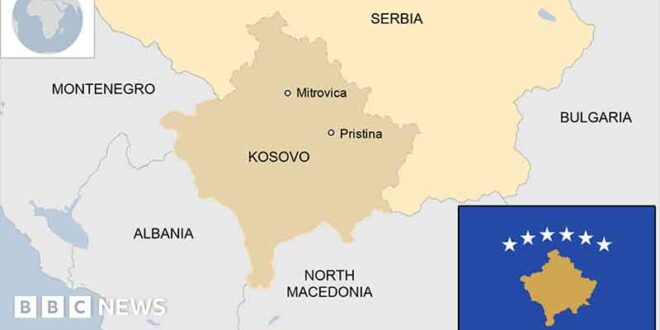
Territory, people, and physical power (security forces like police and army) are the inevitable prerequisites for creating a state. The ethnic Albanians were, at the beginning, intruders into the autonomous province of South-West Serbia – Kosovo-Metochia (KosMet), who constituted a small minority there (in 1455, only 2%). The focal question became: How did they become the overwhelming majority today (95%+) at KosMet?
KosMet: The “Promised Land” for Albanian migrants
As it is a historical fact, migration of the highlanders to the lowlands appears to be a constant feature from prehistory to the present day (just remember the Bible). If both sides belong to the same ethnicity, this phenomenon remains within the socio-anthropological sphere. But if highlanders are of different ethnicities, this otherwise natural phenomenon acquires features of a clash between nations. This clash may end in bloody fighting and a state of war. That is, in fact, what happened in KosMet for decades and even centuries.
The Albanian presence at KosMet during the medieval Serbian state, under the Serbian Nemanjić dynasty (1166−1371), was virtually zero. In the famous Serbian Emperor Stephan Dushan’s juristic code (the Codex of Dushan) from 1349/54, they are not mentioned at all.[1] Several paragraphs are dedicated to the right of nomadic herdsmen, who are allowed to stay in a village for two days at most. These montagnard herdsmen were called the Vlachs, who were supposed to be of Dacian (present-day Romanian) origin. Some of them might be ethnic Albanians, who moved their herds from highlands to lowlands and vice versa, according to the season.
The first recorded presence of Albanians at KosMet appeared only in 1455, in the Ottoman cadastre (defter), which gives the figure of only 2% ethnic Albanians in the region (around the Djakovica town near the border with North Albania). But, afterwards, numerous organized migrations from the territory of the present-day High-Albania have been recorded, both towards the inner Albania and KosMet, apart from the Ottoman settling of Muslim Albanians at KosMet after the 1689 Serbian uprising against the Ottoman authority. There is a record due to the Roman-Catholic Bishop from Skopje, Matija Masarek, who reported in 1764 to the Vatican that brand-new colonies of Albanians from High-Albania were founded around Djakovica in Metochia (western KosMet), near the present border between Serbia and Albania. Serbian historian Jevrem Damnjanović finds that during the Ottoman Empire, members of the following tribes (or fisses in Albanian) were settled on KosMet: Dukagjini, Bitiqi, Kriezi, Shop, Berisha, Krasniqi, Gashi, Tsaci, Shkrele, Kastrati, Shala, Hoti, and Keljmendi.[2] Before the migrations during WWII, which drastically changed the ethnic composition of the region in Albanian favor, when KosMet’s biggest portion was a part of a “Greater Albania”, under fascist Italy (1941−1943) and Nazi Germany (from September 1943 to the autumn 1944), there were constant migrations from North Albania to KosMet too. Here is what the Albanian historian Peter Bartl writes on the subject:
“The Turkish conquests influenced the spread of Albanian settlements. In Turkish times, an increase in the number of the Albanian population was especially considerable in Kosovo.
Already by the end of the 13th century, the immigration of the Albanians from the surrounding mountainous regions to Kosovo started. Among miners mentioned digging silver in the rich mines in Kosovo were also Albanians. During the Turkish conquest (1455) the Albanians comprised already 4−5 % of the overall population…”[3] (however, in fact, only 2%).
This increase in the ethnic Albanian share of the overall population in KosMet was followed from the beginning of the 20th century by the demographic explosion. The birth rates of the Albanians of Albania, KosMet Albanians, and KosMet Serbs and Montenegrins as a function of (historic) time are presented in the book Serbs and Albanians Through Centuries, by Petrit Imami, an Albanian author from KosMet, published in 1998 and transmitted in Belgrade liberal and pro-Western daily Danas. According to P. Imami, from 1950 onwards, both populations, KosMet’s Serbs and Montenegrins and Albania’s Albanians have been decreasing, the first double more compared to the second. However, at the same period, KosMet’s Albanian population was in a drastic increase up to 1980. Nevertheless, these facts, or at least claims, deserve close examination.
The first notice is that Albania’s Albanians and KosMet’s Serbs curves follow the same trend of decreasing, though they differ in absolute values.[4] The curve for the KosMet Albanians behaves radically differently from both, however. It reaches its maximum around 1960, retains this maximum up to 1980, and starts falling. Why was 1980 the “turning point”? Before attempting to answer this puzzle, a few preliminary words are in order.
Josip Broz Tito as a godfather
A Croat-Slovenian dictator of Yugoslavia, Josip Broz Tito (1892−1980), was the seventh of 13 siblings in a relatively poor peasant family in Hrvatsko Zagorje, a rich Pannonian region in North-West Croatia near the Slovenian border. His youth was marked by poverty, and he will suffer from several complexes in his later life. One of them was the lack of good suits. When he was a metal worker in Zagreb, he saved some money and managed to buy a new suit, which he intended to wear while visiting his birthplace, Kumrovec. Unfortunately, just before leaving for his village, he found his brand new suit stolen and gave up his visit. Upon seizing power in Yugoslavia after WWII, he used to have his new suits made once a week or so, just to compensate for the traumatic experience from his youth.[5] Equally, he was somehow ashamed of his numerous siblings, as a sign of poverty. Therefore, he established the institution of awarding numerous families, by appointing himself godfather to every tenth and following child in his Yugoslavia (Titoslavia). Of course, he delivered the award via his representatives, usually high-ranking officers, and many families were proud of having “Marshal” Tito as their godfather.[6]
However, the question arises, who were the beneficiaries of this gratitude? By far the most frequent recipients were ethnic Albanians and Roma (Gypsies). There was some difference between these two groups, however. Roma children suffered from high mortality, for reasons I do not have to elaborate here. Thus, the enormous birth rate of the KosMet Albanians was not only not put under reasonable control, but was encouraged by the very state authorities. The fact was that the Serbs had higher birth rates than Albanians before KosMet was recovered by their motherland, Serbia (during the two Balkan Wars). With re-joining Serbia in 1912/1913, it came with better medical care, and the high mortality rate present among all Dinaric highlanders was drastically reduced. The response of the Serb population to these better conditions and to the rising level of civilization generally was the introduction of family planning. Nevertheless, with the (Muslim) Albanians, it was the opposite case. They took advantage of better medical facilities to further promote the breeding rate.
“Demographic pressure” and demographic change
Another point that deserves to be made concerns the correlation between the economic conditions and fertility. Generally, high fertility signals the low economic status of a family.[7] Albania’s Albanians were definitely below Kosovo’s Albanians in this respect, but had a lower birth rate than the latter. Obviously, other factors were in the game. The same holds for the Serbs, too.
Now it has to be turned to the crucial point of the entire “Kosovo issue”, to the ethnic share on KosMet from the early Serb state, through the Ottoman occupation, to the present day. It has to be noted here that the first record on the subject is from the 14th century, from the so-called Dečani hrisovulja (1330),[8] which contains a detailed list of houses in Metochia and North-West Albania. Out of 89 villages, 3 were Albanian. There were 2.166 agricultural households and 2.666 hauses in the cattle cultivating area. Out of this number, 44 were Albanian (1.8%). The rest was recorded as Slavonic, that is, a Serb.
According to the data by Kosovo’s Albanian writer Petrit Imami (1998), in the region of KosMet, there were 50% of Albanians and 40% of Serbs (and Montenegrins). However, in 1985, there were 12% of Serbs, while in 1995, there were 85% of Albanians. He claims that in 1455, there were fewer than 3% of ethnic Albanians in KosMet. The point from 1455 was taken from the Ottoman cadastral for tax-census (defter) (original is in Turkish in an archive in Istanbul).[9] The latter kind of record is notorious for its accuracy and scrupulousness, as Al Capone found to his misfortune. As for the 20th-century data, oddly enough, they turn out rather unreliable, for various reasons:
First, when KosMet became a “disputed land”, the sides involved started the war by the numbers, producing them as they found convenient to their “just cause”.

Second, since this region was outside a civilized state for centuries, administrative control was very weak, if not absent.
It is known that the Balkan Dinaric highlanders (including ethnic Albanians) had never felt for the state as an institution, nor felt they had much responsibility towards the state and its authorities. In particular, during the census, numerous families, expecting to get help from the state, or at least to get some tax reduction, used to quote an excessive number of children. It is the notorious fact that the KosMet Albanian population was greatly overestimated in these censuses. When Serbia undertook the census in 1981, it was prevented in KosMet by the local riots. Hence, every statistical figure offered for KosMet must be taken with a grain of salt, indeed.
Bearing the latter in mind, the question is: What was the cause of such a steady rise of the Albanian share in KosMet presented by Petrit Imami? Two principal reasons are known:
Constant (illegal) migration from North Albania.
The high birthrate, which led to a demographic explosion after WWII.
Such a situation caused a “demographic pressure” on the non-Albanian population, practically the Serbs (including the Montenegrins), who were forced in one way or another to move from the region, mainly to Central Serbia but to Montenegro as well. All effects combined gave rise to empting KosMet from the non-Albanian population and a steady increase of Albanian share, as Petrit Imami presented.
Problems with the “Gray economy”
In the intense propaganda skillfully controlled by KosMet’s Albanian politicians, KosMet has been considered a very poor region by the international community. However, the focal question became: Is this picture a realistic one, or is it the product of somebody’s wish to make political profit from this misconception? It is, in essence, the latter case, uncritically accepted by the external factors.
As a matter of fact, KosMet possesses very fertile soil, almost as fertile as that in the Pannonic Plane (Vojvodina in Serbia and Slavonia in Croatia). Since 4/5 of the population lives in rural areas, this fact is of no small importance. However, in assessing the economic welfare of the province, one must account for many relevant items. It is clear in modern society that the reality is the information. That is why it appears so important to control public media, both in liberal and autocratic societies.
Normally, all relevant parameters destined to characterize a country or a region are expressed per capita. In the standard case (like the European region), these parameters appear realistic indicators of the true state of the art. But in the situation of demographic explosion, two things must be borne in mind:
First, it is the item per family that is more relevant, for the entity per capita may be very deceiving.
Second, in the same situation, the temporal dimension must be accounted for.
In the case of a large natality rate, the usual quasi-static approximation is quite inadequate.
Another important distinction must be made in estimating the economic well-being of a region. As in any country, there is always, apart from the official, legal economy, the unofficial, illegal one, usually called “gray economy”. Every state tries to reduce the latter as much as possible, if for nothing, then for taxation purposes. The state budget is filed by the legal economy, and all public expenditures, like the army, education, health, infrastructure, etc., are taken from the budget. The problem with the “gray economy” is the same as with other illegal affairs, like drug smuggling, robbery, murders, corruption, etc. They may be just estimated; otherwise, they are not illegal if a rigorous account of the money traffic is possible. Every region with a weak state as an institution is understandably suspect of being subjected to illegal activities. This is exactly the case with KosMet.
However, here I am not interested in the criminal side of illegal things. The matter I am going to deal with is legal, but out of the control of the fiscal authorities, at least to some extent. KosMet is characterized by a very high percentage of unemployment. The estimate goes to 50%, but, however, the exact figure is in question. This percentage appears to be a direct outcome of the youth of KosMet’s Albanian population, which is the highest percentage of teenagers in Europe. This large share of the unofficial economy makes the standard analysis of the state of the art inappropriate.
A large proportion of the KosMet Albanians work in the countries of Western Europe (especially in Switzerland and Germany). These industrious people save almost all they earn and bring it home.[10] This money is then used for private welfare and business, including buying new land. None of this private income goes to the state funds and is nonexistent for the state or regional budget. If one combines this effect with the population of Albanian rural families, one easily understands the failure of the official statistics to provide a real state of affairs.
When the open hostilities in KosMet started in 1987, the London-based Economist published an article emphasizing the poverty of KosMet, as an indication that Serbia’s authorities in Belgrade allegedly did not care for this province. However, if it is compared with the average income per family in KosMet and the rest of Serbia, someone would find no difference in the average income. But the politics of the Economist, as it was the politics of other Western mainstream public mass media means (and still is) that the “Kosovo issue” remains strictly controlled by the “high politics” and was not on the “public market”.