 Eurasia Press & News
With shipping volumes at record highs, stress on infrastructure has become critical
As the US-Iran war moves into its second month, pressure on Gulf supply chains is intensifying.
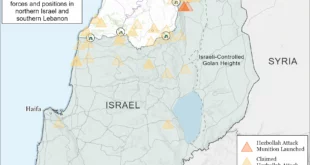
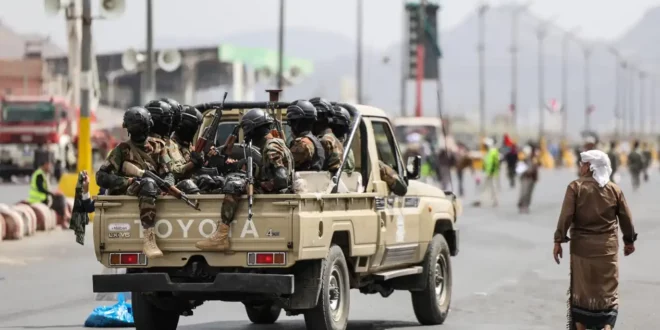
During the weekend, Iranian-backed Houthi militants launched missile strikes on southern Israel, marking a significant escalation that could further disrupt regional shipping routes and deepen risks to global trade.
While the Strait of Hormuz has been all but closed to shipping, the Houthis have so far remained on the sidelines of the conflict, allowing vessels to access Saudi Arabia’s Red Sea ports unhindered. This may be about to change.
The ports of Yanbu, King Abdullah and Jeddah have become critical import and export gateways for the Gulf, experiencing a surge in shipping volumes.
Saudi Arabia’s East-West pipeline, which connects the Abqaiq oil field near Bahrain and Qatar to the port of Yanbu, is now at full capacity, pumping 7 million barrels a day (up from just 0.8 million barrels a day prior to the conflict).
The majority of this oil is destined for Asian markets, specifically India and China.
While not replacing the estimated 15 million barrels a day moved from the Gulf via the Strait of Hormuz, the scaling up of exports will have a significant impact on global oil markets and boost the Saudi economy, especially with prices at elevated levels.
However, with Red Sea volumes at record highs, stress on infrastructure has become critical. Around 40 very large crude carriers (VLCCs) are believed to be at anchor outside Yanbu, some waiting for up to five days to be loaded.
Windward, a shipping market intelligence company, reported that in the last week of March a further 64 ships were on their way to the port. The problems are exacerbated by high levels of volatility.
Over 80% of fertilisers used in sub-Saharan Africa are imported and countries have limited buffers to mitigate shocksNumbers of vessels transiting the Suez Canal, diverting around the Cape of Good Hope or passing through the Bab al-Mandab Strait are extremely variable on a day-by-day basis, highlighting an underlying level of concern over security.
This is only going to increase with the prospect that the Houthis will recommence their attacks in the Red Sea.
Beyond oil exports, developing alternative Red Sea distribution channels for other commodities will be just as crucial to the functioning of many global supply chains.
For example, the closure of the Strait of Hormuz has effectively choked off supplies of helium from Qatar which controls a third of the world’s market.
The element, a by-product of natural gas production, is used extensively in the healthcare industry as well as in the manufacture of semiconductors. At present the shortage is only being reflected in higher prices due to a plentiful supply prior to the war.
However, if normal shipping patterns are not resumed within weeks, there are fears that the supply of equipment, such as MRI scanners, will be affected and a shortage of chips could have a long-term impact on multiple industries for many months to come.
Potentially of even greater significance is the indirect impact of the conflict on African agriculture and the ability of the continent to feed its population.
In normal times, a third of the world’s urea, 44 percent of global sulphur, 18 percent of ammonia and 15 percent of phosphates are shipped from the Gulf, all critical components in the production of fertiliser. The disruption has led to price increases of 35 percent month-on-month, the highest for three years.
More than half of Sudan’s fertiliser imports originate in the Gulf, and Tanzania, Somalia, Kenya and Mozambique are also significantly impacted, according to a report by UNCTAD.
Over 80 percent of fertilisers used in sub-Saharan Africa are imported and countries have limited buffers to mitigate shocks.
This will not only eventually impact the cost of living and increase food poverty but will reduce output of export crops such as cocoa.
Supply chains in the Gulf have so far proved adaptive to the strains placed upon them by Iran’s attacks on its neighbours’ ports, shipping and other transport infrastructure. Alternative routes focused on the Red Sea ports have provided a lifeline for both exports of energy and imports of food and medicine.
However, should Houthi attacks close off the Red Sea in addition to the Gulf, immeasurable damage will be inflicted, with consequences for supply chains, economies and societies, not only in the region but worldwide.