 Eurasia Press & News
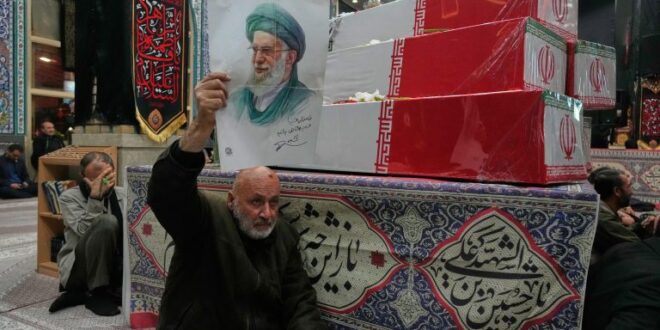
Iran shows no signs of altering its core policies despite the damage done by Israel and the United States to Iran’s strategic architecture.
A continuation of Iran’s existing policies is unlikely to bring the sanctions relief that moderate leaders such as elected President Masoud Pezeshkian deem vital to addressing economic deterioration.
Iran is resisting Trump’s pressure to dismantle its uranium enrichment infrastructure while leaving the door open to renewed diplomacy with the U.S. and its European allies.
Tehran is developing new methods and routes to resupply its Axis of Resistance partners, particularly Lebanese Hezbollah and the Houthis in Yemen.
Iran’s Supreme Leader Ali Khamenei shows no sign of accepting that the damage done to Iran’s regional strategic architecture by Israel and the U.S over the past year necessitates a wholesale change in policy. The Supreme Leader appears to have brushed aside calls by pragmatic Iranian leaders, such as elected President Masoud Pezeshkian, to alter course and pursue a less confrontational foreign policy. Pezeshkian and other pragmatists, pointing to deteriorating economic conditions and a severe water shortage in Tehran, argue Iran urgently needs the sanctions relief only the U.S., U.S. allies, and the UN can provide as an outcome of negotiated compromises.
Iran’s nuclear program advances have formed one pillar of Iran’s effort to demonstrate technological prowess and strength. However, the International Atomic Energy Agency (IAEA) assesses that Iran’s program to enrich uranium — a program with nuclear weapons proliferation potential — was largely destroyed by Israeli and U.S. air strikes in June. Foreign Minister Abbas Araghchi admitted two weeks ago: “There is no [uranium] enrichment right now because our facilities — our enrichment facilities — have been attacked.” Iran’s missile arsenal and missile production capacity were also significantly degraded by Israeli strikes during the Twelve-Day War in June.
Another cornerstone of Iranian geostrategy — establishing deterrence by arming and funding a regional network of non-state allies – has suffered severe setbacks at the hands of Israeli as well as U.S. military action. The collapse of the Assad regime in December deprived Tehran of its closest Arab state ally and eliminated Iran’s secure land corridor to its main non-state ally, Lebanese Hezbollah. Israel degraded the group’s rocket, missile, and drone arsenal and put Hezbollah leaders under significant pressure from the U.S and the Beirut government to disarm outright. The Trump peace plan for Gaza, despite its hurdles, is on a pathway to remove Hamas from power in Gaza and disarm its military wing outright. Pro-Iranian militias in Iraq are under political pressure from Baghdad to disarm or, at the very least, cease armed activity against the U.S., Israel, or other actors in or outside Iraq’s borders. Israeli and the U.S. air campaigns in 2025 degraded the missile arsenal of the Houthi movement in Yemen, but, in contrast to other Axis of Resistance partners, the Houthis face no evident political constraints in Yemen and remain capable of projecting power outside the country.
On all of the files dividing Iran and the West, Iranian officials have adhered to the Supreme Leader’s insistence that Iran not “capitulate” or “surrender” to the U.S. or other demands. On Thursday, Iran said it was ending an Egypt-brokered agreement, from September, allowing the IAEA to resume inspections there, including surveying the sites damaged by the U.S. and Israel. Iran’s action immediately followed the passage of an IAEA Board of Governors resolution demanding Tehran provide the agency “precise information” about its stockpile of 900 pounds of 60 percent enriched uranium (technically close to the 90 percent needed for weapons grade) and its nuclear sites “without delay.” The resolution passed with 19 votes in favor, three against, and 12 abstentions (Russia, China, and Niger were opposed). Iranian Foreign Minister Abbas Araghchi said that countries that voted for the resolution demonstrated “disregard” for “Iran’s goodwill and engagement” and disrupted cooperation between the IAEA and Iran.
Despite expressing defiance, Pezeshkian and other pragmatic leaders grasp that obtaining U.S., UN, and European sanctions relief will require re-engaging in nuclear talks with the Trump team. Iranian and Saudi media report that during his meeting with Trump at the White House on Tuesday, Saudi Crown Prince Mohammed bin Salman (MBS) delivered a letter from Pezeshkian to Trump. Sources told Reuters that the letter stated Iran “is not seeking confrontation,” and remains “open to resolving the nuclear dispute through diplomatic means, provided that its rights are guaranteed.” Engaging with the Trump team and U.S. allies will, in the view of Iran’s moderate leaders, at the very least insulate Iran from any further Israeli air strikes.
Alongside MBS, Trump told reporters Tehran wants a diplomatic resolution with Washington, adding: “I am totally open to it, and we’re talking to them…And we start a process. But it would be a nice thing to have a deal with Iran. And we could have done it before the war, but that didn’t work out. And something will happen there, I think.” On Thursday, France’s foreign ministry deputy spokesperson Pascal Confavreux said his country, the UK, and Germany — the “E3” — want to re-open the door of nuclear diplomacy with Iran. He added despite the Europeans’ triggering the “snapback” of UN sanctions in September, the E3 had always wanted to maintain dialogue with Iran. However, the Iranian team continues to insist it will not permanently abrogate what it says is Iran’s “right,” under the Nuclear Non-Proliferation Treaty (NPT), to enrich uranium — seemingly placing Iran and Trump’s team far from resolving their differences on the nuclear file.
Iranian leaders are also trying to demonstrate renewed strength by centering their post-Twelve-Day War deterrent strategy on Iran’s missile arsenal, which was heavily damaged by Israel but also penetrated some Israeli missile defenses and caused panic there. Three months after the Twelve Day War, satellite imagery reportedly showed the regime was rebuilding missile launch sites targeted by Israel. Iran also asserts it will begin developing missiles with a range longer than the 2,000-kilometer range limit Tehran had previously set voluntarily.
Iran similarly shows few signs of abandoning its commitment to a “unity of fronts” strategy to pressure Israel, despite Israel’s post-October 7 strategic posture centered on preventive military action against Iran’s Axis of Resistance partners. On November 7, John Hurley, Undersecretary for Terrorism and Financial Intelligence for the U.S. Treasury Department, said Iran managed to funnel about $1 billion to Hezbollah in 2025 despite sanctions that have battered its economy. Israeli intelligence officials recently told the Knesset (Israeli parliament) Foreign Affairs and Defense Committee that Hezbollah is rearming more quickly than the Israel Defense Forces (IDF) can bomb it. Foreign intelligence officials say that Iran’s supply lines to Lebanon via Iraq and Syria have been at least partially reestablished, even though Syria is now led by Sunni Islamist leaders who have expelled Iranian militia forces and reoriented policy toward the West. Interim President Ahmad al-Sharaa appeared to cement Syria’s relations with the U.S. in a visit to the White House earlier in November.
In Iraq, Tehran is urging its allied politicians and militia commanders (units of the broader Popular Mobilization Forces, PMF) to resist U.S.-inspired efforts by the government of Prime Minister Mohammad Shia al-Sudani to disarm them. Yet Pezeshkian and other Iranian pragmatists are insisting that Iran-aligned Iraqi actors refrain from resuming their earlier attacks on U.S. forces in Iraq. Senior U.S. officials have warned that any armed reaction by Iraqi militants to U.S. or Israeli regional operations — such as strikes against Hezbollah, Hamas, or the Houthis — would prompt a kinetic U.S. response.
Beyond continuing its support, Tehran has encouraged its armed Iraqi allies to refashion themselves as nationalist political parties committed to stability. Tehran assesses that this strategy will position its Iraqi partners to wield significant influence in the government formation process pursuant to the November 11 national elections. Sudani’s bloc won the most seats in that vote (46 out of the 329 up for election), but Iran’s politico-military allies, who want to distance Iraq from Washington, might be able to deny Sudani a second term if they unite behind a contender. No matter Tehran’s preferences, Trump’s team is likely to exert significant pressure within Iraq’s political structure to prevent the return of Nuri al-Maliki — or any like-minded Iraqi leader — to the Prime Minister post, which has executive authority. Maliki aligned closely with Tehran during his two terms as Prime Minister from 2006 to 2014.
Whereas Tehran is calibrating its policy in Lebanon and Iraq, a report on Friday in the Saudi newspaper Asharq Al-Awsat quoted senior Yemeni political sources as saying that Iran is significantly increasing military support to the Houthis (Ansarallah) to compensate for its setbacks elsewhere. In contrast to Hezbollah and pro-Iranian PMF groups in Iraq, the Houthis face no challenge from a central Yemen government determined to disarm them. The Houthis apparently retain a sufficient arsenal of missiles, drones, drone boats, and other weaponry to resume their strikes on Israel or commercial shipping in the Red Sea, should the Israel-Hamas ceasefire in Gaza break down. U.S. Central Command (CENTCOM), in partnership with Saudi Arabia, the UAE, European states, and the internationally recognized Republic of Yemen Government, is expanding interdiction efforts against Iranian seaborne shipments to the Houthis. To try to circumvent the blockade, Iran has expanded its support for the Sudan Armed Forces (SAF) in its battle against the rival Rapid Support Forces (RSF) militia throughout the country. The SAF controls the key Port Sudan, across the Red Sea from Saudi Arabia and Yemen, and Israeli media outlets have reported that Iran has relocated some senior Houthi leaders to a military base in northern Port Sudan. The move shields them from Israeli and Western surveillance. It repositions them closer to strategic maritime routes — enabling Iran to supply the Houthis with drones, missile components, and personnel through new routes. Other reports corroborating Iran’s stepped-up focus on the Houthis indicate the Islamic Revolutionary Guard Corps — Quds Force (IRGC-QF) returned its key Yemen operative, commander Abdolreza Shahlaei, to Sanaa.