 Eurasia Press & News
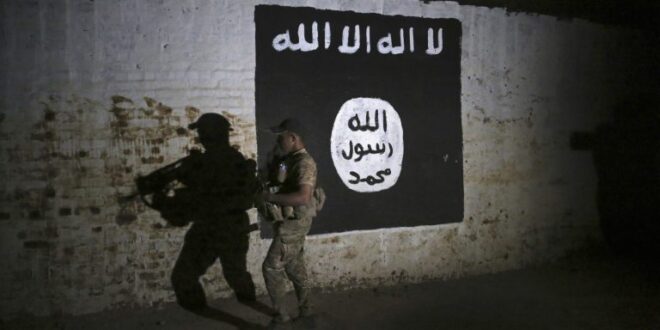
The recent Islamic State attacks in Syria and Australia were less about a resurgence of IS, and more a reflection of a longstanding reality — the group has not been defeated and will remain a major counterterrorism challenge for the foreseeable future.
Looking ahead to 2026, the Sahel will remain one of the primary nodes in the broader global jihadist landscape and there are growing concerns from counterterrorism analysts that Islamic State affiliates across the continent could shift some resources toward conducting external operations.
Islamic State Somalia has accelerated its recruitment of foreign fighters to the Puntland while also pushing sophisticated multilingual propaganda in an effort to radicalize and incite its followers and supporters.
The Islamic State Khorasan Province (IS-K) is at the forefront of experimenting with artificial intelligence to improve the resonance and reach of its propaganda and media operations.
With the events of last weekend — an Islamic State (IS) attack in Palmyra, Syria that killed three Americans and an IS-inspired (or directed, pending further investigation) terror attack in Sydney, Australia targeting a Hanukkah celebration that killed 15, the Islamic State is once again back in the headlines. One of the most frequently asked questions from journalists and the media was, does this suggest the beginning of a new wave of IS attacks across the globe? In truth, nobody knows. But the attacks were less about a resurgence of IS, and more a reflection of a longstanding reality — the group has not been defeated and will remain a major counterterrorism challenge for the foreseeable future.
While the United States and its partners in the Global Coalition to Defeat Daesh have made significant progress in combating the group, it remains dangerous. Though no longer as dangerous as it was when it controlled a so-called Caliphate in the Levant and was able to deploy trained fighters and inspire so many Westerners to conduct terrorist attacks in their home countries with a high operational tempo, even in its far more decentralized form, IS affiliates, regional branches and franchise groups are still highly capable. Even those that have been substantially weakened, including Islamic State East Asia (ISEA), have been back in the news with recent reporting on the Australian terrorists’ trip to the Philippines in the month prior to the Bondi Beach attack.
In the Sahel, Islamic State Sahel Province remains active, battling with militants from al-Qaeda’s Sahelian branch, Jamaat Nusrat ul-Islam wa al-Muslimin (JNIM) while further east toward the Lake Chad Basin, Islamic State West Africa Province (ISWAP) continues to push large volumes of IS propaganda and has accelerated its recruiting efforts in the region. Looking ahead to 2026, the Sahel will remain one of the primary nodes in the broader global jihadist landscape and there are growing concerns from counterterrorism analysts that Islamic State affiliates across the continent could shift some resources toward conducting external operations. ISWAP has been honing its skills using unmanned aerial systems (UAS) or drones, part of a trend of violent non-state actors adopting emerging technologies and integrating them into their tactics and operations. In the Democratic Republic of Congo, Islamic State Central Africa Province (ISCAP) has wreaked havoc, waging a sectarian campaign against Christians in the country. The Islamic State in Mozambique remains a lingering concern, with the group ebbing and flowing in strength, but retaining the ability to conduct a low-level insurgency.
As counterterrorism expert and Soufan Center senior research fellow Lucas Webber has pointed out, the Islamic State Somalia (IS-S) is quickly emerging as one of the group’s most internationally connected and financially influential branches. Its growing reach has serious implications for security in Africa, South Asia, Europe, and North America. The U.S. has recognized this threat, conducting more than 100 strikes against both IS Somalia and al-Shabaab so far this year, the highest annual total since 2007. IS-S’s development from a minor splinter into a regional command hub, including its “Al-Karrar Office,” which coordinates activities across eastern, central, and southern Africa. IS-S leader Abdulqadir Mumin has exerted increasing authority within IS’s global leadership structure, overseeing multiple provinces and extending influence beyond Somalia. IS-S has also accelerated its recruitment of foreign fighters to the Puntland while also pushing sophisticated multilingual propaganda in an effort to radicalize, recruit, and incite its followers.
Arguably the group’s most dangerous affiliate, Islamic State Khorasan Province (IS-K), remains a potent threat and is just two years removed from external operations targeting Iran, Türkiye, and Russia, with several high-profile foiled plots, including in France and Austria, among elsewhere in Western Europe. A recently released report from the UN Analytical Support and Sanctions Monitoring Team focused on Afghanistan made the following assessment of IS-K, noting that the group “is resilient and continues to pose a threat, both internally in Afghanistan and externally.” The report goes on to say, “There are frequent attacks claimed by ISIL-K, combined with regional concerns over the group’s operational capacity, strength, increased propaganda, recruitment and ability to infiltrate the de facto authorities’ ranks.” The report also confirms what many in the counterterrorism community, including researchers at Tech Against Terrorism, have been noting for some time — IS-K is at the forefront of experimenting with artificial intelligence to improve the resonance and reach of its propaganda and media operations. Just this week, as reported by The Khorasan Diary, a journalist-run platform reporting on news from South Asia, IS-K’s spokesman Sultan Aziz Azzam, who is also the founder of its official media, Al Azaim Foundation, was apprehended by the Pakistanis.
The Islamic State is aware that even with a limited physical presence in certain parts of the world, its propaganda remains effective in recruiting and radicalizing new members. It continues to promote propaganda and digital strategic communications that incite attacks by homegrown violent extremists throughout the world. Nearly a year ago, an IS-inspired American launched a deadly terrorist attack in New Orleans, Louisiana on New Year’s Day. In that attack, the perpetrator used Meta Ray-Ban glasses to help him conduct surveillance and reconnaissance of the area he would go on terrorize with a vehicle rampage. This combination of high-tech and low-tech methods is a trend likely to continue posing a challenge to law enforcement authorities.
The renewed attention to the Islamic State comes at a time when counterterrorism has been deemphasized in favor of other national security priorities, including more recently the Trump administration’s focus on the Western Hemisphere, and in particular, Venezuela, where transnational criminal gangs have been redesignated as foreign terrorist organizations. As the year comes to a close and people seek to go about their everyday lives, with many around the world celebrating religious and spiritual holidays in the coming weeks, the risk will remain high that terrorists could strike, keeping law enforcement, intelligence agencies, and security services on high alert, including against the enduring and persistent threat presented by the Islamic State and its global network of affiliates and regional branches.