 Eurasia Press & News
Six months after Operation Rising Lion, Iran’s ballistic missile threat to Israel is once again intensifying. While Israel, with decisive U.S. support, dealt a severe blow to Iran’s nuclear program in June, the campaign left Tehran’s conventional missile infrastructure badly damaged but not eliminated. Iran has retained a residual production capability and is now rebuilding it at speed, while simultaneously expanding espionage networks aimed at identifying new strategic targets inside Israel.
This renewed danger is likely to cast a long shadow over the December 29 meeting at Mar-a-Lago between President Donald Trump and Israeli Prime Minister Benjamin Netanyahu. Although the Gaza war has subsided following the October 10 ceasefire, the broader regional balance remains unchanged. As long as the Islamic Republic retains the ability to inflict catastrophic violence against Israel, prospects for durable regional accommodation will remain elusive.
Expanding Espionage Inside Israel
The Gaza ceasefire reduced active fighting on Israel’s borders but did little to slow Iranian intelligence activity. Since October, Israel’s Shin Bet has announced the arrest of at least six individuals suspected of spying for Iran. Those detained include a female Israel Air Force reservist and a Russian migrant worker, underscoring Tehran’s willingness to recruit across social, ethnic, and professional lines.
The alleged missions were often unsophisticated but potentially lethal: photographing naval facilities, military bases, ports, and other sensitive infrastructure. In several cases, suspects were reportedly tasked with identifying potential targets for future missile or drone attacks.
Iran’s recruitment campaign has also become unusually overt. Thousands of Israelis have reportedly received unsolicited Hebrew-language text messages offering cash in exchange for cooperation with Iranian intelligence. The brazenness of the effort prompted at least one Israeli mayor to publicly warn residents against what he described as a deliberate campaign of entrapment and treason.
Missile Production Back on Track
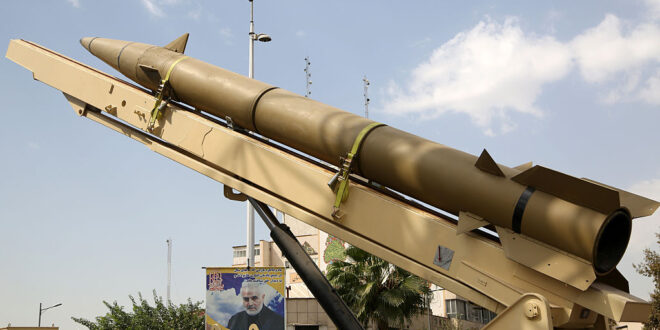
Operation Rising Lion significantly degraded Iran’s missile arsenal and production capabilities. Israeli and American estimates suggest that Iran entered the June conflict with approximately 2,000 to 3,000 ballistic missiles — a stockpile that was cut roughly in half. More than 570 missiles were fired at Israel, while many others were destroyed on the ground along with key production facilities. Between a half and two-thirds of Iran’s missile launchers were reportedly destroyed or rendered inoperable.
That damage, however, appears temporary. Recent U.S. media reporting indicates that Iran may have restored sufficient industrial capacity to potentially manufacture up to 3,000 ballistic missiles annually. Even if that figure is overstated and actual output is closer to 2,000 missiles per year, the threat remains severe.
Intelligence reporting also points to renewed Chinese assistance in supplying missile-related materials, including dual-use components seized by U.S. forces en route to Iran. While it remains unclear if Beijing will help Tehran rebuild its air-defense systems, it appears willing to supply precursor chemicals to fuel Iran’s missile program and support its military industries. Israeli media, citing unnamed Western intelligence sources, says Iran is attempting to procure planetary mixers, key components for the production of solid-fuel missiles destroyed by Israel, from China. At least one shipment was sent, but intercepted. It’s also been reported that Tehran may be shifting away from solid-fuel propellants — harder to obtain under sanctions — in favor of liquid-fuel alternatives that are easier to procure, albeit operationally inferior.
According to an Israeli journalist with close ties to the security establishment, Tehran believes there is “daylight” between Washington and Jerusalem regarding the urgency of confronting Iran’s conventional missile program. This perception may be encouraging Iranian leaders to accelerate production, calculating that missile buildup alone will not trigger U.S. military action — though it could still prompt Israeli strikes with tacit American approval.
Strategic Implications and Policy Choices
When launching Operation Rising Lion, Netanyahu emphasized that Iran’s ballistic missile arsenal constituted the second-most severe threat to Israel after the nuclear program itself. In sufficient numbers — hundreds or more — precision-strike missiles carrying half-ton or larger warheads could overwhelm Israel’s air defenses, inflict widespread destruction, and paralyze civilian life and economic activity. Sen. Lindsey Graham (R-SC) echoed the concern in late December saying, “We cannot allow Iran to produce ballistic missiles because they could overwhelm the Iron Dome. It’s a major threat.”
Before the June conflict, Iran was reported to be on pace to field up to 10,000 ballistic missiles by 2028. Recent intelligence suggests that this trajectory has now resumed. Israel therefore faces a difficult strategic choice: whether, how often, and by what means — covert or overt — to employ preemptive force to degrade Iran’s missile program, knowing that retaliation could impose costs on Israel’s home front and economy. Continued use of “MABAM” (campaign between wars) tools, which offer a degree of deniability, may present one viable option.
To avoid a prolonged tit-for-tat cycle, Israel may ultimately decide to expand its target set beyond missile infrastructure to include regime leadership and select economic assets, excluding those that could severely disrupt global markets or strain relations with Washington, such as energy facilities. Such strikes could weaken Tehran’s coercive capacity and potentially trigger renewed internal unrest among an Iranian population already strained by severe economic hardship and acute water shortages.
At Mar-a-Lago, Netanyahu will need to persuade Trump that while U.S. strikes on Iran’s nuclear facilities were unprecedented and strategically consequential, Israel’s campaign against Iran is not yet complete. Even if Washington is unwilling to directly strike conventional missile targets, it could quietly authorize Israeli action and reinforce it through intelligence sharing and missile-defense support.
Stability in Gaza will remain a top priority for the Trump administration. But Washington must also recognize that Iran remains the region’s principal spoiler and a continued threat to American national security.