 Eurasia Press & News
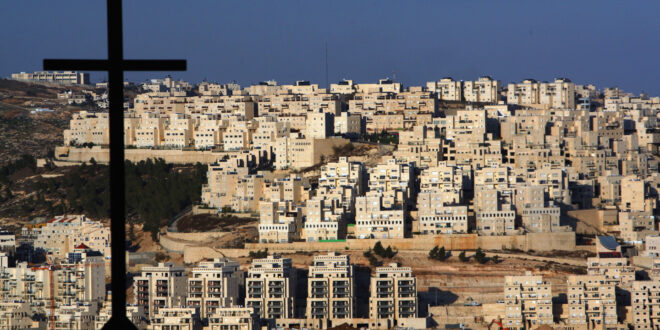
As illegal Israeli settlements seize more land and violent settler attacks escalate, Palestine’s Christian community faces a quiet erasure
Beit Sahour – Overnight on 19 November 2025, Israeli settlers bulldozed the Ush al-Ghurab hilltop in the Palestinian town of Beit Sahour, just east of Bethlehem.
The next morning, Beit Sahour residents woke up to caravans placed on the hill and an announcement from Yaron Rosenthal, council head of the nearby Israeli settlement of Gush Etzion.
“Tonight, we established a new community in Gush Etzion at Shdema,” Rosenthal said, referring to the Israeli designation of the land.
“For 2,000 years, Jews prayed to return to Bethlehem, and here we are…We have merited to return to the city of Rachel, our Matriarch, of King David – a community that will strengthen the connection between eastern Gush Etzion and Jerusalem.”
While all Israeli settlements are illegal under international law, outposts, which can range from a few tents to caravans and other structures, are also illegal under Israeli law, but often legalised retroactively.
“The new settlement outpost of Ush al-Ghurab is not just another construction project,” Rev Dr Fares Abraham, who was born in Beit Sahour, told The New Arab.
“It sits on land owned by families from Beit Sahour and other areas, and it threatens to sever these towns from their eastern lands and natural space for growth.”
The majority of Ush al-Ghurab is private Palestinian property owned by families from Beit Sahour, while some sections of it belong to the town’s municipality.
The area is known as a recreational spot for Palestinians, with a USAID-funded playground on its northern slope. The Israeli military has issued demolition orders for the park, but they were never carried out.
Beit Sahour residents hoped to expand development in Ush al-Ghurab, with the municipality planning to build a hospital there, but these plans have never materialised due to settler pressure.
Following Israel’s occupation of the West Bank in 1967, the Israeli military established “Shdema Camp” at Ush al-Ghurab through several land seizure orders claiming the land was to be taken for “military necessity.”
Under Jordanian rule of the West Bank, the site was also a military base. In 2006, the Israeli army officially evacuated the base, declaring the site was no longer needed for military purposes.
“At this moment, legally and logically, the land should have reverted to its Palestinian owners or at least been released for civilian Palestinian use,” Bissan Amira, researcher at Balasan Initiative for Human Rights, a Beit Sahour-based Palestinian rights group, told TNA.
Amira explained that Ush al-Ghurab fell into Israeli-military-controlled Area C of the West Bank when the Oslo Accords between the Palestine Liberation Organisation (PLO) and Israel were established in the early 1990s, meaning all planning authority is in Israeli hands.
“This allowed Israel to block any Palestinian use, regardless of ownership,” Amira said.
When the army left Ush al-Ghurab, Israelis, mostly affiliated with Women in Green, a coalition of settlers based south of Bethlehem, began frequenting the site in 2008 and advocating for a permanent settler presence there. Occasionally, settlers harassed residents and scrawled graffiti on their playground.
During this period, the Beit Sahour Municipality planned to build a children’s hospital on the land through a USAID grant. Given that Ush al-Ghurab is located in Area C, the project needed Israeli permission.
Following relentless settler campaigns pushing for increased army presence and arguing that a Palestinian facility would endanger settlers driving on the adjacent bypass road, the army catered to the settlers’ demands, and the hospital plan was suspended. In 2010, the military returned, erecting a watchtower along the road under the guise of security.
“The area is treated as a permanent security site, not a vacated base,” Amira said. “Any Palestinian civilian development – even humanitarian projects like a children’s hospital – is framed as a security threat, while settler activity is normalised.”
Beit Sahour residents say this new settlement does even more to strangle the Palestinian presence at Ush al-Ghurab.
“It will limit housing, agriculture, movement, and economic life,” Abraham said. “When land is confiscated – when they just slice up a piece of property – movement becomes more restricted and daily life becomes unpredictable. Young families are pushed to leave because of these circumstances…they cannot build homes, they cannot sustain livelihoods or envision a future for them and for their children.”
Beit Sahour, with a population of approximately 15,000, is a predominantly Christian town. While Palestine is the birthplace of Christianity, individuals identifying as Christian in the land have dwindled from 12.5 per cent before the establishment of the Israeli state in 1948 to a mere 2.2 per cent in Israel and the occupied Palestinian territories.
And this number is at risk of further declining as Israeli military and settler attacks continue to rise.
Over the summer, settlers seized land belonging to the Greek Orthodox Monastery of Abba Gerasimos of the Jordan in Jericho, while another group of settlers raided Taybeh, the last entirely Christian village in the West Bank, setting cars ablaze and vandalising property. In Jerusalem’s Old City, radical Israelis regularly harass and spit on Christians.
The Israeli government has also implemented plans to isolate the Bethlehem Governorate, where Beit Sahour is located. In September 2024, the Israeli Civil Administration, the military body overseeing policy in the West Bank, approved the Nahal Heletz settlement on Palestinian land in Battir, a village in the Bethlehem Governorate.
Nahal Heletz will sit on roughly 60 hectares of land between Jerusalem and Gush Etzion, thereby connecting the Israeli settlement to Jerusalem and creating a contiguous Israeli space from Jerusalem to the West Bank while cutting off Bethlehem from East Jerusalem.
Along with increased settler activity, the Israeli military has also installed at least 57 gates across the Bethlehem Governorate, and according to Balasan, on 2 September 2025, Israel announced plans to completely close the city of Bethlehem with military gates and checkpoints – a move Balasan warns is a step to the formal annexation of the city.
“They are already installing iron gates and roadblocks to prohibit the extension between Beit Sahour and its villages,” Rifat Kassis, a resident of Beit Sahour and general coordinator of Kairos Palestine, a Palestinian Christian ecumenical movement, told TNA.
“But with this settlement and what comes with the settlement…is not just a land grab…but it’s the whole construction which comes with the settlement: the buffer zones, the military roads, towers for protection, and the worst of all is the kind of settlers themselves who would be settled in such a settlement,” Kassis continued.
He added that while Ush al-Ghurab is a popular recreational space for Beit Sahour, residents now avoid the hilltop because of the constant settler presence.
“People do not go there anymore because these settlers are lunatics and violent terrorists,” Kassis said. “So now if they have this settlement, even if they continue allowing Beit Sahour residents to reach the part of Ush al-Ghurab that’s not part of the settlement, people will not go there because it’s becoming too dangerous.”
Residents and the Beit Sahour Municipality say this is what will drive migration out of the town – increased settler violence and the loss of land.
“That’s why I say that this threatens the Christian continuity, not just the Christian presence,” Abraham said.
“Churches can survive persecution. What they cannot survive is slow suffocation. When a community is isolated and economically strangled, continuing our presence becomes very difficult. The presence erodes quietly but decisively.”