 Eurasia Press & News
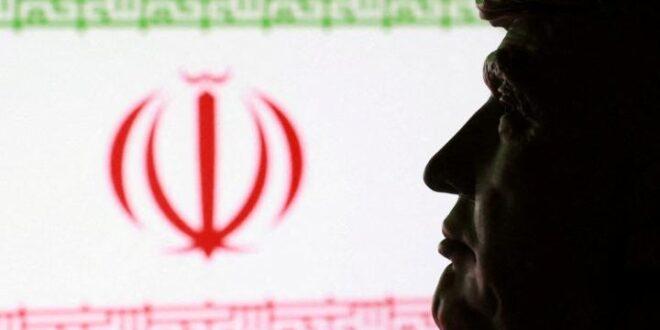
Three experts discuss the rapidly changing situation in Iran, including the status of opposition elements on the ground, the U.S. interests at play in the crisis, and Washington’s policy options for bolstering both.
On January 14, The Washington Institute held a virtual Policy Forum with Holly Dagres, Michael Eisenstadt, and Richard Nephew. Dagres is the Institute’s Libitzky Family Senior Fellow and curator of The Iranist newsletter. Eisenstadt is the Institute’s Kahn Senior Fellow and director of its Military and Security Studies Program. Nephew is the Institute’s Bernstein Adjunct Fellow and former U.S. deputy special envoy for Iran. The following is a rapporteur’s summary of their remarks.
Holly Dagres
Iran has entered a third week of nationwide anti-regime protests, which began on December 28 following the collapse of the rial against the U.S. dollar. Although the immediate trigger differed from the 2022 “Woman, Life, Freedom” uprising, the underlying grievances are consistent: systemic mismanagement, corruption, repression, and explicit demands for the removal of the Islamic Republic.
The protests rapidly spread to all thirty-one provinces, illustrating their national scope and organizational resilience. Mobilization intensified after Kurdish Iranian groups announced a strike, and when Reza Pahlavi, son of the former shah, urged Iranians to protest on January 8-9, with endorsements from activists and celebrities inside the country.
The scale of participation prompted the regime to impose a communications blackout, cutting internet access and even landlines. Such shutdowns have historically been used to enable violent repression rather than crowd control, as documented by Amnesty International. During the 2019 “Bloody November” protests, for example, internet blackouts facilitated mass killings that were concealed from international scrutiny, while UN investigations later confirmed that crimes against humanity occurred during the 2022 uprising. Despite heavy surveillance during the current round, however, the smuggled Starlink terminals used by tens of thousands of Iranians have enabled limited connectivity and allowed some documentation of events to reach the outside world amid the blackout. Eyewitness accounts describe conditions resembling a war zone, including shortages of body bags and offerings of free burial plots and burial shrouds. Human rights organizations report thousands of confirmed deaths and tens of thousands of arrests, with credible estimates placing the death toll well above 10,000.
Amid such abuses, protesters have issued clear, longstanding calls for regime ouster. Iranian activists inside the country have increasingly advocated for international recognition of this objective, including support for a democratic transition and, previously, a constitutional assembly and referendum. The existence of prominent opposition figures inside and outside the country, including imprisoned activists and Nobel laureates, challenges the narrative that Iran lacks viable political alternatives. The trajectory of the protests is now seen as irreversible, with the regime having crossed a moral and political point of no return. Whether this momentum results in its ouster depends heavily on international responses and the regime’s ability to maintain security force cohesion.
Clear evidence also shows that many protesters view international attention, particularly from the United States, as extremely important. The most consistent and immediate demand from activists has been for measures that restore connectivity, particularly direct-to-cell satellite communication, which would enable Iranians to document events and communicate with the rest of the world.
Largely symbolic measures—such as Canada and Australia’s designation of the Islamic Revolutionary Guard Corps (IRGC) as a terrorist organization—have been interpreted positively inside Iran. Yet broader diplomatic actions—like coordinated ambassador withdrawals, formal UN condemnation, and unified messaging—are meaningful pressure points that the international community has not fully utilized.
Michael Eisenstadt
President Trump has publicly threatened to use force to stop the crackdown on protesters in Iran, and he now faces a dilemma: if the United States does not act, or if it acts ineffectively, U.S. credibility will suffer, potentially leading to a more aggressive Iran and undermining deterrence vis-a-vis China and Russia.
Tehran has abandoned its traditional domestic repression playbook, which relied largely on nonlethal force and the protraction rather than intensification of crackdowns to wear down and demoralize the opposition. This time the regime has resorted to massive, intense violence. This shift raises questions about whether Iran may similarly abandon its traditional external “resistance” playbook, which has relied largely on the calibrated use of force to achieve outsize effects while avoiding war with the United States. Much will depend on whether it believes it is facing an imminent threat to its survival.
The United States has several military options. One is the Venezuela model of “regime management” achieved through coercive diplomacy. This is not regime change; rather, it might involve decapitation of the regime by targeting Supreme Leader Ali Khamenei or pressuring the IRGC leadership to give him up, followed by a series of understandings regarding the nuclear program, oil exports, and human rights. Yet such an approach seems a long shot given the IRGC’s loyalty to the system. If achieved, it would require sustained U.S. pressure to prevent backsliding.
A second option is regime collapse through airstrikes and cyber operations to disrupt the functioning of the machinery of repression. This would include bombing security headquarters, disrupting the country’s surveillance system, and disrupting the logistical effort required to support the crackdown. Yet deployed security forces would generally not be viable targets from the air, since most would be dispersed throughout built-up areas and intermingled with civilians. The sheer numbers of these forces would also pose a challenge. As for potential fracturing of the security forces, with some of them joining the protesters—a hallmark of most successful revolutions—this would likely occur only if they believed a tipping point had been reached and the regime was teetering. Yet the absence of an organized opposition remains a major obstacle to a successful transition. This is an area where the Iranian diaspora can do more.
A third option is conducting symbolic, performative strikes designed to demonstrate U.S. resolve without fundamentally altering conditions on the ground. Such actions could satisfy domestic political demands to “do something” while avoiding deeper military entanglement. However, these measures risk failing to change the regime’s behavior or the trajectory of events inside Iran, potentially exposing U.S. threats as hollow and weakening U.S. deterrence.
How might Tehran respond to the use of force? If it believes it faces an existential threat, the regime may respond with all the means at its disposal, including attacks on U.S. bases, strikes on U.S. allies, and the disruption of tanker traffic in the Gulf. If it does not believe its survival is at risk, it will respond more or less proportionately to attacks, trying to inflict enough pain so that the United States will not attack again. Iran’s reliance on the Strait of Hormuz for its own trade would likely preclude any regime efforts to block that waterway except in the most extreme circumstances. Instead, Tehran would probably continue its current policy of “smart control,” which involves the diversion of tankers in response to actions by its adversaries.
Richard Nephew
The existing body of “maximum pressure” sanctions on Iran has already exhausted much of the available economic leverage against the regime. While sanctions impose significant strain, they also limit additional punitive options and have not prevented the regime from employing extreme violence. Related threats like tariffs are therefore unlikely to generate meaningful near-term political effects, especially since they do not impose costs on the companies doing business with Iran.
Remaining options include intensified enforcement against the Chinese financial institutions that facilitate Iranian oil sales; additional targeted sanctions on individuals involved in repression; expanded travel bans, potentially including family members of regime figures involved in crackdowns; and a broad secondary sanctions embargo covering most economic activity outside humanitarian channels. Yet besides requiring substantial enforcement capacity and intelligence support, these measures are unlikely to produce decisive economic shocks capable of altering regime behavior.
Sanctions are most effective when paired with a credible pathway for relief in exchange for compliance. In the current context of mass killings, however, it is unclear what concessions would justify easing pressure. Ultimately, maintaining sanctions without a realistic quid pro quo risks perpetuating the suffering of the Iranian people without the intended effect of influencing elite decisionmaking.
Comparisons to Venezuela are not very useful in this crisis, since Iran retains significant retaliation capabilities against regional energy infrastructure and other major U.S. interests. Seizing Iranian oil shipments risks provoking asymmetric escalation, potentially drawing the United States into a broader conflict. Interdiction remains an option, but it would likely require readiness for sustained military engagement.
As this crisis unfolds, the regime’s nuclear program remains an existential threat to the United States and the Middle East and will need to be addressed again at some point. Yet restarting negotiations on that issue now would be a mistake, partly because new talks would likely require granting extensive sanctions relief, and also because it would be difficult to establish what Iran’s nuclear capabilities are after the United States and Israel struck the program last June. Moreover, engaging in such discussions amid mass repression could give the impression that Washington wants to legitimize a regime whose political legitimacy is irreparably damaged. Indeed, a return to pre-crisis governance models is unrealistic. The regime has not taken substantial steps to address any of the grievances that prompted the demonstrations, so continued cycles of protest and repression are likely.