 Eurasia Press & News
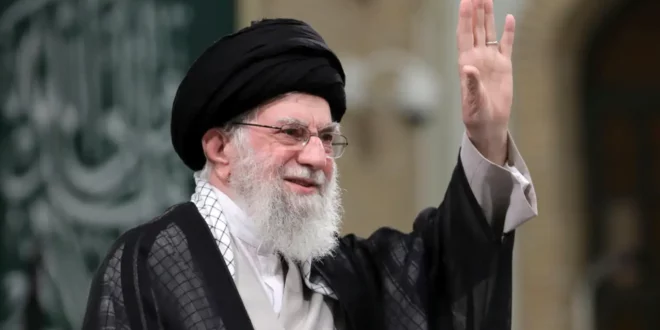
A Bloomberg News investigation reveals that Mojtaba Khamenei, son of Iran’s Supreme Leader, controls a vast international network of luxury real estate and offshore companies, valued at hundreds of millions.
On a quiet, tree-lined stretch of north London known as Billionaire’s Row, multimillion-pound mansions sit hidden behind high hedges, iron gates, and darkened windows. The homes appear lifeless—rarely occupied, heavily guarded, and largely detached from the city around them. Yet behind these facades lies a complex international financial network that stretches from Tehran to Dubai, Frankfurt, London, Paris, Mallorca, and Toronto.
According to a year-long investigation by Bloomberg News, the ultimate beneficiary of this global web of luxury real estate and offshore companies is Mojtaba Khamenei, the second-eldest son of Iran’s Supreme Leader, Ayatollah Ali Khamenei.
A Power Broker in the Shadows
Now 56, Mojtaba Khamenei is widely viewed as one of the most influential yet least visible figures in Iran’s political system—and a potential successor to his 86-year-old father. While he avoids public appearances and holds no formal government office, Western intelligence assessments and people with direct knowledge of his finances say he oversees a sprawling overseas investment empire worth hundreds of millions of dollars, and possibly far more.
None of the properties or companies are registered in his name. Instead, ownership is concealed behind layers of shell companies, offshore trusts, and trusted intermediaries, allowing capital to flow out of Iran despite one of the toughest sanctions regimes ever imposed on a country.
Some of the investments date back to at least 2011, well before Mojtaba Khamenei himself was sanctioned by the United States in 2019.
Luxury Assets Across the West
The portfolio includes:
More than a dozen luxury properties in London, including homes on The Bishops Avenue, with individual purchases exceeding £33 million
A villa in Dubai’s most exclusive residential district, often described as the city’s “Beverly Hills”
Five-star hotels in Frankfurt and Spain’s Mallorca region
High-end real estate in Paris
A penthouse at Toronto’s Four Seasons Private Residences, sold in 2020 for C$10.5 million
Funds for these acquisitions were routed through banks in the UK, Switzerland, Liechtenstein, Cyprus, and the UAE, according to documents reviewed by Bloomberg. Multiple sources say the money largely originated from Iranian oil revenues, moved through opaque trading networks created to bypass sanctions.
The Key Middleman: Ali Ansari
Central to the operation is Ali Ansari, a 57-year-old Iranian construction magnate and banker. British authorities sanctioned Ansari in October, describing him as a “corrupt Iranian banker and businessman” who provided financial support to Iran’s Islamic Revolutionary Guard Corps (IRGC)—a military force that reports directly to the Supreme Leader.
Although Ansari is not sanctioned by the US or EU, intelligence assessments and corporate records identify him as the principal financial conduit for Mojtaba Khamenei.
Ansari’s name appears repeatedly across offshore companies and property holdings used in the network. Among them are firms registered in Saint Kitts and Nevis, the Isle of Man, Luxembourg, and the UAE, including entities such as Ziba Leisure Ltd., Birch Ventures Ltd., A&A Leisure Ltd., and Midas Oil Trading DMCC.
From Modest Origins to Financial Power
Ansari comes from a working-class family near Tehran. His father reportedly joined a post-revolution reconstruction committee linked to the Supreme Leader’s office, helping refurbish religious sites. Through this work, the family developed connections to Iran’s clerical elite.
Ansari is said to have met Mojtaba Khamenei in the late 1980s, when Mojtaba’s father was Iran’s president. From there, Ansari’s rise was swift. He secured lucrative state contracts and licenses in construction, shipping, banking, and petrochemicals—sectors frequently used to move state-linked funds abroad.
In 2009, he founded TAT Bank, later merged into Ayandeh Bank, which became a major financial backer of Iran Mall, one of the largest luxury shopping complexes in the Middle East. Ayandeh collapsed in 2025 amid allegations of insider lending and political favoritism, triggering public outrage inside Iran.
People familiar with the matter say Mojtaba Khamenei played a central behind-the-scenes role in both the bank and the mall project.
Sanctions, Shell Companies, and Oil Money
Officially, Iran’s oil is sold by the National Iranian Oil Company. In practice, sanctions have pushed much of the trade into shadow markets, using front companies, intermediaries, and informal traders—many linked to elites close to the Supreme Leader and the IRGC.
Bloomberg reviewed SWIFT messages showing transfers routed through Abu Dhabi Islamic Bank to offshore firms connected to Ansari. One such company, Ziba Leisure, was incorporated in 2014 and listed Ansari and a UK-based Iranian-born lawyer, Moris Mashali, as directors.
In 2016, Ansari obtained Cypriot citizenship, allowing him easier access to European banking and company registrations. Cypriot authorities later debated revoking his passport amid scrutiny over his political ties.
A Clash With Iran’s Public Image
Iranian state media portrays the Supreme Leader’s family as modest, austere, and deeply religious. While there is little evidence Mojtaba Khamenei personally enjoys these overseas assets, the existence of such hidden wealth clashes sharply with the regime’s messaging—especially as poverty deepens, protests intensify, and thousands have reportedly been killed in unrest over the past year.
Public anger increasingly targets the “aghazadeh”—a derogatory term for the children of powerful officials accused of enriching themselves through political connections.
Europe Pushes Back
British authorities froze Ansari’s UK assets following sanctions, raising the possibility of forced asset sales across Europe. Investigators in Germany and Spain are now examining hotel ownership structures linked to the network.
Frankfurt’s deputy mayor, Nargess Eskandari-Grunberg, herself Iranian-born, warned that Iran’s elite are exploiting weaknesses in Western financial systems.
“They abuse our system,” she said. “Our markets should not serve as safe havens for those financing repression.”
Transparency International echoed that concern, urging stronger enforcement of beneficial ownership laws.
Denials and Silence
Ansari has denied any financial or personal relationship with Mojtaba Khamenei and says he will challenge the UK sanctions. Mashali has also denied acting on behalf of the Khamenei family, stating his role was limited to legal consultancy.
Mojtaba Khamenei did not respond to requests for comment sent via Iranian diplomatic channels. Iran’s foreign ministry, the US Treasury, the EU, and UAE authorities also declined to comment.
A System That Still Leaks
The investigation highlights how, despite two decades of escalating sanctions, Iran’s ruling elite continue to move vast sums abroad, exploiting gaps in global enforcement, lax transparency rules, and jurisdictional loopholes.
As pressure on Tehran intensifies—especially following renewed US threats over Iran’s nuclear program—the future of these overseas assets remains uncertain. What is clear is that the financial footprint of Iran’s most powerful family extends far beyond its borders, quietly embedded in the heart of Western real estate and finance.