 Eurasia Press & News
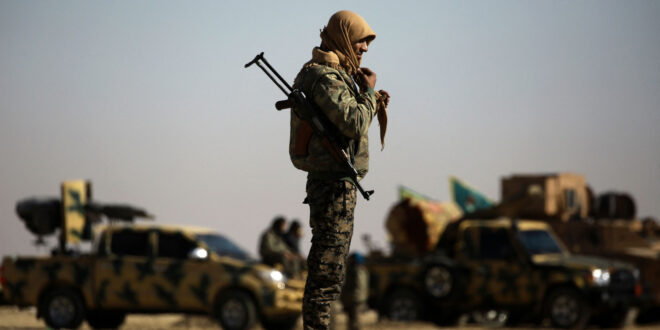
In early February, Syrian Ministry of Interior forces began a phased deployment across multiple Kurdish-held cities and towns in northeastern Syria, marking the first concrete implementation of the 30 January integration agreement between Damascus and the Kurdish-led Syrian Democratic Forces (SDF).
Syrian General Security Service (GSS) units entered Hasakah on 2 February, followed a day later by a coordinated deployment into Qamishli, both under escort from the SDF’s internal security forces, the Asayish.
Parallel movements were also reported in villages south of Kobani, including areas that had recently seen heavy fighting.
The deployments were deliberately staged. Interior Ministry forces – not army units – led the entry, curfews were imposed to limit friction, and joint meetings were held between Syrian officials and SDF security commanders to manage the transition.
In Qamishli, where the 3 February deployment followed reported abuses during the earlier Hasakah entry, local sources noted the absence of arrests or shootings, suggesting that initial frictions had been contained rather than allowed to derail the process.
Syrian officials publicly criticised the earlier incidents without framing them as grounds to suspend the agreement – an indication that both sides remain invested in implementation despite lingering mistrust.
By the time these forces rolled in, however, the central question of Syria’s northeast had already been settled. Through a combination of military pressure, territorial rollback, and shifting external alignments, Damascus had effectively dismantled the SDF’s decade-long control over much of the region.
The January offensive did not reopen negotiations on equal terms; it closed them. Integration is now proceeding largely on conditions set by the central government, following the collapse of earlier frameworks envisioning a more balanced reunification.
The sequencing matters because it captures the deal’s core logic. Damascus is reclaiming the northeast without forcing an immediate confrontation between a historically centralised, still socially homogeneous national army and the Kurdish-led force that governed and fought across the region for over a decade.
Integration is being front-loaded through policing, internal security, and civilian administration, while military questions are deferred.
Yet the same design that makes the agreement implementable in the short term also raises the question that will determine whether it lasts. Is Damascus building “one army”, or absorbing the SDF in a way that preserves parallel structures under new labels?
Integration begins with police, not soldiers
The initial deployments underline the agreement’s carefully managed sequencing. Syrian GSS personnel entered Hasakah and Qamishli under Asayish escort, with both sides framing the mission as a joint effort to “protect” the cities while integration mechanisms are established, with curfews imposed and coordination meetings held to limit friction.
Notably, the Interior Ministry – rather than the Syrian army – has been the state’s primary instrument of return.
Parallel steps were also reported south of Kobani, where government security forces deployed to villages that had recently seen heavy fighting, and where pro-SDF sources circulated footage of joint meetings, new checkpoint arrangements, and coordinated handovers.
Damascus presents this as restored state authority, while the SDF stresses that “no military forces” are entering Kurdish cities, and that security is being handled through a transitional Interior Ministry footprint rather than an army takeover.
This distinction is not cosmetic. It reflects an implicit compromise that lowers the risk of urban escalation while allowing Damascus to reinsert state institutions into the northeast. The SDF can claim it has prevented a direct Syrian army presence in Kurdish-majority centres during the most sensitive phase of integration.
But it also hints at the structural tension ahead. If the state’s first expression of authority in Kurdish areas is policing rather than military command, integration becomes less a single merger into a unified armed force than a series of parallel absorptions into different ministries – Defence for newly formed brigades, Interior for security forces – each with its own chains of command, loyalties, and incentives.
Aron Lund, analyst at the Swedish Defence Research Agency (FOI), describes this sequencing as a temporary stabiliser rather than a settled model.
“The latest deal appears to represent a compromise to resolve what was a very dangerous, destabilising standoff,” he told The New Arab, adding that even if implementation calms the situation, the government is likely to “eventually revise the terms and impose more standard forms of central control over the northeast”.
What ‘SDF brigades’ mean within a centralised army
On paper, the agreement is unusually explicit about force design. It provides for a Syrian army division in Hasakah composed of three brigades integrating SDF fighters, while the Kobani force is to be folded into a brigade affiliated with an Aleppo-based division.
If implemented, Damascus can claim to have absorbed SDF manpower into official structures – a symbolic milestone after months of clashes and a January offensive that sharply reduced SDF-held territory.
Yet the architecture is geographically compartmentalised and identity-preserving. These are not anonymous battalions dispersed across the national force, but territorially anchored formations – ‘Hasakah brigades’ and a ‘Kobani brigade’ – built from existing wartime networks and likely led by many of the same commanders.
That is what makes them feasible in the short term, but it also risks repeating a familiar Syrian pattern: formal unification without deep institutional assimilation.
“This is still a very fluid situation,” cautions Lund. While the agreement appears to envisage both brigade-level formations and individual integration into the new Syrian military, he notes that “depending on how and when that individual vetting is done, it could have a very considerable impact on the brigade-level units”.
As Suhail al-Ghazi, a Syrian researcher and analyst, told TNA, the arrangement “raises the risk of parallel units emerging rather than fully integrated formations,” particularly given the limited trust between the two sides beyond senior leadership levels. According to al-Ghazi, this deficit is likely to affect discipline, intelligence-sharing, and operational coordination at the levels where integration is most fragile.
The Syrian army remains a highly centralised institution shaped by decades of hierarchy and political control, with a strong Arab-nationalist framing. Integrating a Kurdish-led force is therefore not merely an administrative exercise.
It demands decisions about promotions, command authority, access to intelligence, and rules of engagement – the mechanisms that determine whether new brigades are genuinely subordinate units or effectively rebranded local forces.
The agreement’s ban on military forces entering Kurdish cities reduces immediate risk, but it also postpones the moment when integrated units would have to operate under national command in politically sensitive environments. Avoiding confrontation today may therefore entrench semi-autonomous arrangements tomorrow.
Kurdish areas: Protection, leverage, and the price of state return
For Kurdish actors, the deal represents a trade-off between security reassurance and lost leverage. Control over oil fields, border crossings, and strategic infrastructure – long central to the SDF’s bargaining power – is shifting decisively to Damascus.
As Wladimir van Wilgenburg, a reporter and analyst specialised in Kurdish affairs, told TNA, “from a Kurdish perspective, there is clearly a loss of leverage, particularly with regard to control over oil fields, border crossings and strategic infrastructure”.
Much now hinges on the form integration takes. Rather than full individual absorption into state structures, Kurdish leaders appear to be pushing to preserve locally anchored security forces under nominal central authority.
As van Wilgenburg argues, “the key question is whether they can preserve locally anchored security forces under nominal central authority, rather than through full individual integration”. If such arrangements hold, Kurdish actors may retain some influence on the ground even as formal control shifts to Damascus.
At the same time, transforming SDF units into army brigades and absorbing Asayish forces into the Interior Ministry carry obvious risks. Van Wilgenburg cautions that these steps “do risk hollowing out Kurdish autonomous security arrangements,” even if the agreement still leaves room – at least on paper – for limited forms of local command and control, particularly in Hasakah.
Whether that space remains meaningful will depend on Damascus’s tolerance for decentralised or community-based security models.
The deal also includes a political safety valve: the SDF is to propose candidates for key local posts. This could make integration more durable by giving Kurdish actors a stake in the new order, but it also blurs the line between state authority and negotiated co-governance – an ambiguity that could become a flashpoint if either side later reinterprets the agreement.
Kobani, spoilers, and the limits of compromise
Kobani is the most politically sensitive test case. Its integration under an Aleppo-based division, rather than the Hasakah-centred structure, carries clear political implications given the city’s symbolic importance in Kurdish military and political identity. While framed as technical, it is difficult to separate this choice from a broader political downgrading.
Van Wilgenburg notes that “Kurdish actors may be seeking to revert to a familiar model rather than accept full integration”. Even under the Assad regime, state presence in Kobani often remained limited to a single military base. Whether Damascus will accept such a minimal footprint after its January offensive remains an open question.
Even if Damascus and the SDF adhere to the agreement’s letter, spoiler dynamics loom. Turkey has long viewed the SDF as linked to the PKK. As a result, Ankara’s pressure constrains how far Kurdish commanders can retain autonomy inside new brigades, while any perception that PKK-linked figures are being elevated within Syria’s defence hierarchy risks escalation.
At the same time, the United States has moved closer to Damascus’s new authorities over the last year, and recently signalled that its partnership with the SDF is no longer the central pillar of its Syria policy. This shift increases incentives for the SDF to accept an imperfect integration model, while reducing external guarantees against future erosion of Kurdish autonomy.
Integration without transformation?
The February deployments demonstrate that the Syria-SDF agreement is not merely rhetorical; it can be implemented on the ground. But early implementation also clarifies what the deal is – and what it is not.
It is a mechanism to prevent renewed fighting and manage the state’s return through Interior Ministry-led deployments, curfews, and staged handovers. It is not yet proof that Syria is building a single, cohesive national army capable of integrating Kurdish-led forces without reproducing parallel structures.
If integration becomes synonymous with rebranding – SDF brigades remaining territorially fixed, loyalty networks intact, and policing handled through negotiated co-deployments – Syria may achieve stability without institutional transformation.
If, however, Damascus uses the deal to impose genuine command integration, professional standards, and inclusive military governance, this agreement could become a template for how post-war Syria absorbs armed actors without sliding back into fragmentation.
For now, the question remains open. The next phase of deployments – and the first tests of command authority inside newly integrated units – will offer early signals of which trajectory is taking shape.