 Eurasia Press & News
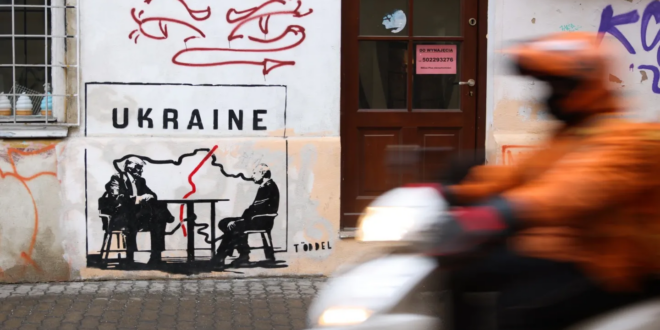
Insisting on Zelensky’s resignation is not just a personal vendetta, but a clear signal that the Kremlin would like to send to all its neighbors: even if you manage to put up some resistance, you will ultimately pay the price—including on a personal level.
The resumption of direct negotiations between Russia and Ukraine in Abu Dhabi has sparked renewed hopes for a resolution to the conflict. With both sides exhausted by four years of war, the main obstacle to a ceasefire appears to be a territorial dispute over a small part of the Donbas, the Sloviansk-Kramatorsk area. But while the territorial issue is admittedly important to the Kremlin, Russian President Vladimir Putin’s main condition, even if not formulated so explicitly in any of the draft agreements, remains nothing short of regime change in Kyiv.
The composition of the delegations in Abu Dhabi, as well as the absence of leaks that could undermine dialogue, create the impression that work on a peace agreement is genuinely progressing. The delegations are headed not by politicians or propagandists, but by representatives of the military intelligence services. On the Ukrainian side is Kyrylo Budanov, the former head of the Main Intelligence Directorate who was recently appointed head of the presidential administration. On the Russian side is Igor Kostyukov, head of the Main Directorate of the General Staff.
Ukrainian President Volodymyr Zelensky described the negotiations in the Emirates as “constructive but not easy.” The Kremlin also said they were “constructive.”
Russia appears to still be insisting that Kyiv withdraw without any further fighting from the parts of the Donbas still under Ukrainian control: effectively, from the cities of Sloviansk and Kramatorsk. Ukraine’s response is that it is only willing to discuss the status of territory that is currently under Russian control—nothing more.
Representatives of Ukraine, Russia, and the United States—including President Zelensky, Kremlin spokesman Dmitry Peskov, and U.S. Secretary of State Marco Rubio—have all openly stated that the main sticking point is the territorial issue.
Despite attempts by the Ukrainians and Europeans to water down these demands in the text of the documents being discussed, Russia continues to insist on territorial concessions—and has repeatedly stipulated that if they are refused, it will in any case take all of Donbas by force. Putin has devoted a significant proportion of his public appearances to trying to convince Trump of the inevitability of this prospect, and Washington appears to have accepted this logic. Judging by leaked documents, the United States is linking security guarantees for Ukraine to territorial concessions.
There are other indications that Russia and Ukraine could sign a peace agreement in the foreseeable future. Above all, it’s the rational thing for both sides to do. They have been fighting for four years, they have exhausted their resources, and their internal problems are mounting. Neither side has objective grounds to expect that continuing to fight will secure them fundamentally better conditions than the current ones.
As the fourth anniversary of the start of the full-scale war approaches, Ukraine is prepared to compromise on its earlier insistence on a return to its 1991 borders. Russia, for its part, is prepared not only to “give up” the parts of the Sumy and Kharkiv regions it has captured, but also the parts of the Zaporizhzhia and Kherson regions that are not under its control but to which it once laid claim, including the regional capitals.
Whatever politicians may say in public, there is no guarantee that fighting for several more months or even years would result in any victories. The situation is still one of trench warfare, and the front lines are virtually unchanged.
In the last few years, the two sides have had the opportunity to thoroughly assess each other’s capabilities—and their own. They have also gained an understanding of the price to be paid for even very limited successes, not to mention setbacks. At the same time, neither side can hope to get any significant outside assistance in the foreseeable future that would allow them to radically change the situation on the front.
Finally, the United States and Europeans are prepared to provide security guarantees for an agreement, and Kyiv has said it is ready to sign an agreement on such security guarantees with Washington at any time.
Still, while all eyes may be on the territorial issue, Moscow has issued reminders that territory is far from the only contentious issue, and that “any proposals must be examined in terms of their acceptability to Russia and compliance with the goals and objectives of the special military operation,” as the Kremlin refers to the war in Ukraine.
The wording of this stipulation doesn’t just refer to the Kremlin’s position that the deployment of Western forces to Ukrainian territory as part of security guarantees is unacceptable. There’s another condition—and one that is fundamental for Putin, even though it’s not explicitly stated. That condition is the removal of Zelensky from power in Ukraine.
Since the full-scale invasion, Putin has labeled the Ukrainian leadership a “criminal gang” that “usurped power in Ukraine,” and even a “neo-Nazi regime.” Far more important than these propaganda cliches are Putin’s repeated references to Zelensky as an illegitimate leader, the implication being that the Ukrainian leader does not have the authority to sign any international agreements.
At one point, the Russian side even managed to plant this idea in Trump’s head to the extent that the U.S. president called his Ukrainian counterpart a “Dictator without Elections” and suggested that Kyiv should demonstrate more willingness to compromise in negotiations with Moscow. This same logic of Zelensky’s alleged lack of legitimacy was behind a clause giving Ukraine 100 days to hold elections that appeared in Witkoff’s peace plan.
Even now, when negotiations have intensified and are seemingly becoming substantive, the Kremlin continues to show disdain for Zelensky. In response to Ukraine’s recent initiative to hold talks at the highest level—i.e., between the presidents of Russia and Ukraine—Moscow made a patently unacceptable and humiliating counteroffer for Zelensky to come to Moscow, “if he is truly ready to meet.” Kyiv responded in kind, and invited Putin to visit Kyiv instead.
At the end of 2021, Russia’s ultimatum to the West laid out its claims to a sphere of influence encompassing Eastern Europe. By the first half of 2022, at the Russian-Ukrainian negotiations in Istanbul soon after the outbreak of war, that had changed to talk “only” of control over the sovereignty of Ukraine. Now, after four years of war, having thoroughly tested itself and the enemy, the Russian political leadership has again noticeably reduced its claims. But it is unlikely to have reduced them right down to the issue of who gets a few parts of the Donbas, and to have abandoned its demands for control over Ukrainian sovereignty.
As far as Putin is concerned, Ukraine and the entire post-Soviet space are still Russia’s sphere of influence, and similar claims by the U.S. administration to the Western Hemisphere only strengthen that belief. The fact that Moscow’s “special military operation” aimed at toppling a neighboring regime has failed and turned into a protracted and exhausting war has not convinced him otherwise.
Insisting on Zelensky’s resignation is not just a personal vendetta, but a clear signal that the Kremlin would like to send to all the leaders of all of Russia’s neighbors: even if you manage to put up some resistance, you will ultimately pay the price (including on a personal level).
Demanding a change in the Ukrainian leadership is a question of Putin’s external and internal political prestige— as well as an opportunity to exert control over the sovereignty of Ukraine, which was the original goal of the war. The removal of Zelensky and his people from power is a non-negotiable condition for the Kremlin, even if it gets Sloviansk and Kramatorsk.