 Eurasia Press & News
Neutralising Tehran’s ability to close the strait is the decisive long-term move
As a US “armada” assembles in the Arabian Gulf and Donald Trump signals that a deadline delivered to Iran is measured in days, the question now is what conflict would seek to achieve.
The answer may lie less in Iran’s nuclear sites than in the Strait of Hormuz, the world’s most critical oil corridor and Tehran’s greatest strategic lever.
Ironically, the likelihood of an attack may have increased after Trump’s recent tariff defeat in the Supreme Court. For a president whose worst insult is “loser”, a highly visible domestic setback creates pressure for decisive action elsewhere.
That does not mean war is inevitable. Talks continue in Geneva, and another Middle East conflict – with the risk of oil spikes, market turmoil and electoral backlash ahead of midterms – should be the last move the White House contemplates.
But this is Trump’s White House, with its love of “shock and awe” and shiny military kit. The president acts when he believes a demonstration of power can reset perceptions.
The main question is not whether he will strike Iran, but whether there is an objective that justifies the risks. Is it the destruction of Iranian nuclear capacity, protection of suffering Iranian citizens, diminution of Iran’s proxy power in the region, removal of the ayatollah’s regime – or all of the above?
A major objective, increasingly, appears to lie not in Tehran but in the narrow waterway 1,200 kilometres away: the Strait of Hormuz. Through it passes roughly a fifth of globally traded oil.
For decades Iran has treated the strait as its ultimate deterrent – carrying an implicit threat that any war will become a global energy and economic crisis. Remove that leverage, and the balance of power shifts instantly.
This is the central insight of a recent analysis by Clayton Seigle of the Center for Strategic and International Studies (CSIS), which maps potential escalation pathways following a US strike on Iran.
A secured Hormuz would effectively place Washington at the gate of the main energy route to Asia – above all to ChinaSeigle argues that Tehran’s most effective military response is not direct confrontation with US forces but disruption of Gulf energy transport: via mines, missiles, drones or harassment of tanker traffic.
Even limited interference would reverberate through crude prices and insurance markets. There is, after all, plenty of oil in the world – the real problem is moving it.
Hormuz, Seigle says, is not a geographic objective but the decisive economic theatre of any US-Iran confrontation. Iranian oil output itself matters less than the concentration of Saudi, Emirati, Kuwaiti and Iraqi exports funnelled through the same chokepoint. Any conflict would instantly become a maritime crisis for Gulf producers and their Asian customers.
That logic has long informed US naval doctrine in the region, but it is now acquiring sharper strategic definition.
Mukesh Sahdev, a veteran oil markets analyst and founder of XAnalysts, argued recently in a Gulf Intelligence podcast that the new aim of US policy has been to “make Hormuz Iran-proof”.
In this view, US airpower alone can devastate Iranian military infrastructure and potentially destabilise the regime. But the decisive long-term move would be neutralising Iran’s ability to threaten or close the strait – obviating Tehran’s “blockage card”.
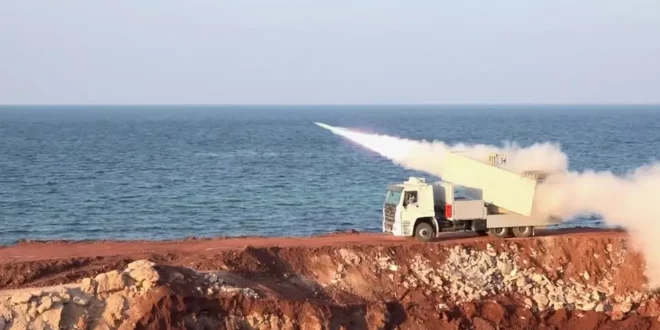
Such a scenario does not require invasion of Iranian territory. It implies rapid suppression of coastal missile systems, naval assets and mine-laying capacity, followed by US-led control of shipping lanes.
“Friendly” Gulf oil would continue to flow and Iranian coercion would collapse. The signal to markets would be immediate: the world’s most critical energy artery had shifted irreversibly into US strategic protection.
From Trump’s perspective, the attraction is obvious. It offers a dramatic assertion of power without open-ended occupation. It converts a regional confrontation into a global reassurance operation. And it delivers a geopolitical dividend beyond the Gulf.
A secured Hormuz would effectively place Washington at the gate of the main energy route to Asia – above all to China. “All roads lead to China” forms US policy under Trump, Sahdev noted in the same discussion. Much of the crude transiting Hormuz ultimately feeds Chinese refineries; control of its security architecture carries strategic weight in the intensifying US-China rivalry.
Whether such control can be achieved quickly or maintained under asymmetric attack is a military question, and Iran’s capacity for disruption – missiles, mines, drones, swarm boats – is real.
But remove Iran’s ability to threaten the strait and its most potent deterrent disappears. The economic consequences of conflict shrink dramatically and US credibility as guarantor of Gulf energy flows is reaffirmed, just as it has been in the Caribbean and Gulf of Mexico with the takeover of Venezuela.
For Trump, that combination may be compelling. A strike framed around nuclear or regime targets alone risks escalation without clear gain. But a strike that ends with Hormuz effectively under US protection redefines the strategic landscape, and converts Iranian leverage into US leverage overnight.