 Eurasia Press & News
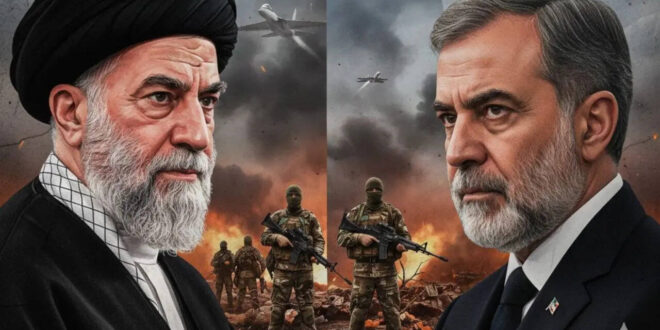
Iran state media has confirmed the death of Iran’s Supreme Leader Ali Khamenei in joint US-Israeli airstrikes. But can the Islamic Republic survive? Here’s why regime change may not be so simple.
Iran state media has declared Supreme Leader Ali Khamenei dead. State-linked media outlets confirmed the death of the Ayatollah in joint US-Israeli strikes. The Tasnim news agency wrote on X: “Inna Lillahi wa Inna Ilayhi Raji’un. The Supreme Leader of the Islamic Revolution in Iran has been martyred. We hereby inform the devoted, martyr-loving people of Iran that His Eminence Ayatollah al-Uzma Khamenei, the Supreme Leader of the Islamic Revolution, was martyred in a joint attack by the criminal America and the Zionist regime on the morning of Monday, the ninth of Esfand.”
US, Israel On Khamenei’s Death
Israeli Prime Minister Benjamin Netanyahu said Saturday that there were “many indications” that Khamenei had been killed in the joint US-Israeli airstrikes. He, however, stopped short of confirming it outright. Trump declared the death of Khamenei in a Truth Social post, calling him “one of the most evil people in History”.
“Khamenei… is dead,” Trump wrote, praising US intelligence and “highly sophisticated tracking systems” that made sure that Iranian leaders could not escape the attack.
Khamenei may be dead. However, does this mean that Iran’s Islamic Republic is finished? Iran’s power structure – as well as history – suggest otherwise.
For there are reports that the Supreme Council may have already chosen a trusted loyalist to succeed Khamenei – former IRGC commander and senior statesman Ali Larijani.
The Islamic Republic System
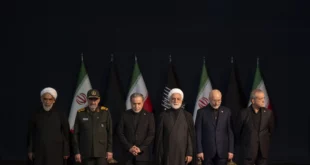
The Islamic Republic system is designed to survive against all odds. Its authority does not solely rest on one individual but on a network of clerical and military institutions. Even if Khamenei’s death is confirmed, the regime’s spine – the IRGC, the Supreme National Security Council, and the Assembly of Experts – remains intact. The Assembly of Experts is a conservative clerical body that is tasked with appointing a new Supreme Leader.
Khamenei, 86, who succeeded Ayatollah Khomeini in 1989, quietly strengthened the regime’s continuity mechanisms, especially after Israel’s surprise attack last June, which disrupted elements of Iran’s military command chain. Khamenei reshuffled leadership structures and contingency plans were drawn up to ensure the Islamic Republic could function even if top figures were assassinated.
And if reports are to be believed, a successor to Khamenei may have already been chosen.
Who Is Ali Larijani
A former IRGC commander and a veteran power broker, Larijani has assumed an increasingly crucial role since early January, amidst domestic unrest and fears of US strikes. Currently serving as the secretary of the Supreme National Security Council, he has been managing many of the state’s most critical portfolios.
In an address on Sunday, Larijani said that a “temporary leadership council will be formed soon until the next leader is elected”.
He further said: “Two oppressors are now eyeing the Iranian nation; in the face of a staunch enemy, we must set aside our differences and move forward with unity. The splinter groups that intend to disintegrate Iran should not imagine that a breeze has blown and they can detach a part of Iran; our response to them will be like yesterday’s. The Americans stabbed the heart of the Iranian nation, and their own hearts will be stabbed. The behaviour of Iran’s armed forces today will be much stronger than the day before.”
Larijani was reportedly tasked with the suppression of the December-January protests that called for an end to Islamic rule. He held nuclear talks with Washington, while coordinating with regional mediators such as Qatar and Oman, and also held consultations with Russia. He travelled to Moscow to discuss aspects of the nuclear deal with President Vladimir Putin. Apart from these, Larijani was also tasked with preparing for the possibility of a direct war with the US.
During a visit to Doha, while speaking to Al Jazeera, Larijani said: “We are ready in our country. We are not looking for war, and we won’t start the war. But if they force it on us, we will respond.”
Experts, however, note that Larijani is not a senior Shiite cleric and hence, unlikely to assume the title of the Supreme Leader. But in Tehran, titles and power are not always synonymous. As a trusted insider, Larijani could as well represent institutional continuity rather than rupture.
For now, Washington may have framed the strike as an opening for regime change. Tehran, however, is likely to treat it as a test of systemic resilience. Khamenei’s fate may alter the face at the top. But it will not automatically dismantle the structure underneath.