 Eurasia Press & News
Dr. Efron is the Israel policy chair and a senior fellow at RAND.
The fighting between Israel and Hezbollah in Lebanon, for now, runs parallel to the U.S.-Israeli war on Iran. But Lebanon will become a main arena when the campaign against Tehran ends.
Israel began planning its operation in Lebanon months ago when it became apparent that since the November 2024 cease-fire, Hezbollah had not depleted its rocket and missile arsenal, that it had rebuilt its command structure and restored its ability to fight and that, despite promises, the Lebanese government had not fully disarmed the terrorist group. On March 2, after Hezbollah joined the Iranian counterattack and fired at the Galilee, Israel seized the opportunity to go on the offensive.
It’s widely agreed that action against Hezbollah — an internationally recognized terrorist group and a Shiite Muslim political party in Lebanon’s multisectarian society — is necessary. However, a prolonged Israeli military operation, the destruction of state infrastructure and a wider presence in southern Lebanon, as Israeli officials now propose, could further undermine weak Lebanese institutions, turn the country’s people against Israel and further entrench Hezbollah’s resistance narrative. That’s precisely the opposite of what Israel and the region need.
Washington now has an opportunity to save Israel from itself and create a clear distinction: Fight Hezbollah, yes; punish all of Lebanon in doing so, no. The Trump administration should rein in Israel’s military operation, make serious efforts at bolstering the Lebanese state and military so that they can crack down on Hezbollah and broker a security arrangement that could even lead to peace.
Israel’s interventions in Lebanon, dating back to 1978, have been recurrent and costly. The 1982 invasion, intended to oust the Palestine Liberation Organization, became a nearly two-decade occupation and guerrilla war that helped catalyze Hezbollah’s rise. In late 2024, after months of exchanging rockets with Hezbollah tied to the Oct. 7, 2023, Hamas attack, Israel mounted a campaign of targeted strikes on the Hezbollah command, weapons systems and caches, logistics and finance nodes and seized five hilltops inside Lebanon while widening a buffer zone to protect the residents of the Galilee, who were evacuated after the Oct. 7 assault.
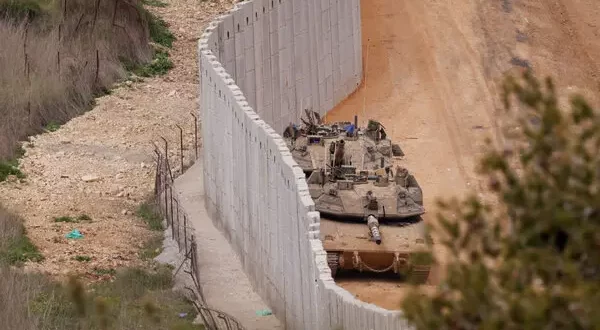
This month’s escalation prompted an Israeli aerial bombardment that has left more than 960 Lebanese dead and led to the flight of more than a million people. Hezbollah has fired at least 1,000 rockets and drones, and at least two Israeli soldiers were killed in combat in southern Lebanon. The campaign has now expanded into a ground operation in southern Lebanon, with the capture of additional positions and the expansion of a buffer zone north of the border.