 Eurasia Press & News
It’s becoming increasingly difficult for Russians to obtain asylum. This applies not only to Western countries and the United States, which have begun deporting Russian refugees en masse, but also to Russia’s neighboring countries. Human rights activists The Insider spoke with note that the immigration and political situation in a number of countries that previously welcomed anti-war Russians has changed significantly.
Where it got worse
One of the responses to Russia’s full-scale invasion of Ukraine in February 2022 was a mass exodus of Russians who opposed the war or feared conscription. Among those who left the country were those who had served at the front or simply in the army but managed to desert. Some of those leaving (the same deserters or opposition members) lacked passports, so the list of countries they could travel to was severely limited.
Legalization in other countries has been a difficult task for anti-war Russians from the very beginning, and the situation has worsened significantly over the past year. Media and social media increasingly report Russian citizens being denied asylum, deported, and even detained for extradition. However, in most cases, the persecution of Russian citizens specifically isn’t being addressed—attitudes toward migrants in general have changed.
In the United States, about a thousand asylum seekers with Russian citizenship are facing deportation, with the first flights to Russia—indirect, via third countries— taking place last summer. Croatia is massively denying protection to people from the North Caucasus, while in Germany, courts are issuing negative rulings on what human rights activists consider “iron-clad” deserter cases. Kazakhstan has already deported people who clearly face criminal charges in Russia. Meanwhile, Moscow is attempting to use Interpol databases and terrorist and extremist lists to persecute undesirable citizens, creating problems even for those holding foreign passports.
In the United States, about a thousand asylum seekers with Russian citizenship are at risk of deportation, some of them have already been deported.
The Russian authorities are also spreading panicky rumors about the threat of mass deportations of anti-war emigrants. However, according to human rights activists, this perception of events is untrue. The frightening picture that has emerged by 2026 is composed of numerous unrelated factors, but there is no talk of a unified campaign. At the same time, in some countries, the authorities’ attitude toward Russians fleeing war and repression has indeed changed. According to human rights activists, the situation has worsened most noticeably in Kazakhstan and the United States, but Russian emigrants in Germany, Croatia, the Netherlands, Sweden, Bulgaria, and several other countries are also facing new problems.
Germany
Russians are increasingly encountering difficulties in Europe as well. This shift in trends is particularly evident in Germany, which, while remaining a “safe haven” for many, has adopted a much tougher stance on migration since the change of government in May 2025. The demonstrative anti-migrant campaign by Chancellor Friedrich Merz’s team, clearly trying to appease right-wing populist sentiments in the country, is even often compared to what is happening in the United States under Donald Trump. And although the scale of the processes in Germany does not yet match those overseas, the indiscriminate approach of the German government is hard to miss.
For example, Germany has effectively suspended its humanitarian visa program for Russians. Authorities cite the need to ease the burden on the budget and social services. However, during the four years of war, fewer than 3,000 Russians have entered the country under the humanitarian visa program, significantly fewer than the number of migrants from other categories.
A coordinator of the human rights initiative inTransit , who wished to remain anonymous, told The Insider that the situation has remained at a standstill since September 2025. Moreover, people who had previously received approval for humanitarian visas have still not been able to have them stamped in their passports, with the exception of one person known to human rights activists. Furthermore, since September 2025, two humanitarian visas have been issued to Belarusians—political prisoners Maria Kalesnikova and Viktar Babaryka, who were released in December 2025.
Since September 2025, two humanitarian visas have been issued in Germany – to the released political prisoners from Belarus, Kolesnikova and Babaryka.
“We spent a long time trying to get humanitarian visas for the Moskalovs , especially in this exceptional case. I know the German Foreign Ministry made every effort to get them issued, but the Ministry of the Interior blocked the decision, and the Minister of the Interior wouldn’t sign off on it. So we applied for a French humanitarian visa and brought them to France. The authorities say humanitarian visas will only be reserved for the most exceptional cases. But the Moskalovs’ case is exceptional, and they didn’t grant them a visa. A group of opposition members—Ilya Yashin, Andrei Pivovarov, and representatives of Free Russia—made a special trip to the congress.”CDU/CSU”We tried to discuss the possibility of resuming the humanitarian program, but we also received a negative response,” an inTransit employee said.
In January 2026, the story of deserter Georgiy Avaliani gained widespread media attention. A civil engineer from Moscow, he found himself fighting in Ukraine against his will, was tortured, and deserted three times. He managed to escape to Europe, where he reached Germany and applied for asylum. The Federal Office for Migration and Refugees (BAMF), after reviewing the case, rejected Avaliani and his family’s application, finding that he faced no threat in his home country. BAMF cited former Defense Minister Sergei Shoigu’s statement that mobilization in Russia would end in October 2022 as justification for its decision.
Furthermore, the agency’s employee questioned the existence of “torture basements” in the Russian army. Human rights activists point out that Avaliani’s case is not isolated, and that BAMF churns out template refusals without delving into the details of the cases and merely changing the applicants’ details in their decisions. European bureaucratic bodies have repeatedly cited Russian authorities’ statements about the end of mobilization, explains Alexander Solovyov, coordinator of the “Consuls of the Anti-War Committee” project, to The Insider: “The decisions regularly state that the applicants are not in any danger in Russia, so they should return.”
In March, a news story from the Echo newspaper thundered through Russian-language media, reporting that Germany had begun deporting anti-war Russians through third countries, in some cases explaining its decisions by the “absence” of mobilization in Russia.
Previously, local officials had not resorted to such a practice because there is no direct air travel between the two countries. Now, however, Russians are periodically deported under escort through Belgrade or Yerevan. Those deported include LGBTQ+ activists, anti-war Russians, and those who donated to organizations deemed “banned” or “terrorist” by Russia.
This is partly due to the peculiarities of German bureaucracy. Until the end of 2023, Berlin offered an exception for applying for a freelance visa. This allowed people to travel to Germany even with a standard tourist Schengen visa from any country and prove the risks of returning to Russia, according to inTransit. Many Russians took advantage of this. However, local authorities subsequently abandoned this practice.
As a result, instead of a residence permit, the Berlin Migration Office began issuing applicants a “Duldung”—a status temporarily deferring deportation. If a person found permanent employment, they could legalize their residence. Furthermore, “Duldungs” were regularly extended. However, in August 2025, their issuance also ceased, and people began receiving deportation orders. Typically, people were given time—about four months—to voluntarily leave Germany. However, deportation police began visiting them within just a couple of weeks and escorting them to Russia via third countries.
Despite this, human rights activists emphasize that mass deportations are still too early to be considered. As Maria Krasova, a lawyer with the inTransit project, explained to The Insider, it’s more a question of the “randomness” of this practice:
“There are no signs of a systemic nature—deportations are not related, for example, to antisocial behavior, offenses, gender, or length of stay. In Germany, the situation is complicated by several factors: population fatigue and high social burden on society (as evidenced by the election results), a slow-moving law enforcement apparatus, an opaque asylum decision-making process, and inaccessible and often ineffective legal protection systems for asylum seekers. In Berlin, for example, the situation is complicated by the obvious lack of cooperation and a sound division of responsibilities between BAMF and the LEA—the Berlin Foreigners’ Authority.”
Another issue is that the lack of widespread attacks hardly makes life easier for those unfortunate enough to be included in the growing list of “isolated” cases. For example, in mid-March, police detained 26-year-old Ilya Shkolny and placed him in pretrial detention in Hof, Bavaria.
In Russia, the young man participated in rallies, volunteered for Alexei Navalny’s political campaigns, transferred funds to the Anti-Corruption Foundation (FBK), and served on the committee of the Moscow branch of the Libertarian Party of Russia. Shkolny arrived in Germany in June 2022, entering on a tourist visa.
Ilya, who speaks German at level C1, enrolled in a master’s program at the University of Bayreuth, married a German citizen, Ansuela, with whom he had been in a relationship since 2019, and applied for asylum. However, his application was rejected, citing the lack of mobilization in Russia. Ilya then applied for a residence permit through marriage and was again rejected.
“The immigration department said that since Ilya hadn’t received asylum, his risks were ‘irrelevant’ and he should return to Russia and apply for a marriage visa from there. Ilya couldn’t return to Russia—he was in obvious danger there,” inTransit reported.
In March 2025, German authorities planned to deport the Russian, accusing him of crossing the border on the “wrong visa.” Meanwhile, the university was prepared to offer Ilya a job. In addition to human rights activists, local politicians also joined the effort to save Shkolny from deportation to Russia . Maria Krasova notes that this is clearly a case of bureaucratic error.
The inTransit coordinator, in turn, emphasizes that defending people already in deportation custody is very difficult, and that a person cannot cope alone or even with the help of German lawyers:
“We’ve gathered new circumstances confirming the risks and a new evidence base based on our experience. A year ago, we defended a man in Denmark who was labeled as an ‘extremist, FBK’ in the Chimera database.”
We argued that he was in danger in Russia, relying on letters from organizations like Transparency International, letters from Russian investigative journalists specializing in Chimera, and, most importantly, scientific publications from the Academy of the Russian Ministry of Internal Affairs. They describe in detail how this database is used in operational work to collect information, identify opposition figures, extremists, political activists, and so on. Eighty percent of operational departments are connected to it. This is crucial evidence, something no applicant could gather independently.
Based on this, we filed an urgent request to the court to halt the deportation—and another asylum application. The court decided that the risks were indeed high and ordered BAMF to review his case again.”
According to Echo , Germany forcibly deported 126 Russians in 2025, with another 1,748 Russian citizens listed as having “voluntarily departed.” Human rights activists emphasize, however, that this isn’t a case of special treatment for Russians—the German authorities’ new approach affects almost all migrants with an uncertain status.
In other European countries
The number of deportations is likely to increase in the near future—and not just in Germany. In February, the European Parliament approved a unified list of “safe third countries,” which should simplify procedures for denying refugee status and deporting. But no one is prepared to say for sure how this will work in practice. As The Insider’s sources point out, there are plenty of countries in Europe where Russians are discouraged from seeking asylum. These include Croatia, the Netherlands, Sweden, and Bulgaria.
In the Netherlands and Sweden, asylum seekers are forced to wait for decisions in refugee camps, in psychologically and physically harsh conditions. Bulgaria and Croatia have openly declared their refusal to grant asylum to Russians.
Human rights activists are aware of a case where a person won a court case in Bulgaria, but the migration service still refused to legalize him and delayed the process in every way possible. Croatia has not approved a single asylum request from Russian deserters during the entire war in Ukraine. If the applicant is also a native of the North Caucasus, they face detention and extradition to Russia.
Croatia is not alone in such practices. For example, on March 20, Estonia deported a Chechen asylum seeker to Russia who was in danger in his home country. The young man, whose name is being withheld for his safety, was denied full legal assistance and was unable to defend his rights, human rights activists note.
Furthermore, deserters who signed contracts with the Russian army are viewed with particular caution in Europe. “The main problem for asylum seekers is that often, even those who truly deserve this status don’t properly assemble their documents and describe their case accurately. People often come to us after the first refusal. This complicates the process. Therefore, we strongly recommend contacting human rights activists before applying!” advises Solovyov.
In Europe, deserters who signed contracts with the Russian army are treated with particular caution.
Margarita Kuchusheva, consul of the Anti-War Committee, emphasized in an interview with The Insider that it would be incorrect to talk about a tightening of European policy regarding Russian asylum seekers. Currently, the EU has accumulated a large number of people who arrived in 2022–2023 and, by 2026, have completed all the bureaucratic stages: the first refusal, the first appeal, the second, and so on. Technically, the time has come for final decisions on their cases, which is why it may seem as if the situation has worsened.
In any case, the statistics are alarming. Verstka drew attention to Eurostat data, according to which, in 2025, EU countries issued 10,415 orders to Russian citizens to leave their territory—a record number over the past five years. This figure is almost double the pre-war level of 2021. Moreover, in 2025, the EU expelled 38% more Russians than in 2024. However, this data makes it impossible to determine how many of the Russian citizens expelled were cases similar to Avaliani or Shkolny.
Thus, despite numerous examples of Russians facing deportation due to serious danger in their home country, the situation in the EU is currently arguably one of the most favorable. Deportations of those facing serious danger in Russia, if they occur, are still isolated. Moreover, European authorities often give deportees time and opportunity to leave the country voluntarily. However, this does not change the fact that the overall situation for Russians who left the country after 2022 for political reasons is objectively becoming increasingly difficult.
USA: suitcase, airport, Russia
In the US, the rise to power of the Republican administration led by Donald Trump has contributed to the degradation of the refugee reception system. Anti-war Russians have also fallen victim to Washington’s declared crusade against migrants. However, as Alexander Solovyov, coordinator of the “Consuls of the Anti-War Committee” project, explained to The Insider, while there are indeed many deportations from the US, “not every flight is filled with Russians, and those being deported are far from always political activists facing threats in Russia.”
“Unfortunately, there are many people who apparently came for a better life. They submitted documents that are either untrue or lack sufficient grounds for asylum. Another issue is that among those being deported are indeed activists who should not be deported. But it’s also wrong to say that hundreds of anti-war Russians are being deported from the US,” says Solovyov.
The fact that many of the Russians who have requested asylum in the US are those who “went for a better life” was confirmed in a conversation with The Insider by Sergei Vlasov, head of the American NGO Russian Refugee Foundation and former Moscow municipal deputy.
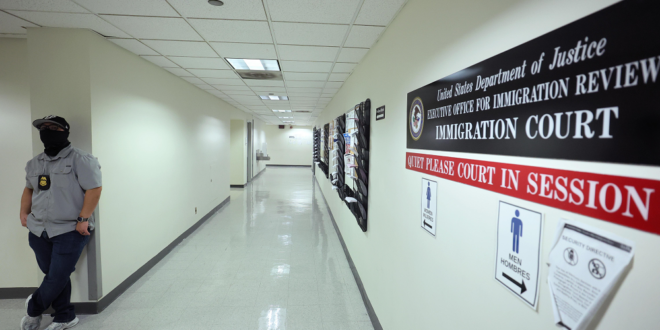
According to him, attitudes toward Russian asylum seekers began to deteriorate under President Joe Biden, when in June 2024, authorities decided to more thoroughly screen Russian citizens crossing the Mexican border. Effectively, all asylum seekers with Russian passports began to be sent to immigration detention centers, orDetentions(from detention centers), although previously, most were released pending a decision on their case. Since Trump’s rise to power, immigration judges at these prisons have, according to Vlasov, begun “slapping everyone with denials and sending everyone home.”
“Detention judges are typically former prosecutors or ICE officers, accustomed to working within the system and following orders. They’re clearly biased,” emphasizes the head of the Russian Refugee Foundation. “Let’s say there are ten cases, only a couple of which have any real basis. But now even these cases could be eliminated. The person has no criminal record, they’ve been checked against all international databases. So why not release them to face trial in their home state, where judges are less biased? But they’re held for a year, or even more, in immigration detention, where the treatment is completely different.”
According to the human rights activist, in the current situation, obtaining asylum in the US requires “a very strong case with real documents and a clear story.” “The old way of arriving with just an administrative ticket and sitting around waiting is no longer an option,” says Vlasov. “And I definitely don’t recommend traveling across the Mexican border right now, as that means a 100% guarantee of imprisonment and a biased trial.”
To obtain asylum in the US, you need a “very strong case with real documents and a clear story.”
However, Russians with “strong cases” have also fallen victim to the US administration’s indiscriminate crackdown on migrants. One of the most shocking stories involved Leonid Melekhin, a Perm activist who was expelled from the US and then sent to pretrial detention in his home country on charges of “justifying terrorism.”
Russian authorities persecuted him for his ties to Alexei Navalny’s campaign. Melehin crossed the Mexican border in August 2024, almost immediately after the Biden administration introduced the practice of detaining Russian asylum seekers in immigration detention centers.
A drama is currently unfolding for spouses Elizaveta and Dmitry. She has openly spoken out against repressive laws against LGBTQ+ people in Russia, and he is a Ukrainian from the temporarily occupied territories. According to Elizaveta, they applied for asylum in the United States, where they fled after the war began, within the established deadline and provided all the evidence, documents, and letters of support. At one hearing, the judge stated that there were no further questions in the case, but later, at the prosecutor’s request, the hearing was postponed to allow for the presentation of original internal passports, military IDs, and work records. Before the next hearing, the prosecutor’s office filed a motion to dismiss the case without consideration, which the court granted. Elizaveta and Dmitry now have until April 17 to file an appeal; otherwise, according to human rights activists, they face the deadly threat of deportation to Russia.
Three stories of people deported from the United States
The Insider spoke with three Russians who, like Melehin, were held in US immigration detention and later deported to their home countries. All of them managed to avoid arrest.
Anti-war activist Andrei Sakharov left Russia for Georgia in 2022, spent eight months in Mexico in 2024, and from there, caught a window inCBP One appHe and his wife finally entered the United States legally. However, they were immediately handcuffed and forced to sign documents declaring their illegal entry.
“My wife was held at the border for 17 days, and I for ten, even though they have signs there stating that the maximum detention period is three days,” Sakharov says. He also claims that there are staff in immigration prisons who enjoy torturing people:
“On the day of my departure, I asked the duty officer if I could say goodbye to my wife—she saw me, stood there, and cried. He smiled and said, ‘No.’ I started arguing, and they told me I was a nobody here and should shut up.”
Andrei had evidence of opposition activity dating back to the 2010s, but he was unlucky: his lawyers failed to provide the necessary documents on time. The judge agreed to wait, but postponed his hearing for three months. During this time, US immigration policy sharply tightened. Andrei was denied legal representation.
Fearing forced deportation, he requested it himself, hoping to avoid returning to Russia. Indeed, during his layover, he was assisted by a Moroccan officer who agreed to help the couple purchase tickets to Istanbul. Ultimately, the couple ended up back in Mexico, where their dog had been waiting for them all along. Andrey now plans to legalize his status there, having rejected offers to apply for humanitarian visas to Europe.
The Insider’s other interviewees, Pavel and Elena, arrived in Mexico in September 2024 and waited about five months for a CBP One slot to legally cross the border. But after Trump came to power in January 2025, everything changed dramatically: the app was shut down, previously approved slots were cancelled, and the National Guard was deployed to the border.
“We were confused, but in early February we finally decided to go the old-fashioned way—by car,” Pavel recounts. “There were nine of us in the car. On February 8th, we crossed the border on our first try. The police came running, handcuffed us, and took us to be processed.”
In the US, they were placed in different detention centers: Pavel in California, Elena in Louisiana. Initially, they were warned that anyone arriving after January 20, 2025, would be deported. Later, Pavel was interviewed in person.checksHe successfully completed his application under the Convention against Torture: in the past, he had been detained at rallies, donated to the Anti-Torture Foundation, and reported to the police by his own father for his anti-war stance. Elena, however, was denied, after which, despite the judge’s promises to give the couple a “second chance,” they began preparing her for deportation. Pavel asked to deport them together.
The couple eventually ended up in Russia, but managed to avoid arrest and leave again—this time for Europe. Now Pavel and Elena are staying in France, learning the language, and hoping for full legalization. “They don’t put you in any prison here; they give you social housing, a little money, and food packages,” Pavel says of his new country.
Another person profiled by The Insider, Yevhen, had been participating in opposition rallies since 2017, was detained once, and in 2022, he participated in protests during the early days of the war in Ukraine. In May 2023, Yevhen and his wife flew to Mexico to apply for political asylum in the United States. They were separated upon crossing the border: his wife was released, while Yevhen was sent to a migrant detention center in California.
During his imprisonment, he changed seven detention centers, two of which, according to him, were actual prisons. Unlike citizens of other countries, people from the CIS countries received no information about their status for months, Evgeny recalls. It later emerged that his case would be heard by a judge known for his minimal asylum approval rate. Furthermore, Evgeny himself had made a mistake by deciding to submit the documents himself. The papers were delivered to the court one day late, and the Russian citizen was deprived of the opportunity to await the decision in freedom.
At the final hearing, the judge declared that he saw no threats to Evgeny in Russia. He attempted to appeal the decision, but soon found himself faced with a choice: remain in prison for another year or two, awaiting a decision on his wife’s case, or agree to deportation and return later if her case was successful. Evgeny chose deportation, with his flight scheduled for May 1, 2025. During a layover in Morocco, the Russian caused a scene, flatly refusing to fly to Moscow and demanding his passport be handed over to him so he could fly to another country. Despite threats from airport staff and even police involvement, he was able to fly to Istanbul and then to Astana, where he stayed with relatives.
At the final hearing, the American judge said he saw no threats in Russia.
“I’m in Kazakhstan now, and my wife is in the US,” says Evgeniy. “I have no doubt everything will be fine. We have a good lawyer and a good judge. But staying in Kazakhstan for long is scary. The situation here is changing for the worse; we’ll probably have to move somewhere else.”
At the end of March, it became known that another deportation flight carrying dozens of Russians departed the United States for Moscow via Cairo.
Persecution of Russians in Kazakhstan
Kazakhstan is the second country where human rights activists are observing a deteriorating situation for anti-war Russians. At the beginning of the war in Ukraine, President Kassym-Jomart Tokayev publicly criticized the Kremlin’s actions. In September 2022, as hundreds of thousands of Russians fled conscription, he instructed the government to “show concern for them and ensure their safety,” as “most of them are forced to leave due to the current hopeless situation.” “This is a political and humanitarian crisis,” the Kazakh president declared at the time.
Thanks to Tokayev’s rhetoric, Kazakhstan gained a reputation as a relatively safe country for quick relocation. However, it soon became clear that the republic was unlikely to become a “safe haven” for anti-war Russians. By late 2022, the first reports of deserters being deported emerged. For example, FSO officer Mikhail Zhilin, who had fled Russia during mobilization, was deported back home. The Barnaul Garrison Military Court later sentenced him to six and a half years in a maximum-security penal colony.
At the beginning of the war, Tokayev criticized the Kremlin’s policies, so the republic acquired a reputation as a relatively safe country for relocation.
In 2023, detentions and deportations from Kazakhstan of military personnel unwilling to participate in the “SVO” continued. Moreover, Russian security forces also began operating in the country: they detained former contract soldier Kamil Kasimov in Astana .
Some anti-war Russians have attempted to obtain asylum in Kazakhstan, but human rights activists say this is virtually impossible. Since the republic’s independence, there has been virtually only one known case of refugee approval, and that occurred back in the 1990s. Instead, the authorities are dragging out the asylum denial process, giving individuals the opportunity to leave for a third country with the help of human rights activists.
In recent months, however, this scheme has begun to experience serious disruptions, and Kazakhstani security forces have begun to show increased interest in Russian migrants. In January 2026, Alexander Kachkurkin, a Crimean native who worked as an IT developer, was deported from Kazakhstan to Russia.
The formal grounds for his deportation were two administrative charges: jaywalking and smoking a hookah indoors. The extradition process, which typically drags on for weeks or even months, in this case took just a few hours, from the drafting of the charges to the deportation. In Russia, Kachkurkin was immediately detained and taken to Moscow’s Meshchansky Court, where he was remanded in custody on charges of “high treason.”
In late January 2026, the Kazakh Prosecutor General’s Office, at Russia’s request, approved the extradition of Chechen opposition figure Mansur Movlaev, who had been tortured in his home country. The republic’s authorities made the decision in violation of their own legislation—Movlaev had a hearing scheduled for February 11 to appeal the denial of refugee status.
Thanks to the efforts of human rights defenders, the activist has not yet been deported to Russia, but he has been denied legal representation. The opposition leader’s lawyers plan to appeal. Meanwhile, Movlaev is in pretrial detention, meaning he cannot travel to a third country. The activist faces a serious risk: he will almost certainly face torture and possibly extrajudicial execution in Chechnya.
In February, Kazakhstan granted Russia’s extradition request for Yulia Yemelyanova, a former employee of Alexei Navalny’s campaign headquarters. She was detained on August 31, 2025, at the Almaty airport while connecting on a flight to Vietnam. To avoid extradition, she sought asylum in Kazakhstan. The country’s Prosecutor General’s Office guaranteed that the activist’s extradition would not be considered until all procedures related to obtaining this status were completed. Human rights activists succeeded in halting Yemelyanova’s extradition, but on February 27, a court denied her asylum.
Commenting on Yemelyanova’s case, Anti-War Committee Consul Margarita Kuchusheva notes that Kazakhstan granted the activist’s extradition request under a different article than the one Russia requested: “Legally, this is absolute nonsense. This alone is a monstrous procedural error.” Furthermore, as she told The Insider, the court announced Yemelyanova’s extradition decision in a closed hearing, without her lawyers present:
“The court refused to provide us with either a written or oral decision. All this demonstrates that such cases are handled very poorly. Political decisions are made, and the process itself exceeds all legal bounds.”
Human rights activists emphasize that the risks for Russian opposition figures in Kazakhstan have grown so great that it shouldn’t even be considered a transit country. “Many people think transit is safe. No, now it’s completely forbidden to set foot in Kazakhstan,” Kuchusheva states. Human rights activists advise those already in the republic to move elsewhere if possible.
In March, Kazakhstan’s National Security Committee launched an investigation into the falsification of temporary residence permits in the country. Anonymous human rights activists reported in the media that this threatened a “mass deportation” of anti-war Russians.
However, lawyers interviewed by The Insider explained that those who purchase these false documents are witnesses in the case and do not face criminal liability. The most serious consequences for them could be revocation of their residence permit and deportation if they have lived in the country illegally for more than a year. Regardless, human rights activists advise anyone who has used such schemes to leave Kazakhstan, especially if they face prosecution in Russia.
Flight difficulties
It’s unlikely that a single map of safe and unsafe countries for Russians will be created, as there are too many nuances in each individual case. However, human rights activists The Insider spoke with identified several countries where even transit poses serious risks. These include Azerbaijan, Belarus, Venezuela, Vietnam, Egypt, India, Indonesia, Kazakhstan, Cambodia, China, Cuba, Kyrgyzstan, the UAE, the United States, Tajikistan, Thailand, Turkey, and Uzbekistan.
Despite Turkey being a NATO member, human rights activists are aware of at least one case in which local security forces kidnapped a person for extradition to Russia. Moreover, they say, “it was not some well-known activist.”
Overall, no post-Soviet country can be considered safe for Russian oppositionists. Only Armenia and Georgia stand out, with some reservations.
Armenian Parliament Speaker Alen Simonyan stated that his country will definitely not extradite Russians persecuted for political reasons. However, the republic has close legal ties with Russia, so there is always a risk of arrest for anyone included in the unified wanted list. Furthermore, there are known cases of deserters being kidnapped by Russian security forces. It is especially dangerous for fugitive Russians to appear in the area of the Russian Armed Forces base in Gyumri.
No post-Soviet country can be considered safe for anti-war Russians.
At the same time, since the beginning of the war in Ukraine, Armenia has not extradited Russian citizens for political reasons. Rather, there is a risk of being stuck in the republic for a long time while the investigation is ongoing. In this case, the person finds themselves in limbo and forced to rely on the goodwill of Armenian officials. For example, Tatarstan activist Ilfat Gareyev, stuck in Armenia due to a Russian extradition request.
Nevertheless, Armenia is currently relatively safe, Kuchusheva believes. “So far, Armenia has held up well. There haven’t been any systemic violations on their part,” the lawyer says.
Georgia has not yet openly extradited Russian political activists, but there have been cases of kidnapping and illegal transfer of people. The domestic political situation also has an unfavorable impact: in recent years, the country’s authorities have leaned toward a pro-Russian stance and rhetoric. There have been incidents of anti-war Russians who participated in local protests or “simply engaged in activism” being denied entry into the country.
“Sometimes people leave for business and aren’t allowed back. We haven’t seen any extraditions yet, but we don’t recommend staying there for long,” explains Kuchusheva.
In March, Russian artist Konstantin Rachkovsky was expelled from Georgia after seeking asylum. He left behind his wife. Now, Mikhail Timofeev, a former aide to former Khabarovsk Krai Governor Sergei Furgal, has been detained in Tbilisi. Local authorities are expected to consider his extradition to his home country soon. He has already been denied political asylum.