 Eurasia Press & News
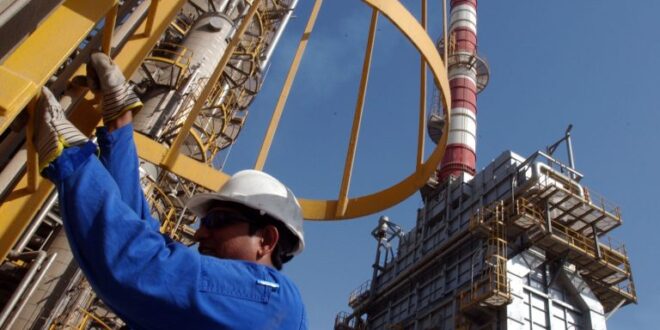
The United Arab Emirates (UAE) announced its withdrawal from the Organization of Petroleum Exporting Countries (OPEC), serving as a major blow to the cartel’s influence in the global oil market.
The timing of Abu Dhabi’s decision to exit OPEC is noteworthy considering its long-standing friction within the bloc over production quotas, exemplifying how the economic impact of the U.S.-Israeli war with Iran managed to finally push the UAE over the edge.
The UAE’s departure removes approximately 12 percent of OPEC’s overall production, stripping OPEC of global influence in managing supply and will negatively impact its ability to respond to oil shocks.
That Abu Dhabi did not consult Riyadh before announcing its decision signals that the priorities of the two leaders continue to diverge.
The United Arab Emirates (UAE) announced its withdrawal from the Organization of Petroleum Exporting Countries (OPEC), effective May 1, serving as a major blow to the cartel’s influence in the global oil market. Established in 1960, with the UAE joining a few years later, OPEC is designed to coordinate member states’ production levels in order to stabilize oil markets and influence global prices. In an announcement by the UAE’s state-run WAM news agency, the government stated its decision “reflects the UAE’s long-term strategic and economic vision and evolving energy profile, including accelerated investment in domestic energy production, and reinforces its commitment to a responsible, reliable, and forward-looking role in global energy markets.” The announcement to withdraw from OPEC nearly coincided with a Gulf Cooperation Council (GCC) meeting in Jeddah, Saudi Arabia, where Gulf nations met to discuss the fallout from the war with Iran. According to Reuters, the UAE has criticized the GCC’s response to the conflict as weak.
The timing of Abu Dhabi’s decision to exit OPEC is noteworthy considering its long-standing friction within the bloc over production quotas, exemplifying how the economic impact of the U.S.-Israeli war with Iran managed to finally push the UAE over the edge. Tourism plummeted and expats fled as 2,800 drones and missiles were fired at the UAE during Iran war. This has damaged its economy and led to the whole idea of Abu Dhabi as an investor haven into question. Just last week, U.S. President Donald Trump openly mused about offering financial support to the UAE, a bailout of sorts that the President said surprised him, “because they are really rich.” That this conversation is even taking place demonstrates just how badly the UAE’s energy infrastructure was damaged over the past two months of war, with Abu Dhabi — like other Gulf countries — perhaps wondering why Washington did not do more to anticipate such fallout and help to prevent it from happening.
UAE energy minister Suhail Al Mazrouei stated in an interview that “The world needs more energy. The world needs more resources, and UAE wanted to be unconstrained by any groups.” By withdrawing from OPEC, the UAE will re-gain autonomy in regulating its production levels, allowing it to sell more oil to supplement its economy. According to CNBC, Abu Dhabi wants to reach a target of five million barrels per day of capacity by 2027, an almost two million barrel a day difference from its production output allowed under OPEC, documented by the International Energy Agency (IEA) before the war began.
The UAE’s departure removes approximately 12 percent of OPEC’s overall production, according to the IEA, stripping OPEC of global influence in managing supply and will negatively impact its ability to respond to oil shocks. This loss compounds a longer-term erosion of OPEC’s market power: the U.S. shale revolution greatly expanded global supply, weakening OPEC’s market share. In turn, this forced the group to broaden its coalition in 2016, forming OPEC+ (which the UAE has also withdrawn from) with ten non-member producers, including Russia. However, this expansion has shown its limits, and its impact has been inconsistent in competing with U.S. prices. Other geopolitical developments have also contributed to the weakening of OPEC such as the U.S. naval blockade in the Strait of Hormuz which has diminished the ability of Iranian oil tankers to leave the Strait. Additionally, Russia’s export capacity is stretched under Western sanctions, though the U.S. temporarily loosened sanctions on Russian oil following the oil crisis caused by the U.S.-Israeli war on Iran.
Though the closure of the Strait of Hormuz has not impacted the UAE’s export capacity as much as other Gulf states thanks to its east-west Habshan–Fujairah (or Abu Dhabi Crude Oil) Pipeline, it is clear Abu Dhabi sees the closure as ushering in a new era of energy security in which it desires more independence in its investments, partnerships, and production — not just of oil, but gas and renewables as well — and views regional coordination as incredibly weak. Without ties to OPEC, the UAE will likely use its flexibility to secure partnerships with leading energy importing states including China. Additionally, the Financial Times recently reported that the state-owned Abu Dhabi National Oil Company (ANDOC) is planning on investing billions of dollars into a U.S. natural gas business.
The UAE’s departure from the oil cartel also reflects the state of its relationship with OPEC’s de facto leader, Saudi Arabia. The exit appears to be a culmination of years of tension with Riyadh over both oil output policy and competition for regional influence, where the two countries’ interests diverged, a paradigm especially evident in Yemen. The UAE has long chafed at the production caps that Saudia Arabia has pushed for, a dispute that at times prolonged or delayed OPEC meetings entirely. That Abu Dhabi did not consult Riyadh, or any other OPEC member for that matter, before announcing its decision signals that UAE President Sheikh Mohamed bin Zayed Al Nahyan (MBZ) did not feel obliged to coordinate with Saudi de facto leader Crown Prince Mohammed bin Salman (MBS) on a decision of this magnitude, and that the priorities of the two leaders continue to diverge. However, the UAE’s attendance at the GCC summit Tuesday indicates that it has not entirely dismissed its regional partners.
The strain in relations between Abu Dhabi and Riyadh also demonstrates the gravitational orbit of the UAE toward Israel, further building on a relationship that has strengthened since the signing of the Abraham Accords in September 2020. At one point during the war with Iran, according to Axios, Israel deployed an Iron Dome air defense system, and the troops needed to operate it, to the UAE. There are concerns that, as the UAE and Israel cooperate more closely, it will continue to ensure that Abu Dhabi remains in Tehran’s crosshairs. With multiple Hezbollah cells broken up throughout the Gulf since the war started, another concern is an uptick in Iranian-sponsored terrorist attacks in the region. It will be difficult for the UAE to go back to business as usual, with geopolitics within the region shifting rapidly, catalyzed by the U.S. and Israeli war on Iran, which has triggered several consequential second-and-third-order effects that have left the UAE reeling.