Eurasia Press & News
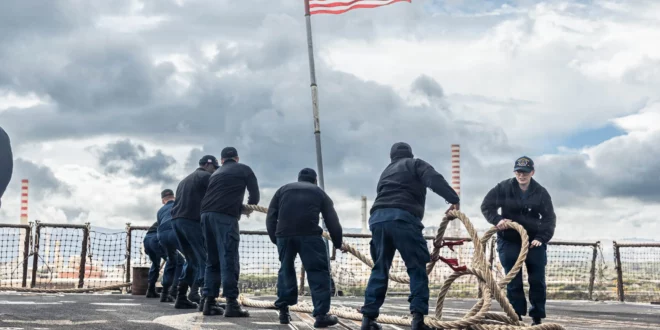
At the Shangri-La Dialogue in Singapore this past Saturday, US Secretary of War Pete Hegseth spoke about the “most consequential region in the world.” He was not talking about the Middle East, where the US-Iran conflict, now in its fourth month, has settled into a brittle ceasefire, as the Strait of Hormuz’s closure continues to rattle the global economy. He was talking instead about the Pacific—and, in the process, reviving a long-running and wider debate about whether the United States should “pivot” its attention away from the Middle East and toward the Indo-Pacific.
The US role in the world is, of course, more complicated than focusing exclusively on one region or the other. So, we asked three of our leading experts to assess where things go from here and how the United States should position itself in the world following the Iran war.
Grand strategy: Don’t “pivot” now
Contrary to those who argue that the United States can and should pivot to Asia, this conflict shows that the Middle East will likely remain an important theater for US grand strategy for years to come.
Since World War II, Washington has prioritized three theaters in its grand strategy and military force posture: Europe, the Middle East, and the Indo-Pacific. US strategists viewed these as the three regions with the greatest concentrations of wealth and danger whose security and stability mattered for the well-being of average Americans.
In recent years, however, some strategists have argued that the United States is over-indexed on Europe and the Middle East and that it should “pivot to Asia” instead. So-called prioritizers have made this argument most starkly. They argue that Washington should focus on Asia—the fastest-growing, most dynamic region—and allow capable allies in Europe and the Middle East to step up and police their own regions. They further argue that US energy dominance makes the United States less dependent on Middle Eastern energy than in the past. They maintain that while a nuclear-armed Iran would be a problem, it is one that can be contained, and that preparing a military to deter and, if necessary, defeat a Chinese invasion of Taiwan is a much more challenging and important task.
Operation Epic Fury calls many of these assumptions into question. While some strategists might argue that a nuclear-armed Iran can be contained, elected leaders of the United States from George W. Bush to Trump have consistently disagreed. Trump has argued repeatedly that military action is necessary to ensure Iran can never have a nuclear weapon. And while energy independence provides many benefits, it does not insulate the US economy from disruptions to Middle Eastern energy supplies. The energy market is global, and disruptions to supply anywhere result in price spikes in the United States. We see this today as Americans pay nearly $4.50 at the pump, on average, for a gallon of regular unleaded gasoline. Moreover, while US allies and partners such as Israel are highly capable, they are not a one-for-one replacement of the United States. When the time came, only the Pentagon had the capabilities needed to destroy Iran’s deeply buried nuclear facilities and severely degrade its conventional military.
Some hope that Operation Epic Fury will lance the boil of the Middle East once and for all, allowing the United States to finally prioritize the Indo-Pacific in its strategy. Indeed, it is still possible that the Islamic Republic could fall, bringing to power a pro-Western government that is more cooperative internationally and respects the human rights of its own people. This would be a welcome and transformational development for the region.
To successfully address these challenges, as I’ve argued at length before, both Washington and its allies will need to do more. First, Washington will need to greatly increase defense spending and revitalize its defense industrial base. Trump’s requested $1.5 trillion defense budget is right on target. Second, Washington will need to lead its allies as they step up to contribute to defenses in all three regions. This will only work with active US leadership.