 Eurasia Press & News
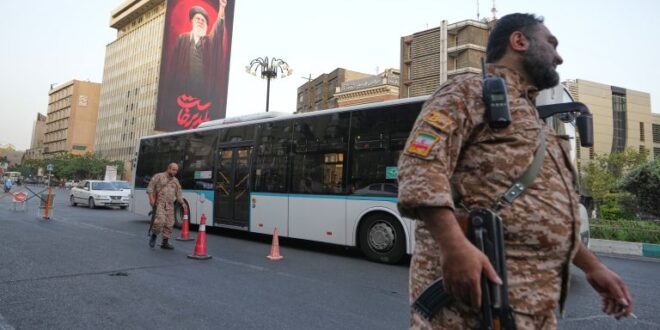
The U.S.-Iran conflict will remain in a “no war, no peace” status indefinitely as neither side is able to deter the other, but both try to avoid returning to major combat.
Iranian hardliners judge that maintaining control of the Strait of Hormuz provides Iran greater leverage and strategic benefits than engagement with and promises of economic benefits from Washington.
The U.S. might have reached a “strategic dead end” in which it cannot accomplish its core goals with any level of escalation that the U.S. Congress or the American public would accept.
Regional mediators are intensifying their search for a formula to recommit to and meld their differing interpretations of the June Memorandum of Understanding (MOU) terminating hostilities.
To the frustration of U.S., regional, and global officials, the June U.S.-Iran Memorandum of Understanding (MOU) did not reconcile or satisfy the rival strategic objectives of either the U.S. or Iran. As a consequence, the MOU has not produced the expected pathway toward a permanent U.S. accord, or even ended the potential for a return to all-out warfare. There are no clear or palatable U.S. options that would shift the strategic balance away from Iran and compel its leadership to settle with Washington. At the same time, the fear of renewed warfare has motivated regional mediators to intensify their efforts to negotiate compromises that might recommit the combatants to de-escalation.
Iranian hardliners’ insistence on maintaining their principal source of strategic leverage gained in the war — essential control of traffic through the Strait of Hormuz — produced renewed U.S.-Iran exchanges over the past week, and set the stage for a return to major combat. On Tuesday and again on Saturday, Islamic Revolutionary Guard Corps (IRGC) units attacked commercial ships seeking to transit the Strait on routes that hug the Omani coast. The ships were attempting to transit without coordinating with Iran and under a measure of U.S. Navy protection. Iranian hardliners view the U.S.-backed traffic channel as undermining their leverage over the world economy — and U.S. President Donald Trump — as well as contradicting the article of the MOU they interpret as directing Iran to manage Strait traffic. The MOU assigns future Strait arrangements to be negotiated among Iran, Oman, and the other Arab Gulf states.
On Saturday, in concert with their strikes on shipping, the hardline IRGC, whose statements have expressed support for “revenge” for the killing of Supreme Leader Ali Khamenei and for “punishing” the U.S. more broadly, announced that the Strait was “closed until further notice.” The announcement undermined and terminated the diplomacy underway between Foreign Minister Abbas Araghchi and his counterparts in the Sultanate of Oman, a key stakeholder in any final settlement of the Strait dispute. Iran’s actions suggest hardliners were energized by the strong public showing at last week’s funeral ceremonies for the slain Supreme Leader. His son and successor, Mojtaba Khamenei, who did not appear at any of the ceremonies, nonetheless issued a message declaring that “revenge is the demand of our nation and it will be carried out.” The call for revenge reflects views expressed by some IRGC commanders and civilian hardliners that Iran should not be negotiating with the U.S. at all. Amid analysis that Khamenei might be deceased or incapacitated, it is conceivable that his call for revenge was formulated by a coalition of IRGC and other hardliners acting in his name. Experts argue that, through their attacks, Iranian hardliners are messaging that they see escalation as yielding Iran greater benefits than engagement.
In response to the Iranian attacks early in the week, President Trump declared the ceasefire “over” and ordered significant — and escalating — retaliation, in some cases expanding the target set to civilian infrastructure such as bridges and energy processing facilities. On Saturday, U.S. retaliatory attacks struck 140 targets concentrated along the Iranian coast — a far larger strike package than on any day since the MOU was signed. The U.S. response also featured an economic component: Trump reimposed the sanctions on Iran that were lifted in accordance with the MOU, including re-imposing sanctions that block Iran from selling its oil and receiving proceeds in U.S. dollars. On Friday, the U.S. Treasury Department sanctioned Iranian financial facilitator Ali Ansari, who oversees a sprawling global network of assets benefitting Iran’s regime elites — violating a clause in the MOU that commits the U.S. to avoid imposing any new economic sanctions on Iran. Washington’s responses reflect Trump’s frustration that the MOU did not accomplish his principal short-term goal — the full and unfettered reopening of the Strait. Trump considers achieving that goal essential to easing the political and economic pressure that resulted from his decision to launch Operation Epic Fury.
Global leaders fear not only the economic effects of renewed combat but also the impact on Iran’s civilian population, particularly those on the coast, and the military infrastructure, of which is being intensively targeted by the U.S. Iran responded to Saturday’s strikes with missile barrages on U.S. bases in all of the Arab Gulf states except Saudi Arabia, and on a U.S. base in Jordan. Regional observers expressed surprise that Iran’s attacks included Qatar and Oman, the two Gulf states seeking to mediate U.S.-Iran de-escalation. Iran launched an additional barrage against U.S. military targets in Kuwait on Sunday, claiming to hit long-range artillery systems firing on Iran from land. U.S. forces apparently continued to attack Iranian coastal targets on Sunday.
The combat over the past week raises questions for the future of the region. Although Iranian leaders appear willing to suffer consequences from escalation, neither they nor Trump appear to want to return to major conflict. Each side prefers a “no war, no peace” stalemate to politically risky capitulation or a return to all-out warfare. Yet the prospects for regional mediation, led by Qatar, Pakistan, and the Sultanate of Oman, to produce a return to the U.S.-Iran peace process appear bleak. As the funeral ceremonies for Khamenei concluded Friday, with the burial in his hometown of Mashhad, Qatari officials visited Tehran for talks. On Saturday, Iranian Foreign Minister Abbas Araghchi visited the Sultanate of Oman, whose coast on the Strait of Hormuz — and its close ties to Tehran — put the Gulf state at the core of forging an acceptable resolution of the U.S.-Iranian battle over the waterway. Trump publicly has backed continuing talks with Iran and U.S. officials told journalists indirect U.S.-Iran “technical talks” would continue. However, no U.S.-Iran meetings will likely resume unless, and until, differences over the Strait are bridged.
Even if mediators can return Washington and Tehran to a peace process, global leaders and experts remain skeptical that a permanent accord can be reached. Former senior National Security Council official Richard Haass characterized U.S. policy to journalists last week as “at something of a strategic dead end.” The analysis encapsulates a widespread view that no combination of economic incentives or escalation of pressure — military, economic, or otherwise — will compel the remaining regime leaders to accede to U.S. demands for a free and unfettered Strait and strict limits on its nuclear program. According to this argument, U.S. officials have no clear strategic alternatives that can bring the war to a permanent conclusion on terms acceptable to U.S. officials and the American public. On Wednesday, Vice President JD Vance sought to articulate the core of the ongoing U.S. strategy by saying: “So, the deal is very simple … If they shoot at ships, we’re going to knock the hell out of them.” However, the Trump team has yet to answer why it believes retaliation for Iranian attacks in the Strait — even on a scale as large as Saturday — will yield a different result than have previous U.S. strikes.
On the other hand, most of Iran’s civilian government leaders appear amenable to finding a compromise with Washington. Elected Iranian leaders such as President Masoud Pezeshkian and Majles (parliament) Speaker Mohammad Bagher Ghalibaf have advocated negotiations with the Trump team in order to avoid further harm to the Iranian population, and to extract needed relief from U.S. sanctions. They appear to recognize that Trump and his team are considering not only broader air strikes but also the reimposition of the U.S. naval blockade that was lifted to implement the MOU. During his visit to Muscat on Saturday, Araghchi reportedly favored an Omani compromise under which Strait traffic would use two separately-controlled routes to transit the Strait — one along the Iranian coast and one along the Omani coast. However, the IRGC attacks on ships that day undermined the diplomacy, and the fate of Oman’s proposal is not clear. At the same time, civilian government leaders have echoed, at least in public, the arguments made by Iranian hardliners that the Trump team’s efforts to steer shipping to a route that hugs the Oman coast violates the MOU.
The continuing battle for control of the Strait augurs poorly for a resolution of the issue of core significance to U.S. officials — imposing strict limitations on Iran’s nuclear program. U.S. and Iranian negotiators have not discussed the issue since the MOU was signed. A senior U.S. official told journalists that if Iran cannot abide by the terms of the MOU — which gives Iran financial benefits in exchange for reopening the Strait — then there is little hope of reaching a far more complex nuclear deal.