 Eurasia Press & News
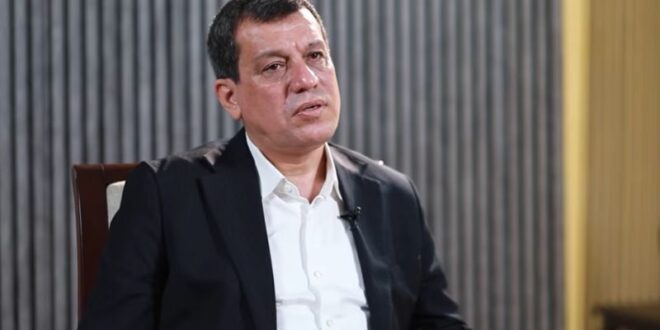
Syrian presidential adviser Mazloum Abdi said relations between Syria and Turkey, as well as between the Kurdish side and Turkey, should move onto a “normal and constructive” footing, noting that channels of communication and dialogue between the two sides remain open. His remarks came in interviews with Turkish media published over the past two days.
Abdi gave an interview in al-Hasakah city (northeastern Syria) to Turkish broadcaster İlke TV with journalist Banu Güven, which the channel published on September 4. He also gave another interview to the newspaper Yeni Yaşam.
The two interviews come after Abdi moved from leading the Syrian Democratic Forces (SDF) to serving as an adviser to the Syrian presidency, following the announcement of the SDF’s dissolution and the completion of its integration into the Syrian army.
Abdi told Yeni Yaşam, “Today, there are also channels of communication and dialogue between us and Turkey,” adding that relations in the coming phase should proceed on a “normal and constructive” basis.
He added that developing relations with Turkey is in the interest of Syria and Syrians, noting that Damascus is open to expanding these contacts.
“We Do Not Want to Return to War”
Speaking about the new phase following the end of the SDF’s military role, Abdi said he did not want residents to return to wartime conditions, explaining that he had made a commitment that the people of the region would not return to war “unless we are forced to.”
He said the past 15 years had been marked by war, and that the current phase should focus on building Syria and on political and diplomatic work instead of returning to military confrontation.
He added that the Kurds have entered a new phase based on political and constitutional work and participation in building the Syrian state, calling on the Kurdish community to treat the coming period as a transition from armed activity to political work.
In the interview, Abdi rejected describing the integration process as a “surrender,” while also rejecting claims that nothing had changed. He explained that SDF forces had joined the Syrian army as brigades, together with their commanders, and would continue their role in defending the areas where they had previously been deployed.
He said the SDF had officially become part of Syria’s defense establishment, and that the personnel and commanders who had served within it were now part of the Syrian army. He said the aim of the process was to strengthen the Syrian army and defend both the region and Syria as a whole.
Ankara, Damascus and the Kurds
Abdi linked developments in Syria to the ongoing dialogue process in Turkey, arguing that the Kurdish issues in the two countries affect one another.
In his interview with İlke TV, he said Turkey had played an influential role in the Syrian file over the past years, and that its position on the Kurdish issue in Syria had affected developments inside the country.
He added that the ongoing solution process in Turkey had, in his view, contributed to achieving a degree of stability and ending confrontations. He said he believed the process between Ankara and Abdullah Öcalan could have a “positive impact” on resolving the Kurdish issue in Syria.
Abdi said the “solution process in Turkey” could positively affect the Syrian Kurdish issue, noting that the link between the two files has existed for years and that developments in the Turkish process have been reflected in relations with Kurds in Syria.
He believes Turkey’s role in Syria has increased during the new phase and that it can play a role in rebuilding the country, particularly in the economic sphere. He said Syria’s stability also serves Turkey’s interests.
Kurdish Rights and the Constitution
Abdi also addressed the future of Kurds in Syria, stressing that their main objective is to participate in building the new Syrian state while preserving their rights and gains.
He said Kurds had not been a fundamental part of the process of establishing the Syrian state in previous phases, arguing that the current period presents an opportunity for them to participate in building the new state.
He noted that agreements signed during the previous period, including the January 29 agreement, contained provisions related to Kurds and the Kurdish language, but stressed the need to enshrine rights in the constitution.
He explained that Kurds want guarantees for their national and cultural rights, mother tongue rights and administrative rights within Syria’s new constitution.
According to Abdi, a committee is expected to be formed in the coming period to draft the constitution, with the Kurdish side seeking representation on the committee.
Kurdish Language
On education in Kurdish, Abdi said the official introduction of the Kurdish language into Syrian curricula represents a “major step,” as it is the first time Kurdish has been officially accepted within Syria’s education system.
However, he said the step does not meet all Kurdish demands, particularly when compared with the Kurdish language education system that had existed in areas of northeastern Syria during previous years.
He added that the Kurdish language would remain one of the issues pursued through political work in the coming phase, and that achieving the rights sought by Kurds would require continued dialogue, negotiations and political engagement.
Abdi also spoke about his personal experience with the Kurdish language, saying he was arrested when he was 13 or 14 because Kurdish language books were found at his school, and that he remained in prison for about a week.
Forming a New Political Body
Regarding the future of the SDF following its integration into the Syrian army, Abdi said there is a need to form a new political body to represent Kurds in the coming phase.
He explained that several political forces in the region are working on the issue, but that the name and structure of the new organization have not yet been finalized.
He said the end of the SDF’s military role does not mean the end of political activity, but rather its transition into a new phase. He argued that the experience accumulated over the past years in political and social work should now be transferred to the political sphere.
He stressed that the coming period would see efforts to unify Kurdish political forces with the aim of preserving their gains and increasing their participation in Syrian state institutions.
Return to Afrin and Ras al-Ain
Abdi also addressed the return of displaced people to Afrin (Aleppo governorate, northwestern Syria) and Ras al-Ain (al-Hasakah governorate, northeastern Syria).
He said the situation in Afrin differs from that in Ras al-Ain, noting that some residents of Afrin had returned to their areas, but that several issues still need to be addressed, including education, local administration, security and property rights.
Regarding Ras al-Ain, he said returns have not yet begun fully, but noted that measures are being taken to ensure residents can return gradually and in an organized manner.
He added that work is underway to implement understandings concerning Afrin, Ras al-Ain and other areas in a way that guarantees the rights of returning residents and regulates their relationship with the Syrian state.
Adviser to the Syrian Presidency
Discussing his new role, Abdi said he accepted a position in Damascus to help ensure the success of the integration process and guarantee strong Kurdish participation within Syrian state institutions.
He explained that his role is not limited to Kurdish areas, saying he wants to play a “positive and constructive” role across Syria as a whole.
He said his official work had begun, but that he remained in the region to complete files related to the integration process, after which he would spend more time in Damascus.
Abdi stressed that the coming phase should be based on the participation of Syria’s various communities in the state, saying Kurds, Druze, Alawites and others should have a strong presence in state institutions.
He also urged Kurdish political forces to unite, arguing that preserving gains achieved over the past years requires a unified political position.
At the conclusion of his remarks, Abdi called on residents not to be pessimistic about the new phase, saying that 15 years of war had ended and that the focus should now be on rebuilding Syria and pursuing political work.
He said Kurds are not seeking to establish an entity separate from Syria, but rather to participate in the Syrian state “with a clear identity” and obtain constitutional guarantees for rights achieved during the past years.
On August 25, Mazloum Abdi announced the dissolution of the SDF and the completion of its integration into Syrian state institutions following a series of talks in Damascus. Two days later, on August 27, President Ahmed al-Sharaa issued a decree appointing Abdi as an adviser to the presidency.