 Eurasia Press & News
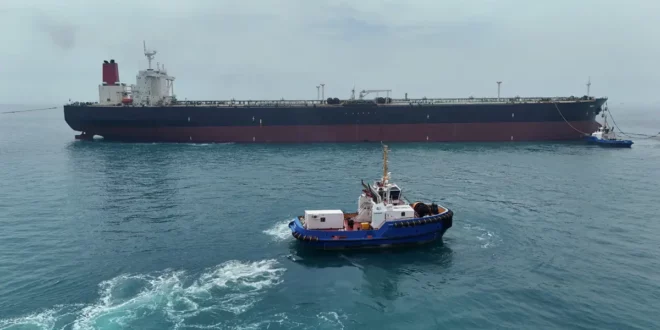
Gulf oil exports are nearing pre-war levels despite intensifying attacks on vessels in the Strait of Hormuz, revealing a parallel between the flow of crude and the mounting cost and risk of shipping it, analysts have told AGBI.
Oil prices remain elevated, but Gulf exporters prioritise keeping crude flowing and restoring stability to global supply over maximising the price they receive, experts said. That means absorbing higher transport costs and offering discounts to compensate buyers for the risk of moving oil through the region.
At least nine vessels have been reported struck between October 1 and 5, according to UK Maritime Trade Operations, a marine security agency. The attacks failed to derail the recovery in crude shipments, however, with analysts noting that hitting a tanker does not necessarily remove its cargo from the market.
“Most keep going,” Samir Madani, co-founder of maritime intelligence company TankerTrackers.com, told AGBI.
The seven-day average for Middle East oil exports – including Strait of Hormuz, Red Sea and Iraqi-Mediterranean – is about 18 million barrels per day, according to TankerTrackers.com, roughly 600,000 bpd below pre-war levels.
Middle East oil exports rose last month to their highest since the war began in February.
Gulf producers have adapted to the threat of attack – some vessels switch off their transponders, while producers increasingly rely on ship-to-ship transfers outside the strait. US naval protection provides another security layer for some commercial traffic.
Eye-watering costs remain
This does not mean the oil market has returned to normal, with the Brent crude benchmark hovering around $100 a barrel for much of the past week, up from $68 before the war.
Shipping expenses and war-risk insurance remain extraordinarily high and the cost of chartering a VLCC (very large crude carrier) has topped $1 million a day, compared with $100,000 before the war.
“The threat may keep oil prices elevated, but at the same time it only plays into the hands of the Arab nations that need to cover their elevated costs of moving barrels,” Madani said.
Higher crude prices, however, do not necessarily compensate Gulf exporters for the wider economic costs of the conflict.
“It’s not just a matter of revenues but an exponential increase in defence expenditure and repairing damaged infrastructure and oil facilities,” said Umer Karim, an associate fellow at the King Faisal Centre for Research and Islamic Studies.
Oil nations are also offering discounts, partially absorbing the cost of additional risk. Iraq’s state oil marketer Somo is providing discounts of up to $37 a barrel to buyers of October-loading crude, to offset soaring freight costs. Saudi Arabia also will sell oil to Asian markets next month at its highest discount since Covid.
“It’s an issue of market stability and risk alleviation as compared to optimum pricing for these exporters,” Karim said.
‘Cannot fool the price’
Even if crude exports have returned close to pre-war levels, the recovery does not erase the supply deficit accumulated during the previous seven months. Furthermore, the supply of refined products remains constrained.
The result is a market in which the headline number of barrels exported increasingly understates the economic impact of the disruption.
“The price of oil represents the shortage and the difficulty of taking it out of Hormuz. So you cannot fool the price,” said Danny Citrinowicz, non-resident senior fellow with the Scowcroft Middle East Security Initiative at the US think tank Atlantic Council.
Political statements about an eventual settlement can influence sentiment temporarily, Citrinowicz said, but physical market conditions have become more important as the conflict drags on.
“Oil is a physical commodity. Either you have it or you don’t.”