 Eurasia Press & News
Key Takeaways:
Iran’s traditional “forward defense” through affiliated groups such as Hezbollah, Iraqi militias, the Houthis, and Palestinian militants has suffered setbacks since October 2023, including major losses for Hezbollah and Hamas and the loss of the Assad government in Syria.
Direct Israel–Iran exchanges have exposed the limits of proxy-based deterrence, prompting Tehran to place greater emphasis on its own ballistic and cruise missiles, UAVs, and maritime capabilities while still relying on regional partners to extend its reach.
The article concludes that Iran is adapting rather than abandoning its proxy strategy, moving toward a hybrid model that combines affiliated armed groups with greater reliance on capabilities under direct Iranian control, raising the prospect of more conventional future confrontations.
Iran’s foreign policy has traditionally centered on its immediate neighborhood, although its strategic reach extends across the wider Middle East. Iran has often sought to shape regional developments and exert pressure on rival states through affiliated armed groups, including Hezbollah, Iraqi militias, Yemen’s Ansarullah (the Houthis), and Palestinian militant groups, rather than through direct military intervention. Iran’s network of affiliated armed groups has served as a form of “forward defense,” extending its strategic reach and complicating the calculations of Tehran’s adversaries and perceived “enemies” by creating the prospect of retaliation on multiple fronts. The Iranian proxy system has provided Iran with considerable influence given the country’s limited conventional military and economic means.
However, Iran’s regional network faced substantial setbacks after the outbreak of the Israel–Hamas war in October 2023, particularly among Hezbollah and Hamas, while the fall of Bashar al-Assad’s government in Syria further disrupted Tehran’s overland links to Lebanon and the Mediterranean. With several of Iran’s key regional partners weakened and the loss of a longstanding ally in Syria, the central question is whether Tehran will continue to rely on its established proxy strategy or adapt it to address the changing security environment.
Evidence suggests that Iran is adapting its proxy strategy in response to emerging regional threats and pressures. Despite the setbacks suffered by Hezbollah and other affiliated armed groups, Tehran shows no clear indication of abandoning its reliance on these partners to advance its regional interests. Iran’s proxy strategy has historically rested on the assumption that the threat posed by its regional partners would deter Israel and the United States (US) from launching direct military action against Iranian territory. Tehran viewed Hezbollah’s missile arsenal as a key element of its deterrence strategy. Iraqi armed groups posed a threat to US interests in the region, while Palestinian Islamic Jihad (PIJ) provided an additional means of applying military pressure on Israel from Gaza.
The growing frequency of direct exchanges between Iran and Israel exposes a key limitation of Tehran’s regional partnerships. While they can extend Iran’s reach, they cannot guarantee protection against direct attacks or ensure that its partners will come to its defense. Tehran may therefore be looking for additional ways to strengthen its deterrence. Recent developments show that Tehran is supplementing its reliance on regional partners with greater emphasis on its own military capabilities.
Limits of the Axis of Resistance
Hezbollah illustrates both the value and the limitations of Iran’s proxy strategy. For many years, it was Tehran’s strongest regional ally and a key element of its deterrence posture toward Israel. Its substantial missile arsenal and position along Israel’s northern border gave Iran the potential to open an additional front in the event of a direct military confrontation. The 2023–2024 Israel–Hezbollah conflict exposed the risks of relying heavily on a single partner whose own military position can be weakened. Hezbollah continues to give Tehran additional leverage against Israel, but its effectiveness depends on its ability to sustain its military and political position in Lebanon.
Hamas presents a different set of constraints. Although Iran’s relationship with Hamas has both political and military dimensions, Tehran does not exercise complete control over the group’s decisions or operations. As a Palestinian movement with its own leadership and strategic objectives, Hamas retains a degree of autonomy from Tehran. The Israel–Hamas war also demonstrated that Iran’s political and military support does not amount to a security guarantee against Israeli military action. Through the provision of weapons, training, and political support, Iran can strengthen Hamas’s capabilities. However, defending Hamas against a sustained Israeli military campaign would require a far greater Iranian commitment, potentially risking a wider regional conflict. Iran’s relationships with members of the Axis of Resistance vary in nature and depth, and strategic alignment does not necessarily entail a mutual defense commitment.
As Hezbollah and Hamas have suffered considerable losses, the Houthis have assumed greater strategic importance within Iran’s regional network. Their control over parts of Yemen provides Tehran with an additional means of threatening commercial shipping in the Red Sea, particularly around Bab el-Mandeb, one of the world’s busiest maritime chokepoints. This is especially relevant to Iran because the Strait of Hormuz is a critical artery for global energy supplies and international trade. By threatening maritime traffic in the Red Sea, the Houthis extend Iran’s strategic reach beyond the Persian Gulf and provide leverage in a theater geographically distinct from the Tehran–Baghdad–Damascus–Beirut axis. However, the Houthis retain their own political interests and military objectives, which do not always align with those of Tehran.
The term “proxy” can create a misleading impression of a chain of command extending directly from Tehran. Hezbollah operates within Lebanon’s political system, Iraqi militias pursue interests within Iraq’s political arena, Hamas has its Palestinian political and military priorities, and Ansarullah is rooted in Yemen’s domestic conflict. Although Iran provides these groups with varying degrees of financial, logistical, and military support, this assistance does not make them mere extensions of the Iranian state. At times, their interests and strategic calculations diverge from Tehran’s, leading them to make decisions that do not always align with Iran’s preferences.
This autonomy can help these groups build local support and strengthen their long-term resilience. However, their actions may also contradict Tehran’s interests, especially if they provoke an escalation that Iran neither desires nor can easily manage. Their strategic objectives therefore overlap with, but do not fully coincide with, those of Iran. Tehran’s challenge is to maintain sufficient influence over these groups to advance shared objectives while managing the risks arising from their independent decisions.
Iran’s Evolving Military Reach and Regional Partnerships
These dynamics point to a change in how Iran exercises its regional influence. Tehran continues to rely on a loose network of affiliated armed groups across Iraq and the Levant, although shifts in regional conditions may further fragment that network. Despite sustained efforts to weaken them, Iraqi armed groups and Hezbollah are likely to retain significant political and military influence. Palestinian armed groups will also remain part of the conflict with Israel.
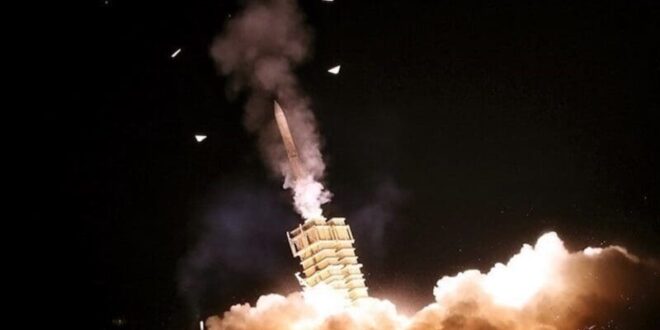
Iran’s regional influence increasingly depends on how Tehran integrates its own military capabilities with the evolving reach of affiliated armed groups. Iran’s ballistic and cruise missiles, in addition to its uncrewed aerial vehicles (UAVs), expand Tehran’s options for striking its adversaries directly. This includes targets in Israel and US military positions and installations in the region. The direct exchanges with Israel demonstrated both the reach of Iran’s missile and drone arsenal and its limitations, particularly the difficulty of penetrating Israel’s multilayered air-defense network, which, although highly effective, is not impenetrable. These exchanges exposed the limits of a deterrence strategy rooted in the threat of retaliation.
Maritime power is another dimension of Iran’s regional strategy. The Strait of Hormuz gives Tehran considerable leverage over international shipping, with disruptions affecting regional economies and global energy markets. Anti-ship missiles, naval mines, fast-attack craft, and drones strengthen Iran’s ability to threaten commercial traffic and raise the costs of military pressure. Events in and around the Strait of Hormuz since February 28 have demonstrated the challenges of protecting commercial shipping in the Persian Gulf, highlighting the strategic value of these capabilities beyond direct missile strikes against Iran’s adversaries.
Indeed, Iran’s regional partners extend this reach beyond the Persian Gulf. The Houthis’ ability to threaten shipping around Bab el-Mandeb and in the Red Sea has extended the disruption of maritime trade beyond the Persian Gulf, although their operations remain shaped by their own political and military objectives in Yemen. Although assessments of the US-led “Operation Prosperity Guardian” vary, it achieved tactical gains without fulfilling its broader strategic objectives. Similar challenges have emerged in the latest crisis in the Strait of Hormuz, where US military efforts have yet to restore safe and reliable commercial navigation. Iran’s missile, drone, and naval capabilities operate alongside those of affiliated armed groups rather than as part of a single, centrally controlled system.
From Proxy Warfare to Direct Deterrence
The central conclusion is that Iran’s proxy strategy has changed rather than failed. Tehran has traditionally relied on affiliated armed groups to extend its defensive reach, protect its regional interests, and reduce the risk of direct confrontation on Iranian territory. Recent events, however, have exposed the limits of this approach.
Iran appears to be placing greater emphasis on its military capabilities while continuing to rely on regional partners to extend its influence and complicate the strategic calculations of its adversaries. Iran’s Axis of Resistance may therefore evolve toward a model that combines affiliated armed groups with a greater reliance on military capabilities under Tehran’s direct control. This could make future confrontations more conventional, even as Iran continues to operate through regional partners. The central strategic question is whether this combination of national military power and affiliated armed groups can provide credible deterrence against potential adversaries.