 Eurasia Press & News
On October 17, the New York Times revealed the central element of the US plan for Ukraine: Europe should resume the purchase of Russian gas. The newspaper calls the proposal likely to upset years of American energy policy. For a century, Washington had been fighting this German-Russian junction, and this week it is proposing to restore it against a share.
- What an analyst described
February 2015, Chicago. George Friedman, founder of the private intelligence firm Stratfor, speaks before the Chicago Council on Global Affairs. The conference is entitled ‘Europe: intended for conflict?’. The Council has published a report of this, there is no official transcript.
It must be said what it is: an analyst analysis, not a state decision. And Friedman himself rejects the posture of the council. “That’s not why I’m interested in politics. What I’m trying to understand is what’s going to happen.”
“The primary interest of the United States, for which we fought for a century, the first war, the second, the Cold War, was the relationship between Germany and Russia. Because united, they are the only force that could threaten us. And to make sure that doesn’t happen.”
Then the exact wording of this fear. “For the United States, the primary fear is German capital and technology, natural resources and Russian labor. The only combination that for centuries has terrified the United States.”
On Europe, it is even more brutal.
“We no longer have a relationship with Europe. We have a relationship with Romania. We have a relationship with France. There is no Europe with whom to have a relationship.”
And there is, in this discourse, an admission of method that is better than the rest. Friedman recommends Reagan’s policy towards Iran and Iraq. “He funded both sides to fight each other and not against us. It was cynical, it certainly wasn’t moral, and it worked.”
A private analyst who recommends is not a state that decides. Eleven years later, the policy he described changed his form.
2. What the Doctrine Writes
The Europe chapter of the Heritage Foundation’s Solutions collection, updated in May 2026, is an institutional document, published and signed. It calls for the development of “solid bilateral relations with European countries individually, instead of supporting the European Union by reflex”.
And he gives his definition of the Union. It is “a supranational and undemocratic organization that undermines the national sovereignty of its members.” It “washes taxpayers’ money, distorts European migration policies and defends a radical left-wing energy and social agenda.”
The text adds two prescriptions. Strengthen “transatlantic networks of conservative politicians, policymakers and think tank leaders.” And refuse the European integration of defence, because “European strategic autonomy in defence is a chimera piloted from Brussels”.
This document does not prescribe any destabilization. He prescribes a disintegration. It’s not the same, and it’s more effective.
It also contains a passage that the October plan contradicts, and no one has noticed it. On energy, the same chapter is explicit. The war in Ukraine “underlines the need for Europe to move away from its dependence on Russia.” And U.S. exports of liquefied natural gas “are an important component of future European energy security.” The United States must therefore increase its production and export capacity.
No more Russian gas, place to American LNG. Five months later, the plan says the opposite of doctrine.
There remains the most quoted phrase, and it must be accompanied by his safeguard. In 2018, Heritage researcher Ted Bromund spoke before the Helsinki Commission. “It is time to acknowledge that the EU is an open and declared enemy of the role that the US assumed in Europe after 1945.”
The document is marked on page 1. “Nothing written here should be interpreted as necessarily reflecting the views of The Heritage Foundation.” Quoting one without the other would be dishonest, and a contradictor would take care of it.
3. What Washington proposes
The New York Times on October 17. “Europe, according to the US proposal, should resume the purchase of more Russian gas, a move that would be an economic advantage for Moscow.” And who would “give him renewed influence in the region.”
The newspaper adds a second sentence, more precise. “To help convince Russia to end the war, the Americans argued that Ukraine should consider restarting pipelines that once transported Russian gas to Europe.”
Emissaries are Jared Kushner and Steve Witkoff. They carried the idea to Ukrainian and European officials, including Zelensky in Kiev last month. A few days after his talks in Moscow, Kushner told Kiev he had advocated for “prosperity agreements.” And the European officials present reacted negatively.
The reasoning of the administration is assumed. The revenue that would go to Ukraine, and what the NYT calls “the inevitable desire for energy cheaper of European voters.”
The White House responded in a statement. The war “raises energy prices throughout Europe and creates considerable economic difficulties in both Russia and Ukraine.” “Our goal is not simply to stop the fighting, but to create the conditions for lasting peace, economic recovery and greater stability across the region.”
Until then, it is a diplomatic plan. The American part is elsewhere.
On 8 October, Reuters established it on five sources. Russian and U.S. officials, including Kushner and Kirill Dmitriev, have discussed bringing an American investor into the Nord Stream pipelines. A White House official is laying the condition. Any agreement “will have to be negotiated by Russia with the DFC and the Treasury, and must benefit taxpayers and U.S. companies.”
The same official said there had been no “discussions on Nord Stream recently.” The two sentences coexist in the same dispatch.
The direct debit is even more explicit on another file, the acquisition of Lukoil’s assets. The consortium is associated with DFC, Qatar and the Emirates. A White House official said: “Steve and Jared have worked with the DFC to negotiate a substantial initial payment and profit-sharing for the United States.”
The obstacle is legal. The two pipelines are under U.S. and European sanctions, “making any restart illegal,” Reuters wrote. Trump can lift US sanctions. It will be harder if the Democrats take Congress in November.
Nord Stream is not an anonymous pipe. The company that controls the pipelines is 51% owned by Gazprom, and 31% by two German entities. The rest belongs to a French company and a Dutch company. The two German shareholders want to keep their shares to keep their influence if Gazprom sells its own.
The New York Times adds a detail. Discussions also focused on restarting the intact Nord Stream 2 segments after a peace agreement. A source describes this option as “the simplest step.” The White House has formally denied that the Baltic project has been discussed recently.
4. Those who refuse
Berlin is the clearest refusal, and it is argued.
Günter Sautter, a diplomatic and security adviser to Chancellor Friedrich Merz, battled the idea during consultations in Florida. According to the Kyiv Post, German officials made a simple argument. Russian gas remains Russian, whether through intermediary traders or third-party brokers.
The spokeswoman for the Ministry of Economy adds the legal condition. Any reopening requires the agreement of the German government. And according to her, neither of the parties is looking for it.
The ministry also recalls the state of affairs, and this is what makes the refusal credible. Before February 2022, Germany bought more than half of its gas from Russia, through the two Nord Stream pipelines. They were slowed down and then destroyed by underwater explosions in September 2022. Going back is not a technical decision.
A political nuance counts. The AfD, which Reuters presents as the most popular party in the country, reached 30% at the Insa Institute in early October, its best national score. She is campaigning on the cheap Russian return to gas. And Dmitriev is scheduled to meet with his management early next year to talk about it.
Poland and the Baltic states also refuse, and Reuters notes that they are the most exposed to Russia. Five bosses of European intelligence agencies told Reuters this year. According to them, Moscow is not trying to finish the war quickly. He uses negotiations to obtain trade agreements.
A German elected official gives the thesis its shortest formula. Michael Kellner, energy policy officer after the invasion: “It threatens to be a dirty market that will cost Europe dearly. The Americans and the Russians will share the profits.”
Kiev also refuses, and the refusal precedes the plan. On October 8, before it was known, Zelensky was already setting a limit. We cannot negotiate with the Russians on “economic plans for the future.”
5. The sequence, and what she says
For a century, Washington prevented the German-Russian bond. This week, he proposes to restore it, provided he takes its share.
The license of October 9 concerns a refined product, diesel. The plan of the 17 concerns the molecule itself, and the pipes that carry it from one end of the continent to the other. It’s not the same scale, and it’s not the same price.
The movement is there. In 2015, an American analyst described what his country had been preventing for a century. In 2026, the same power proposes to do so, provided that it takes a share. The goal has not changed: that Europe pays someone else for its energy.
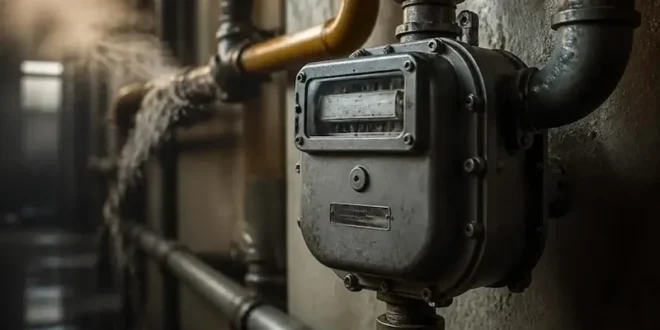
What has changed is the mechanism. We’re not turning the tap off. We reopen it, install a meter, and charge for the passage.
It is not Russia that is blocking, or even Washington. These are Berlin and Kiev, and for opposite reasons. One no longer wants to depend on Moscow. The other refuses to fund the aggressor. Both refuse the same thing: a peace of which Europe would be the customer.