 Eurasia Press & News
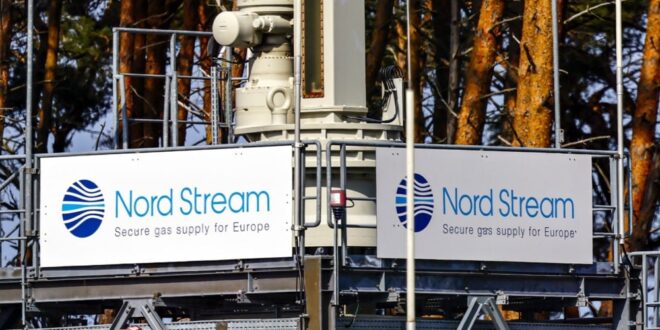
On October 17, a Polish court denied Germany’s request to extradite a man suspected of masterminding one of the most daring acts of sabotage in recent decades: the 2022 destruction of the Nord Stream 2 pipeline, which was built to carry billions of cubic metres of Russian natural gas direct to Germany under the Baltic Sea. The ruling raised tensions between the two allies, further exacerbated when Polish Prime Minister Donald Tusk posted one of the most widely quoted tweets of recent weeks: “The problem with Nord Stream 2 is not that it was blown up. The problem is that it was built.”
Tusk’s blunt remarks sparked uproar among German politicians and sections of the media, putting German Chancellor Friedrich Merz in a decidedly awkward spot at home.
This came at a time when Polish-German relations had seemed poised for a new golden age. Tusk is a close ally of Ursula von der Leyen, the German head of the European Commission, and he is a politician who has long stressed the importance of Warsaw maintaining good relations with Berlin.
Meanwhile, Merz may be the most ‘East-aware’ German chancellor since Helmut Kohl (who oversaw the unification of Germany) and an unwavering supporter of Ukraine in its struggle against Russian aggression, a key geopolitical development for Poland.
Furthermore, both politicians belong to parties in the same political grouping in the European Parliament, and the talk is that they get on well on a personal level – yet the relationship keeps souring, often stumbling over unresolved issues from the past.
One such longstanding bone of contention is Nord Stream – a project that has stirred controversy from its very beginnings when the first of two pipelines (each consisting of two strings) came onstream in November 2011. What Germans long framed as a purely economic venture has always been viewed in Poland as an ill-advised strengthening of ties with Russia, destabilising the region and fuelling Vladimir Putin’s appetite for foreign aggression.
Even today, as the gas pipelines rust away on the Baltic seabed, Nord Stream still has the capacity to stir controversy and poison relations.
Peeved over a pipeline
Nord Stream 2 runs parallel to its predecessor Nord Stream 1, which began carrying gas in two strings directly from Russia to Germany from 2011, avoiding transit states like Ukraine and Poland.
This cheap Russian gas is widely seen as one of the engines that powered Germany’s “golden decade” of economic growth in the 2010s. And Nord Stream 2 was designed to double that import capacity, from about 55 billion cubic metres of gas per year (cm/y) to over 100 billion cm/y, when its two strings were completed towards the end of 2021.
As much as Donald Tusk’s aforementioned remark can be regarded as surprisingly strong, most experts agree that the Nord Stream 2 project was deeply problematic from the very outset.
“Germany never needed Nord Stream 2 to secure its gas supply,” Professor Claudia Kemfert of DIW Berlin, the German Institute for Economic Research, tells BIRN. “Existing routes and [liquefied natural gas] capacities were sufficient, and demand projections were exaggerated. From the beginning, it was clear that the project created dependency, not security – despite clear warnings from Eastern Europe and the US.”
Yet Kemfert’s negative view about the legacy of Nord Stream 2 certainly doesn’t represent that of all Germans.
Recent, widely covered interviews with Gerhard Schroder and Angela Merkel, both former chancellors and key political figures behind Nord Stream 2’s conception and construction – caused consternation across much of Central and Eastern Europe.
Schroder, appearing before a German parliamentary commission inquiry into potential financial and political irregularities surrounding the Nord Stream project, defiantly insisted that he has no regrets about the decisions he took that left Germany so reliant on Russian gas. For context, directly after leaving office in 2005, Schroder became chairman of the Russian state-controlled company responsible for the project, earning millions in the process.
Merkel went further, igniting an even bigger outcry by suggesting it was Poland and the Baltic states’ refusal to negotiate with Russia before February 2022 that helped trigger the full-scale invasion of Ukraine. Even if parts of her statements were taken out of context or exaggerated online, the biggest shock for many was that she did not once question the rationale of sending billions of euros to Russia even after it annexed Crimea in 2014 and subsequent developments proved that appeasing Putin with economic ties clearly hadn’t worked.
Even back then, in 2014, Polish politicians, experts and diplomats tried repeatedly to stop the Nord Stream 2 project from going ahead – but without success. It wasn’t until early 2022, on the eve of Russia’s full-scale invasion of Ukraine and under intense pressure from Washington that the then-chancellor, Olaf Scholz, suspended the pipeline’s certification, meaning it never actually went into service. Then the war began. Then came the explosions.
An explosive end
In late September 2022 – more than six months into Russia’s full-scale invasion of Ukraine – a chartered yacht set off across the Baltic Sea. On board was a small but unusually professional crew: Ukrainian nationals, including expert divers, a seasoned captain and an explosives expert.
Their route took them through Germany, Sweden and Poland. Just days after they returned to port, powerful explosions shook the bed of the Baltic Sea, damaging three of the four strings of Nord Stream 1 and Nord Stream 2.
Even though gas flows through Nord Stream had already dwindled, the sabotage was far from inconsequential. “The sabotage was a drastic stop to the project,” Susanne Nies, an expert from Helmholtz Zentrum Berlin, tells BIRN. “It raised the barrier for any resumption enormously, because of the cost of rebuilding it. Before, it could simply wait for better circumstances – it was a political choice. Now, it’s an economic one too.”
The circumstances, the perpetrators, and those who ordered and financed the operation remain shrouded in mystery. Of the four investigations originally launched – in Poland, Sweden, Denmark, and Germany – only the last is still ongoing. And it’s this investigation that has put Poland and Germany at loggerheads.
Multiple investigations
After nearly two years of painstaking work, Germany secured at least six European Arrest Warrants. Two suspects were quickly arrested, but extraditing them to Germany – normally a routine procedure – has proved far more complicated.
On Wednesday last week, Italy’s Cassation Court rejected the final appeal of 49-year-old Serhii Kuznietsov, a Ukrainian suspected of setting off the explosions that damaged the pipelines, against his extradition to Germany. By contrast, the Polish district court on October 17 ruled against the extradition of another key suspect, Volodymyr Zhuravlov.
Judge Dariusz Lubowski delivered a 30-minute lecture explaining his decision over Zhuravlov. Drawing on Aristotle and the Just War Theory, he concluded: “Ukrainian soldiers…, as well as anyone acting on their behalf, cannot be regarded as terrorists or saboteurs. By all possible means, they are pursuing a single goal: the defence of their homeland and the weakening of the enemy. You are free, Mr Zhuravlov.”
The ruling came at a sensitive time. “Poland’s refusal here is certainly difficult for Polish-German bilateral relations – especially with the upcoming intergovernmental consultations, which will include, among other things, energy issues,” says Agnieszka Loskot-Strachota, an expert at Warsaw’s Centre for Eastern Studies.
The German government’s official response was diplomatic. “In Poland, a court has issued a ruling that I respect because we recognise the division of powers,” said Foreign Minister Johann Wadephul.
Yet, just like Merkel’s earlier controversial remarks, the Warsaw court judgement sparked heated debate in Poland and Germany.
The co-leader of the pro-Russian Alternative for Germany (AfD), Tino Chrupalla, went so far as to call Poland “a country using double moral standards and refusing to extradite a terrorist.”
Donald Tusk, by contrast, kept it simple: “And rightly so. The case is closed.” It was one of those rare moments when Poland’s government and opposition spoke with one voice, and the court’s decision was widely applauded across the political spectrum.
Speaking to BIRN, Nies reflects that tensions might have been eased if Germany had acknowledged past mistakes: “Of course, there’s a legal process that Poland must comply with. But there also needs to be a bigger story from Germany: admitting, ‘Poland, you got it right and we got it wrong.’ That would have been a more appropriate response and might have calmed unnecessary tensions.”
With Zhuravlov’s case closed, the focus will now turn to the extradition and potential trial of Kuznetsov, as well as the fate of the other four unknown suspects in the case. Given the general slowness of the German justice system, especially for complex criminal cases, a resolution to the affair remains far off. Still, Loskot-Strachota argues that this might be the best outcome for all parties.
“Any conclusion to this investigation will have deep and serious political consequences – for Europe and for Germany. Most probably, it will be decisive for the future of Nord Stream, if that future exists at all,” she says.
In your Nord dreams
“They [the four strings to Nord Stream 1 and 2] are finished. After the explosions and the fundamental policy shift away from Russian gas, Nord Stream will not be repaired or revived,” Professor Kemfert states.
With the new wave of sanctions unveiled in October and the EU’s push to cut all gas and oil trade with Russia by 2027, this seems the most likely outcome right now.
Yet whispers of a possible Nord Stream revival began circulating in spring, when the Washington Post reported that an American businessman, with close ties to the Kremlin and the Russian oil company Rosneft, filed papers with the US government seeking permission to buy the company that operates Nord Stream, despite the current sanctions.
The deal never materialised, but Loskot-Strachota cautions that political circumstances are subject to sometimes rapid change: what seems impossible today might be feasible tomorrow.
“As long as there are no definitive decisions or physical actions – I mean even more serious destruction or full closure of the remaining pipeline – and no clear political or legal-political statement from the German side that these routes will never be used again, nothing is settled. We are definitely not dealing with a situation where it will certainly never happen.”
The natural gas trade is, first and foremost, a business. Politics heavily influences it, but at its core it’s still a business. European countries have reshuffled supplies, but one market rule remains unchanged: the bigger the competition, the lower the price. In a few years, once there is a semblance of peace in Ukraine and Europe’s relationship with Russia normalises somewhat, if an offer of bringing back cheap energy comes along, can anyone be certain it would be ignored?
“Today, it seems Germany doesn’t need Nord Stream gas. But, of course, it’s a market, and everyone is always happy to get gas cheaper than they would normally pay. That’s maybe the simple answer,” Nies tells BIRN.
Chancellor Merz has no appetite for restarting the project, yet a new political force is rising in Germany: the far-right AfD. “Those people would restart it tomorrow if they could, but they are not in government,” says Nies. “The [Christian Democratic Union of Merz] has figures like Thomas Barreis, who want the pipeline to resume, arguing that ‘Germany is in crisis, we need cheap gas.’ And the [Social Democratic Party ] is known for being lenient toward Moscow.”
One thing is clear, though: the sooner the Nord Stream saga reaches some kind of closure and the subject fades from the political stage, the better it will be for relations between Poland and Germany.