 Eurasia Press & News
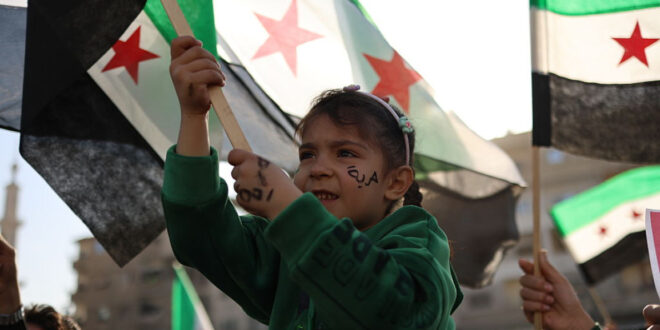
One year on from Assad’s fall, Syria is still grappling with the ruins of dictatorship, sectarian violence, and a fragile economic future, writes Shady Hamadi.
“Assad has fallen.”
It was announced to me over the phone on the morning of 8 December 2024, a date that marked a turning point in Syria’s modern history. After 54 years of rule defined by repression, authoritarianism, and war, the Assad family’s grip on the country collapsed almost overnight—a development few Syrians had ever thought possible.
For millions displaced abroad, the fall of the regime opened the door to return. But sadly huge devastation awaited them: cities reduced to rubble, infrastructure in ruins, and mass graves still being uncovered across the country. The physical scars were visible everywhere; the psychological ones, even more so.
One scene, perhaps more than any other, captured the magnitude of what had been hidden for decades: the prisons. Sednaya—long described by human-rights groups as a place of systematic torture and mass killings—became the symbol of this reckoning.
When rebel forces opened its gates, detainees emerged screaming, raising trembling hands to the sky as if trying to touch the sunlight they had seen only through iron bars. Thousands who had been presumed dead or “disappeared” resurfaced, living testimonies of years spent in darkness.
Nevertheless, even these scenes of ‘freedom’ brought into question the future of the country, and whether this was a bright new dawn for the people.
Sectarian violence
Today, Syria faces a series of political and social challenges. At the centre of them is Ahmed al-Sharaa, whose legitimacy as Syria’s new leader remains contested. Given his past with al-Qaeda, some accuse him of still maintaining links with extremist networks and effectively being a rebranded fundamentalist.
There are expressed fears (something that was inconceivable under the former regime), including amongst sections of the Syrian diaspora, that his vision of society remains conservative.
Yet, unlike the secular opposition groups that lacked real influence on the ground, al-Sharaa had spent years building networks, alliances, and a military force in the country’s North. He spoke the language of rural Syria, of the communities long marginalised by the political elites of Damascus and Aleppo.
Additionally, his inner circle is composed largely of men from the countryside—outsiders to the old political game.
However, he received much more scrutiny, including from international NGOs, following sectarian killings that took place in the coastal region. One brutal attack last March left more than 1,000 civilians dead. Many of the perpetrators were young men from coastal communities who had suffered Assad-era repression and turned their anger towards the Alawite population.
In response, a handful of officers were tried, but the damage was already done: sectarian wounds have reopened.
Similarly, in the South, the Druze-majority region of Sweida has demanded autonomy after months of clashes with Bedouin tribes. This also reflected deep-rooted local grievances.
Israel capitalised on the divisions and violence, and has expanded its control over the region of Quneitra – a demilitarised zone. To add fuel to fire it is also supporting some of the active armed groups in Sweida.
The lack of adequate pushback or protection against Israel from the current government, did not gone unnoticed.
A new chapter?
One of the biggest political shifts (and a key strategy) for the ‘new Syria’ has certainly been al-Sharaa’s relationship to the US. There have been high-level diplomatic overtures, including an official visit to the White House, with Washington making clear: support American objectives in the region, and investment will follow.
Indeed, cooperation between the Syrian army and US Marines in recent operations against ISIS signals a significant geopolitical realignment. Al-Sharaa has also detained many of the foreign fighters who once fought under his leadership in Hay’at Tahrir al-Sham—moves seen as attempts to position himself as a credible and pragmatic partner to the West. In exchange, sanctions on Syria and on members of his inner circle have been eased.
The economic effects are visible. Trade volumes are rising, reconstruction projects are expanding, and foreign investment is cautiously returning.
Nevertheless, inflation has also been surging which is widening inequality in the country and threatens the remnants of Syria’s middle class.
As it stands, Syria is clearly still far from being stable, let alone democratic. But revolutions rarely deliver perfection. They unfold in stages, shaped by compromise and tension. And a year on from Assad’s fall, the country is still shaping its future—but the fact that such a future is even conceivable marks a profound shift.
Samir Kassir, the Lebanese intellectual who was killed by the Syrian regime, wrote: “the Arab people are haunted by a sense of powerlessness”. He explained the ‘Arab malaise’ that has left the Arab world trapped in stagnation—imprisoned by decades of dictatorship and demobilisation, with a sense that nothing could ever change. That Syrians continued to pursue an end to this cycle, reached an unthinkable movement, and can now conceive of a country in which they can thrive, sends a powerful message to the entire region.
Syrians, for the first time, now have a chance of life because the impossible was made possible.