 Eurasia Press & News
A post‑Orbán reset is coming, but Péter Magyar’s nationalism tempers his pro‑EU signals; expect cooperation on Ukraine and security, and resistance on cultural and sovereignty issues.
The Hungarian vote mattered far beyond Budapest: it would reshape EU unity on sanctions, funding, and enlargement; decide whether a NATO member remained a reliably cooperative partner; and influence Kyiv’s lifeline amid war. Washington watched for the future of transatlantic cohesion; Kyiv for the fate of crucial EU aid and diplomatic backing; Brussels for a more aligned, rule‑of‑law‑compliant member; and Moscow for keeping a reliable Western partner. A single ballot thus carried outsized geopolitical weight, testing whether Hungary would stay an unpredictable outlier or return to the European fold.
Who Hungary’s New Prime Minister Is
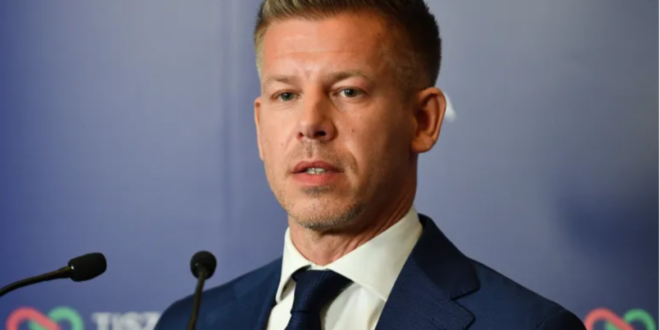
Péter Magyar’s sudden ascent in Hungary has reset expectations in Brussels and Kyiv, but whether Hungary will become a reliable partner again depends on a simple, uncomfortable truth: Magyar is no liberal cosmopolitan — he is a conservative, nationalist politician who packaged pragmatism as a promise to fix corruption and restore competence.
Who he is matters. Magyar is a 45‑year‑old product of Hungary’s conservative establishment: law‑trained, from a highly educated family, and a former Fidesz insider who spent years in Brussels.
Magyar’s victory is a chance to reset relations; it is not a guarantee that all disagreements have disappeared
In 2010, as Fidesz returned to power and Orbán began as prime minister, Magyar joined the Foreign Ministry and, in 2011, moved to Hungary’s permanent representation to the EU in Brussels. His wife, Judit Varga, served as justice minister from 2019 to 2023, the year that they got divorced. Magyar’s break with Orbán in 2024 stemmed from scandal and disillusionment, not a turn to progressive values: the episode, exposed the year before, involved former president Katalin Novák’s pardon of a man tied to the cover‑up of a rape in a children’s home — a pardon that Varga had also signed as justice minister.
He built his Tisza party by fusing a harsh critique of Orbán’s kleptocracy with a muscular cultural conservatism — anti‑migration rhetoric, careful avoidance of flashpoints like the gay Pride parade, and a campaign aimed at winning conservative rural voters as much as urban liberals. Voters rewarded him with a two‑thirds parliamentary majority, not because they wished for a European social democrat, but because they wanted change.
Péter Magyar’s Position in European Politics
That mixed pedigree explains the cautious optimism in EU capitals and in Kyiv. Magyar has signalled readiness to re-engage: he’s promised to lift Hungary’s parliamentary roadblocks — notably the obstruction that stalled a €90 billion EU support package for Ukraine — and he has pledged to make Hungary a “reliable EU partner.” Kyiv’s leadership has already reached out, and Magyar says he would even take a call from Vladimir Putin to ask for an end to the fighting. Those are unmistakable, constructive moves after years of Orbán’s EU obstructionism.
Yet cooperation will not be unconditional or automatic. Magyar’s conservative nationalism will shape his calculus. On issues where Brussels pushes cultural liberalism — LGBT rights, open‑borders rhetoric, and supranational prescriptions for identity politics — Magyar will likely resist, not out of loyalty to Orbán but from a political instinct to preserve national sovereignty and placate the conservative base that brought him to power. On migration and social policy, his positions will often collide with the EU’s liberal majorities.
On Ukraine, however, incentives align more strongly. Hungary borders Ukraine and faces tangible security and economic costs from instability. Lifting vetoes on loans and EU accession mechanics costs Magyar little electorally and yields immediate diplomatic capital. Tackling corruption at home and untying Hungary from the image of an EU outlier will unlock investment and legitimacy. So expect pragmatic cooperation on security, funding, and NATO-EU coordination — conditional, transactional, and framed in national interest terms.
My final takes
Magyar is likely to be cooperative where Hungary’s material and strategic interests converge with EU and Ukrainian priorities — sanctions, loans, defense coordination, and border infrastructure. He’ll push back when Brussels asks for cultural conformity or when he frames it as infringements on Hungarian sovereignty. The tension will be between a European desire for predictable liberal alignment and Magyar’s conservative nationalism that demands respect for domestic political realities.
If Brussels wants steadier Hungarian cooperation, it should treat Magyar not as a liberal convert but as a nationalist realist: reward tangible moves that restore trust, but be prepared for ideological skirmishes. For Kyiv, the door is open — cautiously. Magyar’s victory is a chance to reset relations; it is not a guarantee that all disagreements have disappeared. Magyar has already sent a message: he doesn’t want to “fast-track” Kyiv’s membership.
Magyar’s election has unleashed sky‑high hopes for the EU, but what concerns enlargement may be the danger: rushing enlargement without clear reasons, objectives, leadership, or vision risks undermining the whole EU project.