 Eurasia Press & News
Even if oil and gas production recovers, the supply chain may not
As US President Donald Trump blockades Iran’s ports during what appears to be a protracted and highly unpredictable war, considerations are turning to the long-term implications for transport and logistics in the Gulf.
Unsurprisingly, the oil and gas sector is likely to take the longest to recover. Damage caused by a missile strike in March on the Ras Laffan natural gas facility has eliminated 17 percent of Qatar’s export capacity, a shortfall estimated to persist over the next five years. However, the two-week ceasefire has enabled some work to restart.
In neighbouring Saudi Arabia, attacks on the Khurais and Manifa fields have removed 5 percent of the country’s capacity of 12 million barrels a day, according to officials. Damage to refining facilities in Riyadh, Jubail and Yanbu has further reduced supply stability.
Apart from the disruption from military action, supply-chain constraints resulting from the dislocation of shipping are likely to assert themselves.
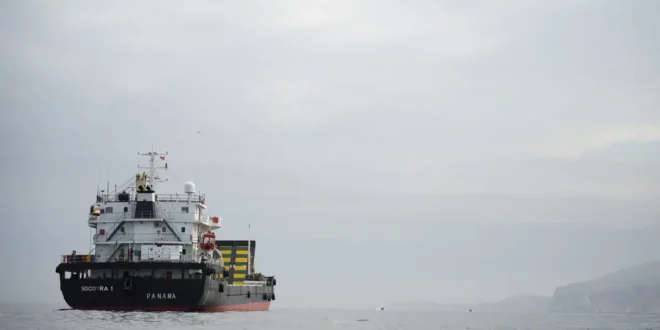
Even if production recovers, logistics may not. Tankers remain stranded or are being rerouted, meaning oil can be pumped but not reliably moved – creating bottlenecks that outlast the conflict itself.
While some initial demand elsewhere in the world will be met by existing “oil on water” (tankers already full in the Gulf), lumpy supply will likely result in a classical supply-chain whiplash.
Downstream chemical production will be particularly affected, especially due to the difficulty of shutting down and turning on industrial facilities in response to supply-and-demand imbalances.
While the tourism and leisure sector is expected to bounce back, there may be longer-term issues for the expatriate communityThe market dysfunction could also have long-term impacts on investment.
If the supply of hydrocarbons to chemical manufacturing facilities such as fertiliser plants is constrained, or the conflict irreparably damages the market, new projects are likely to be delayed or postponed.
This will have significant negative implications for construction logistics and for companies which maintain equipment and supply on-site workers.
Another mainstay of the Gulf economy is tourism. Hotel occupancy in Dubai is as low as 20 percent, according to consultants speaking to AGBI last month, with some hotels shutting completely or using the period for renovations.
Events such as conferences have been cancelled many months in advance, suggesting that the meetings, incentives, conferences and exhibitions (Mice) industry will feel the effects of the conflict for the rest of the year.
Specialist logistics are also likely to be hard hit. When DP World signed an agreement in September last year with Atlantis Dubai Resorts to manage logistics at its Atlantis, The Palm and Atlantis The Royal, it said it would be managing 7,000 pallets a day, covering 60,000 products sourced from nearly 70 countries, including temperature-controlled logistics.
Consultancy Oxford Economics estimates that 23 to 38 million fewer people will travel to the Gulf region this year, depending on the length of the conflict, impacting the associated parcels, logistics and warehousing market.
While the tourism and leisure sector is expected to bounce back, there may be longer-term issues for the expatriate community. Around one in eight residents from the UK has left the UAE, according to official estimates obtained by the Financial Times, a level likely to be mirrored among other nationalities.
Typically, with their higher spending power, such a migration of expatriates will have a major impact on real estate and demand for high-end consumer goods if a de-escalation does not quickly reverse the outflow.
Workers from countries such as India, Bangladesh and Pakistan are also being affected by the conflict, implying a downturn in construction and investment.
The impact on the oil, gas and shipping industries, as well as the collapse of tourism, will lead many to be laid off, reducing spending on food and consumer goods.
If these workers, too, leave the region due to a protracted conflict, this will significantly impact the growth of the many sectors that serve them, not least transport and warehousing.