 Eurasia Press & News
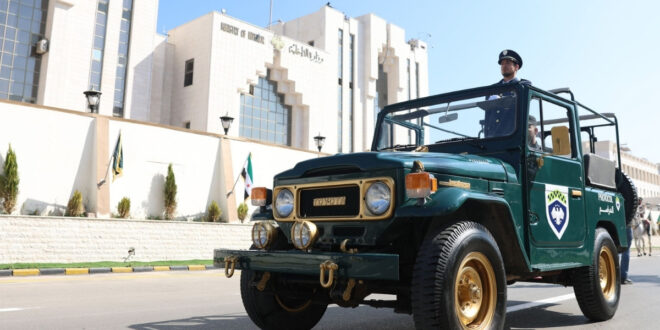
The Syrian Interior Ministry is reorganizing its internal security apparatus through a new visual identity and administrative restructuring, after the dissolution of the former regime’s security institutions.
During this process, Enab Baladi monitored disparities in security performance, with cities stabilizing after most of them witnessed a wave of chaos following the regime’s sudden fall, while Syrian rural areas still experience dysfunction amid incomplete administrative measures, especially in areas that are still in the process of integration.
On another level, the ministry still suffers from weak legal and judicial procedures, raising fears of the return of “arbitrary” measures used under the former regime and its security-state practices.
In this file, Enab Baladi discusses the security reality in Syria, especially in recent months, following the Interior Ministry’s announcements on restructuring and the visual identity it unveiled in repeated displays. It also monitors the ministry’s legal procedures with experts, researchers, and specialists.
Security Reality in Syria, Stability in Cities and Dysfunction in Rural Areas
Security conditions vary across Syrian governorates from one area to another. Some areas are seeing a noticeable improvement in stability, while others still face scattered security challenges that affect residents’ daily lives and movement.
In Quneitra (southwestern Syria), Enab Baladi’s correspondent reported that the Israeli presence in most of the western countryside imposes major restrictions on residents’ movement and creates fear and hesitation about travel because of the risk of arrest.
Other areas suffer from security problems, most notably thefts, especially the theft of water pump cables and telephone networks.
In Raqqa (northeastern Syria), the correspondent noted a clear improvement in the security situation compared with nearly two months ago, pointing out that the Internal Security Forces recently carried out operations targeting theft gangs.
However, the area still faces challenges related to a shortage of security personnel and weak deployment in some rural areas.
In Daraa (southern Syria), Enab Baladi’s correspondent confirmed that the security situation saw a major positive shift after the “liberation” phase, as assassinations declined noticeably and became almost nonexistent.
Most security incidents have become limited to personal disputes, while residents increasingly feel safe and able to move at night in many areas.
Through field monitoring conducted by Enab Baladi, residents in Damascus and its countryside spoke of a general state of security stability and a clear improvement compared with previous years, both inside the capital and in surrounding rural areas.
They confirmed that movement between the city and countryside has become easier and safer, and that interaction at security checkpoints has become normal and is not accompanied by restrictions or obstacles, helping strengthen a sense of daily stability.
Residents said security incidents, including some that circulate on social media, are often individual and limited in scope and do not reflect the general reality on the ground. They confirmed that the situation in most neighborhoods is proceeding normally without notable tension.
They also noted that waves of theft that appeared in earlier periods, especially at the beginning of the post-liberation phase, have declined noticeably after local measures and coordination between relevant authorities to control markets and enhance stability. They said security responses to reports or violations have become faster and more effective, strengthening residents’ sense of safety and the overall stability of daily life.
In Aleppo (northern Syria), Enab Baladi’s correspondents observed a noticeable improvement in the security reality over the past months, especially with the intensified presence of security personnel and the creation of new security units, such as city monitoring and the “A1 Unit.”
By contrast, the security reality in rural areas, especially the northern countryside, still sees theft and robbery incidents, particularly on secondary rural roads, amid a notable absence of security personnel.
Different Threats Create Different Security Realities
According to what Enab Baladi observed from residents’ and correspondents’ accounts, the security scene differs between cities and rural areas based on multiple factors, including the nature of threats, infrastructure, and the social and geographical factors affecting each area.
Security and military expert Nawar Shaaban told Enab Baladi that the security reality in cities differs from that in rural areas in terms of the nature of threats and the level of security institutions’ deployment. He explained that cities usually have a larger presence of state institutions and security agencies, giving them faster capacity to respond to security incidents.
He added that cities, despite this, remain exposed to a range of risks, including organized crime, assassinations, “terrorist” attacks, and local unrest.
By contrast, Shaaban noted that rural areas face greater security challenges because of their large geographical size, the distance between population centers and security centers, weak road and communications infrastructure, the spread of weapons, smuggling routes, armed cells, landmines, and remnants of war.
The military expert noted that this rule is not absolute, pointing out that the security situation in some governorates makes the difference between city and countryside limited.
He cited Deir Ezzor (eastern Syria), where both the city and countryside suffer from weak security systems, stressing that each geographical area has its own characteristics and different circumstances.
Shaaban explained that the difference between security realities in cities and rural areas is not linked only to security administration, but also to the nature of the threats.
Security challenges in cities usually involve criminal offenses, assassinations, or potential bombings, requiring a focus on protecting markets, government facilities, and public gatherings, as well as managing population density, traffic, protests, and different disputes.
The challenges in rural areas are relatively different, according to the expert, and include monitoring wide geographical areas and long roads, combating smuggling, pursuing armed cells that benefit from the terrain and open spaces, dealing with tribal and local disputes, and protecting remote villages and agricultural land.
Shaaban said disparity in the security reality is linked largely to logistical factors, including the number of security personnel, vehicle availability, the spread of security centers, the strength of communications networks, and infrastructure supporting security work.
He said one of the most prominent factors affecting the security situation is the history of control over the area and the actors that were previously active there. Other factors also play important roles, including the area’s proximity to borders, its social composition, and the extent to which residents accept the security forces and entities deployed there.
Steps to Strengthen Security
Regarding the steps required to strengthen the security reality, Shaaban explained that the starting point should be preparing detailed security maps at the level of districts and municipalities, not only governorates, allowing the nature of threats and risks in each area to be identified and security resources and forces to be distributed accordingly.
The security and military expert pointed to the importance of creating fast and mobile patrol units capable of serving several villages and rural areas at the same time, as well as connecting rural security centers to unified operations and communications rooms that help accelerate response, while providing vehicles and equipment suited to the nature of roads and distances.
He noted the possibility of benefiting from modern technologies, including drones used by some countries to monitor remote areas and wide geographical spaces because they support surveillance operations and improve response speed.
Shaaban stressed that building an effective security apparatus depends mainly on the continuous training of personnel, pointing out that having combat experience does not necessarily mean having the skills required for security work.
He explained that personnel working in cities need specialized training, including crowd management, protection of facilities and public places, criminal investigation methods, dealing with modern technologies such as monitoring systems and cameras, and skills for organizing and controlling traffic.
The nature of security work in rural areas requires different skills, according to Shaaban, including training in long-range patrols, road security, combating smuggling, dealing with landmines and remnants of war, understanding social structures and tribal and local relations, and mechanisms for managing disputes within rural communities.
Security professionalism is not measured only by a member’s ability to use weapons, but by their ability to prevent incidents, gather information within legal frameworks, protect evidence, communicate effectively with residents, and be subject to accountability when any violations occur.
These requirements gain added importance amid the continuing security fragility the country is witnessing as a result of complex challenges, both internal and external.
New Restructuring and Visual Identity
Improved Performance Met by Fears of Overlapping Powers
The Interior Ministry worked on developing a new structure, supported by a visual identity, starting with vehicles and official uniforms, which appeared more clearly in an official display on 17 March for most of its affiliated units.
In late November 2025, the ministry announced the design of its vehicles and machinery in a step aimed at introducing its affiliated units and distinguishing between them, after most had been affiliated with General Security, which later developed into Internal Security.
Here, questions emerge about the impact of the visual identity and new structure on security performance during the past period.
Lorans al-Shamali, a researcher at the Syrian Center for Security and Defense Studies, known as MISDAD, said the visual identity strengthens two main dimensions in security or military work.
The first dimension is organizational, as the visual identity strengthens administrative discipline and reflects the new values of the security institution in Syria.
The second dimension relates to the psychology of belonging, as the visual identity strengthens an individual’s link to the institution and their feeling of being part of an integrated whole. All of this ultimately reflects on the quality of security performance.
After the Visual Identity, Focus on “Remnants” and Criminal Security
Lorans al-Shamali, a security affairs researcher at MISDAD, believes the past months saw noticeable progress by Interior Ministry formations in two important files after the launch of the visual identity and the new restructuring track.
The first file relates to the Counterterrorism Forces’ focus on those the Syrian government calls “remnants,” and on those involved in war crimes from the former regime.
The Interior Ministry had intensified its efforts to arrest people linked to the former regime. Its official spokesperson, Nour al-Din al-Baba, announced during a press conference attended by Enab Baladi on 15 June that the Counterterrorism Directorate currently has 5,989 detainees distributed across various military ranks, including one general, 42 major generals, 172 brigadier generals, 218 colonels, 112 lieutenant colonels, 73 majors, 160 captains, 126 first lieutenants, 32 lieutenants, 435 first warrant officers, 268 warrant officers, 174 sergeants first class, 285 sergeants, 160 corporals, in addition to 1,483 members.
Al-Baba also reviewed the Counterterrorism Department’s work mechanism, explaining that it is based on three main stages:
Intelligence assessment and information analysis.
Coordination and field implementation.
Criminal investigation and judicial support before detainees are referred to the competent judiciary.
On another level, the Interior Ministry announced the arrest of 235 members of the Islamic State organization during March, April, and May, including 198 Syrians and 37 foreigners.
Drugs and “Criminal” Networks
The second file, according to al-Shamali, applies to criminal security, where the Interior Ministry has been observed handling many criminal cases, although arrests are not enough compared with preemptive deterrence operations, which he considers the most important indicator in measuring security quality.
According to Enab Baladi’s monitoring, the Interior Ministry continuously announces the arrest of cells it describes as “criminal,” some specialized in kidnapping and extortion, in addition to theft and looting networks.
The ministry’s operations also focus on dismantling drug manufacturing and smuggling networks. In May alone, it announced the seizure of nearly 28 million Captagon pills, in addition to 40,000 assorted narcotic pills, 658 kilograms of raw materials, and field follow-up on 175 users and promoters.
Restructuring … Do Tasks Overlap?
The launch of the visual identity was preceded by a restructuring of Syria’s internal security apparatus, with some departments reshaped and others created.
Interior Minister Anas Khattab revealed in an interview with the official al-Ikhbariya channel on 4 June 2025 that he had submitted a proposal to the presidency to unify security and police under one ministry without separating them, in order to strengthen specializations and organize tasks precisely.
However, he denied any merger between police work and security work, considering it a step to strengthen security functions within the ministry to face renewed challenges with “higher efficiency.”
The ministry created new directorates, such as Border Guards, whose tasks had been handled by the Ministry of Defense, along with the Counterterrorism Directorate and Road Security.
The Interior Ministry formed the Tourist Police, whose first class graduated from the Police College on 2 June 2025.
It also updated the tasks of the Traffic, Criminal Investigation, and Anti-Narcotics directorates, which had previously existed, according to Minister Khattab.
The Interior Ministry had previously announced, through its official spokesperson during a press conference attended by Enab Baladi on 25 May 2025, the appointment of six assistants in different specializations:
Security affairs.
Police affairs.
Civil affairs.
Administrative and legal affairs.
Technical affairs.
Human resources affairs.
For his part, MISDAD researcher Lorans al-Shamali told Enab Baladi that the administrative divisions have not been reflected in the required clarity over the nature of each directorate’s work.
He said there is some overlap in the powers and concepts of certain directorates, including Counterterrorism, which should address everything that threatens Syria’s national security at the intelligence or security level, yet is focused on the “remnants” file.
Although the roles of security institutions are integrative by nature, clear boundaries must exist between them to prevent conflict in coordination and implementation.

Lorans al-Shamali
Researcher at the Syrian Center for Security and Defense Studies, MISDAD
Challenges Facing the Interior Ministry
Developments in the first quarter of the current year show that Syria’s security scene is still taking shape within a complex transitional phase, where efforts to rebuild state institutions overlap with the heavy legacy left by years of conflict, according to an assessment published by security and military researcher Nawar Shaaban at the Arab Center for Contemporary Syrian Studies.
According to Shaaban, those years left armed networks and illicit economies entrenched in several areas, making the process of reorganizing the security space a gradual path rather than a rapid transformation.
Nevertheless, indicators emerged during this period of improved handling of some hard challenges, as security operations moved toward more direct targeting of Captagon production and smuggling networks, focusing on the organizational structures that managed this activity in past years.
The eastern borders saw efforts to contain tensions linked to some regional armed groups, in parallel with greater reliance on intelligence work in pursuing cells of the Islamic State organization.
By contrast, some local events showed that community security remains one of the most sensitive challenges.
Shaaban pointed to incidents such as those in al-Suqaylabiyah (Hama, central Syria), which occurred on 27 March after a fight between several young men from the city and others from the town of Qalaat al-Madiq (Hama, central Syria). The incident developed into limited gatherings before Internal Security Forces intervened to break up the clash, but it was followed by broad protests with sectarian and demand-based characteristics.
According to Shaaban, these events revealed that the speed of the security response, the way incidents are described in official discourse, and legal handling mechanisms remain factors affecting the level of trust between society and state institutions.
He said repeated reliance on social settlements in some cases opens a wider discussion about how to balance containing local tensions with consolidating the rule of law.
He added that any sustainable security progress will also remain tied to the economic and social path, as the Syrian experience over past years has shown that fragile economic and social environments remain more vulnerable to the activity of organized crime networks or extremist organizations.
Therefore, long-term stability requires combining security institution reform with improved living conditions in areas most affected by the conflict.
On another level, researcher al-Shamali believes a new challenge is emerging, namely, controlling revolutionary emotions among a wide segment harmed by the former regime.
He noted that the country witnessed in recent days forms of protest accompanied by signs of violence, demanding transitional justice.
Here lies the most important challenge in this phase, as it could lead to civil war if the circle of violence expands and is not addressed by accelerating transitional justice and controlling the movement.
The demonstrations that researcher al-Shamali referred to took place in several Syrian cities, including Aleppo, Idlib (northwestern Syria), Deir Ezzor, and Damascus, where protesters demanded accountability for “shabiha” and people affiliated with the former regime.
Legally, Security Requirements and Legal Guarantees in the Transitional Phase
The performance of Syria’s Interior Ministry during the transitional phase, from a legal standpoint, is one of the most sensitive and debated files because security considerations overlap with the state’s legal and human rights obligations.
Between the need to control public security and the need to respect national laws and international human rights standards, questions are rising about the nature of the practices used in the ministry’s work mechanisms, including arrests, detention mechanisms, and the extent of coordination with the judiciary.
Between Maintaining Security and Complying With the Law
Legal experts believe that the commitment of security institutions affiliated with the Interior Ministry to the law and internal regulations is one of the most important indicators of a transition from the logic of force to the logic of the state.
They justify this by saying that security in any modern state is not measured only by the ability of agencies to control and impose order, but also by the extent to which they are subject to law and respect constitutional guarantees.
Several questions arise about the evaluation of the Syrian Interior Ministry in the past period in terms of compliance with laws and internal regulations.
Almoutassim Al-Kilani, a specialist in international criminal law and human rights, believes that evaluating the Interior Ministry’s performance in the transitional phase must start from two basic standards: maintaining security on one hand, and respecting the law on the other.
Al-Kilani stressed that the success of the security institution is not measured only by its ability to control security, but also by the extent to which it respects legal procedures and internal regulations governing its work. He noted that building trust between citizens and the state is directly linked to the ministry’s commitment to the principles of legality, transparency, and accountability.
He told Enab Baladi that the security stability achieved by the ministry, despite its importance, is not enough to build a state of law unless it is paired with respect for rights and public freedoms.
Arrests Without Judicial Warrants … A Violation of Liberty and Personal Security
Judicial arrest warrants and the right to seek the assistance of a lawyer are among the most important legal guarantees protecting individuals from arbitrariness, and are basic pillars in modern criminal justice systems.
But in the Syrian scene, arrests without judicial warrants are widespread, and many families of detainees complain that the Interior Ministry prevents them from appointing lawyers for their relatives.
Here, legal expert Almoutassim al-Kilani explained that an arrest warrant issued by a competent judicial authority is a basic guarantee of personal liberty, and that any detention outside these legal frameworks raises serious questions about the extent of compliance with due process.
He stressed that a detainee’s right to appoint a lawyer is not a privilege but an inherent right of defense, and that any delay or prevention in this context requires reviewing procedures and correcting shortcomings to ensure that all detentions are subject to judicial oversight and to strengthen public trust in state institutions.
A detainee’s right to appoint a lawyer is not a privilege but an inherent right of defense, and any delay or prevention in this context requires reviewing procedures and correcting shortcomings.

Almoutassim al-Kilani
Specialist in international criminal law and human rights
Bassam al-Ahmad, executive director of Syrians for Truth and Justice, explained that cases were documented in which a lawyer was prevented from attending or the accused was prevented from appointing a lawyer. He noted that the Interior Ministry issued Circular No. 10 of 2025, which allowed a lawyer to attend only as a “listener” without intervening in the investigation, while investigations continue in the lawyer’s absence.
Al-Ahmad told Enab Baladi that this circular, despite being presented as an organizational measure, “gave an administrative character to the restriction of the right of defense and granted formal legitimacy to practices that had already existed.”
He added that these practices conflict with the International Covenant on Civil and Political Rights and with the principles of the constitutional declaration, which affirm the protection of rights and freedoms.
He also noted that arrest without a judicial warrant constitutes a violation of the right to liberty and personal security, and in some cases, especially when the person’s fate is not disclosed or contact with family and a lawyer is prevented, may reach the level of “enforced disappearance.”
He concluded that these practices reflect the absence of judicial oversight and the retreat of the principle of separation of powers, weakening the rule of law.
Arrest Cases Documented by Enab Baladi
“Maram A.,” the wife of a man detained for four months in Interior Ministry prisons, said her husband quarreled with another person, and they exchanged blows, leading the other person to file a complaint against him. When he was arrested at a police station in Damascus without a judicial warrant, he was prevented from appointing a lawyer, and he has not yet been referred to the judiciary.
“Zubaida H.” complained that her son has been detained for one year and two months in al-Nabk Central Prison (Rif Dimashq, southern Syria) without knowing the charge, under the name “File 202.” This wing prevents the appointment of lawyers or knowledge of charges or the reason for arrest. According to her account, her son has not yet been brought before the judiciary, under the pretext of waiting for Al-Nabk prison’s turn to refer its prisoners to the judicial committee in Damascus.
“Our neighbor claimed that we stole her cooking pot, so my father was arrested for two and a half months, under the pretext of waiting for his turn to be transferred to the Rif Dimashq Court. He was beaten, abused, subjected to shabeh suspension, and beaten with electric shocks after cold water was sprayed on him, under the pretext of ‘confession.’ When his turn came before the sheikh at the Rif Dimashq Court, he issued an acquittal because there was no evidence or proof,” “Naeem A.” told Enab Baladi.
Detention Conditions Are Subject to Human Rights
The place and conditions of detention are a basic part of justice standards, as the legal right is not limited only to protection from arbitrary arrest, but also includes ensuring humane and healthy detention conditions that preserve human dignity.
Enab Baladi monitored numerous cases of arrests carried out in places not designated for detention, such as courthouse holding cells in some governorates, with the absence of sanitary, accommodation, and housing conditions.
Here, legal expert Almoutassim al-Kilani said detention must take place exclusively in legally designated places that meet sanitary and humanitarian conditions.
He stressed that using unqualified places, such as some holding cells in courthouses, “raises serious human rights problems,” even if linked to exceptional circumstances or a lack of capacity.
He stressed the need to address these gaps urgently to ensure a legal and humane detention environment that respects human dignity.
Bassam al-Ahmad believes that placing detainees in places not designated for detention is a clear indicator of an intention to keep them out of sight, deprive them of the right to appear before the judiciary and the right to a fair trial, and of an intention toward enforced disappearance.
He called for detention centers to be subject to judicial authority and oversight, and for appropriate sanitary conditions to be available. Failure to comply with these standards confirms an intention to return to the approach that was followed during the era of the former regime.
Placing detainees in places not designated for detention is a clear indicator of an intention to keep them out of sight, deprive them of the right to appear before the judiciary and the right to a fair trial, and of an intention toward enforced disappearance.

Bassam al-Ahmad
Executive director of Syrians for Truth and Justice
Indications of Arbitrary Arrest
The impact of arbitrary arrest is not limited to detained individuals but extends to affect the structure of society and its trust in the state, reflecting the level of commitment to the rule of law.
Legal expert Bassam al-Ahmad said arbitrary arrest indicates the absence of the rule of law and the continuation of a security mentality that considers itself above accountability, in addition to weak judicial independence and the dominance of the executive authority.
He stressed that these practices lead to:
Entrenching a culture of impunity.
The possibility of torture or enforced disappearance.
Creating a state of legal anxiety among families.
Opening the door to financial extortion through intermediaries.
Deepening social division and popular resentment.
He noted that the absence of legal safeguards may create a social environment prone to tension and revenge instead of civil peace.
Coordination Between Interior and Justice
Coordination between the executive authority and the judiciary is one of the pillars of the legal system, as it ensures that detention and arrest procedures fall within a clear judicial framework and are subject to oversight. But in the Syrian scene, an image emerges that reflects a flaw in coordination between the two ministries, despite the statements and promises resulting from their meetings.
Legal expert Almoutassim al-Kilani stressed that the relationship between the two ministries must be based on integration and respect for jurisdictions, so that detention and arrest decisions remain subject to effective judicial oversight.
He pointed to the importance of:
Accelerating the presentation of detainees before the judiciary.
Documenting all detention procedures.
Exchanging information within legal frameworks.
Training security agencies to comply with judicial orders.
He added that strengthening this coordination contributes to raising public trust and consolidates the legitimacy of security procedures.
Legal expert Bassam al-Ahmad, however, believes there is no coordination between the two ministries, explaining: “The mere fact that personnel affiliated with the Interior Ministry carry out arrests without a judicial warrant or a home entry permit from the judiciary, the Public Prosecution, confirms the absence of this coordination, and this may lead people to lose trust in the judicial apparatus as was previously the case.”
Legal Recommendations
The two legal experts concluded their interventions by presenting the main recommendations to develop and improve the work mechanism of the Syrian Interior Ministry, as follows:
Activate full judicial oversight over all arrest and detention operations.
Guarantee the right of defense from the first moment of detention without formal restrictions.
Cancel or review any administrative instructions that limit the lawyer’s role in investigations.
Restrict detention to legally designated and equipped places that observe humanitarian standards.
Develop internal accountability mechanisms within the Interior Ministry.
Train security and police personnel on the need to comply with judicial orders.
Strengthen institutional coordination between the Interior and Justice ministries on a clear and binding basis.
Commit to international human rights standards as part of the national legal system.