 Eurasia Press & News
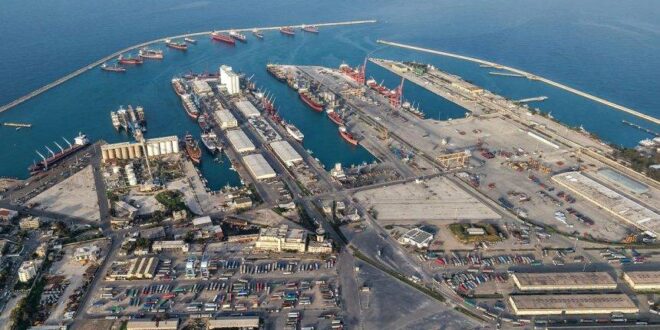
Russia is accelerating efforts to entrench its economic presence in Syria through a new logistics project at the Port of Tartous, signalling a strategic shift from military dominance to commercial leverage. The move comes as Moscow and Damascus engage in sensitive negotiations over the future of Russia’s military installations in Tartous and Hmeimim, at a time when American, Western, and Gulf companies are vying for access to Syria’s reconstruction and investment landscape.
The initiative reflects Moscow’s attempt to secure long-term influence through economic channels following the political changes that reshaped Syria after the fall of the Bashar al-Assad regime.
Tartous: Russia’s Emerging Trade Gateway
Syrian officials told Reuters that Moscow plans to activate a commercial logistics centre on one of the piers inside the Russian naval base at Tartous by mid-July. Russia will retain its military presence on an adjacent pier, creating a dual-use arrangement that blends commercial operations with ongoing military activity.
In its first phase, the hub is expected to handle wheat, grain, fodder, vegetable oils, timber, steel, coal, sugar, and mineral oils, with a targeted monthly capacity of around 250,000 tonnes. Operations will begin with an incoming 30,000-tonne grain shipment.
The project is widely viewed as a key instrument for Moscow to preserve its influence in Syria amid a noticeable decline in its geopolitical and military leverage compared with previous years. Russia is seeking to compensate for these losses by expanding its trade and investment footprint.
The timing is significant. In 2025, Damascus cancelled a 49-year contract with the Russian firm Stroytransgaz to develop commercial facilities at Tartous, awarding instead a 30-year, $800 million concession to Dubai Ports World (DP World). The shift forced Moscow to pursue alternative mechanisms to maintain an economic presence inside the harbour.
A Supply Network Extending to the Gulf
The Russian-Syrian Business Council, operating under Russia’s Ministry of Industry and Trade, announced last June a plan to establish an assembly and distribution hub for Russian goods in Tartous. The project is being developed by the Syrian company Rus Line in partnership with Russian enterprises.
Osama Ajaj, Rus Line’s General Manager, said the hub will be located at Pier 4 within a restricted zone of the naval base, while the neighbouring pier will remain dedicated to Russian military operations.
Ajaj explained that the project aims to establish a regular shipping line between Novorossiysk on the Black Sea and Tartous. Goods will be distributed inside Syria and re-exported to Iraq and Jordan, with plans to expand later into Saudi Arabia, Kuwait, Qatar, and Bahrain — effectively transforming Tartous into a regional re-export centre. He added that the project will be managed jointly with the Syrian Sovereign Wealth Fund, elevating it beyond a conventional logistics venture into a broader investment partnership.
New Agreements Between Moscow and Damascus
According to Syrian officials, the logistics project was proposed during a meeting in Moscow between Syrian President Ahmad al-Sharaa and Russian President Vladimir Putin, described at the time as a turning point in bilateral economic cooperation.
Russian Foreign Ministry spokesperson Maria Zakharova confirmed that Moscow and Damascus are discussing a “re-formulation” of Russia’s military presence in Syria alongside expanded economic cooperation — a reflection of Moscow’s efforts to recalibrate its role in line with Syria’s new political realities.
Beyond logistics, Russia has become Syria’s primary supplier of wheat and essential food commodities over the past two years, while also strengthening its position as a key crude oil provider. Data cited by Reuters indicates that roughly 85 percent of Syria’s wheat imports for the 2025–2026 season came from Russia and the Crimean Peninsula. Russian oil shipments reached nearly 16.8 million barrels in 2025, rising to about 60,000 barrels per day in early 2026 — underscoring Syria’s growing dependence on Russian food and energy supplies.
Tartous as a Theatre of International Competition
The new logistics hub offers Moscow a means of sustaining economic influence even if its military footprint is eventually reduced. It ensures continued control over part of the trade flow through Tartous and positions Russia as a central player in supply chains linking the Black Sea, the Levant, and the Arabian Gulf — making it an indispensable economic actor in Syria’s reconstruction phase.
The United States, meanwhile, is monitoring the project closely amid intensifying competition for economic influence in Syria. A U.S. State Department official told Reuters that Washington is tracking Russian-backed commercial and logistical initiatives, expressing concern that they may serve to entrench Russian influence rather than promote genuine economic stability.
The official said the United States encourages Damascus to prioritise partnerships with American companies and other “reliable” partners during the recovery and reconstruction period. With sanctions on Russia still in place, the Port of Tartous is emerging as a new arena of geopolitical rivalry — one centred not only on military positioning, but on trade routes, investment, and the future direction of the Syrian economy.