 Eurasia Press & News
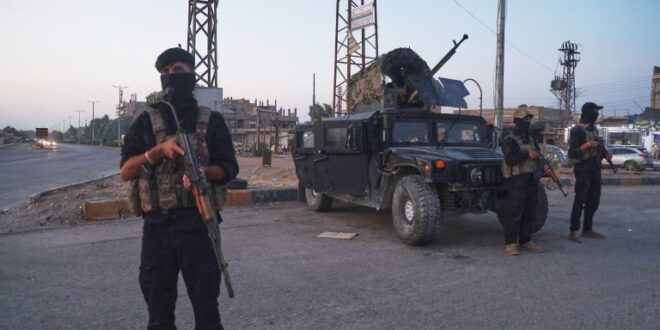
In recognition of the crucial role Syria’s new government will play in containing Iran over the long term, the U.S. ended Syria’s designation as a State Sponsor of Terrorism on Monday.
The “delisting” will further the country’s reintegration into the global economy and lower the hurdles to developing trans-Syria oil export routes that avoid the Strait of Hormuz.
U.S. diplomacy will likely be required to prevent outside actors like Türkiye, Israel, and Russia from encroaching on Syria’s sovereignty.
In the interest of maintaining its close ties to Damascus, U.S. officials will likely downplay human rights abuses against Syria’s minorities, including the Kurdish community whose fighters this week completed their integration into the Syrian armed forces.
On Monday, the U.S. gave the post-Assad government of Ahmed al-Sharaa another significant vote of confidence by rescinding its designation as a State Sponsor of Terrorism (SST: the so-called “terrorism list”). The label had plagued Syria since the terrorism designation was first established by the Export Administration Act of 1979 — its initial designation resulting from the Assad regime’s support for militant Palestinian factions such as the Popular Front for the Liberation of Palestine (PFLP) and its radical offshoot, the Popular Front for the Liberation of Palestine – General Command (PFLP). These secular, left-wing groups were eventually displaced by Islamist movements such as Hamas, but Syria remained on the terrorism list primarily for Assad’s active membership in the Iran-led “Axis of Resistance.” The delisting leaves only Iran, Cuba, and North Korea on the terrorism list.
Washington is rewarding Sharaa because Syria’s exit from Iran’s orbit has diminished Tehran’s regional reach. Iran no longer has a secure overland route through which to resupply Lebanese Hezbollah, Iran’s main regional ally, which is beleaguered by an Israeli military offensive as well as pressure from the Beirut government to disarm. U.S. officials judged that Sharaa’s centrality to U.S. strategy in the war against Iran merited overlooking the Damascus government’s domination by Hayat Tahrir al-Sham (HTS), at one time an ally of al-Qaeda. Concurrently with the delisting of Syria, the U.S. removed HTS from a separate list of “Specially Designated Global Terrorist” organizations (SDGT). HTS had earlier been removed from a separate list of Foreign Terrorist Organizations (FTOs).
Damascus remains in Washington’s favor despite failing to fulfill pledges to expel at least 5,000 Islamist foreign fighters who helped HTS topple the Assad regime in December 2024. The foreign fighters, as well as HTS members incorporated into Syria’s security forces, have committed significant human rights abuses, including extrajudicial killings of members of minority groups perceived as opposing the new regime, including the Alawites who formed the backbone of the Assad regime. Sharaa’s January offensive that captured territory held by the Kurd-dominated Syrian Democratic Forces (SDF) — a key U.S. partner against Islamic State (IS) — raised questions about Damascus’ commitment to minority rights. On Tuesday, speaking at the presidential palace in Damascus, SDF commander Mazloum Abdi announced the force’s formal dissolution, stating: “We announce today the end of the mission of the Syrian Democratic Forces and declare, with full responsibility, their dissolution as an independent military force.” U.S. Ambassador to Türkiye and Special Envoy for Syria and Iraq Tom Barrack downplayed the potential for the integration to harm Kurdish rights, instead praising the Sharaa government for “[r]ecognizing the Kurdish language in education” and other minor concessions to Syria’s Kurds.
The lifting of U.S. sanctions on Syria carries concrete economic benefits that will help the country recover from a decade of civil conflict, as well as geostrategic benefits for Washington. U.S. Secretary of State Marco Rubio referred to the paramount U.S. interest in a strong, economically robust Syria in statements on Monday announcing the SST delisting. He stated: “[This delisting] action unlocks new potential for Syria’s economic revitalization and progress. The Trump Administration continues to advance U.S. national security to achieve peace, prosperity, and security in the Middle East … Rescinding Syria’s designation as an SST and HTS’ designation as an SDGT eliminates the final major barriers for private sector investment in Syria and promotes Syria’s economic recovery and reintegration into the global economy.”
When combined with the sanctions relief already provided by Washington, the removal from the SST list likely mitigates remaining concerns foreign investors have about working with the Sharaa government. The delisting opens Syria to direct U.S. foreign aid, sales of civilian items to Syria that might have military applications (“dual-use items”), and (although unlikely to materialize) U.S. arms sales. Under a variety of laws, foreign banks that handle financial transactions for terrorism-listed states are barred from the U.S. financial system. A statement issued by U.S. Embassy Damascus also noted the removal from the SST will help the Syrian people recover from the decade-long civil war, saying: “This designation has long stood as a wall separating the Syrian people from the investments, projects, and opportunities necessary to rebuild their homeland.”
U.S. officials intend the SST delisting to add momentum to Syria’s restoration of its dilapidated oil sector and to discussions between Baghdad and Damascus to repair pipelines carrying Iraqi oil to the Syrian port of Baniyas. If successful, the repair of the Iraq-Syria line would not only reduce Iranian leverage over the Strait of Hormuz but also strengthen Iraq’s economic resilience and generate revenue for the government in Damascus. Syrian state news agency SANA said the pipeline, vital for Iraqi oil exports via the Mediterranean, dates to 1952 but went out of service in 2003 after being damaged during the U.S. invasion of Iraq. It was also shut down by the regime of Hafez al-Assad during the 1980-88 Iran-Iraq war in an effort to weaken Baghdad’s war effort against Assad’s ally, Tehran. Security hurdles, including threats posed by IS cells in western Iraq and eastern Syria, precluded earlier consideration of restoring the line.
U.S. officials and energy executives are investing resources in the restoration project. The feasibility of the reconstruction is currently under study by U.S. major, Chevron. For now, Iraq is employing a variety of stopgap measures, including trucking fuel oil to Baniyas, but these steps cannot replace pipeline-scale oil export volumes. Earlier this month, Syrian Petroleum Company CEO Youssef Qablawi hailed restoring the line as “a vital project” for Syria, putting the pipeline’s capacity at “between 1.5 million and 2 million barrels a day.” Qablawi notes that Syria currently produces only about 100,000 barrels a day, but production is projected to reach 250,000 by the end of next year, with a target of 1,000,000 barrels a day by 2030. However, restoring the line will not provide immediate leverage for the U.S. in the war against Iran because the rebuild is estimated to require four years of construction and cost at least $15 billion, sources with knowledge of the project told Reuters.
The revocation of Syria’s SST label is also intended to empower Sharaa’s government to resist encroachment on its sovereignty by external actors. During the civil war, several major powers, including Iran, Türkiye, and the U.S., backed local proteges and established competing spheres of influence. The number of outside intervenors has shrunk as a consequence of Iran’s expulsion from Syria and the withdrawal of U.S. troops from the eastern desert, but the departures merely reshuffled rather than ended competition for influence in Syria. Russia, which was the Assad regime’s main supporter, is no longer influential, but a recent agreement between Moscow and Damascus shrunk, rather than ended, the Russian military presence in bases on the Mediterranean coast. Under an accord announced on August 9, Syria will take control of civilian facilities at the Hmeimim airbase and the commercial section of the port of Tartus, and the facilities will be transformed into joint Russian-Syrian training centers.
Perhaps the most pressing threat to Syria’s sovereignty is posed by strategic competition between Sharaa’s main ally, Türkiye, and Israel. Both are allies of the U.S., but they are at odds with each other on a wide range of issues including the war in Gaza and the role of Islamist movements in regional politics. As Sharaa’s main backer against Assad, Ankara is using its influence to expand its military presence inside Syria and enhance Türkiye’s regional position. Since the October 7, 2023 Hamas attack, Israel has adopted a new posture based on control over buffer zones in neighboring countries and territories, including inside Syria, to prevent any potentially hostile force from approaching its borders. Even though Türkiye’s military in Syria is positioned far from Israeli forces, last week Israeli aircraft struck the Abu al-Duhur military air base in northwestern Syria to message Türkiye not to expand its reach in Syria.
The Israeli raid raised concerns in Washington about the potential for conflict between the two major regional powers. After the strike, Israeli Prime Minister Benjamin Netanyahu said the base was targeted due to fears that Türkiye intended to establish air-defense radars and attack drones at the base, threatening Israeli security. Expressing Washington’s displeasure at Israel’s action, Ambassador Barrack disputed the claim that Türkiye intended to use the base. But demonstrating Washington’s influence over all the relevant stakeholders, Israel, at the behest of the U.S., sent Mossad chief Roman Gofman to Jordan on Sunday for an unprecedented U.S.-brokered meeting with Syrian foreign minister Asaad al-Shaibani. The meeting represented a positive engagement, but it was not immediately clear whether the meeting would result in any new policy approaches by Türkiye, Syria, Israel, or the U.S.