 Eurasia Press & News
Benjamin Netanyahu is the longest-serving prime minister in Israel’s history. Eighteen years in power, three comebacks, three resignations, endless promises to “deliver security.” But today his name has become synonymous not with strength but with international toxicity. Not because Israel’s enemies conspired, but because he himself turned the country into a hostage of his own political and legal battles.
And this is no longer just a crisis. It is a question of the survival of Israeli statehood as it was known.
18 Years in Power—and Not a Single Blow Taken
Netanyahu first led the government in 1996. Then came 2009 and 2022. He left, came back, left again—and came back again. But each time, his political trajectory looked less like service to the country and more like a personal rescue operation.
In 2019, he became the first sitting Israeli prime minister to be criminally indicted. The trial has been underway since 2020. It has repeatedly been interrupted, postponed, and suspended because of emergencies—including the wars in Gaza, Lebanon, and Iran. Four cases hang over Netanyahu. He denies everything. But the fact remains: a man making decisions about war and peace is at the same time fighting to avoid ending up in the defendant’s dock without the prime minister’s shield.
He betrayed the state itself when he made its future dependent on his coalition, his trial, and his vanity
In 2023, his government pushed through a radical judicial overhaul. Israel was then swept by the largest protests in its history. Citizens understood: this was not about technical amendments but about concentrating power in the hands of one man and his coalition. From that moment on, the rift inside Israel stopped being a political dispute. It became a question of trust in the state mechanism itself.
October 7: A Tragedy He Turned Into a Personal Line of Defense
Hamas’s successful operation on October 7, 2023, should have been a moment of national responsibility. Instead, for three years Netanyahu tried to shift the blame onto everyone but himself. Onto the army, the intelligence services, the “left,” the media, and the opposition.
For example, he claimed that senior security officials allegedly deliberately did not wake him on the morning of October 7. If he had been warned, he wrote on Instagram, he would have canceled the Nova music festival and “woken up all the communities.” His wife, Sara, went further—claiming that opposition politician Yair Golan knew about Hamas’s plans before the attack. This is no longer politics. This is the collapse of responsibility.
New accusations appeared in the book “Hostages: 843 Days in Isolation.” Its authors published a report in Haaretz alleging that several days before October 7, Netanyahu received a personal warning from UAE President Sheikh Mohammed bin Zayed but did not pass it on to the heads of Israel’s security services. Netanyahu called it “an absolute lie” and instructed his lawyers to sue Haaretz and journalist Shlomi Eldar. He speaks of “vile slander” and a “left-wing election campaign.”
But even if he denies everything, the political effect is devastating. Former Prime Minister Naftali Bennett said Netanyahu bears “personal and direct responsibility” for the deaths on October 7 and “cannot remain in his post for another minute.” Gadi Eisenkot, his likely main rival in the election, accused him of ignoring warnings. Yair Golan accused him of “undermining Israel’s security.” The reputation of “Mr. Security” has been destroyed. And it was not Hamas that destroyed it. Netanyahu himself destroyed it.
Gaza and the West Bank: He Pays With Other People’s Lives and Other People’s Legitimacy
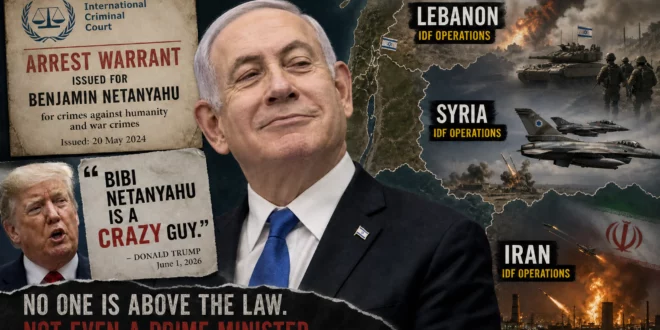
In May 2024, the International Criminal Court issued an arrest warrant for Netanyahu and former Defense Minister Yoav Gallant. The charge: responsibility for alleged war crimes in the Gaza Strip. This is not “media criticism.” It is an international legal stigma.
In Gaza, according to the world press, more than 73,000 Palestinians have been killed, and the territory has been leveled. In the West Bank, there are more than 500,000 Israeli settlers and about three million Palestinians. Since the start of the war, Israeli forces or settlers have killed at least 1,105 Palestinians there. These are numbers that turn Israel from a victim of terror into an object of international condemnation.
And against this backdrop, Netanyahu’s government is advancing the E1 project—the construction of 1,200 homes east of Jerusalem. This project effectively cuts through the West Bank and makes the creation of a viable Palestinian state almost impossible. Previous Israeli governments postponed E1 for decades. Netanyahu published the tenders.
Britain announced a ban on trade with Israeli settlers. Foreign Secretary Ed Miliband called settlers “terrorists” guilty of “ethnic cleansing.” France said it would stop trade with settlements. Canada, Denmark, Finland, France, Iceland, Ireland, Norway, Poland, Portugal, Spain, and Sweden—12 countries—supported sanctions against the settlements. They say plainly: Israel’s actions undermine the two-state solution.
This is not isolation caused by anti-Semitism. This is isolation caused by Netanyahu’s policies.
Allies Are No Longer Covering for Him: From Trump to Miliband
Netanyahu’s main ally is the United States. But here too the ground is shifting. In June, reports emerged of a phone call in which Trump called Netanyahu “crazy” for escalating attacks on Lebanon. “Now everyone hates you,” Trump reportedly said. “Everyone hates Israel because of this.” And he added: Netanyahu would be in prison if not for Trump’s support.
These are not the words of an enemy. They are the words of an ally.
After Miliband’s statement, British Prime Minister Andy Burnham briefed Trump. Axios reported: Trump did not object and did not ask for a change of course. American officials, according to sources, share concern about Netanyahu’s West Bank policy. Yes, Washington has not yet imposed its own sanctions. But the White House’s silence in response to London’s tough steps is already a signal.
Netanyahu did not react publicly. Although a month earlier he called Britain the “Islamic Republic of Britain.” Now he is silent. Because he understands his main defender is tired.
Elections, Coalition, and Ben-Gvir’s Blackmail
In October, Israel faces elections. A Kan poll from September 6 showed: Netanyahu’s bloc gets 52 seats, the competing coalition 51. A majority requires 61. That is not there. And Netanyahu cannot risk pushing away ultra-right allies like Itamar Ben-Gvir and his Otzma Yehudit.
That is why he cannot support Trump’s Gaza peace plan if Ben-Gvir is against it. That is why he continues settlement construction. That is why he does everything to preserve the coalition—even at the cost of Israel’s international legitimacy.
The poll showed that if elections were held now, the largest party in the Knesset would be the centrist Yashar, led by Eisenkot. Netanyahu’s support is falling. Analyst Amotz Asa-El of the Shalom Hartman Institute told Reuters: “Everyone in Israel feels a historic crisis, and his name is on everyone’s lips. And he knows it.”
Israel Must Not Become a Hostage to One Man
Netanyahu betrayed the interests of Israelis. Not abstractly, but concretely. He betrayed their security when on October 7 the system failed and he began looking for scapegoats instead of taking responsibility. He betrayed their international legitimacy when he made settlements a priority above alliances. He betrayed their unity when, for the sake of legal salvation, he clung to the ultra-right, whom he himself had once marginalized. He betrayed the state itself when he made its future dependent on his coalition, his trial, and his vanity.
When the ICC issues an arrest warrant for a prime minister, when Britain, France, Canada, and nine other countries impose sanctions against settlements, when the U.S. president says in fury that without him Netanyahu would be in prison—this is not just a political crisis. It is a threat to statehood.
Israel has a right to security. Israelis have a right to a normal government. But as long as Netanyahu remains in power, the country will pay for his survival with its isolation. The question is no longer whether he led Israel into isolation. The question is whether Israel will survive another Netanyahu term.